
Certified Payroll Report Excel Template: How to Generate Form WH-347 for Government Construction Contracts
Key Takeaways
- ✓Davis-Bacon & Copeland Act Mandates: Any federally funded or assisted construction project exceeding $2,000 requires contractors and subcontractors to submit weekly certified payroll reports on U.S. Department of Labor Form WH-347 (or an approved equivalent).
- ✓The Anatomy of Form WH-347: Compliance requires accurate tracking of all 9 columns: Worker identifying numbers, Wage Determination work classifications, daily straight-time and overtime project hours, hourly base rates, fringe benefit cash equivalents, project gross vs. all-projects gross, itemized tax and voluntary deductions, and net weekly wages.
- ✓Fringe Benefits & Annualization Rules: Prevailing wages combine base hourly pay and mandatory fringe benefits. Employers who contribute to bona fide third-party benefit plans must strictly apply the annualization principle (spreading costs over all 2,080 annual work hours) rather than loading private benefits solely onto federal project hours.
- ✓Severe False Statement Liabilities: The Statement of Compliance (Page 2) is a sworn legal document. Willful falsification carries criminal penalties under 18 U.S.C. § 1001 (up to 5 years imprisonment and $10,000 fines), civil False Claims Act treble damages, and 3-year federal debarment.
- ✓Offline Batch Generation Without SaaS Markups: Instead of paying $150–$500/month in certified payroll add-on fees to cloud platforms, contractors can manage records in structured Excel templates and use PayslipGen to batch generate password-protected, audit-ready PDF payslips and certified payroll archives locally.
Winning a federal, state, or municipal public works contract is a monumental milestone for any commercial general contractor or specialty subcontractor. Government infrastructure projects—funded through federal grants, Department of Transportation (DOT) initiatives, HUD housing programs, and the landmark Infrastructure Investment and Jobs Act—represent multi-million-dollar revenue pipelines with guaranteed government backing.
However, entering the public works arena introduces one of the most stringent, high-stakes regulatory compliance frameworks in commercial law: Prevailing Wage Reporting and Certified Payroll under the Davis-Bacon and Related Acts (DBRA).
Unlike commercial or residential private-sector construction, where payroll is processed bi-weekly or semi-monthly on standard wage ledgers, federal construction projects mandate that every prime contractor and tiered subcontractor submit a sworn, itemized Certified Payroll Report (U.S. Department of Labor Form WH-347) every single week. Missing a single submission deadline or misclassifying a trade apprentice can trigger immediate withholding of contract progress payments, contract termination, liquidated damages, and mandatory Department of Labor audits.
In this definitive operational guide, we provide a complete, legally grounded breakdown of Form WH-347. We examine the exact mechanics of the 9 required columns, walk through fringe benefit calculation formulas and annualization rules, present a master Excel spreadsheet architecture, and show you how to generate bulk, encrypted, audit-proof payroll documentation using PayslipGen.
Try Our Interactive Demo Instantly
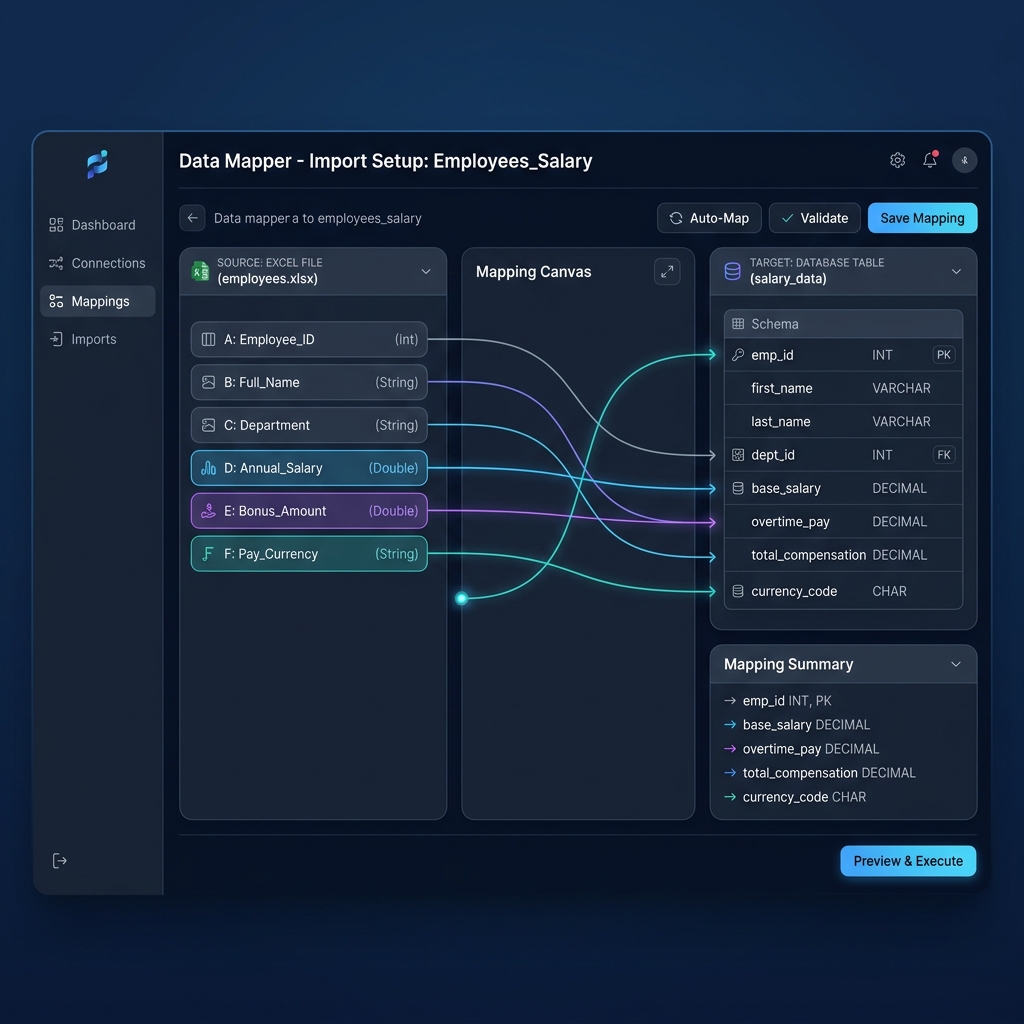
Want to see how an offline-capable, client-side payslip generator works in practice? Try our brand-new interactive demo right in your browser. Upload a sample CSV, map your columns, and generate beautifully designed PDF payslips—with zero data ever being transmitted to our servers.
Launch Free Demo NowChapter 1: The Government Contract Payroll Problem: Davis-Bacon, Copeland Act & the SaaS Add-on Trap
To navigate certified payroll successfully, construction business owners, controllers, and payroll administrators must first understand the legal statutes that govern federal construction compensation.
1. The Statutory Framework: DBRA & Copeland Anti-Kickback Act
Certified payroll compliance is governed by two interlocking pieces of federal legislation:
- The Davis-Bacon Act (40 U.S.C. 3141 et seq.): Enacted in 1931, the Davis-Bacon Act applies to contractors and subcontractors performing on federally funded or assisted contracts in excess of $2,000 for the construction, alteration, or repair of public buildings or public works. It mandates that all mechanics and laborers employed directly upon the site of the work must be paid not less than the locally prevailing wages and fringe benefits for corresponding work on similar projects in the area, as determined by the Secretary of Labor.
- The Copeland Anti-Kickback Act (40 U.S.C. 3145 & 18 U.S.C. 874): Enacted in 1934, the Copeland Act makes it a federal crime to induce any person employed on a public work project to give up any part of the compensation to which they are entitled (i.e., kickbacks). More importantly for payroll administrators, Section 3145 requires every contractor and subcontractor to furnish a weekly statement with respect to the wages paid each employee during the preceding week. This weekly filing requirement is what created the "Certified Payroll Report."
- Contract Work Hours and Safety Standards Act (CWHSSA): Applies to federal construction contracts over $100,000. It requires overtime pay at not less than 1.5 times the basic rate of pay for all hours worked in excess of 40 hours in a workweek, with liquidated damages assessed at $31 per worker per day for overtime violations.
The 2023/2024 DBRA Final Rule Modernization
The U.S. Department of Labor implemented the most comprehensive update to Davis-Bacon regulations in over 40 years (29 C.F.R. Parts 1, 3, and 5). Key updates include reinstating the "three-step process" (the 30% rule for prevailing wage determinations), broadening prevailing wage coverage to energy infrastructure, and strengthening anti-retaliation and record-retention provisions. Certified payroll reports must now be retained for at least three full years following project completion.
2. The Enterprise Payroll Software Extortion
When construction companies transition from private residential or commercial work into public contracting, their first instinct is to turn to their existing payroll software provider (such as QuickBooks Payroll, ADP, Gusto, or Paychex) to generate certified payroll reports.
They are immediately confronted by what the construction industry colloquially calls the "SaaS Certified Payroll Tax":
- Expensive Add-On Modules: Mainstream small business payroll engines (like basic Gusto or standard QuickBooks) do not support prevailing wage job-costing or Form WH-347 generation natively. They force contractors to purchase third-party connectors (such as Points North, Certified Payroll Reporting apps, or LCPtracker integrations) that cost an additional $150 to $500 per month, plus per-employee fees.
- Forced Enterprise Tier Upgrades: Major payroll platforms lock certified payroll reporting behind enterprise-tier packages (such as ADP Workforce Now or QuickBooks Enterprise Diamond) that cost upwards of $4,000 to $12,000 annually in recurring subscription overhead.
- Rigid Cloud Lock-In: If your job site employs dynamic craft laborers who work 16 hours as a Carpenter on Monday/Tuesday and 24 hours as a Common Laborer on Wednesday through Friday across multiple job sites, standard cloud payroll tools struggle with split-rate classification, forcing hours of manual data re-entry.
As a result, thousands of general contractors and trade subcontractors rely on custom Excel spreadsheets to calculate their weekly certified payroll. However, manually transcribing spreadsheet rows onto official government PDF forms or printouts every single week is grueling, highly error-prone, and unsustainable during peak construction seasons.
Chapter 2: The Anatomy of Form WH-347: Detailed Breakdown of the 9 Columns
Form WH-347, published by the Wage and Hour Division (WHD) of the U.S. Department of Labor, is the universal gold standard for certified payroll reporting. While contracting agencies may accept computerized printouts or state-specific electronic portals (e.g., California DIR eCPR, New York City PASSPort, LCPtracker), any compliant submission must mirror the exact data architecture of Form WH-347.
Captures Contractor/Subcontractor name, business address, Payroll Number (consecutive starting with #1), Week Ending Date, Project Name & Location, and Federal Project / Contract Number.
Full name of the worker and an identifying number (mandatory: last 4 digits of the worker's Social Security Number or unique internal worker ID). Full 9-digit SSNs and home addresses must not appear on public submissions.
The exact craft trade classification matching the project's Wage Determination (e.g., Electrician, Carpenter, Laborer Group 1, Sheet Metal Worker). If apprentices are used, show apprentice level and percentage.
Day-by-day matrix (Mon–Sun) split into two rows per worker: S (Straight-time hours) and O (Overtime hours). Must show total hours worked on this federal project vs. other private jobs.
Actual calendar dates corresponding to the days of the payroll week (e.g., 06/12, 06/13, 06/14). Aligns daily worker punch times directly with the project shift logs.
The hourly basic rate of pay plus the hourly cash equivalent of any fringe benefits paid directly in cash (e.g., "$42.50 / $14.20 cash fringe"). Overtime hourly base rate must be at 1.5x.
Two distinct numbers: (Top) Gross wages earned on this specific government project; (Bottom) Total gross wages earned by the worker on all projects (public and private) during the workweek.
Itemized statutory and voluntary withholdings: FICA (Social Security & Medicare), Federal Income Tax, State Tax, Local Tax, and "Other" authorized deductions (401k, health, dues), followed by Column 8 (Total Deductions).
The actual net take-home pay delivered to the worker (Total Gross on All Projects minus Total Deductions in Column 8). This figure must reconcile penny-for-penny with actual direct deposit transactions or physical payroll checks.
Critical Privacy Rule: SSN & Address Redaction
Prior to 2009, Form WH-347 required contractors to write full employee Social Security Numbers and home addresses directly on the report. Under revised Department of Labor regulations (29 C.F.R. § 5.5(a)(3)(ii)(A)), full SSNs and home addresses must never be included on weekly certified payroll submissions to contracting agencies.
Instead, use only the worker's legal name and an individual identifying number—specifically, the last four digits of their Social Security Number (e.g., "John D. Smith (XXX-XX-4892)") or an internal employee ID number. Prime contractors must still maintain full SSNs and home addresses in their confidential internal records for DOL audit inspection upon request.
Chapter 3: Fringe Benefits Calculation Rules: Cash in Lieu vs Bona Fide Plans & Annualization
Prevailing wage determinations published on SAM.gov (formerly WDOL) establish two distinct wage components for every trade classification:
For example, a Wage Determination for a Heavy Equipment Operator (Class 1) in Cook County, Illinois might specify:
- Basic Hourly Rate: $54.00 per hour
- Fringe Benefit Rate: $22.50 per hour
- Total Prevailing Wage Obligation: $76.50 per hour
As an employer, how you satisfy that $22.50/hour fringe benefit obligation dictates how you complete Form WH-347 and calculate weekly gross pay. Federal law provides two primary compliance avenues:
| Compliance Method | How It Works | Form WH-347 Page 2 Checkbox | Tax Implications |
|---|---|---|---|
| Option A: Bona Fide Third-Party Plans | Employer pays monthly contributions to qualifying third-party trusts/plans (major medical health insurance, defined benefit/401(k) pension, vacation trusts, registered apprenticeship training). | Box 4(a) Checked | Pre-tax. Exempt from employer payroll taxes (FICA, FUTA, SUTA) and workers' comp premiums. |
| Option B: Cash in Lieu of Fringes | Employer does not provide bona fide plans (or only provides partial benefits). The remaining fringe obligation is paid directly to the worker in cash on their weekly paycheck. | Box 4(b) Checked | Taxable wages. Subject to full federal/state income tax withholding, FICA (7.65%), and increases workers' compensation insurance premiums. |
| Option C: Hybrid Combination | Employer provides bona fide health insurance creditable at $8.50/hr, and pays the remaining $14.00/hr in cash on the weekly paycheck. | Box 4(c) Itemized | Bona fide portion is pre-tax; cash portion is treated as taxable gross wages. |
The Golden Rule: Annualization of Fringe Benefits
The single most common audit trap in prevailing wage enforcement is failing to properly annualize fringe benefit credits.
Under 29 C.F.R. § 5.29, when an employer contributes to a bona fide benefit plan that covers the employee continuously throughout the year (e.g., group health insurance or life insurance), the employer cannot allocate the entire monthly premium solely to the hours the employee worked on the government project.
The Statutory Annualization Formula
To determine the creditable hourly fringe rate for health insurance, pension, or life coverage, divide total annual employer contributions by the worker's total annual hours worked across all private and public projects (standard full-time benchmark = 2,080 hours):
Example: If a contractor pays $7,200 annually for an employee's medical insurance, and the employee works 2,000 total hours during the year (400 hours on a Davis-Bacon project, 1,600 hours on private residential jobs), the allowable hourly credit is $7,200 ÷ 2,000 = $3.60 per hour. The contractor cannot claim $7,200 ÷ 400 = $18.00/hr against the Davis-Bacon project.
Calculating Overtime on Prevailing Wage Contracts
When a laborer or mechanic works over 40 hours in a workweek on a covered project, the Contract Work Hours and Safety Standards Act (CWHSSA) and FLSA require overtime pay. However, the calculation of prevailing wage overtime contains a vital rule:
- Overtime Base Rate: The 1.5x overtime multiplier applies only to the basic hourly rate, never to the fringe benefit rate.
- Fringe Benefit Rate on Overtime: Mandatory fringe benefits (whether paid into bona fide funds or paid in cash in lieu) are paid at straight time (1.0x) for all overtime hours worked, unless specifically mandated otherwise by a collective bargaining agreement or state prevailing wage schedule.
// Prevailing Wage Overtime Formula
Overtime Hourly Pay = (Basic Hourly Rate × 1.5) + (Hourly Cash Fringe Rate × 1.0)
Example: Base = $40.00, Cash Fringe = $15.00 → Overtime Rate = ($40.00 × 1.5) + $15.00 = $75.00/hr (NOT $55.00 × 1.5 = $82.50/hr).
Chapter 4: Statement of Compliance & Legal Certification (18 U.S.C. § 1001)
Page 2 of Form WH-347 is the Statement of Compliance. This is not a casual administrative cover sheet; it is a formal, legally binding affidavit signed under penalty of perjury.
The Legal Weight of the Statement of Compliance
By signing the Statement of Compliance, the contractor or authorized payroll officer certifies four non-negotiable assertions:
- That the payroll submitted contains the name and identifying number for each laborer or mechanic, and that the weekly wages paid are correct and complete.
- That no rebates or kickbacks have been or will be made directly or indirectly to or on behalf of the contractor from the full wages earned by any person.
- That no deductions have been made other than permissible deductions as defined in 29 C.F.R. Part 3 (e.g., statutory taxes, court-ordered garnishments, or written voluntary authorizations).
- That each laborer or mechanic has been paid not less than the applicable wage rates and fringe benefits specified in the applicable Wage Determination incorporated into the contract.
Federal Criminal Liabilities: 18 U.S.C. § 1001
The bottom of Form WH-347 explicitly states: "The willful falsification of any of the above statements may subject the contractor or subcontractor to civil or criminal prosecution. See Section 1001 of Title 18 and Section 3729 of Title 31 of the United States Code."
- 18 U.S.C. § 1001 (False Statements Act): Fines up to $10,000 and up to 5 years in federal prison per false report.
- 31 U.S.C. § 3729 (Civil False Claims Act): Treble damages (3x the underpaid wages) plus civil penalties exceeding $13,000 to $27,000 per false claim.
- Federal Debarment (29 C.F.R. § 5.12): Ineligibility to bid on or receive any federal, federally assisted, or state public contracts for a mandatory period of 3 full years.
Chapter 5: Master Certified Payroll Excel Spreadsheet Schema & Formulas
To maintain pristine records without paying bloated monthly SaaS fees, commercial contractors should establish a standardized, structured master payroll Excel ledger.
Below is the comprehensive schema design for a multi-trade, prevailing wage certified payroll spreadsheet. Each column maps directly to Form WH-347 inputs and automated PDF generation engines.
| Col | Excel Column Header | Data Type | Formula / Calculation Logic | WH-347 Target |
|---|---|---|---|---|
| A | Emp_Name | String | Full legal employee name (e.g. "Marcus Vance") | Col 1 |
| B | SSN_Last4 | String (4 digits) | Worker ID: `"XXX-XX-" & RIGHT(Full_SSN, 4)` | Col 1 |
| C | Trade_Class | Dropdown List | SAM.gov Trade (e.g., "Electrician - Inside Wireman") | Col 2 |
| D-J | Hrs_Mon to Hrs_Sun | Decimal Number | Daily straight-time hours on this government job | Col 3 (S) |
| K-Q | OT_Mon to OT_Sun | Decimal Number | Daily overtime hours on this government job | Col 3 (O) |
| R | Total_Gov_Hrs_ST | Formula | =SUM(D2:J2) | Col 3 (Total S) |
| S | Total_Gov_Hrs_OT | Formula | =SUM(K2:Q2) | Col 3 (Total O) |
| T | Base_Rate | Currency ($/hr) | Determined basic hourly rate from Wage Determination | Col 5 |
| U | Fringe_Cash_Rate | Currency ($/hr) | Mandatory fringe rate paid as cash in lieu | Col 5 |
| V | Gross_This_Job | Formula | =(R2*(T2+U2)) + (S2*((T2*1.5)+U2)) | Col 6 (Top) |
| W | Other_Jobs_Gross | Currency ($) | Gross wages earned on private/commercial projects | Non-Project |
| X | Total_Gross_All | Formula | =V2 + W2 | Col 6 (Bottom) |
| Y | Ded_FICA | Formula / Currency | Social Security & Medicare withholding: `=X2*0.0765` | Col 7 (FICA) |
| Z | Ded_Fed_Withholding | Currency ($) | Federal income tax withholding from IRS W-4 tables | Col 7 (Fed W/H) |
| AA | Ded_State_Tax | Currency ($) | State income tax withholding | Col 7 (State) |
| AB | Ded_Other | Currency ($) | Voluntary 401(k), health pre-tax, or court orders | Col 7 (Other) |
| AC | Total_Deductions | Formula | =SUM(Y2:AB2) | Col 8 |
| AD | Net_Pay_Week | Formula | =X2 - AC2 | Col 9 |
Essential Excel Data Validation Rules
To prevent human data-entry mistakes before generating certified reports, apply these Excel Data Validation controls to your master worksheet:
- Dropdown Lists for Work Classifications (Column C):Use Excel List Validation linked to your project's Wage Determination codes so site clerks cannot type non-existent crafts like "Helper" on a contract that prohibits helpers.
- Positive Number Constraints: Set validation on all hourly rate (Columns T, U) and hours worked (Columns D–Q) cells to allow only decimal values greater than or equal to 0.
- Net Pay Sanity Check Formula:Add a conditional formatting rule on Column AD (Net Pay): `=AD2<=0` highlighting in bold red if any worker's deductions exceed their gross earnings.
Chapter 6: Automated Batch Generation & Archiving with PayslipGen
While Excel is unmatched for structured tabulations and mathematical calculations, converting 50 or 200 employee rows into clean, individual, password-protected PDF payslips and certified payroll records every Friday afternoon is an administrative nightmare.
This is where PayslipGen transforms construction payroll operations.
How PayslipGen Streamlines Certified Payroll & Itemized Paystubs
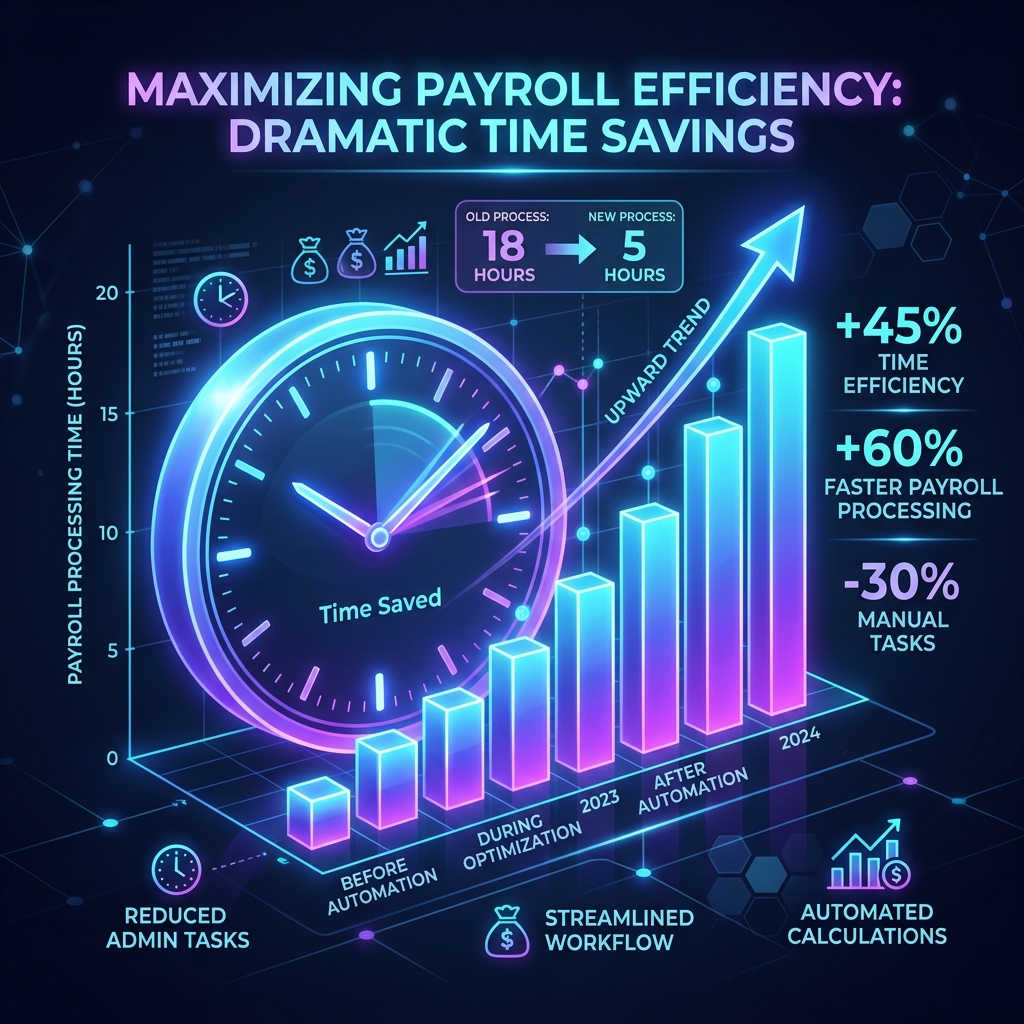
- 1Direct Spreadsheet Ingestion: Drag and drop your master weekly Excel (.xlsx) or CSV timesheet directly into PayslipGen. The software automatically detects headers and columns.
- 2Dynamic Prevailing Wage Multi-Line Mapping: Map your base rates, cash fringe equivalents, daily hours, and itemized deductions directly to professional construction paystub templates.
- 3Local AES-256 Encryption:Protect confidential worker earnings with individual password protection. Automatically lock each PDF using dynamic formulas (such as the last 4 digits of the employee's SSN or employee ID).
- 4100% Offline Data Sovereignty: Unlike cloud SaaS platforms that upload sensitive employee wage data to third-party multi-tenant servers, PayslipGen executes 100% locally on your machine. Zero cloud vulnerability, zero data breach risk, and zero monthly subscriptions.
- 5Audit-Ready 3-Year Archiving: In one click, export indexed, timestamped PDF payroll batches organized by Project ID, Contract Number, and Payroll Week Number to satisfy federal 3-year record retention audits effortlessly.
Chapter 7: Top 7 Certified Payroll Audit Traps & Red Flags to Avoid
Department of Labor Wage and Hour Division (WHD) investigators and state contracting officers audit thousands of public works projects annually. Here are the top seven compliance errors that trigger audits, contract payment freezes, and liquidated damages:
Assigning a lower-paid trade code (like "Laborer Group 1" at $32/hr) to an employee who was observed on-site operating power equipment, hanging drywall, or roughing in electrical conduit. WHD inspectors conduct unannounced site visits and interview workers about the exact tools and tasks performed. Workers must be paid the prevailing rate for the actual craft work performed, regardless of their general job title.
Paying workers reduced "apprentice rates" when they are not officially registered in a bona fide apprenticeship program certified by the U.S. Department of Labor Office of Apprenticeship (OA) or a recognized State Apprenticeship Agency (SAA). Furthermore, exceeding the allowable journeyman-to-apprentice ratio on the site on any given day requires all excess apprentices to be paid full journeyperson prevailing wages.
Attempting to satisfy a $18/hr fringe requirement by claiming the entire annual cost of a health or pension plan against the few weeks the employee worked on the federal contract. Benefit credits must be strictly annualized over the employee's total yearly working hours.
Failing to report Column 6 (All Projects Gross) correctly when employees split their workweek between the certified government project and private commercial jobs. If Column 6 only reflects the government project, but the net pay in Column 9 reflects deductions taken from an unstated larger paycheck, the certified report is legally defective and will fail automated agency validation checks.
Under the Copeland Act, deductions for safety boots, company tool purchases, damaged equipment, or cell phone reimbursements cannot be made without prior written employee authorization and, in many cases, formal approval from the Department of Labor. Deductions that reduce take-home pay below prevailing wage minimums are strictly prohibited.
Certified payroll reports are due within seven calendar days after the regular pay date for the payroll week. Contracting agencies routinely freeze contract progress billings across the entire job if a single subcontractor is two weeks behind on certified payroll filings.
Under 29 C.F.R. § 5.5(a)(6), the prime general contractor is legally responsible for the compliance of all lower-tier subcontractors. If a second-tier drywall subcontractor fails to pay prevailing wages or submits fraudulent certified reports, the federal government will withhold payments directly from the prime contractor's contract balance.
Chapter 8: Frequently Asked Questions (FAQ)
Is Form WH-347 mandatory, or can contractors use their own payroll software printouts?
Form WH-347 is optional in format, but mandatory in content. The U.S. Department of Labor allows contractors to submit computer-generated payroll summaries or customized Excel reports, provided they contain all of the exact identical information required by Form WH-347 and include a fully executed, signed Statement of Compliance (Page 2) certifying the data under penalty of perjury.
How do we handle certified payroll during weeks when no work was performed?
If work on the project is temporarily suspended or no craft workers were on-site during a given workweek, you do not need to list individual workers. Instead, submit a "No Work Performed"certified report indicating consecutive payroll numbers (e.g., "Payroll #7 - No Work Performed") along with a signed Statement of Compliance. This maintains unbroken sequential numbering for contracting officer audits.
Do working business owners and corporate officers need to be listed on Form WH-347?
Yes. If an owner, partner, or corporate officer performs manual labor or works with tools on the job site (as a carpenter, electrician, operator, etc.), they must be listed on Form WH-347 with their craft classification, daily hours worked, and notation of owner status. However, their hourly rate and deductions may be recorded as "Owner" or "Salaried Officer" if they own at least 20% equity and are exempt under 29 C.F.R. Part 541.
What is the difference between federal Davis-Bacon and state "Little Davis-Bacon" laws?
Federal Davis-Bacon applies to projects funded in whole or in part by federal agencies. Over 28 states have their own "Little Davis-Bacon Acts" (such as California DIR, New York Labor Law 220, Washington State Prevailing Wage) that apply to state, county, and municipal public works contracts. State laws often have higher prevailing wage thresholds, mandatory electronic submission portals (e.g., California eCPR), and stricter daily overtime rules (e.g., overtime required after 8 hours in a single day).
How are electronic signatures handled on modern certified payroll reports?
Most federal contracting agencies and electronic reporting portals (LCPtracker, eComply, B2Gnow, Elation) accept cryptographically secure electronic signatures, digital signature certificates, or verified PDF signatures. When submitting physical or scanned PDF copies, ensure the signatory is an authorized officer, owner, or designated payroll supervisor named in the contract pre-construction documents.
Can PayslipGen replace expensive SaaS payroll subscriptions for certified construction payroll?
Yes. Construction businesses can run their calculations in standard, flexible Excel spreadsheets and use PayslipGen as their high-speed, local document generation engine. PayslipGen imports your multi-line payroll spreadsheet, maps prevailing wage classifications and fringe benefits, and generates batch password-protected PDF payslips and audit archives in seconds—saving thousands of dollars annually in SaaS subscription fees.
How long must certified payroll reports and underlying timesheets be preserved?
Under 29 C.F.R. § 5.5(a)(3)(i), certified payroll reports, basic timesheets, job-site punch logs, wage determination schedules, and proof of fringe benefit contributions must be preserved for at least three (3) years after the completion of the construction contract. These records must be readily accessible for inspection by the contracting agency and the Department of Labor.
Automate Audit-Proof Certified Payroll & Paystubs Today
Generate professional, multi-line, password-protected construction paystubs and certified payroll records directly from your spreadsheets—with 100% offline security and zero monthly SaaS subscriptions.
Get PayslipGen TodayConclusion
Prevailing wage construction contracts are lucrative opportunities that can expand your business and elevate your firm's commercial reputation. But winning government bids is only half the battle; the other half is executing flawless, weekly certified payroll compliance under the Davis-Bacon and Copeland Acts.
By mastering the 9 columns of Form WH-347, implementing rigorous fringe benefit annualization calculations, maintaining a structured master Excel ledger, and leveraging the fast, secure local generation of PayslipGen, your business can eliminate payroll bottlenecks, pass Department of Labor audits with flying colors, and keep your contract progress payments flowing smoothly.
(Looking to streamline other complex payroll workflows? Explore our specialized guides on Construction Worker Field Payslips, Hourly Overtime Payroll Automation, 1099 Contractor Payment Advice, or Archiving Thousands of Payslips for Audit Season.)