
How to Archive Thousands of Employee Payslips for Audit Season
Key Takeaways
- ✓A 500-employee company on a bi-weekly schedule generates 13,000 PDF payslips annually, making manual file retrieval unsustainable for financial audits.
- ✓Manual PDF consolidation across local or network folders introduces high risks of missing records, data transfer corruptions, and privacy breaches.
- ✓Batch archival encapsulates entire payroll cohorts into standardized ZIP containers with 256-bit AES PDF encryption, ensuring data security and audit compliance.
- ✓PayslipGen enables HR teams to filter, organize, and export entire payroll years into structured ZIP archives in seconds, dramatically shortening audit review cycles.
As the fiscal year draws to a close, human resources professionals and payroll administrators brace themselves for the inevitable onset of audit season. The meticulously organized documentation that auditors require necessitates the retrieval, organization, and secure archiving of thousands of individual employee payslips.
For organizations relying on fragmented systems or manual PDF generation, this task can quickly devolve into a logistical nightmare, fraught with human error, compromised security, and monumental expenditures of time. Without an intelligent, bulk-processing solution, compiling these records becomes an insurmountable hurdle that distracts from strategic HR initiatives.
Try Our Interactive Demo Instantly
Want to see how an offline-capable, client-side payslip generator works in practice? Try our brand-new interactive demo right in your browser. Upload a sample CSV, map your columns, and generate beautifully designed PDF payslips—with zero data ever being transmitted to our servers.
Launch Free Demo Now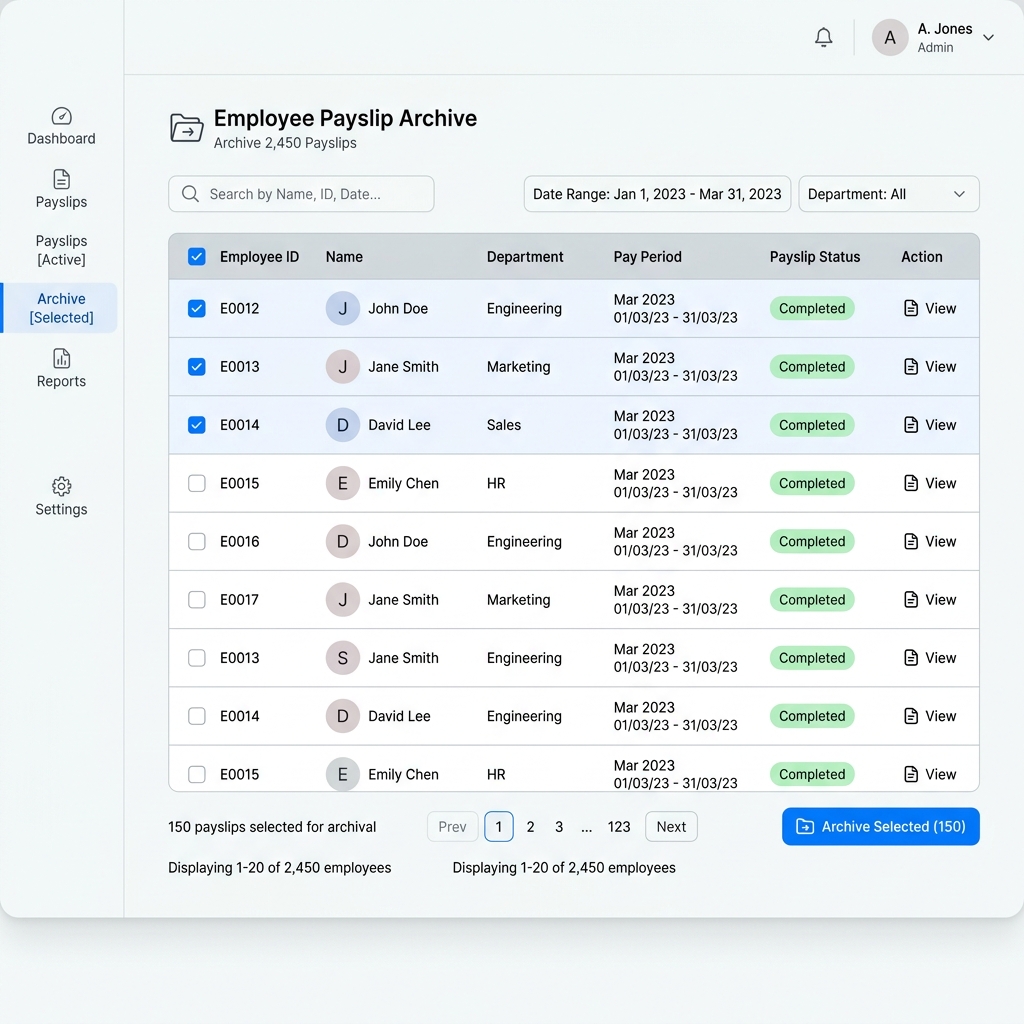
The Escalating Complexity of Compliance Audits
Regulatory bodies and financial auditors operate with a zero-tolerance policy for incomplete or missing payroll records. When an auditor requests a comprehensive breakdown of departmental compensation spanning the preceding twelve months, the expectation is absolute accuracy and immediate availability.
In a medium-sized enterprise employing 500 individuals, a year of bi-weekly payrolls translates to 13,000 distinct PDF documents. Attempting to manually locate, verify, and consolidate 13,000 files spread across disparate local drives, network folders, or rudimentary payroll software is not merely inefficient—it is profoundly risky.
The Hidden Costs of Manual Consolidation
Beyond the direct administrative labor hours wasted on file retrieval, manual consolidation introduces significant vulnerabilities regarding data loss and privacy breaches. A single misplaced folder containing unencrypted payslips constitutes a severe compliance violation.
Embracing Automated Bulk Archival
The paradigm shift required for a stress-free audit season centers on embracing dedicated, intelligent software capable of automating the archival process at a granular level. Modern solutions empower HR teams to transition from reactive file hunting to proactive, batch-oriented data management.
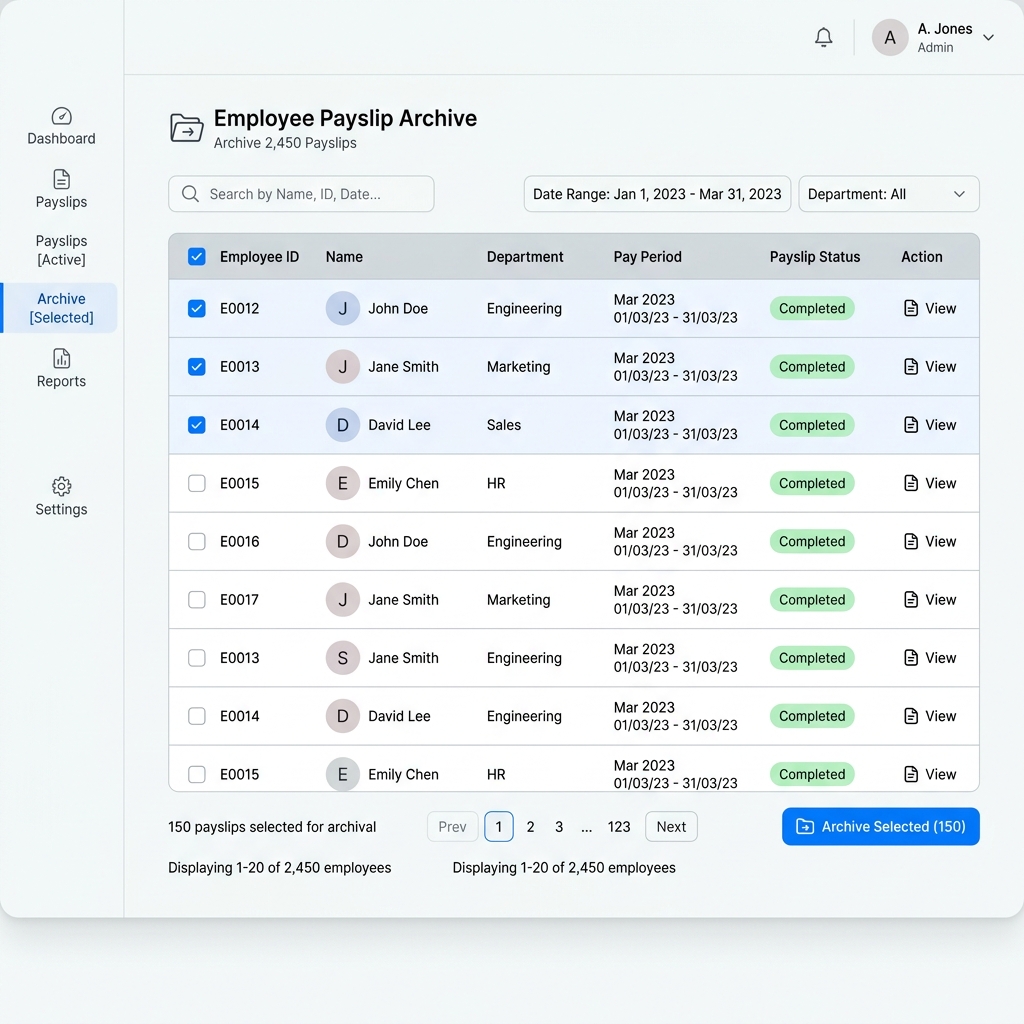
Imagine a centralized, highly visual interface where an administrator can effortlessly filter payroll records by date range, department, or specific employee cohorts. With a few clicks, the system aggregates the requested data, bypassing the laborious process of manual folder traversal.
The Power of the ZIP Archive
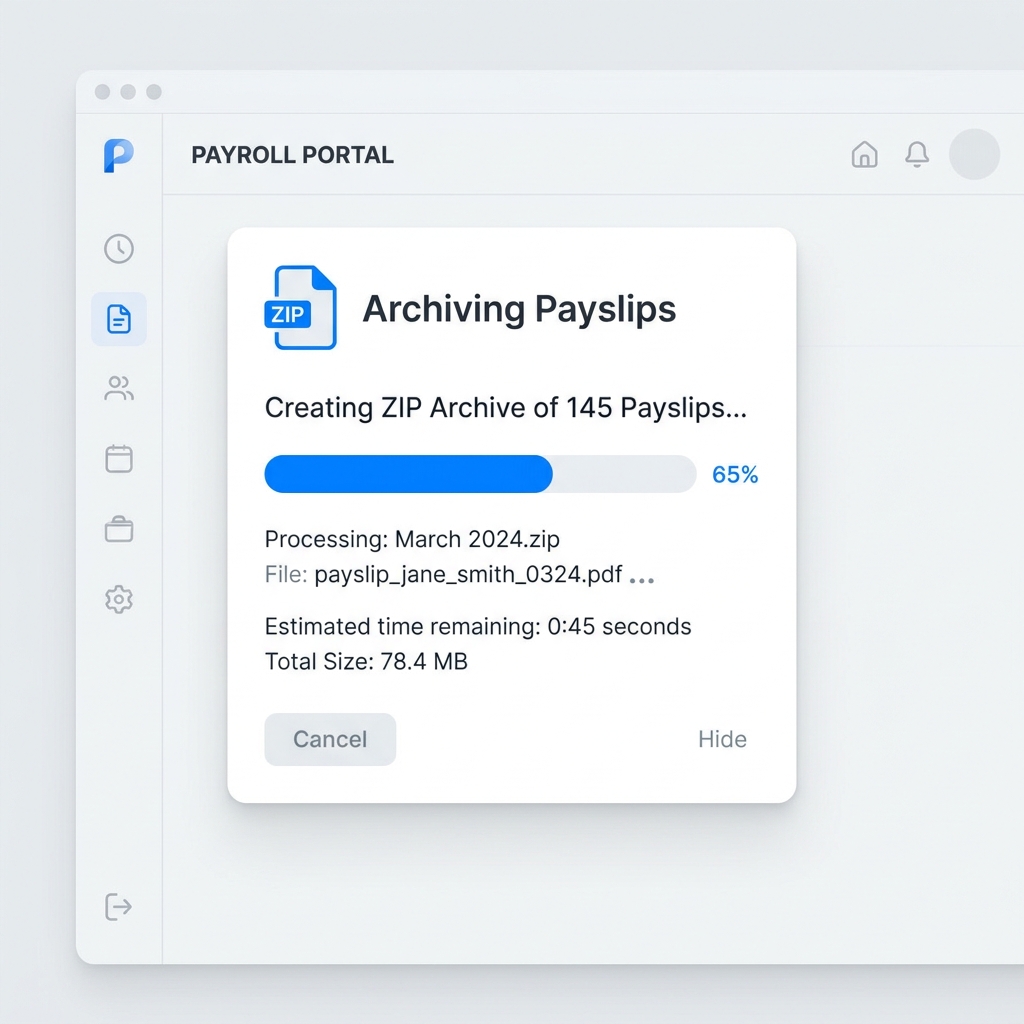
The cornerstone of an efficient audit handover is the utilization of compressed, standardized ZIP archives. Transferring 13,000 individual PDFs to an auditor via secure file transfer protocols is a cumbersome, error-prone endeavor that often results in stalled uploads and corrupted transfers.
By encapsulating entire payroll batches into a single, cohesive ZIP archive, administrators dramatically reduce the file transfer footprint while simultaneously ensuring the structural integrity of the localized directory. Advanced desktop solutions streamline this by automatically generating these archives with intuitive naming conventions, ensuring the auditor receives a meticulously organized, self-contained data package.
Furthermore, this methodology fundamentally transforms the internal storage architecture of the HR department. Rather than maintaining sprawling hierarchies of loose PDFs, historical payroll data is neatly compartmentalized into highly portable, securely encrypted ZIP containers that can be effortlessly migrated to cold storage or cloud backups.
Ensuring Immutable Security During Archival
Efficiency cannot supersede security, especially when handling unredacted financial compensation data. A robust archival strategy must incorporate cryptographic safeguards at every stage of the pipeline, from generation to final storage.
When utilizing professional-grade desktop payroll software, the generated PDFs are natively encrypted with formidable 256-bit AES algorithms before they ever touch the local hard drive. This encryption persists even when the files are aggregated into a ZIP archive, guaranteeing that if the archive is intercepted or mishandled, the underlying data remains cryptographically sealed.
Streamlining the Auditor Experience
Ultimately, a streamlined archival process is as much about accommodating the auditor as it is about saving internal HR hours. A frustrated auditor forced to untangle a chaotic, non-standardized directory of files is inherently more scrutinizing.
Conversely, presenting a clean, chronologically organized, and perfectly compressed ZIP archive demonstrates a level of operational maturity that fosters trust. The auditor can swiftly mount the archive, access the necessary documents using the provided decryption keys, and complete their review with unprecedented velocity.
This operational excellence translates directly into shorter audit cycles, reduced consulting fees, and the peace of mind that comes from knowing your organization's compliance posture is impenetrable.
Prepare for Audit Season Without the Stress
Upgrade your workflow to seamlessly handle thousands of payslips. Generate, organize, and securely compress your payroll records for auditors with unprecedented speed.
Export entire payroll batches as ZIP archives.Conclusion
The dread traditionally associated with audit season is a symptom of outdated methodologies and inadequate tooling. By transitioning to a system designed expressly for high-volume generation and intelligent compression, HR departments can reclaim thousands of hours while simultaneously elevating their security and compliance standards. The ability to export an entire year's worth of payroll into a secure ZIP archive is not merely a convenience; it is a strategic imperative for modern enterprises.