
Wage Garnishment & Child Support Paystub Deductions: The Complete Calculation and Formatting Guide
Key Compliance Takeaways
- ✓CCPA Disposable Earnings Formula: Only mandatory statutory taxes (Federal, FICA, Medicare, State, Local, and state mandatory disability) are subtracted from gross earnings. Voluntary pre-tax deductions (such as 401(k) contributions, Section 125 health insurance premiums, and FSA deferrals) cannot be deducted when establishing the CCPA disposable earnings base.
- ✓Child Support Maximum Caps (50% to 65%): Under Title III of the Consumer Credit Protection Act (CCPA), child support withholding is capped at 50% (if the employee supports another spouse or child) or 60% (if not supporting a second family), increasing by +5% to 55% or 65% if the employee is more than 12 weeks in arrears.
- ✓Strict Order of Precedence: When multiple withholdings are served against a single employee, Child Support Income Withholding Orders (IWOs) take precedence over general creditor garnishments, student loans, and subsequent tax levies. Creditor garnishments are strictly capped at the lesser of 25% of disposable earnings or the excess over 30× the federal minimum wage ($217.50/week).
- ✓Post-Tax Itemization & Privacy: Garnishments are strictly post-tax deductions and must be itemized on the employee's payslip with exact court docket numbers and agency references. Processing payroll locally with PayslipGen ensures court data remains 100% private, generating password-protected PDFs without exposing sensitive court orders to cloud servers.
Few administrative tasks trigger as much immediate anxiety for human resources managers, controllers, and small business owners as receiving a certified legal envelope containing an official Income Withholding for Support (IWO), an IRS Form 668-W (Notice of Levy on Wages, Salary, and Other Income), or a County Court Writ of Garnishment.
Under federal and state law, receiving a wage garnishment notice immediately transforms the employer into an involuntary fiduciary of the court. You are legally mandated to calculate precise withholding thresholds, deduct the funds from the employee's earnings before they receive their paycheck, and remit those monies directly to state disbursement units (SDUs), child support agencies, or judgment creditors within strict statutory deadlines.
The legal stakes are unforgiving. If an employer fails to garnish an employee's wages after being properly served, the business becomes jointly and severally liablefor the employee's underlying debt—plus statutory interest, state non-compliance fines, and opposing legal fees. Conversely, if an employer over-withholds, deducts from the wrong wage base, or wrongfully terminates an employee due to a single garnishment, the company faces severe civil penalties and federal criminal liability under Section 304 of the Consumer Credit Protection Act (CCPA).
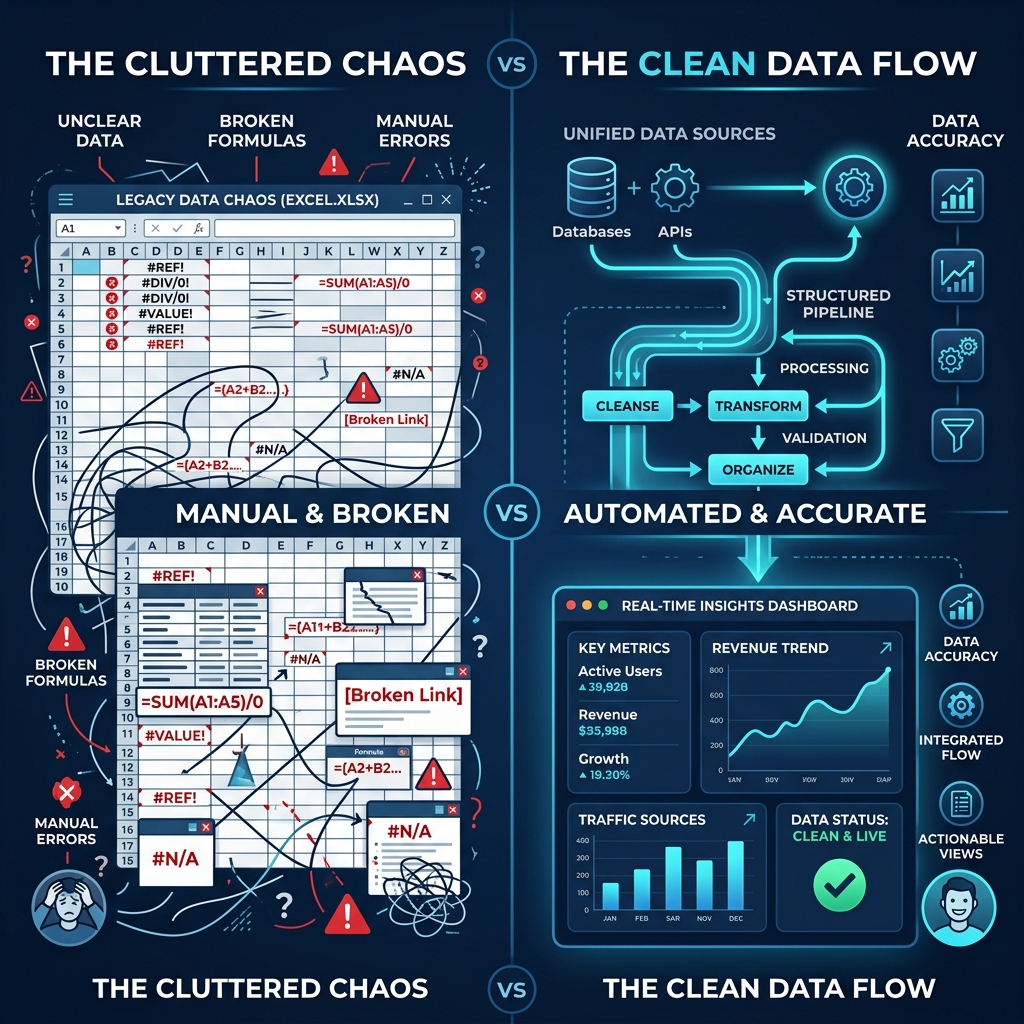
Compounding this challenge, mainstream payroll SaaS platforms (such as ADP, Gusto, Paychex, and Rippling) frequently charge exorbitant add-on surcharges ($15 to $100 per garnishment setup fee, plus recurring monthly processing fees) or fail to correctly handle multi-order priority proration. Small businesses running payroll in Excel or Google Sheets are left navigating complex federal formulas, state exemptions, and paystub itemization rules on their own.
In this comprehensive engineering and payroll guide, we will unpack the mathematical architecture of wage garnishments, provide step-by-step Excel formulas for CCPA disposable earnings, dissect multiple garnishment priority waterfalls, and demonstrate how to generate audit-ready, password-protected PDF payslips using PayslipGen.
Try Our Interactive Demo Instantly
Want to see how an offline-capable, client-side payslip generator works in practice? Try our brand-new interactive demo right in your browser. Upload a sample CSV, map your columns, and generate beautifully designed PDF payslips—with zero data ever being transmitted to our servers.
Launch Free Demo NowChapter 1: The Legal Taxonomy of Wage Garnishments (CCPA Title III & Governing Statutes)
A wage garnishment is a legal procedure in which an employer is ordered by a court or government administrative agency to withhold a specific portion of an employee's compensation to satisfy an unpaid debt. The overarching federal statute governing wage withholdings in the United States is Title III of the Consumer Credit Protection Act (CCPA), codified at 15 U.S.C. § 1671 et seq., and enforced by the Wage and Hour Division (WHD) of the U.S. Department of Labor.
To process payroll lawfully, payroll administrators must understand the five primary legal classes of wage withholdings, each operating under distinct statutory caps, calculation rules, and procedural requirements:
1Child Support and Spousal Support (Alimony) Orders
Governed by 15 U.S.C. § 1673(b), the Social Security Act (42 U.S.C. § 666), and the Uniform Interstate Family Support Act (UIFSA). Orders arrive on standardized federal forms entitled "Income Withholding for Support" (IWO). Child support orders hold absolute legal priority over nearly all other liens and have the highest allowable withholding caps in federal jurisprudence (ranging from 50% to 65% of disposable earnings).
2Federal Tax Levies (IRS Form 668-W)
Governed by Internal Revenue Code (IRC) §§ 6331, 6332, and 6334. Issued directly by the Internal Revenue Service via Form 668-W (Notice of Levy on Wages, Salary, and Other Income). Unlike CCPA garnishments, federal tax levies do notoperate on a percentage cap; instead, the IRS publishes annual tables (IRS Publication 1494) establishing an "Exempt Amount" based on standard deductions and dependents. All earnings above the exempt amount must be remitted to the federal government.
3State and Municipal Tax Levies
Issued by state revenue agencies (e.g., California Franchise Tax Board, New York Department of Taxation and Finance) or municipal tax collectors for delinquent state income taxes, sales taxes, or business assessments. State tax levies are subject to state-specific statutory caps (typically ranging from 10% to 25% of gross or disposable earnings).
4Federal Student Loans (Administrative Wage Garnishment - AWG)
Governed by the Debt Collection Improvement Act of 1996 (31 U.S.C. § 3720D) and Higher Education Act regulations (34 C.F.R. § 34). Issued by the U.S. Department of Education or federal guaranty agencies without requiring a prior judicial court hearing. Capped at a strict 15% of disposable earnings (or up to 25% if multiple federal student loan guarantors hold simultaneous orders).
5Commercial & Consumer Creditor Garnishments
Issued by county or state civil courts following a formal monetary judgment for defaulted credit card debt, unpaid medical bills, private student loans, or personal loan defaults. Strictly governed by CCPA Section 303 (15 U.S.C. § 1673(a)), capping withholding at the lesser of 25% of disposable earnings or the amount exceeding 30 times the federal minimum wage.
Garnishment Statutory Comparison Matrix
The following reference matrix synthesizes the governing legal frameworks, maximum statutory withholding caps, priority tiers, and operational rules across all major garnishment types:
| Garnishment Type | Issuing Authority / Form | Statutory Withholding Ceiling | Priority Tier | Pre-Tax Deduction Rule |
|---|---|---|---|---|
| Child Support & Alimony | State SDU / Court (Federal IWO Form) | 50% to 65% of Disposable Earnings | Tier 1 (Highest Priority) | Only mandatory taxes deducted for base; pre-tax benefits not exempted. |
| Federal Tax Levy | Internal Revenue Service (Form 668-W) | All pay above IRS Pub 1494 Exempt Table | Tier 2 (Unless prior IWO served) | Existing pre-tax benefits at levy service date may reduce net subject to levy. |
| State / Local Tax Levy | State Dept of Revenue (State Notice) | 10% to 25% (Varies by State Statute) | Tier 3 (Subordinate to Federal & IWO) | Varies by state statute; follows state disposable wage definitions. |
| Federal Student Loans | Dept of Education / Guaranty Agency | 15% of Disposable Earnings (Max 25% combined) | Tier 4 | Standard CCPA disposable earnings base applied. |
| Consumer / Creditor Judgment | Civil Court / County Sheriff (Writ) | Lesser of 25% or Excess over 30× Min Wage | Tier 5 (Subordinate to all others) | Standard CCPA disposable earnings base. Prohibited in TX, PA, NC, SC. |
Chapter 2: The Core Math – Calculating CCPA "Disposable Earnings" vs Net Pay
The single most frequent error committed by payroll bookkeepers and automated spreadsheet templates is conflating Net Take-Home Pay with CCPA Disposable Earnings.
Critical Compliance Distinction
CCPA Disposable Earnings does NOT equal Take-Home Pay. Under 15 U.S.C. § 1672(b), disposable earnings are defined strictly as gross earnings minus deductions required by law to be withheld. Voluntary employee deductions—including 401(k) retirement contributions, health insurance premiums, dental/vision deductions, and FSA/HSA plans—cannot be subtracted from gross earnings when calculating the disposable earnings base.
Statutory vs Voluntary Deductions: The Legal Breakdown
To compute the lawful base for any wage garnishment, you must partition the employee's deductions into two strict categories:
Statutory Deductions (SUBTRACTED from Gross)
- •Federal Income Tax (FIT): Mandatory federal withholding based on Form W-4.
- •Social Security Tax (OASDI): 6.2% mandatory federal FICA withholding.
- •Medicare Tax: 1.45% mandatory FICA (+ 0.9% Additional Medicare if > $200k).
- •State Income Tax (SIT): Mandatory state withholding.
- •Local / City Income Taxes: Mandatory county/city payroll taxes (e.g., NYC, Philadelphia).
- •Mandatory State Disability / Paid Family Leave: Statutory deductions (e.g., CA SDI, NY PFL, NJ TDB, WA PFML).
- •Mandatory Government Retirement: State/statutory public pension contributions required by law.
Voluntary Deductions (CANNOT be Subtracted)
- •401(k) / 403(b) / 457 Deferrals: Even though pre-tax for income tax purposes, retirement is voluntary.
- •Section 125 Health Insurance: Medical, dental, and vision insurance premiums.
- •FSA & HSA Contributions: Flexible Spending and Health Savings Accounts.
- •Life & Disability Insurance: Supplemental life, AD&D, or voluntary short-term disability.
- •Union Dues: Voluntary or contractual labor union assessments.
- •Payroll Advance Repayments: Voluntary company loan payback schedules.
- •Charitable Contributions: Voluntary United Way or foundation pledges.
The Mathematical Formula
Step-by-Step Worked Calculation Example
To illustrate how this distinction dramatically impacts payroll math, let us calculate the garnishment base for an employee, Marcus Sterling, who receives a bi-weekly paycheck:
- Gross Bi-Weekly Wages: $3,500.00
- Pre-Tax Deductions: $250.00 (Medical Insurance) + $200.00 (401k Contribution) = $450.00
- Taxable Wage Base for FIT: $3,500.00 - $450.00 = $3,050.00
- Mandatory Statutory Taxes:
- Federal Income Tax (FIT): $310.00
- Social Security (6.2% of $3,500): $217.00
- Medicare (1.45% of $3,500): $50.75
- State Income Tax (SIT - California): $135.00
- California SDI (1.1% of $3,500): $38.50
- Total Statutory Deductions: $751.25
| Metric | Calculation | Resulting Amount |
|---|---|---|
| Gross Wages | Base Salary | $3,500.00 |
| Minus Statutory Taxes Only | FIT + FICA + Med + SIT + SDI | -$751.25 |
| CCPA Disposable Earnings Base | $3,500.00 - $751.25 | $2,748.75 |
| Minus Voluntary Pre-Tax Benefits | Health ($250) + 401(k) ($200) | -$450.00 |
| Remaining Cash Before Garnishment | $2,748.75 - $450.00 | $2,298.75 |
Notice the profound difference: If the employer had mistakenly used the pre-garnishment cash balance ($2,298.75) instead of the true CCPA Disposable Earnings ($2,748.75), a 50% child support withholding would have been calculated as $1,149.38 instead of the lawful maximum of $1,374.38. Under-withholding by $225.00 exposes the company to legal sanctions and contempt from the child support enforcement agency.
Chapter 3: Garnishment Caps & Statutory Withholding Limits
Once the CCPA Disposable Earnings base is established, the employer must apply the specific statutory cap governing the order type. Never deduct the full amount demanded on a court order without first verifying that it falls within these statutory boundaries.
1. Child Support & Spousal Support: The 50%–65% Matrix
Title III Section 303(b) of the CCPA establishes a four-tier maximum withholding matrix for family support obligations. The exact percentage ceiling is determined by two factual variables documented on the IWO order:
| Family Support Status | Arrears < 12 Weeks | Arrears ≥ 12 Weeks (+5% Surcharge) |
|---|---|---|
| Supporting Second Family (Employee has a spouse or other dependent child not covered by this order) | 50% | 55% |
| Single / Not Supporting Second Family (Employee has no other legal spouse or dependent children) | 60% | 65% |
State Law Exception: If a state statute specifies a lower maximum cap (for instance, some states cap child support at 50% across the board regardless of arrears), federal law dictates that the employer must apply the lower, more protective limit for the employee.
2. Commercial Creditor Garnishments: The 25% or 30× Minimum Wage Rule
For consumer debts, credit cards, auto loans, and civil judgments, CCPA Section 303(a) protects low-wage workers by imposing a dual-threshold calculation. The maximum weekly garnishment is strictly limited to the lesser of:
- 25% of the employee's CCPA Disposable Earnings for that pay period; OR
- The amount by which disposable earnings exceed 30 times the Federal Minimum Wage ($7.25 × 30 = $217.50 per week).
To apply this across standard payroll frequencies, calculate the protected floor using the pay-period multipliers:
| Payroll Frequency | Minimum Wage Multiplier | Protected Weekly Floor (0% Garnishment) | 25% Cap Threshold |
|---|---|---|---|
| Weekly | 30 × $7.25 | $217.50 | $290.00 |
| Bi-Weekly | 60 × $7.25 | $435.00 | $580.00 |
| Semi-Monthly (24/yr) | 65 × $7.25 | $471.25 | $628.33 |
| Monthly (12/yr) | 130 × $7.25 | $942.50 | $1,256.67 |
Garnishment = $0.00; // Complete Statutory Exemption
} ELSE IF (Disposable_Earnings > $435.00 AND Disposable_Earnings <= $580.00) {
Garnishment = Disposable_Earnings - $435.00; // 100% of excess above floor
} ELSE {
Garnishment = MIN(Creditor_Order_Demand, Disposable_Earnings * 0.25);
}
State Law Preemption and Outright Garnishment Bans
Under 15 U.S.C. § 1675, state garnishment laws that offer greater financial protection to the employee supersede federal CCPA rules. Employers must verify their local state regulations:
- Texas, Pennsylvania, North Carolina, South Carolina: Commercial and consumer creditor wage garnishments are strictly prohibited by state constitution or statute. In these four states, an employer cannot garnish wages for consumer credit cards, personal loans, or medical debts—only child support, tax levies, and federal student loans are enforceable against wages.
- California (CCP § 706.050): Uses the higher of the state minimum wage ($16.00+) or local municipal minimum wage multiplied by 48 hours per week as the protected floor, resulting in significantly lower creditor garnishment amounts than federal law allows.
- New York (CPLR § 5252): Withholding cannot exceed the lesser of 10% of gross wages or 25% of disposable earnings, provided earnings exceed 30 times the federal or state minimum wage.
Chapter 4: The Order of Precedence & Multiple Garnishment Waterfall
What happens when an employer receives multiple withholding orders against the same employee? For example, an employee with an existing Child Support IWO for $600/month suddenly receives an IRS Form 668-W for back taxes and a civil court writ from a credit card company.
You cannot simply divide the paycheck equally or process orders on a first-come, first-served basis across different legal categories. Employers must follow the strict Federal Priority Waterfall:
Tier 1: Child Support & Spousal Support (IWOs)
Mandated priority under 42 U.S.C. § 666. Always takes precedence over creditor garnishments, student loans, and state tax levies.
Tier 2: Federal Tax Levies (IRS Form 668-W)
Takes priority over all other liens except a child support order served prior to the levy date, or a child support order established prior to the tax assessment date.
Tier 3: State & Municipal Tax Levies
Subordinate to child support and federal tax levies; senior to student loans and commercial judgments.
Tier 4: Federal Student Loan Administrative Garnishments (AWG)
Senior to commercial consumer judgments; subject to 15% disposable cap.
Tier 5: Commercial & Consumer Creditor Writs
Processed strictly on a "First in Time, First in Right" basis based on the exact date and time the employer was legally served.
Handling Multiple Child Support Orders: Proration Math
When an employee has two or more child support orders from different custodial parents and the total ordered amount exceeds the employee's CCPA limit (e.g., 50% or 55%), the employer must prorate the available funds.
The vast majority of states mandate the Pro-Rata Allocation Method(allocating based on each order's percentage of total current support):
Worked Multi-Order Child Support Case Study
- • Employee Disposable Earnings: $2,000.00 / month
- • CCPA Maximum Cap (50% - supporting second family): $1,000.00
- • Order A (Current Support): $700.00 / month
- • Order B (Current Support): $500.00 / month
- • Total Ordered Support: $1,200.00 (Exceeds $1,000 max cap by $200)
| Order | Ordered Amount | Share of Total | Prorated Withholding |
|---|---|---|---|
| Order A | $700.00 | 58.33% ($700 / $1,200) | $583.33 |
| Order B | $500.00 | 41.67% ($500 / $1,200) | $416.67 |
| Total Disbursed | $1,200.00 | 100.00% | $1,000.00 |
Note:In states utilizing the Alternative Equal Allocation Method, available funds are split 50/50 ($500 to Order A, $500 to Order B) until the smaller obligation is satisfied. Always review the receiving state's SDU employer handbook.
Chapter 5: Post-Tax vs Pre-Tax Deduction Ordering & Paystub Formatting Architecture
A major point of failure during labor audits is improper paystub disclosure. Under state wage payment laws (such as California Labor Code § 226, New York Labor Law § 195, and the Illinois Wage Payment and Collection Act), employers must provide an itemized written statement detailing all earnings and deductions every pay period.
The Precise Payroll Deduction Waterfall
On your payroll ledger and paystub, deductions must follow a strict sequential hierarchy:
2. [-] Pre-Tax Section 125 Deductions (Health, Dental, FSA) -> Yields FIT/FICA Taxable Base
3. [-] Mandatory Statutory Taxes (FIT, Social Security, Medicare, SIT, Local, SDI)
4. [=] Compute CCPA Disposable Earnings Baseline (Gross - Step 3)
5. [-] Mandatory Court Garnishments (Child Support IWO, IRS Tax Levy, Creditor Writ)
6. [-] Employer Administrative Garnishment Fee (Statutory $1.00 - $5.00 allowed by state)
7. [-] Voluntary Post-Tax Deductions (Roth 401(k), 529 College Plans, Union Dues, Uniforms)
8. [=] Disbursed Net Pay (Direct Deposit / Check)
Mandatory Paystub Line-Item Formatting Rules
To ensure compliance and protect your business against wage theft claims, adhere to these paystub formatting rules:
- Explicit Case Number Identifiers: Never group wage garnishments into a vague generic label like "Miscellaneous Deduction" or "Admin Adjustment". Label each line item explicitly: e.g.,
Child Support - Case #2026-CS-88190orIRS Wage Levy - Ref #668W-0041. - Separation of Employer Admin Fees: If your state permits an administrative processing fee ($1.00–$5.00), list it on a distinct deduction line:
Garnishment Admin Fee. Do not blend the fee into the court remittance amount. - Year-to-Date (YTD) Cumulative Tracking: Display both current period deductions and cumulative YTD totals for every garnishment line. This allows the employee, court clerk, and judgment creditor to track exactly when the debt balance will be satisfied.
| Paystub Deduction Line Item | Category | Current Period | YTD Total |
|---|---|---|---|
| Pre-Tax Health Insurance | Pre-Tax Benefit | $125.00 | $2,000.00 |
| Federal Income Tax (FIT) | Statutory Tax | $310.00 | $4,960.00 |
| Social Security (FICA) | Statutory Tax | $217.00 | $3,472.00 |
| Child Support (Case #CS-2026-9912) | Post-Tax Garnishment | $450.00 | $7,200.00 |
| Employer Garnishment Admin Fee | Processing Fee | $2.00 | $32.00 |
Chapter 6: Employer Administrative Fees & State SDU Remittance Mandates
Administering wage garnishments imposes a measurable operational burden on payroll personnel. To offset software and administrative expenses, the majority of states permit employers to deduct an Employer Administrative Feedirectly from the employee's remaining wages.
State-by-State Administrative Fee Allowances
Administrative fee caps vary across jurisdictions:
Deducted from remaining wages; cannot push total withholding past CCPA caps.
$5.00 for initial administrative setup, plus $2.00 per subsequent disbursement.
Permitted for child support processing; deducted from employee earnings.
Standard maximum statutory fee for wage deduction orders.
Deducted from employee pay for child support administration.
$25 initial fee plus $3.00 per subsequent payroll remittance.
State Disbursement Unit (SDU) Remittance Rules
Deducting funds from the employee is only half the fiduciary obligation. Employers must transmit the withheld amounts to the designated State Disbursement Unit (SDU) or court registry:
- The 7-Day Federal Remittance Rule: Under 42 U.S.C. § 666(b)(6)(D), employers must remit child support withholdings to the state SDU within 7 business days following the employee's regular pay date.
- Mandatory Electronic Funds Transfer (EFT / EDI 820): Most states require employers with more than 5 to 10 employees to remit payments electronically via NACHA CCD+ or EDI 820 formats.
- Required Transaction Metadata: Every electronic or physical check remittance must include:
- Child Support Case Docket Number
- State FIPS Code (Federal Information Processing Standard)
- Non-Custodial Parent (Employee) Full Name & SSN
- Pay Period Date / Date of Withholding
Chapter 7: Automating Wage Garnishment Calculations in Excel & Google Sheets
If your organization manages payroll in Microsoft Excel or Google Sheets, you can eliminate human calculation errors by embedding exact CCPA formulas directly into your master payroll spreadsheet.
Master Spreadsheet Schema
Structure your payroll columns to isolate statutory taxes, disposable earnings, and capped withholdings:
| Col A | Col B | Col C | Col D | Col E | Col F | Col G | Col H |
|---|---|---|---|---|---|---|---|
| Emp_Name | Gross_Pay | PreTax_Benefits | Statutory_Taxes | Disposable_Earn | CS_Order_Amt | CS_Max_Cap% | CS_Deduction |
Core Spreadsheet Formulas
1. Disposable Earnings Formula (Cell E2)
Subtracts total statutory taxes (FIT, FICA, SIT, SDI) from Gross Pay, ignoring pre-tax benefits (Col C).
2. Child Support Capped Deduction Formula (Cell H2)
Returns the lesser of the requested order amount (F2) or the statutory percentage cap (e.g. 50% or 60% of Disposable Earnings E2).
3. Creditor Garnishment 30× Minimum Wage Formula (Bi-Weekly Example)
Applies the 60 × $7.25 ($435.00) bi-weekly floor while clamping maximum withholding to 25% of disposable earnings.
Chapter 8: PayslipGen – Local, Compliant, Password-Protected Payslip Automation
Once your payroll formulas are configured, you face the final operational hurdle: distributing individualized, professional, password-protected PDF payslips to your workforce without compromising confidentiality.
Handling wage garnishments on cloud SaaS payroll platforms presents serious operational and privacy risks:
- Cloud Privacy Exposure: Court dockets, child support case numbers, and arrears totals constitute highly sensitive Personally Identifiable Information (PII). Uploading unencrypted garnishment data to public cloud platforms exposes your business to data breach liability under GDPR and state privacy laws.
- Recurring SaaS Seat Taxes: Major payroll software vendors charge $45 to $150 per month in base fees plus $6 to $15 per employee, adding dedicated line-item surcharge fees ($25/order) merely to print a garnishment deduction line on a paystub.
- Brittle Mail-Merge Macros: Attempting to mail-merge PDF payslips via Microsoft Word and Outlook VBA macros frequently breaks, fails to encrypt attachments, and risks emailing an employee's garnishment details to the wrong coworker.
How PayslipGen Solves the Garnishment Paystub Dilemma
PayslipGen is a professional, standalone desktop payroll automation engine designed specifically for small businesses, accounting firms, and HR departments who manage payroll in Excel or Google Sheets.
Runs locally on your Windows, Mac, or Linux computer. Zero employee salary figures, court case numbers, or SSNs ever touch external cloud servers.
Directly maps your spreadsheet columns for child support, tax levies, student loans, and admin fees to clean, dedicated line items on professional payslips.
Automatically encrypts each generated PDF with a unique dynamic key (e.g., Birth Year + Last 4 of SSN), ensuring complete privacy during email distribution.
Own your payroll tools forever. Generate unlimited payslips for 10, 100, or 1,000+ employees with zero recurring monthly subscription overhead.
Chapter 9: The Complete Employer Compliance Action Plan (Step-by-Step Checklist)
When a wage garnishment notice arrives at your office, execute this step-by-step standard operating procedure (SOP) to ensure ironclad legal compliance:
Step 1: Validate Order Authenticity & Active Employment Status
Verify that the court seal or administrative agency signature is valid. Confirm that the named individual is currently on your active payroll. If the individual never worked for you or has terminated employment, immediately complete and return the Employer Termination Notice section of the IWO or writ to the issuing agency within 10 to 14 days.
Step 2: Deliver Mandatory Written Notice & Order Copy to Employee
Federal and state laws require employers to furnish a formal copy of the withholding notice and blank exemption claim forms to the affected employee within a specified window (typically 10 to 14 business days). Maintain a signed proof-of-delivery receipt in your payroll compliance archive.
Step 3: Calculate CCPA Disposable Earnings and Apply Priority Clamping
Calculate statutory taxes, determine the disposable earnings base, and apply the appropriate statutory cap (50%–65% for child support; 25% or 30× min wage for creditor orders). If multiple orders exist, apply the federal priority waterfall and proration math.
Step 4: Batch Generate Encrypted Payslips via PayslipGen
Import your verified payroll spreadsheet into PayslipGen. Ensure deduction line items reflect exact case numbers and YTD totals. Batch-render individual password-protected PDF payslips for distribution.
Step 5: Remit Withheld Funds to the Designated SDU within 7 Days
Transmit the garnished funds electronically or via certified check to the state SDU, IRS, or court registry within 7 business days of the employee's pay date, including all required case and FIPS metadata.
Step 6: Maintain Audit Records & Cease Withholding Only Upon Official Release
Never cease wage withholding solely on an employee's verbal or written statement that the debt has been settled. Continue withholding until you receive an official written Notice of Release, Termination Order, or IRS Form 668-D directly from the court or issuing agency. Archive all payslips and remittance receipts for a minimum of 3 to 5 years.
Chapter 10: Frequently Asked Questions (FAQ)
Can an employer terminate an employee to avoid dealing with a wage garnishment?
No. Section 304 of the CCPA (15 U.S.C. § 1674) strictly prohibits an employer from discharging an employee because their earnings have been subjected to garnishment for any single indebtedness. Violating this federal law exposes the employer to criminal misdemeanor charges, fines up to $1,000, and up to one year imprisonment. Furthermore, state laws in California, New York, Florida, and Illinois expand this protection, making it unlawful to fire an employee for any number of child support withholding orders.
How are lump-sum bonus and commission payments handled for child support?
Lump-sum payments (such as annual bonuses, performance commissions, sign-on bonuses, and severance pay) qualify as earnings under the CCPA. Most state statutes mandate that employers report any scheduled lump-sum disbursement exceeding $500 to the state child support agency prior to payout. The state will issue a specific lump-sum withholding notice directing the employer to withhold up to the maximum 50%–65% cap of the net bonus to satisfy outstanding arrears.
Are 1099 independent contractors subject to child support wage garnishments?
Yes. Under federal child support regulations (45 C.F.R. § 303.100) and numerous state statutes (such as California SB 933 and Texas Family Code § 158.001), independent contractor non-employee compensation is subject to Income Withholding Orders (IWOs). If your business pays a 1099 contractor regularly and receives an IWO, you are legally required to withhold and remit support payments directly from their accounts payable disbursements.
What happens if an employee's take-home pay is reduced to $0.00?
Negative take-home pay is legally prohibited. If mandatory statutory taxes and court-ordered garnishments consume an employee's available cash, voluntary deductions (such as voluntary retirement deferrals, supplemental life insurance, and gym memberships) must be suspended sequentially until the net pay balance reaches zero. The employer cannot advance wages or force the employee into a negative cash balance.
Can an employee negotiate a lower withholding percentage directly with the employer?
No. Employers possess zero legal discretion to alter, reduce, or negotiate garnishment amounts directly with an employee. Any adjustment to the withholding amount requires a formal modified order or amended IWO issued by the presiding court or administrative agency. The employer must strictly enforce the written order until served with an official judicial modification.
Automate Audit-Proof, Itemized Payslips with PayslipGen
Generate professional, password-protected PDF payslips with dedicated wage garnishment lines, court case identifiers, and complete data privacy—directly from your Excel spreadsheets.
Get PayslipGen Today (One-Time Purchase)Conclusion
Navigating wage garnishments and child support withholding orders does not have to be an operational nightmare. By anchoring your payroll process in the statutory definitions of CCPA Disposable Earnings, adhering strictly to the 50%–65% child support matrix, enforcing the federal priority waterfall, and maintaining clean itemized paystub disclosure, you protect your organization from costly civil liability and fiduciary penalties.
Rather than paying hundreds of dollars in monthly cloud SaaS fees or risking PII exposure with fragile macros, empower your payroll team with the precision and privacy of PayslipGen. Transform your master spreadsheets into audit-ready, encrypted PDF payslips in seconds—keeping your payroll compliant, confidential, and completely under your control.
(Managing complex payroll variations? Read our specialized guides on Hourly Overtime Payroll Calculations, 1099 Contractor Payment Advice, or discover how to generate bulk PDF payslips from Google Sheets.)