
Travel Nurse Paystub Generator: How Healthcare Staffing Agencies Split GSA Per Diem Stipends, Base Pay & FLSA Overtime in Excel
Key Takeaways
- ✓The Multi-Component Pay Package: Travel nurse compensation relies on a delicate tri-part structure: taxable hourly base wages, non-taxable GSA lodging allowances, and non-taxable Meals & Incidentals (M&IE). Conflating these components on paystubs invites severe IRS penalties and worker disputes.
- ✓IRS Accountable Plan Mandate: Under IRC § 62(a)(2)(A), Treas. Reg. § 1.62-2, and Rev. Rul. 73-529, per diem stipends are tax-exempt only if the clinician maintains a verified, duplicate-expense tax home and payments do not exceed published federal GSA maximums.
- ✓The Clarke v. AMN Services Hazard: Prorating or docking per diem stipends based on actual hours worked transforms non-taxable reimbursements into disguised wages under the FLSA, triggering retroactive overtime recalculations across all hours worked and exposing agencies to multi-million-dollar collective action lawsuits.
- ✓Excel-Driven Agency Autonomy: Most healthcare staffing agencies maintain roster spreadsheets in Excel or Google Sheets. Using PayslipGen, staffing operators can generate compliant, password-protected PDF paystubs for hundreds of travel nurses for a one-time $49 lifetime license—completely bypassing $500–$2,000/month SaaS platforms like Bullhorn or BlueSky.
In clinical staffing, compensation is rarely a straightforward transaction. When a registered nurse signs a 13-week travel contract to staff an intensive care unit (ICU) or emergency department (ED) three states away, their weekly remuneration is an intricate blend of taxable base pay, non-taxable housing stipends, daily meal allowances, and statutory overtime.
To attract high-caliber clinicians, healthcare staffing agencies market "blended gross weekly rates"—such as $3,200 or $4,100 per week. However, delivering that pay package lawfully requires navigating a regulatory minefield bounded by the Internal Revenue Code (IRC), General Services Administration (GSA) per diem limits, and the Fair Labor Standards Act (FLSA).
Standard commercial payroll software like QuickBooks Online, Gusto, or generic ADP packages cannot handle this complexity natively. They either lack separate line-item tracking for non-taxable lodging versus meals, fail to cap stipends against dynamic county-level GSA thresholds, or miscalculate the FLSA regular rate when travel nurses work extra 12-hour shifts.
Conversely, enterprise clinical staffing suites like Bullhorn, Avionté, or BlueSky charge extortionate monthly seat fees and per-placement SaaS tolls that erode agency profit margins.
In this comprehensive operational guide, we explain the legal anatomy of travel nurse per diem stipends, unpack the landmark Clarke v. AMN Services overtime ruling, provide an exact master spreadsheet formula blueprint, and show how independent healthcare staffing agencies use PayslipGen to generate fully compliant, encrypted travel nurse paystubs from Excel with zero recurring subscriptions.
Try Our Interactive Demo Instantly
Want to see how an offline-capable, client-side payslip generator works in practice? Try our brand-new interactive demo right in your browser. Upload a sample CSV, map your columns, and generate beautifully designed PDF payslips—with zero data ever being transmitted to our servers.
Launch Free Demo NowChapter 1: The Legal Foundation: IRS Accountable Plan Rules & The 3-Factor Tax Home Test
The defining competitive advantage of travel healthcare staffing is the ability to pay clinicians a significant portion of their earnings as non-taxable expense reimbursements. For an ICU nurse earning $3,000 per week, receiving $1,400 of that compensation tax-free increases their net take-home pay by $400 to $600 each week compared to a static staff nursing role.
However, the IRS does not permit tax-free per diems by default. Non-taxable travel stipends are only legal if they satisfy the strict parameters of an Accountable Plan under Internal Revenue Code (IRC) § 62(a)(2)(A) and Treasury Regulation § 1.62-2.
The Three Mandatory Prongs of an Accountable Plan
If a staffing agency's reimbursement policy fails any one of the following three criteria, 100% of all per diem payments must be reclassified as taxable gross wages, subjecting both the clinician and the agency to retroactive payroll taxes, penalties, and interest:
- Business Connection (Treas. Reg. § 1.62-2(d)): The expenses must be incurred by the travel nurse while performing healthcare services as an employee away from their permanent tax home. The assignment must necessitate overnight lodging; local commuters who return home after a 12-hour shift cannot lawfully receive tax-exempt per diems, regardless of highway distance.
- Substantiation (Treas. Reg. § 1.62-2(e)): The nurse must substantiate the time, business purpose, and location of the expenses. Under IRS Revenue Procedure 2019-48 (and subsequent annual updates), healthcare staffing agencies may satisfy the substantiation prong without collecting physical hotel and restaurant receipts by adopting the federal GSA per diem rate substantiation method.
- Return of Excess Payments (Treas. Reg. § 1.62-2(f)): Any allowance paid to a nurse that exceeds substantiated business days or federal GSA maximum caps must either be returned to the agency within a reasonable timeframe (typically 120 days) or immediately converted into taxable gross wages subject to federal income tax (FIT), state income tax (SIT), Social Security, and Medicare withholding.
The Tax Home Verification Test: Revenue Ruling 73-529
A travel nurse can only receive tax-free lodging and meal stipends if they maintain a legitimate "tax home" from which they are traveling. The IRS defines a tax home not as where one's family resides, but as the general vicinity of the worker's regular or principal place of business.
Because travel nurses temporarily leave their permanent residence to accept 8-week, 13-week, or 26-week assignments across the nation, their qualification hinges on IRS Revenue Ruling 73-529, which evaluates whether the nurse incurs duplicate living expenses using a rigorous three-factor test:
| Rev. Rul. 73-529 Factor | Statutory Legal Requirement | Agency Audit Evidence Required |
|---|---|---|
| Factor 1: Ongoing Business Base | The clinician performs a portion of their professional work in the vicinity of their claimed main home and uses that dwelling while working there. | Prior local hospital PRN / per diem timesheets, active regional nursing registry, or local clinic employment records. |
| Factor 2: Duplicate Living Expenses | The nurse incurs real, recurring, monetary lodging expenses at their permanent home that continue uninterrupted while they incur separate lodging expenses at the assignment site. | Primary home mortgage statement or fair-market lease agreement, utility bills in nurse's name, plus canceled checks / bank receipts proving monthly payments. |
| Factor 3: Unabandoned Historical Ties | The clinician has not abandoned the vicinity of their permanent residence, demonstrated by family ties, voter registration, primary banking, driver's license, and state vehicle registration. | State driver's license matching claimed tax home address, voter registration card, and personal tax returns filed as a resident of that state. |
The IRS applies these three factors strictly:
- All 3 Factors Satisfied: The nurse possesses a bona fide tax home. Per diem payments up to GSA limits are 100% tax-free.
- 2 Factors Satisfied: A tax home may exist depending on specific facts and circumstances. The agency must exercise heightened scrutiny and retain extensive documentation.
- Fewer Than 2 Factors Satisfied: The nurse is legally classified as an itinerant worker (their tax home follows them wherever they sleep). An itinerant nurse cannot receive non-taxable stipends; every single dollar paid by the agency must be treated as taxable W-2 wages.
Debunking the Mythical "50-Mile Rule"
Many recruiters mistakenly tell candidates: "If you live more than 50 miles from the hospital, you automatically get tax-free stipends." This is completely false. Neither the Internal Revenue Code nor the Treasury Regulations contain a 50-mile threshold for travel healthcare workers. The true legal test is whether the assignment requires overnight rest (the United States v. Correll rest rule) and whether the nurse duplicates substantial living expenses under Rev. Rul. 73-529. A nurse living 65 miles away who drives home after every shift cannot legally receive non-taxable per diems.
The One-Year Assignment Limit (IRC § 162(a))
Under IRC § 162(a), travel status is strictly temporary. An assignment at a single medical facility or within the same metropolitan commuting area is legally temporary only if it is realistically expected to last—and actually lasts—for 12 months or less.
If an agency extends a nurse's 13-week contract repeatedly until they cross 365 continuous days in the same region, the assignment transforms into an indefinite placement. Crucially, the moment the contract extension is executed that pushes the anticipated stay beyond one year, all per diems immediately become 100% taxable from that date forward.
Chapter 2: GSA Per Diem Rate Caps: Lodging vs. Meals & Incidentals (M&IE)
Staffing agencies rely on the per diem rates published annually by the U.S. General Services Administration (GSA) to determine the maximum non-taxable allowances payable to travel clinicians.
The GSA establishes distinct rate caps for every county and metropolitan statistical area (MSA) in the continental United States (CONUS). These figures are split into two legally independent categories:
1. Maximum Lodging Allowance
The lodging component is designed to reimburse the clinician for temporary housing, furnished apartments, extended-stay hotels, or short-term leases at the assignment location.
- Standard CONUS Locations: In rural and non-metropolitan counties, the baseline standard lodging rate is typically around $110 per night ($770 per 7-day week).
- Non-Standard Areas (NSAs): In competitive metropolitan and high-cost healthcare markets (e.g., Boston, San Francisco, Seattle, Manhattan, Los Angeles), lodging caps vary monthly and can reach $220 to $360+ per night ($1,540 to $2,520 per week).
2. Meals & Incidental Expenses (M&IE) Allowance
The M&IE tier reimburses the clinician for breakfast, lunch, dinner, and minor incidental fees incurred while working away from home. The GSA organizes M&IE into standardized daily tiers: $68, $74, $79, $84, $89, or $92 per day.
Unlike lodging, which reflects market rental rates, M&IE is a fixed statutory daily entitlement. On a 7-day work week in a standard CONUS tier ($68/day), the maximum non-taxable M&IE allowance is $476.00 per week. In a tier 6 NSA like San Francisco ($92/day), the weekly cap is $644.00 per week.
The Mechanics of Stipend Overages ("The Spillover Rule")
What happens if a staffing agency quotes a travel nurse an aggressive $2,400 weekly stipend package in a rural market where the combined GSA weekly cap is only $1,550?
Under IRS rules, paying a per diem higher than the GSA cap does not invalidate the entire Accountable Plan—provided the agency accurately calculates and itemizes the overage. Any dollar disbursed beyond the federal cap is legally classified as Taxable Stipend Excess.
The calculated Total_Taxable_Stipend_Excessmust be merged into the employee's gross taxable wages, reported on Form W-2 in Box 1, and subjected to statutory payroll taxes (6.2% Social Security, 1.45% Medicare, federal and state income tax withholding).
Only the compliant amount (Total_NonTaxable_PerDiem) is excluded from gross wages and reported separately in Box 12 of the W-2 under Code L (Substantiated employee business expense reimbursements).
Chapter 3: The Landmark Clarke v. AMN Services Ruling: The FLSA Overtime Catastrophe
The most dangerous legal trap in travel healthcare staffing does not stem from the IRS—it stems from the Fair Labor Standards Act (FLSA) and the landmark federal appellate ruling in Clarke v. AMN Services, LLC, 987 F.3d 848 (9th Cir. 2021).
The Common Agency Practice That Was Ruled Illegal
For over a decade, hundreds of healthcare staffing agencies structured travel nurse compensation using "hours-linked" per diem formulas. Because travel nurse contracts typically require 36 hours per week (three 12-hour shifts), agencies would calculate per diems on an hourly equivalent basis.
Under AMN Services' compensation policies:
- If a nurse missed a 12-hour shift (working only 24 hours of their scheduled 36), AMN docked one-third of their weekly per diem stipend.
- Conversely, if a nurse worked an extra shift or picked up overtime, AMN paid additional "per diem hours" or banked missed per diem hours against future overtime shifts.
AMN argued that this policy was lawful under FLSA § 207(e)(2), which exempts "reasonable payments for traveling expenses... incurred by an employee in the furtherance of his employer's interests" from the regular rate of pay used to calculate overtime.
The 9th Circuit's Holding
The United States Court of Appeals for the Ninth Circuit rejected AMN's defense in an unanimous ruling with sweeping nationwide ramifications. The court held that:
"The per diem payments at issue functioned as compensation for hours worked, rather than reimbursement for travel expenses, and thus must be included in the regular rate of pay for calculating overtime compensation under the FLSA."
The court emphasized that living expenses (such as maintaining an apartment or renting a hotel room for a week) remain fixed whether a clinician works 24, 36, or 48 hours. Tying per diem stipends to hours worked, docking stipends for missed shifts, or paying extra per diems for overtime proves that the stipend is not an expense reimbursement—it is disguised hourly wages.
The Catastrophic Mathematical Reality: Recalculating the Regular Rate
When a staffing agency violates the Clarke v. AMN precedent, the penalty is not a small fine. The Department of Labor and class-action employment attorneys recalculate the nurse's FLSA Regular Rate of Pay (RRP) across every overtime hour worked during the statutory two- or three-year lookback period.
Let's examine the exact mathematical formula comparing the non-compliant method versus the legally mandated recalculation:
Case Study: ICU Travel Nurse Working 48 Hours (12 Hours Overtime)
- Base Hourly Wage: $25.00 / hour
- Contract Commitment: 36 hours / week (three 12-hr shifts)
- Weekly Per Diem Stipend: $1,440.00 / week ($240/day lodging + meals)
- Actual Hours Worked in Pay Period: 48 hours (four 12-hr shifts = 12 OT hours)
Method A: Flawed Agency Practice (Base-Only OT)
Agency calculates overtime strictly as 1.5x the $25 base wage:
Method B: Clarke v. AMN Required Recalculation
Stipend is included in remuneration because it was hours-linked:
The Compounding Financial Exposure
An underpayment of $180 per week might seem manageable for a single clinician. But consider a mid-sized healthcare staffing agency placing 100 travel nurses:
- Weekly Underpayment: 100 nurses × $180.00 = $18,000 per week
- Annual Unpaid Overtime: 50 weeks × $18,000 = $900,000 per year
- 3-Year Statutory Willful Period: 3 × $900,000 = $2,700,000 in back wages
- FLSA Liquidated Damages (100% Mandatory Penalty): +$2,700,000
- Total Agency Liability Before Legal Fees: $5,400,000.00
This staggering figure explains why plaintiff employment firms actively target healthcare staffing agencies.
How Agencies Must Structure Compliant Overtime and Stipends
To insulate your agency from Clarke v. AMN claims while preserving non-taxable stipends:
- Pay Stipends as Fixed Weekly Allowances:State clearly in the nurse's assignment confirmation that housing and M&IE stipends are fixed weekly reimbursements paid for each calendar week the clinician maintains duplicate lodging in the assignment territory.
- Never Dock Per Diems Hourly: If a nurse works 32 hours instead of 36 due to hospital low-census or facility cancellation, do not prorate the per diem if they remained available and incurred duplicate housing costs.
- Never Pay Additional Per Diem for Overtime: Overtime hours must be compensated exclusively with statutory 1.5x taxable overtime pay based on the agreed taxable hourly base rate.
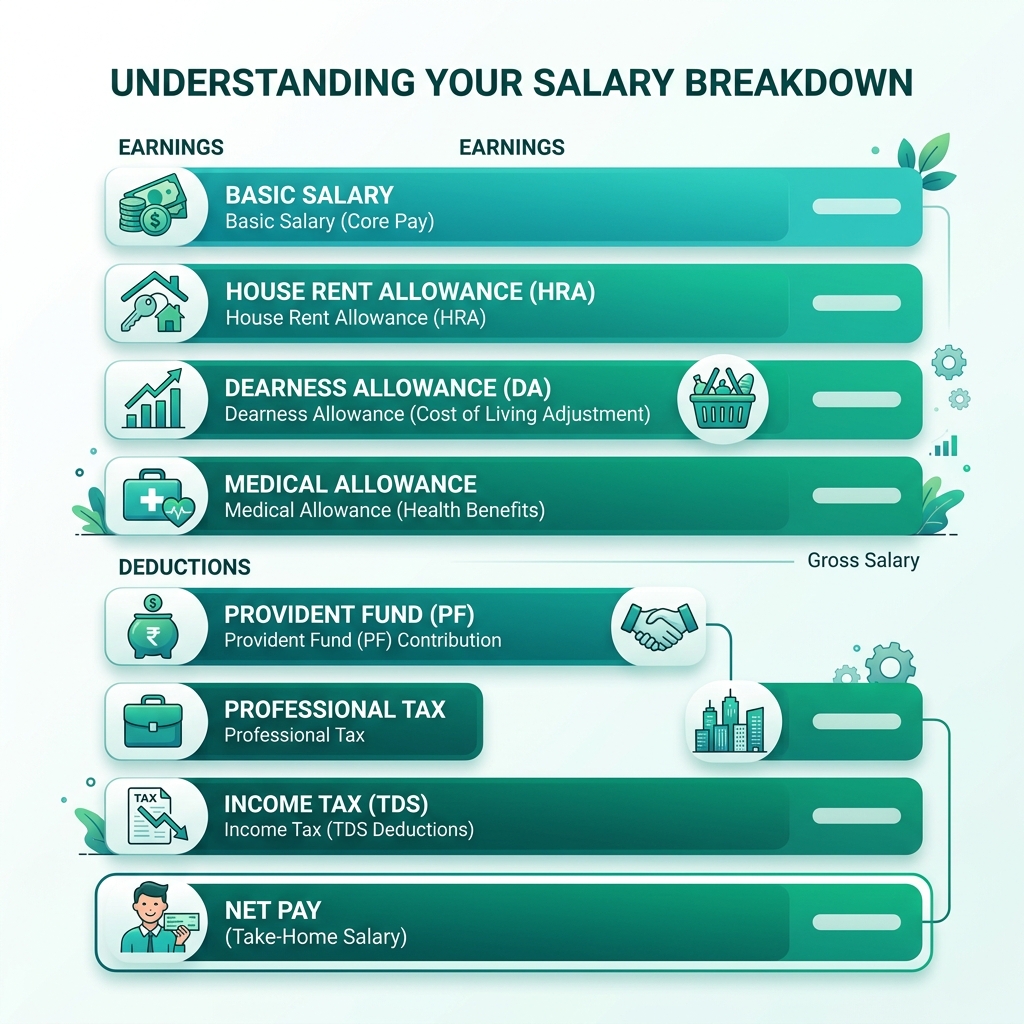
- Display Every Component Transparently on the Paystub:The paystub must separate Regular Taxable Hours, Overtime Taxable Hours, Non-Taxable Lodging, and Non-Taxable M&IE into distinct, clearly titled lines.
Chapter 4: The Master Excel Spreadsheet Blueprint for Travel Nurse Payroll
Because travel nurse staffing involves variable shift counts, floating GSA caps by county, and multiple deduction categories (medical benefits, state credentialing reimbursements, scrubs allowances), the most agile way to manage clinical payroll is a structured Microsoft Excel or Google Sheets master workbook.
Below is the comprehensive architectural blueprint for your agency's weekly payroll workbook:
| Col | Header Name | Data Type | Excel Formula or Value | Regulatory Purpose |
|---|---|---|---|---|
| A | Employee_ID | Text | RN-84920 | Unique clinician identifier for PDF password hashing |
| B | Nurse_Name | Text | Jessica Morales, BSN, RN | Paystub header display |
| C | Hospital_Facility | Text | St. Luke's Medical Center | Assignment location audit trail |
| D | Work_State | Text | CO | Non-resident state withholding determination |
| E | Tax_Home_Verified | Boolean | TRUE | Rev. Rul. 73-529 audit eligibility flag |
| F | Base_Hourly_Rate | Currency | $32.00 | Contracted taxable wage baseline |
| G | Reg_Hours | Decimal | 36.00 | Standard 3x12 weekly schedule |
| H | OT_Hours | Decimal | 8.00 | FLSA overtime hours (>40 hrs or daily state rule) |
| I | Hourly_Taxable_Gross | Currency | =(F2*G2)+(F2*1.5*H2) | Base wage plus statutory 1.5x overtime |
| J | GSA_Lodging_Cap | Currency | $1,190.00 | County GSA weekly maximum ($170/night × 7) |
| K | GSA_MIE_Cap | Currency | $518.00 | County GSA weekly meals maximum ($74/day × 7) |
| L | Actual_Lodging_Paid | Currency | $1,190.00 | Housing allowance disbursed for pay period |
| M | Actual_MIE_Paid | Currency | $518.00 | Meals allowance disbursed for pay period |
| N | NonTaxable_PerDiem | Currency | =IF(E2=TRUE, MIN(L2,J2)+MIN(M2,K2), 0) | Reimbursement excluded from W-2 Box 1 (Box 12 Code L) |
| O | Taxable_Stipend_Spillover | Currency | =IF(E2=TRUE, MAX(0,L2-J2)+MAX(0,M2-K2), L2+M2) | Overage or unverified stipend converted to gross wages |
| P | Adjusted_Taxable_Gross | Currency | =I2+O2 | Subject to statutory federal & state withholdings |
| Q | FICA_Social_Security | Currency | =ROUND(P2*0.062, 2) | 6.2% FICA on taxable earnings (up to statutory wage cap) |
| R | FICA_Medicare | Currency | =ROUND(P2*0.0145, 2) | 1.45% Medicare on all taxable earnings |
| S | Federal_Income_Tax | Currency | =$194.20 | IRS Pub 15-T bracket withholding on taxable gross |
| T | State_Income_Tax | Currency | =$68.45 | Assignment state withholding schedule |
| U | Net_Take_Home_Pay | Currency | =(P2-(Q2+R2+S2+T2))+N2 | Final disbursement sent via ACH / direct deposit |
| V | Password_DOB | Text | 14071991 | DDMMYYYY format for AES-256 PDF encryption in PayslipGen |
Notice how the formulas in Columns N and O protect your agency from regulatory non-compliance:
- If
Tax_Home_Verifiedin Column E is toggled toFALSE(e.g., the clinician failed to submit duplicate rent receipts), Column N automatically calculates $0.00 in non-taxable stipends. Column O immediately captures the full per diem amount as taxable gross wages, safeguarding the agency from IRS tax evasion penalties. - If a recruiter accidentally disburses $1,400 in lodging when the local GSA cap is $1,190, the
MAX(0, L2-J2)formula automatically sweeps the $210 overage into Column O as taxable compensation.
Chapter 5: 5-Year Cost Matrix: Enterprise Staffing SaaS vs. PayslipGen
Healthcare staffing agency founders and finance directors face an aggressive software tollbooth. Software vendors know that clinical compliance is complex, and they price their platforms to extract maximum recurring revenue:
- Bullhorn / TargetRecruit: $150 to $250 per recruiter seat per month, plus expensive back-office payroll integration modules ($5,000–$15,000 annual contracts).
- BlueSky Medical Staffing Software: $500 to $1,500 base fee per month, plus $5 to $10 per active travel nurse placement per month.
- QuickBooks Online Payroll Elite: $130/month base plus $10/employee per month, while completely failing to support custom travel nurse stipend line items without manual post-processing.
Let's evaluate the actual 5-year software expense for an independent healthcare staffing agency scaling from 25 to 100 travel clinicians on assignment:
| Agency Scale & Horizon | BlueSky Staffing Software ($750 base + $7/nurse) | Bullhorn Back-Office Bundle | PayslipGen Desktop License |
|---|---|---|---|
| Year 1 (25 Active Clinicians) | $11,100 / year | $14,400 / year | $49.00 (Total) |
| Year 3 (50 Active Clinicians) | $39,600 (3-yr cumulative) | $48,000 (3-yr cumulative) | $49.00 (Total) |
| Year 5 (100 Active Clinicians) | $87,000 (5-yr cumulative) | $102,000 (5-yr cumulative) | $49.00 (Total) |
| Per-Nurse Placement Penalty | Yes ($7.00/nurse/month) | Yes (Tiered usage tiers) | ZERO ($0.00 forever) |
Over a five-year period, an agency managing 50 to 100 travel clinicians forfeits between $87,000 and $102,000 in gross profit to cloud staffing platforms simply to generate PDF documents.
By decoupling payslip generation from recurring SaaS monopolies and bringing it locally into PayslipGen, that capital remains inside your agency—funding recruiter performance bonuses, sign-on allowances for specialty nurses, or higher contract bid competitiveness.
Chapter 6: Operational Workflow: From VMS Timesheets to Encrypted Nurse Paystubs
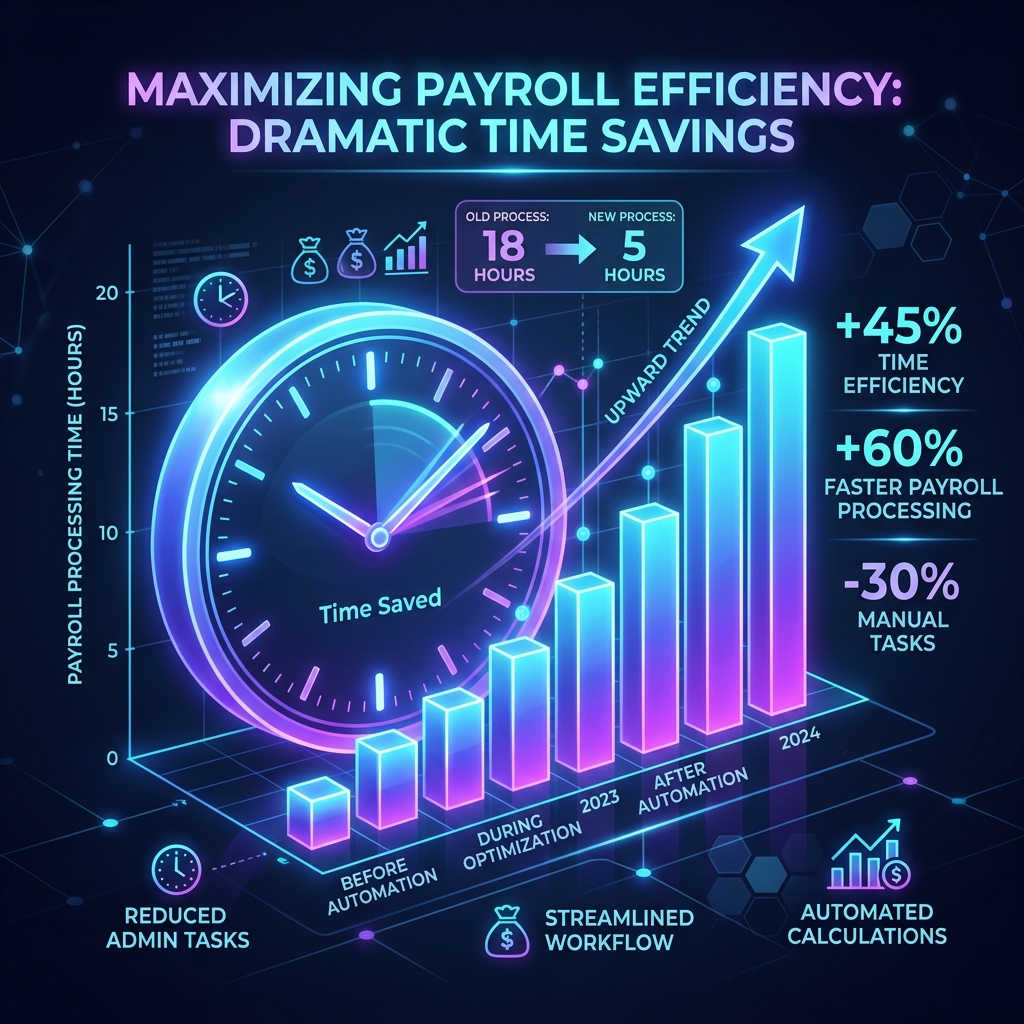
In high-volume healthcare staffing, payroll coordinators must process timesheets rapidly between Monday morning and Wednesday payroll funding. Here is the streamlined, 5-step operational workflow used by agencies operating with Excel and PayslipGen:
Step 1: Export Approved Timesheets from Vendor Management Systems (VMS)
Most travel nurse hours are tracked within client hospital VMS platforms like ShiftWise, Fieldglass, Wand, Medefis, or Qualivis. On Monday morning, the agency payroll coordinator downloads the approved weekly timesheet report as a CSV or Excel file.
Step 2: Paste Hours into the Agency Master Workbook
Copy the approved regular and overtime hours into Columns G and H of your master workbook. The pre-built formulas automatically calculate taxable base wages, compare stipend amounts to county GSA caps, verify tax home eligibility, and compute net disbursements.
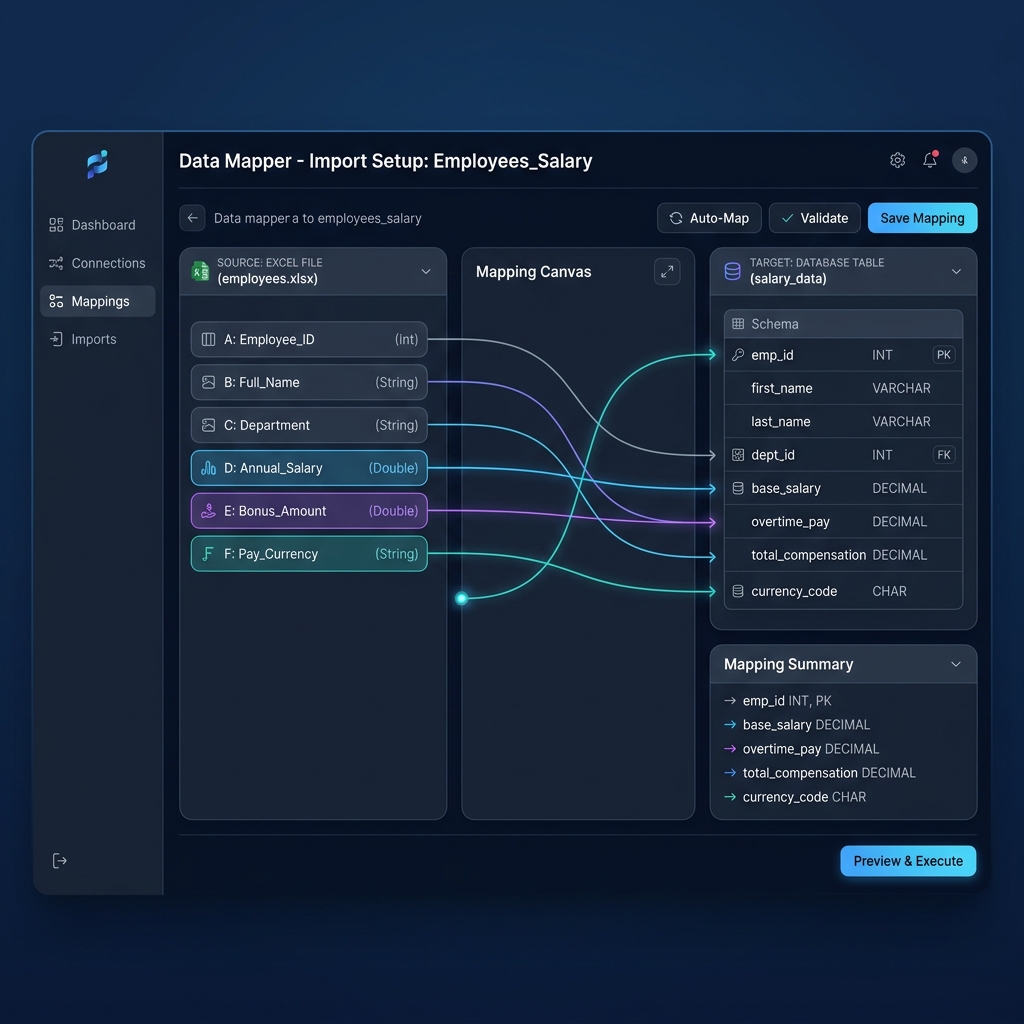
Step 3: Ingest Spreadsheet into PayslipGen with Saved Column Mapping
Open PayslipGen on your local Windows, macOS, or Linux workstation and drag the weekly payroll spreadsheet into the application:
- During your initial setup, map your spreadsheet columns (e.g.,
Nurse_Name,Hourly_Taxable_Gross,NonTaxable_PerDiem,FICA_Social_Security,Net_Take_Home_Pay). - PayslipGen saves this column profile permanently. For every subsequent payroll cycle, the application recognizes your headers instantly—requiring zero re-configuration.
Step 4: Apply Bank-Grade AES-256 PDF Encryption
Travel nurse paystubs contain sensitive Protected Health Information (PHI) identifiers, Social Security Numbers, banking direct deposit details, and home addresses. Sending unencrypted PDFs over email violates enterprise security standards and client hospital vendor agreements.
In PayslipGen, enable password protection and select your Password_DOB or Employee_IDcolumn. PayslipGen compiles each payslip into a separate, 256-bit AES encrypted PDF document that cannot be opened without the clinician's personal security credential.
Step 5: Automated SMTP Dispatch or Batch Archive
With a single click on "Generate & Dispatch," PayslipGen's local turbo rendering engine compiles 100 personalized, high-resolution vector PDF paystubs in under 5 seconds:
- Local Export: The PDFs are organized automatically into structured client or pay period folders (e.g.,
/Payroll_2026/Week_36/Paystubs/). - Direct Email Dispatch: Using your agency's private SMTP server or Amazon SES credentials, PayslipGen delivers encrypted payslips directly to each clinician's inbox under your verified corporate branding.
Frequently Asked Questions (FAQs)
Is the "50-mile rule" an actual IRS regulation for travel nurse stipends?
No. The "50-mile rule" is an internal hospital policy and staffing industry myth; it appears nowhere in the Internal Revenue Code. The true legal benchmark established by the Supreme Court in United States v. Correllis the "sleep or rest rule." The assignment must be far enough from the clinician's tax home that it is unreasonable for them to commute daily, requiring them to sleep away from home to perform their duties. Furthermore, the clinician must incur real duplicate living expenses under Rev. Rul. 73-529.
If a travel nurse works 48 hours instead of 36, can we increase their per diem stipend for that week?
Absolutely not. Following the 9th Circuit's ruling in Clarke v. AMN Services, LLC, increasing a travel nurse's per diem stipend because they worked extra hours—or paying "extra per diem hours"—proves that the stipend is disguised hourly wages rather than a fixed travel reimbursement. Doing so obligates your agency to include the entire weekly stipend in the clinician's regular rate of pay, exposing you to massive retroactive overtime liabilities and liquidated damages under the FLSA.
How should non-taxable travel nurse stipends be reported on Form W-2 at year-end?
Compliant per diem reimbursements paid under an Accountable Plan that do not exceed GSA caps are completely excluded from Box 1 (Wages, tips, other compensation), Box 3 (Social Security wages), and Box 5 (Medicare wages). At year-end, the agency reports the total non-taxable per diem amount in Box 12 using Code L (Substantiated employee business expense reimbursements). Any stipend amount that exceeded the GSA cap must be rolled into Box 1, 3, and 5 as taxable compensation.
What documentation must our staffing agency maintain to substantiate our Accountable Plan?
During an IRS or DOL payroll audit, your agency must produce: (1) A signed annual Tax Home Certification form from each clinician verifying adherence to Rev. Rul. 73-529; (2) Proof of duplicate monetary expenses, such as a primary residence lease or mortgage statement alongside an assignment lease or lodging receipt; (3) A signed travel assignment confirmation documenting hospital location and shift schedule; and (4) Itemized weekly paystubs demonstrating clean separation between taxable wages and non-taxable per diems.
How do we handle state income tax withholding when a nurse works in multiple states?
Travel nurses are generally subject to non-resident state income tax in the state where physical clinical services are rendered (the assignment state), as well as resident state income tax in their permanent tax home state. In your master Excel payroll sheet, configure state tax withholding formulas based on the assignment state's non-resident withholding tables. Most tax home states provide a tax credit on the clinician's home tax return for taxes paid to other states.
Can PayslipGen password-protect individual nurse paystubs before they are emailed?
Yes. PayslipGen includes built-in AES-256 PDF encryption. You can designate any spreadsheet column (such as the nurse's Date of Birth in DDMMYYYY format, the last 4 digits of their SSN, or their unique Employee ID) as the decryption key. When the payslip is generated or emailed, the clinician must enter their secure personal password to unlock and view the PDF.
Generate Compliant Healthcare Staffing Paystubs Without Monthly SaaS Tolls
Generate unlimited, branded, password-protected PDF paystubs for all your travel nurses and allied clinicians directly from Excel. One-time payment of $49, lifetime access, zero monthly subscriptions.
Get PayslipGen for $49 (Lifetime Access)Conclusion: Protect Agency Margins and Clinical Trust with Sovereign Payroll
Clinical staffing agencies operate in a high-stakes environment where nurse trust and regulatory precision dictate survival. A single class-action lawsuit under Clarke v. AMN Services or an IRS audit under IRC § 62 can wipe out years of hard-won agency profits.
By mastering the mechanics of GSA per diem caps, enforcing Accountable Plan substantiation, and executing transparent payroll via an optimized Excel master workbook, your agency maintains absolute compliance and mathematical integrity.
Pairing your spreadsheets with PayslipGen eliminates thousands in recurring cloud software overhead, protects sensitive clinical PII with local air-gapped security, and delivers institution-grade, encrypted paystubs in seconds.
(Looking to streamline other specialized payroll scenarios? Explore our comprehensive operational guides on Hourly Employee Paystubs with Overtime, S-Corp Owner Reasonable Salary Paystubs, or Bulk Payslip Generation for Multi-Entity Bookkeepers.)