
Tattoo Artist Paystub Generator: How Studios Balance Booth Rental Fees, 50/50 Commission Splits & Tip Pass-Throughs in Excel
Key Takeaways
- ✓The Two Studio Business Models: Tattoo and body piercing studios operate under two distinct financial frameworks: the Booth Rental Model (where the artist leases space for a flat weekly fee and keeps 100% of revenue) and the Commission Split Model (where revenue is divided 50/50, 60/40, or 70/30 between artist and studio).
- ✓IRS Classification & State ABC Tests: True booth renters are independent contractors reported on Form 1099-NEC. However, enforcing mandatory working hours, dictating retail prices, or controlling artist booking books can trigger reclassification as W-2 statutory employees under IRS common-law guidelines and state ABC rules.
- ✓Itemized Supply & Merchant Deductions: Transparent settlements require detailed itemization of consumable supply charges (sterile needle cartridges, inks, barrier film, autoclave spore tests) and merchant credit card processing fees (2.75%–3.5%) before passing through credit card tips under IRC § 6053.
- ✓Air-Gapped Studio Financial Privacy: Tattoo studio owners frequently handle significant cash transactions and confidential client records. By using PayslipGen, shop managers generate password-protected PDF commission settlement vouchers locally from Excel for a one-time $49 fee, completely bypassing $60–$150/month cloud SaaS subscriptions.
On Sunday night in a busy tattoo parlor, the hum of rotary machines falls silent, the autoclave completes its final sterilization cycle, and the studio owner sits down with the weekly register tape. In this creative and fiercely independent industry, the financial reconciliation between studio and artist is one of the most sensitive operational tasks in personal services.
Tattoo artists are master craftspeople. Whether executing custom full-sleeve realism, delicate fine-line florals, or traditional flash, their relationship with the studio is built on mathematical trust. Every week, studios must reconcile thousands of dollars in client cash and credit card payments, allocate agreed commission splits, deduct consumable supply charges, account for merchant processing fees, and disburse credit card tips without shortchanging either party.
Yet many studios still rely on handwritten envelopes, illegible dry-erase boards, or fragmented spreadsheets. When miscalculations occur, or when credit card processing fees are arbitrarily subtracted without itemization, artist trust evaporates, leading to bitter shop walkouts and audit scrutiny from state labor departments and the IRS.
Try Our Interactive Demo Instantly
Want to see how an offline-capable, client-side payslip generator works in practice? Try our brand-new interactive demo right in your browser. Upload a sample CSV, map your columns, and generate beautifully designed PDF payslips—with zero data ever being transmitted to our servers.
Launch Free Demo NowChapter 1: The Studio Economy: Booth Rental vs. Commission Split Models
Across the tattoo, piercing, and body modification industry, studios structure their compensation around two core business architectures:
1. The Booth Rental (Chair Lease) Model
Under the pure booth rental model, the studio owner acts primarily as a commercial landlord. The tattoo artist leases an individual station, chair, or private booth for a fixed weekly or monthly rental fee (typically $250 to $600 per week, depending on studio foot traffic, city location, and studio prestige).
- Revenue Retention: The artist collects 100% of the gross tattoo fee directly from the client.
- Pricing & Autonomy: The artist sets their own hourly rates, books their own appointments, controls their own calendar, and supplies their own machines, needles, inks, and personal PPE.
- Studio Obligations: The studio provides the physical facility, utility services, biomedical waste disposal contracts, waiting area, and local health department station compliance.
2. The Commission Split Model
In the commission split framework, all client payments flow directly through the studio's central point-of-sale (POS) terminal (Square, Clover, or Stripe). At the end of the pay cycle (weekly or bi-weekly), total gross billings are divided according to an agreed ratio:
- The Standard 50/50 Split: The traditional industry baseline. The artist receives 50% of gross service fees; the studio retains 50% to cover marketing, shop rent, front-desk counter staff, cleaning, and general supplies.
- The 60/40 or 70/30 Senior Artist Split: Experienced resident artists with massive client followings command 60% to 70% of gross fees, while the studio retains 30% to 40%.
- The Apprentice Split (30/70 or 40/60): Early-career apprentices receive 30% to 40% while learning the craft under direct mentorship, with the shop retaining the balance to offset instruction time and shop overhead.
| Operating Attribute | Independent Booth Renter | Commission Split Artist |
|---|---|---|
| Financial Obligation | Fixed rent ($350–$550/wk) regardless of bookings | Percentage cut (50%–70%) of completed tattoos |
| Tax Reporting Form | Form 1099-MISC (Box 1 Rent Paid) / Direct 1099-NEC | Form 1099-NEC (Box 1) or Form W-2 |
| Client Payment Flow | Client pays artist directly via artist's personal card reader | Client pays central studio POS register |
| Consumable Supplies | Artist purchases all needles, inks, and barriers independently | Shop provides supplies or deducts itemized supply fees |
| Schedule Flexibility | 100% autonomous hours and calendar control | Assigned floor days, walk-in shifts, and shop hours |
Chapter 2: Worker Classification & The Legal Hazards of Reclassification
In personal care and body art studios, the misclassification of tattoo artists as independent contractors (1099) when they function as employees (W-2) is one of the highest enforcement priorities for state labor commissioners.
The Common Law Behavioral Control Test
Under IRS common law guidelines, if a studio owner exercises substantial control over how, when, and where the artist works, the artist is legally an employee. Critical warning signs of misclassification include:
- Mandated Shift Schedules: Requiring the artist to be present in the studio Tuesday through Saturday from 11:00 AM to 8:00 PM, regardless of whether they have booked appointments.
- Price Fixing: Prohibiting the artist from negotiating custom piece rates or discounting their own hourly rates.
- Exclusivity & Non-Competes: Forbidding the artist from tattooing at guest conventions, other studios, or private studio spaces.
- Mandatory Dress Codes or Counter Duties: Requiring artists to answer general shop phones, sweep public lobby areas, or manage front-desk merchandise sales without separate hourly compensation.
State Alert: The ABC Test & Personal Services Exemptions
In states enforcing the strict "ABC Test" (such as California under AB 5 / Labor Code § 2750.3 and New Jersey), Prong B requires that the worker perform tasks outside the usual course of the hiring entity's business. While cosmetologists, barbers, and estheticians secured narrow statutory exemptions with specific criteria, tattoo artists in several jurisdictions must strictly operate as separate business entities (with their own municipal business tax certificate, separate client contracts, and independent card processing) to maintain 1099 status.
Chapter 3: Dissecting Deductions: Supplies, Merchant Fees & Tip Pass-Throughs
When running a commission split settlement, clarity in operational deductions prevents disputes between artists and shop owners. Three specific deductions must be handled with precision:
1. Consumable Medical & Disposable Supply Fees
Tattooing requires an enormous volume of single-use, sterile consumables to satisfy OSHA bloodborne pathogen standards and county public health codes:
- Sterile disposable needle cartridges (liners, shaders, magnums).
- Organic or vegan inks, dynamic black outline pigments, and distilled witch hazel mixing washes.
- Barrier protection film, clip cord sleeves, machine bags, and dental bib covers.
- Green soap, skin prep alcohol, stencil transfer paper, and stencil primer lotion.
- Nitrile examination gloves, disposable razors, and biohazard sharps container disposal fees.
Studios typically handle supply costs in one of three ways: (a) charging a flat supply fee per tattoo (e.g., $10 per setup), (b) deducting an agreed percentage (e.g., 3% to 5% of gross billings), or (c) requiring the artist to purchase bulk boxes directly from medical supply distributors.
2. Merchant Credit Card Processing Offsets
When a client pays $800 for a 4-hour tattoo using a credit card on the studio's Square terminal, the credit card processor deducts an interchange fee (typically 2.6% to 3.5% plus $0.10 to $0.15 per transaction).
If the studio absorbs 100% of the processing fee on an artist's 60% commission split, the studio's net margin is unfairly eroded. Conversely, deducting the processing fee from the artist's cut must be mathematically equitable. The compliant standard is to deduct only the artist's proportionate share of the merchant fee, or deduct the exact merchant fee assessed on the gross ticket before splitting the net proceeds.
3. Tip Pass-Throughs & IRC Section 6053 Compliance
Gratuities given by satisfied clients represent the sole property of the tattoo artist. Under Internal Revenue Code Section 6053 and the federal Fair Labor Standards Act:
- Zero Studio Retention: Studio owners, managers, and counter staff cannot retain or take a "house cut" of artist tips.
- Credit Card Tip Pass-Through: When a client adds a $150 credit card tip at the POS terminal, that entire $150 must be passed through to the artist on their weekly settlement sheet (minus only the actual credit card processing interchange fee attributable to the tip, typically 2.6%).
- Cash Tips: Cash tips handed directly to the artist are not processed through shop registers, though artists must maintain personal tip logs for annual IRS Form 4070 reporting.
Chapter 4: Master Excel Tattoo Settlement Blueprint (With Real Formulas)
To ensure full transparency between studio ownership and resident artists, weekly earnings should be tracked in a structured spreadsheet workbook.
Below is the exact production architecture for a senior tattoo artist operating on a 60/40 commission split, itemizing gross client tickets, consumable supply deductions, card fees, and tip disbursements:
| Line # | Settlement Component | Weekly Transaction Detail | Weekly Values | Excel Formula Specification |
|---|---|---|---|---|
| 01 | Gross Client Billings | Custom Full-Sleeve Realism Appointments | 18.5 billable hrs @ $180.00/hr | =B10*C10 ($3,330.00) |
| 02 | Gross Client Billings | Walk-in Flash Tattoos (4 pieces) | Fixed piece rates ($150, $200, $220, $180) | =SUM(C11:C14) ($750.00) |
| 03 | TOTAL GROSS SERVICE FEES | Total Tattoo Revenues Produced | $4,080.00 | =E1+E2 |
| 04 | Artist Commission Split | Senior Resident Artist Cut (60.0%) | Contractual split rate | =E3*0.60 ($2,448.00) |
| 05 | Studio Retained Share | Shop Overhead & Counter Cut (40.0%) | Studio retained revenue | =E3*0.40 ($1,632.00) |
| 06 | Studio Deduction | Consumable Setup Fees (8 client setups) | 8 setups @ $12.00/setup | -$96.00 |
| 07 | Studio Deduction | Merchant Card Processing Offset | 2.8% on $3,200 card volume × 60% | -$53.76 |
| 08 | Tip Pass-Through | Shop POS Credit Card Tips Collected | 100% Artist pass-through | $580.00 |
| 09 | NET ARTIST PAYOUT | Weekly Check or Bank ACH Transfer | $2,878.24 | =E4+E6+E7+E8 |
Studio Multi-Artist Weekly Settlement Roster
In a thriving body art collective, individual artists operate under varying business agreements:
| Artist Name | Agreement Type | Gross Revenue | Shop Share / Rent | Supply / Card Fees | Card Tips | Net Disbursement |
|---|---|---|---|---|---|---|
| Damian Cross | Senior Resident (60/40) | $4,080.00 | -$1,632.00 | -$149.76 | +$580.00 | $2,878.24 |
| Katja Thorne | Guest Artist (70/30) | $3,600.00 | -$1,080.00 | -$112.00 | +$440.00 | $2,848.00 |
| Leo Montoya | Booth Renter (Flat Rent) | $3,200.00 | -$450.00 | -$35.00 | +$0.00 (Self) | $2,715.00 |
| Sora Chen | Apprentice Artist (40/60) | $1,450.00 | -$870.00 | -$48.00 | +$210.00 | $742.00 |
| STUDIO TOTALS | $12,330.00 | -$4,032.00 | -$344.76 | +$1,230.00 | $9,183.24 | |
Chapter 5: Why Tattoo Studios Need Offline Desktop Software
Tattoo studio owners frequently discover that mainstream cloud payroll systems are completely unsuited to the personal services industry:
1. Rigid Cloud Payroll Platforms Fail at Studio Math
Platforms like Gusto, ADP, or QuickBooks Online are built around corporate W-2 salaried employees or generic hourly workers. They do not have built-in concepts for weekly chair booth rent offsets, split percentages that vary by artist seniority, medical supply deductions, or credit card tip pass-throughs. Forcing studio math into generic cloud forms requires cumbersome manual journal entries every week.
2. Complete Cash Flow & Financial Privacy
The tattoo industry is privacy-centric. Studios handle substantial cash transactions, proprietary guest artist percentages, and artist Social Security Numbers. Uploading artist settlement records to multi-tenant cloud servers creates unnecessary third-party data tracking.
With PayslipGen, all calculation logic and PDF generation happens 100% locally on your computer (Mac or Windows). No financial data ever leaves your studio desk.
3. Zero Monthly SaaS Subscription Bleed
Booking and payroll SaaS providers (such as Square Payroll, Vagaro, or Boulevard) charge $40 to $120 every single month, plus $6 to $12 per artist per month. For an 8-artist studio, that amounts to over $1,800 every year in recurring software tolls. PayslipGen costs a single one-time payment of $49 for lifetime access with unlimited artists.
Chapter 6: 5-Year Financial Analysis: $49 Lifetime vs. Cloud SaaS Subscriptions
Let's compare the 5-year operating costs of running weekly settlements for a 6-artist tattoo parlor:
| Cost Component | Square Payroll / Vagaro | Gusto Cloud Payroll | PayslipGen (One-Time Desktop License) |
|---|---|---|---|
| Monthly Software Base Fee | $35.00 / mo ($420/yr) | $40.00 / mo ($480/yr) | $0.00 (Forever) |
| Per-Artist Monthly Seat Fee | $6.00 / artist / mo ($432/yr) | $6.00 / artist / mo ($432/yr) | $0.00 (Unlimited artists) |
| Booth Rent & Split Modeling | Requires complex workarounds | Not supported natively | Native Excel Formula Flexibility |
| Offline Operation & Privacy | Cloud Only (Data tracked) | Cloud Only | 100% Air-Gapped Local Desktop |
| Year 1 Net Cost | $852.00 | $912.00 | $49.00 total |
| Year 3 Cumulative Cost | $2,556.00 | $2,736.00 | $49.00 total |
| Year 5 Cumulative Cost | $4,260.00 | $4,560.00 | $49.00 (Lifetime) |
Over 5 years, using PayslipGen saves a tattoo shop owner between $4,200 and $4,500 in unnecessary subscription drain—funds far better invested in a top-of-the-line autoclave or guest artist travel stipends.
Chapter 7: Step-by-Step Workflow: Excel to Artist Paystubs in PayslipGen
Generating transparent, professional PDF settlement vouchers for your resident and guest artists takes under two minutes:
Step 1: Enter Weekly Billings in Your Studio Spreadsheet
In Excel or Google Sheets, input each artist's weekly service revenue, contractual split percentage, consumable setup fees, card processing deductions, and credit card tip totals.
Step 2: Configure Your Studio Profile in PayslipGen
Open PayslipGen on your front-desk laptop. Enter your studio's legal name (e.g., Obsidian Needle Tattoo Collective), municipal address, business license number, and shop logo.
Step 3: Drag and Drop Your Weekly Sheet
Drag your .xlsx or .csv settlement file into PayslipGen. The desktop application parses all rows instantly without uploading data to the internet.
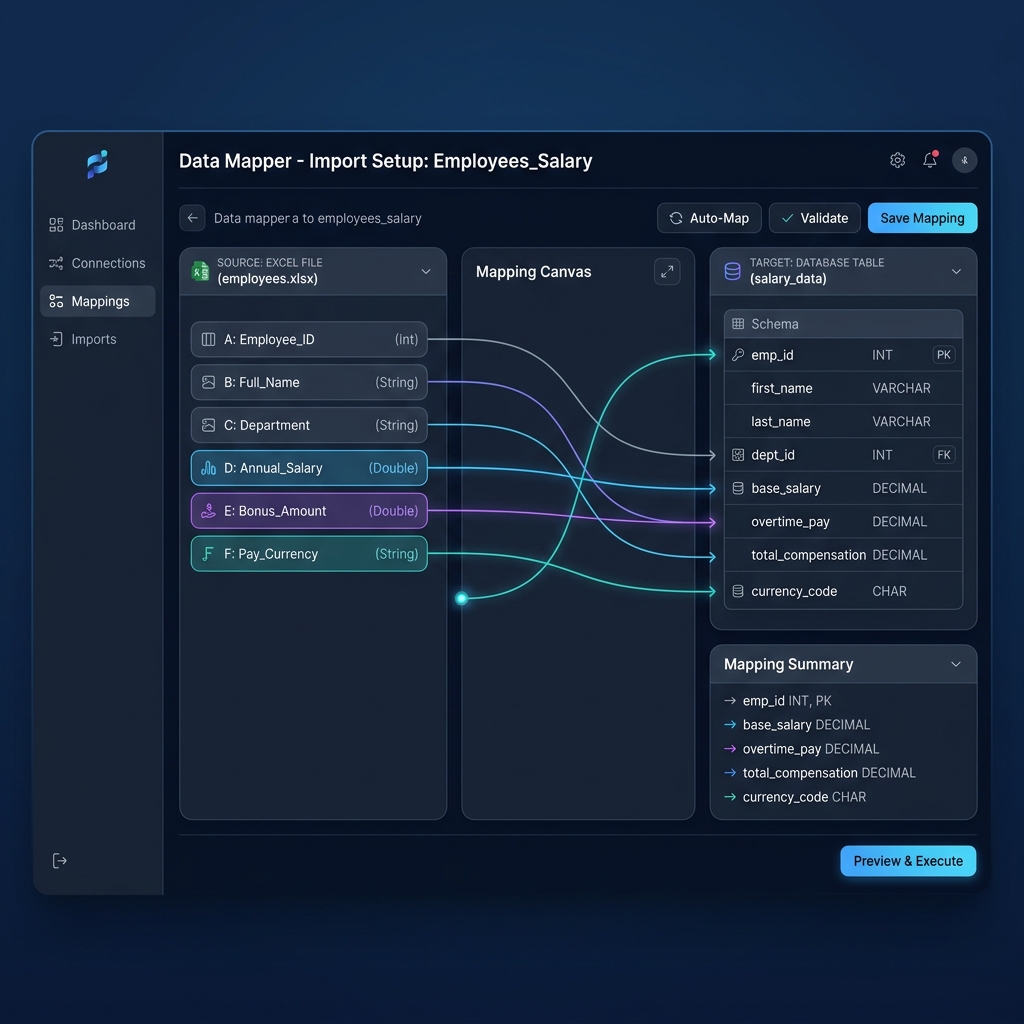
Step 4: Confirm Column Mappings
Match your spreadsheet headers to PayslipGen's itemized line items:
Gross_Tattoo_Revenue→ Gross EarningsArtist_Commission_Cut→ Base PaySupply_Deduction→ Other Deduction 1Card_Fee_Offset→ Other Deduction 2Credit_Card_Tips→ Tips / Bonus PayNet_Disbursement→ Net Pay
Step 5: Export Password-Protected Settlement Statements
Assign individual passwords (such as each artist's 4-digit PIN or Date of Birth) and click "Generate Payslips". PayslipGen compiles beautiful, high-resolution PDF settlement sheets ready to print or email directly to your artists with complete privacy.
Frequently Asked Questions (FAQs)
How do I handle guest artists visiting my studio for a short guest spot?
Guest artists typically operate on a temporary commission split (commonly 70/30 in favor of the visiting artist) or pay a flat daily booth fee. Because they are temporary independent professionals, their compensation should be itemized on a dedicated settlement voucher showing gross pieces completed, studio cut, and net earnings, reported at year-end on Form 1099-NEC if earnings exceed $600.
Is it legal to deduct credit card processing fees from tattoo artist commissions?
Yes, provided the deduction is explicitly stipulated in the written studio-artist independent contractor agreement. However, studios may only deduct the actual transaction fee charged by the merchant processor (typically 2.6% to 3.5%) attributable to that artist's transaction. Deducting inflated administrative fees or taking a cut of tips beyond direct processing costs violates state labor laws.
Can a tattoo studio withhold cash tips from an artist?
No. Under federal labor law and the Fair Labor Standards Act, tips are the absolute property of the service provider. A studio owner or front-desk manager may never retain any portion of an artist's tips. When credit card tips are collected through the shop POS, the full amount (minus only the direct card processing fee) must be remitted to the artist on their weekly settlement.
What tax form should be issued to booth renters versus commission artists?
Independent booth renters who pay flat rent and collect fees directly from clients are independent businesses; the studio issues a rent receipt or reports rental income received. Commission artists who are paid by the studio as independent contractors receive Form 1099-NEC (Box 1) for non-employee compensation. If the studio exercises behavioral control and classifies them as employees, they receive Form W-2 with standard payroll tax withholding.
Does PayslipGen support custom branding with my tattoo shop logo?
Yes. PayslipGen allows you to upload high-resolution studio logos, configure custom color palettes matching your brand aesthetic, and insert customized disclosure notes and acknowledgment signature lines at the bottom of every settlement voucher.
Master Studio Settlements Without Monthly Software Fees
Generate clean, transparent tattoo artist settlement sheets directly from Excel. 100% offline, private local data, one-time payment of $49 for lifetime access.
Get PayslipGen for $49 (Lifetime Access)Conclusion: Build Artist Loyalty with Financial Transparency
A tattoo studio thrives on artistic talent, mutual respect, and absolute financial integrity. Artists who receive clear, itemized weekly settlement sheets detailing their gross revenues, commission cuts, supply deductions, and tip pass-throughs remain loyal to your shop for years.
By pairing an organized Excel spreadsheet with PayslipGen, studio owners eliminate Sunday night calculation headaches, ensure strict tax compliance, protect their financial privacy, and keep thousands of dollars in software subscription fees in their own pockets.
(Looking to streamline other personal service or contractor workflows? Check out our guides on 1099 Freelancer Paystub Generation, Restaurant Tip Payroll Management, or how to Manage Multiple Company Payrolls in Bulk.)