
Restaurant Payroll & Payslip Generator: How to Format Tip Pools, Hourly Wages, and Meal Deductions
Key Takeaways
- ✓Restaurant payroll is inherently complex due to dual-rate roles (FOH vs BOH), credit card tip payouts, tip pooling formulas, and FLSA Section 3(m) tip credit regulations.
- ✓Vague or lumped payslips trigger Department of Labor wage audits, costly FLSA lawsuits, and employee tip-dispute churn.
- ✓Exporting shift reports from POS systems (Toast, Square, 7shifts) into a structured master Excel sheet allows instant translation into itemized, transparent pay stubs.
- ✓PayslipGen eliminates per-seat SaaS subscription penalties ($8–$12/employee/month on high-turnover staff) with a one-time $49 desktop automator.
Managing payroll in the restaurant and hospitality industry is widely recognized as one of the most punishing operational challenges in business. While a standard corporate office calculates predictable 40-hour salaried compensation, a restaurant manager juggles a chaotic matrix of Front of House (FOH) servers, bartenders, bussers, Back of House (BOH) line cooks, dishwashers, fluctuating shift lengths, split shifts, cash tip declarations, credit card gratuity distributions, tip pool points, meal credit deductions, and uniform allowances.
Under the United States Fair Labor Standards Act (FLSA), state labor boards, and European hospitality directives, tipped employee compensation is subject to relentless legal scrutiny. If your payslips fail to clearly distinguish between base cash wages, claimed tip credits, distributed tip pools, and voluntary meal deductions, your establishment is exposed to severe wage-and-hour lawsuits, back-tax assessments, and toxic staff friction.
In this practical guide, we will break down the regulatory rules of restaurant payroll, provide optimal payslip formatting frameworks for tipped staff, demonstrate how to import data from modern Point-of-Sale (POS) systems like Toast, Square, and 7shifts, and show you how to generate bulk, password-protected PDF payslips in seconds using PayslipGen—all without bleeding money to per-employee monthly cloud SaaS subscriptions.
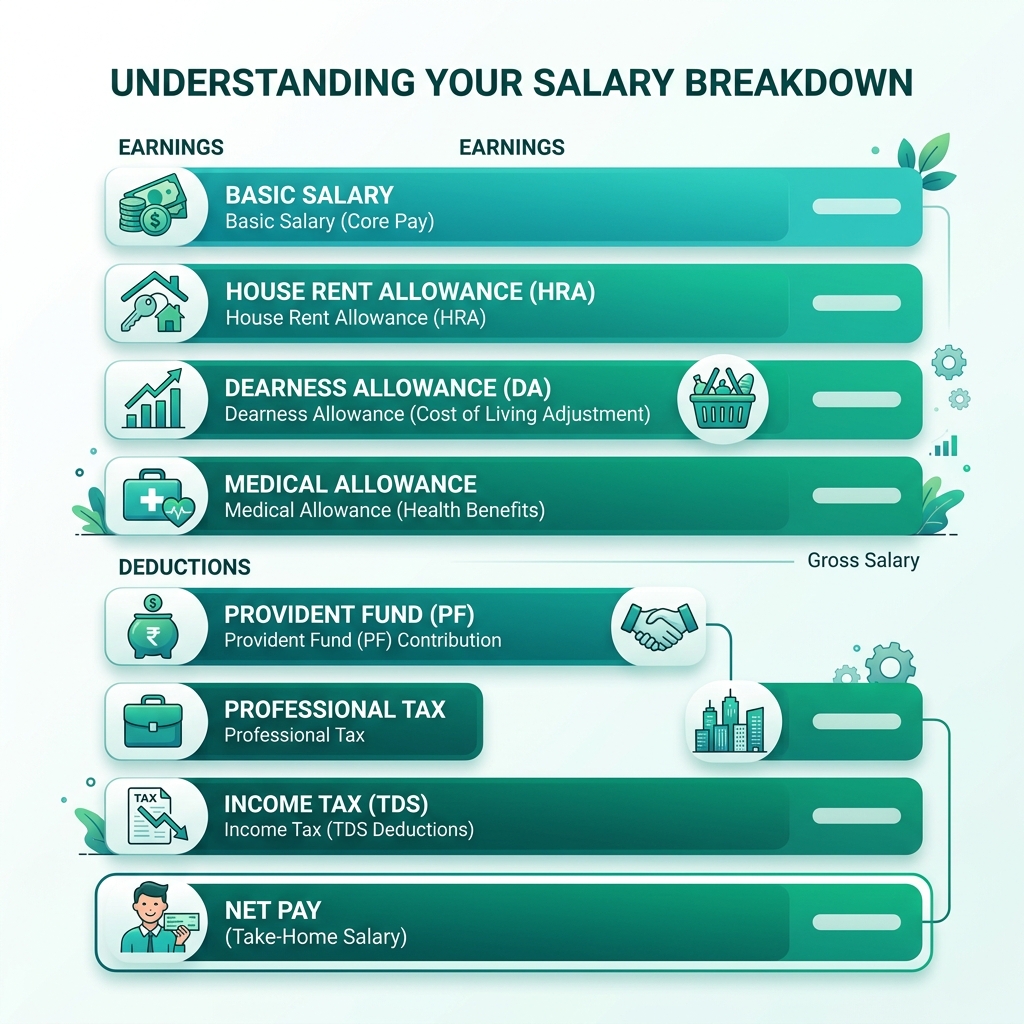
Try Our Interactive Demo Instantly
Want to see how an offline-capable, client-side payslip generator works in practice? Try our brand-new interactive demo right in your browser. Upload a sample CSV, map your columns, and generate beautifully designed PDF payslips—with zero data ever being transmitted to our servers.
Launch Free Demo NowChapter 1: The Unique Complexities of Hospitality Compensation
Why can't restaurant operators simply use generic payroll templates? The answer lies in the multifaceted nature of restaurant earnings and deductions.
1. Front of House (FOH) vs. Back of House (BOH) Wage Structures
In most food service establishments, staff fall into two distinct compensation categories:
- Front of House (FOH): Servers, bartenders, barbacks, and runners typically earn a lower direct cash wage (often utilizing a legal "tip credit") supplemented heavily by direct customer gratuities and pooled tips.
- Back of House (BOH): Line cooks, sous chefs, prep cooks, and dishwashers typically earn direct hourly wages (e.g. $16 to $24/hr) or fixed weekly salaries, often without participating in traditional tip pools (depending on state labor laws).
2. Dual-Role Shifts and Blended Rates
It is exceedingly common for a team member to work as a server on Friday evening ($2.13/hr direct cash wage + tips in FLSA states) and then work as a prep cook or shift manager on Sunday morning ($18.00/hr flat wage). A legally compliant payslip must clearly itemize the separate hours worked at each individual wage rate rather than lumping them into an incomprehensible average.
3. Cash Tips vs. Credit Card Gratuities
When customers pay via credit card, tips are processed electronically through the POS system. Management must either pay these out in cash at the end of the shift or include them on the bi-weekly paycheck. Regardless of payout timing, both declared cash tips and electronic credit card tips must be reported on the payslip to ensure proper FICA (Social Security & Medicare) and income tax withholding.
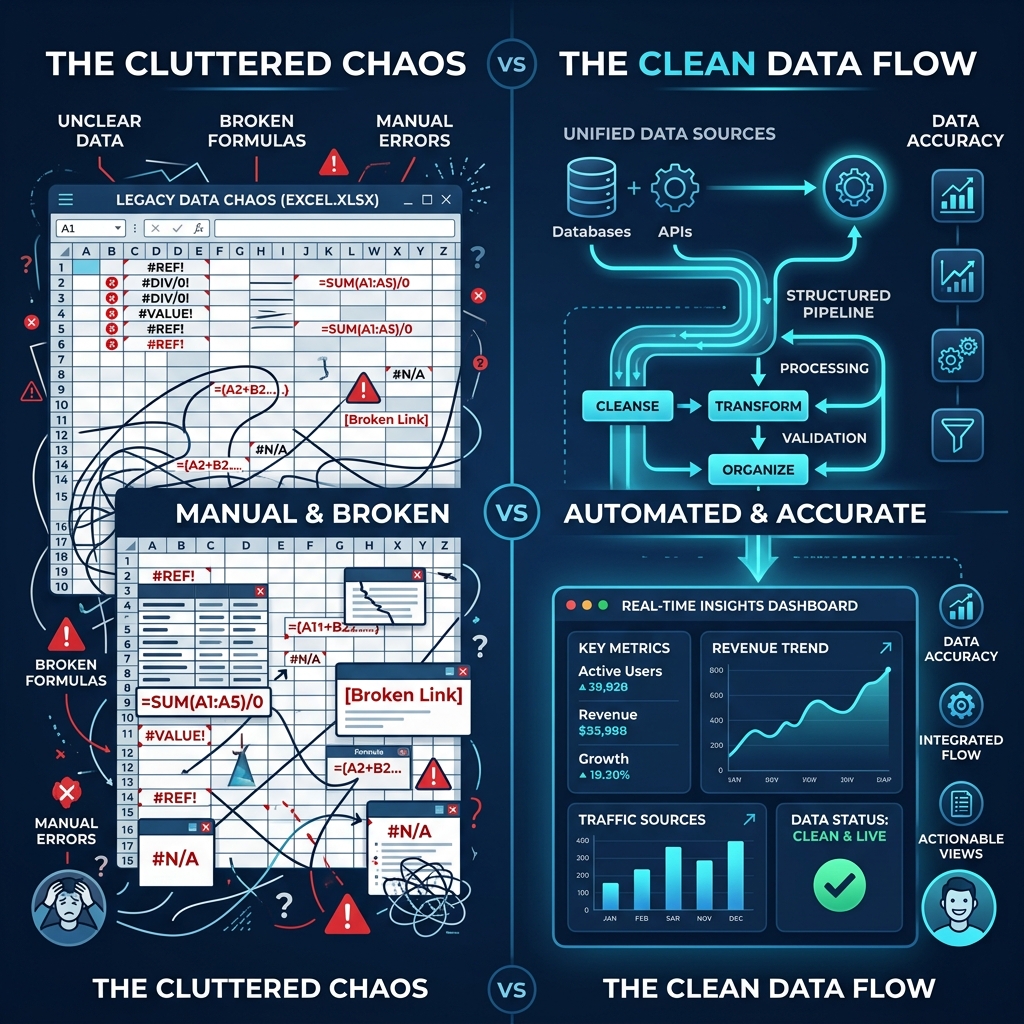
Chapter 2: The Regulatory Framework - FLSA 3(m) Tip Credits and Pooling Rules
Compliance failures in restaurant payroll carry devastating financial consequences. Understanding the core legal mechanisms protects your business from punitive audits.
1. Understanding the FLSA Section 3(m) Tip Credit
Under Federal law, the federal minimum wage is $7.25 per hour. Under FLSA Section 3(m), employers of tipped employees may pay a direct cash wage of as little as $2.13 per hour, claiming a "tip credit" of up to $5.12 per hour, provided that the employee’s direct wage plus tips equals at least $7.25 per hour.
The Make-Up Pay Rule: If an employee’s tips combined with their direct wage fail to equal minimum wage over the workweek, the employer is legally obligated to fund the difference ("tip make-up pay") on that pay period's payslip.
Note: Many states (including California, Oregon, Washington, Minnesota, Montana, Nevada, and Alaska) have eliminated the tip credit entirely, requiring employers to pay the full state minimum wage before any tips.
2. FLSA Tip Pooling Regulations
Under the Department of Labor (DOL) 2020/2021 Final Rules:
- Traditional Tip Pools: If an employer claims a tip credit, tip pools may only include employees who customarily and regularly receive tips (FOH servers, bartenders, bussers). Managers, supervisors, and BOH kitchen staff cannot participate.
- Nontraditional Tip Pools: If an employer pays all employees the full minimum wage without claiming any tip credit, the tip pool may be shared with BOH staff (dishwashers and cooks). However, managers and supervisors are strictly prohibited from receiving any tip pool funds under any circumstances.
The Importance of Line-Item Tip Pool Transparency
Lumping tips into a single unexplained "Bonus" or "Gross Pay" number breeds employee distrust and invites Department of Labor audits. Displaying exact "Shift Gratuities", "Tip Pool Contribution (-)", and "Tip Pool Received (+)" on the payslip creates complete auditability.
Chapter 3: Meal Credits, Uniform Allowances & Common Deductions
In addition to earnings, food service operations feature industry-specific deductions that must be handled with care.
1. Meal Credits and Meal Deductions
Many restaurants provide shift meals to staff. This can be handled in two ways:
- Voluntary Pre-Tax/Post-Tax Meal Deduction: An agreed-upon daily amount (e.g. $4.50 per shift) deducted from net wages to cover meal costs.
- FLSA Meal Credit: Employer credits the reasonable cost of providing meals toward minimum wage obligations (subject to strict statutory recordkeeping).
The deduction must be clearly labeled on the payslip as Shift Meal Deduction so the worker can verify the number of shifts billed.
2. Uniform and Tool Deductions
If a restaurant requires employees to wear a specific branded uniform or purchase specialized equipment (e.g., wine keys, chef aprons, non-slip footwear), federal law stipulates that the cost of the uniform cannot reduce the employee’s net wage below the statutory minimum wage or cut into overtime pay.
3. Cash Register Shortages and Walkouts
Under federal law and most state statutes, employers cannot deduct cash drawer shortages, broken glassware, or unpaid customer walkouts from an employee's wages if doing so brings their effective hourly rate below minimum wage. Transparent, itemized payslips prove that no illegal deductions took place.
Chapter 4: The Ideal Restaurant Payslip Structure
What should a high-standard, bank-verifiable restaurant payslip look like? Let’s examine the anatomy of a transparent layout built with PayslipGen.
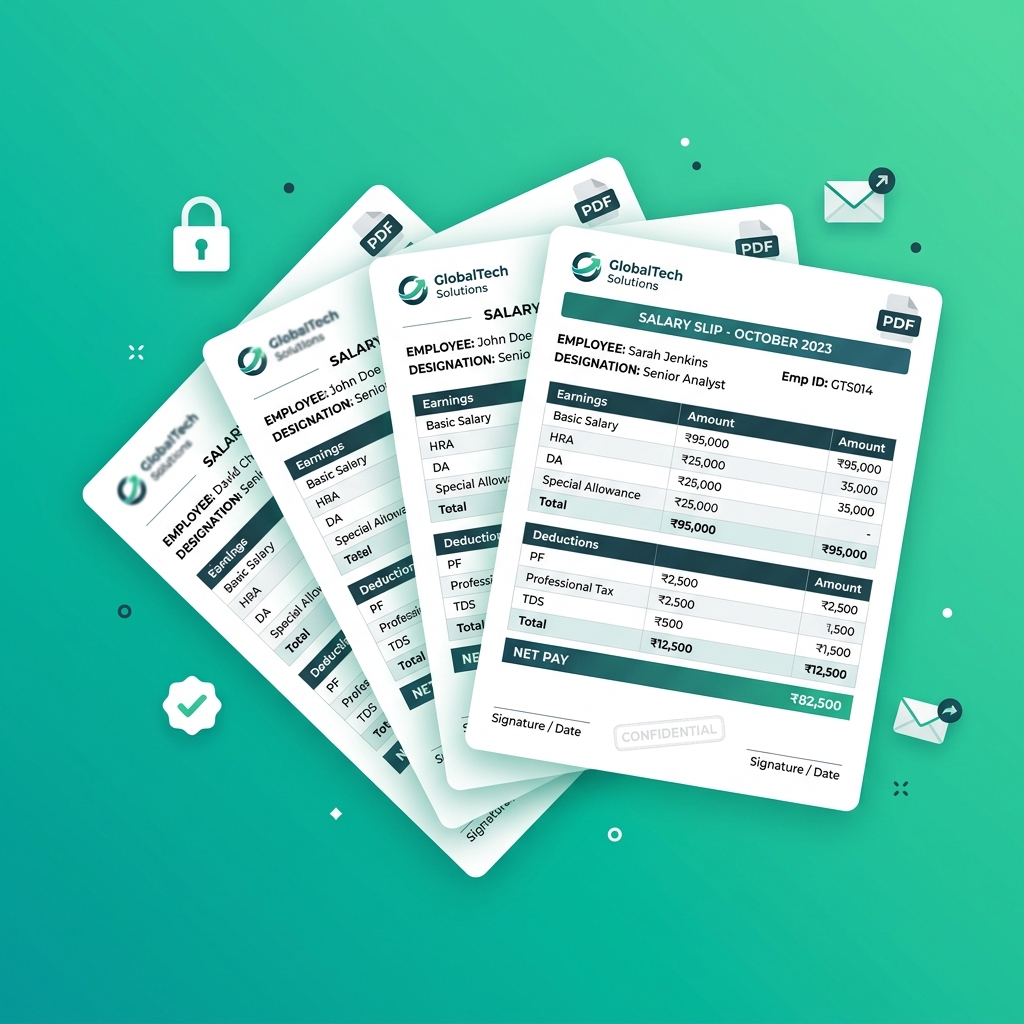
Standard Restaurant Payslip Field Mapping
1. Earnings & Tip Itemization
Server Hourly Wages (32 hrs @ $5.00/hr) = $160.00Overtime Server Hours (4 hrs @ $7.50/hr) = $30.00Host Shift Wages (8 hrs @ $15.00/hr) = $120.00Direct Credit Card Tips = $640.00Tip Pool Points Received = $180.00Declared Cash Tips (For Tax Only) = $150.00- Total Gross Taxable Wages: $1,280.00
2. Taxes & Net Deductions
Federal Income Tax Withholding = $98.40FICA Social Security (6.2%) = $79.36FICA Medicare (1.45%) = $18.56State Income Tax = $42.00Shift Meal Deduction (5 meals @ $4.00) = $20.00Direct Cash Tips Retained (-$150.00)- Net Pay Distributed via Direct Deposit: $871.68
Chapter 5: Workflow - From POS Reports to Batch Payslips in 5 Minutes
Modern restaurants don't do math on napkins—they pull summary reports from modern POS platforms like Toast, Square, 7shifts, Clover, or TouchBistro. Here is how you can convert those raw exports into encrypted PDF payslips in minutes.
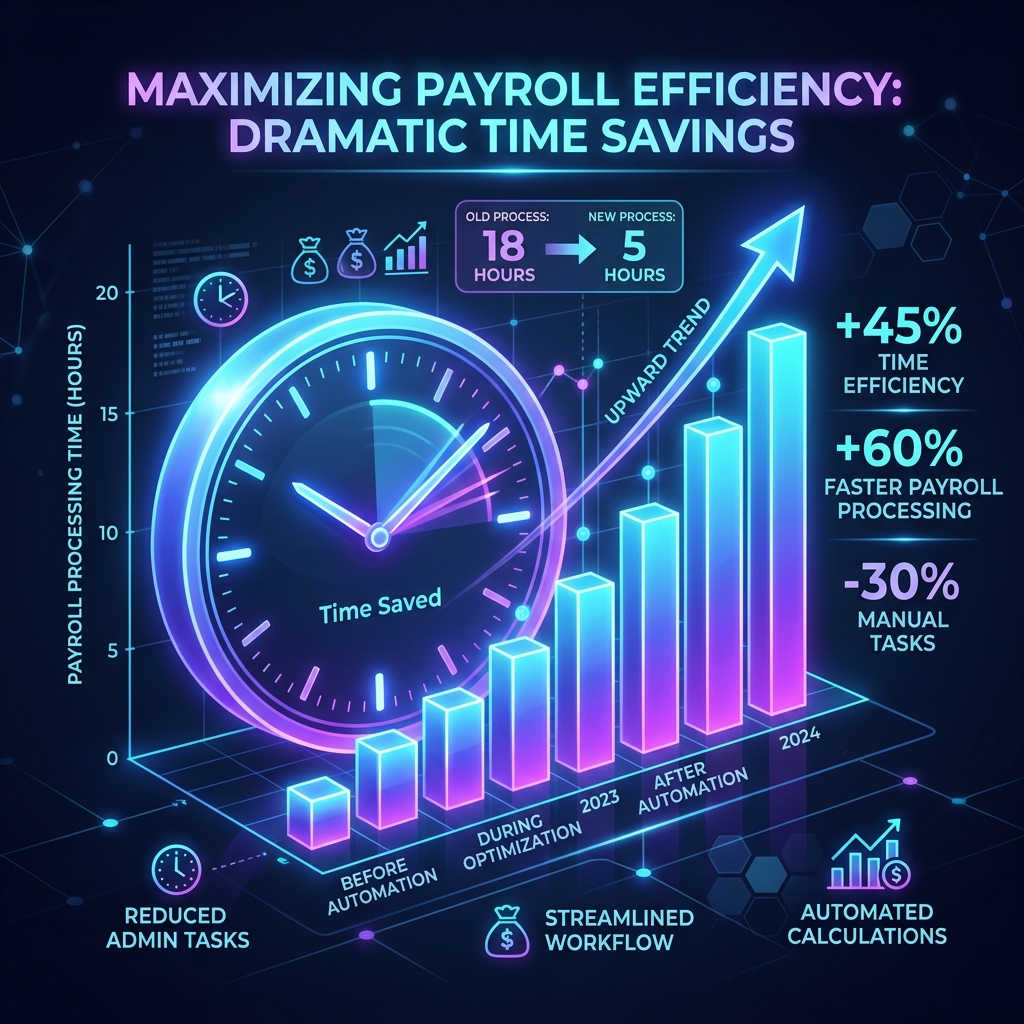
The 4-Step Operational Pipeline
- Export POS / Labor Summary: At the close of the pay cycle, export the Payroll / Tip Summary CSV from your POS (Toast, Square, or 7shifts). The report includes Employee Name, Email, Role, Total Regular Hours, Overtime Hours, Credit Card Tips, and Cash Tips.
- Review in Excel / Master Spreadsheet: Open the CSV in Excel. Add your standard deduction columns (e.g.
Shift MealsorUniform Allowance). Save the sheet. - Import & Map in PayslipGen: Launch PayslipGen. Drag and drop your spreadsheet. Use the visual dropdown mapper to connect your POS columns to template fields (
Hourly Wage,Credit Card Tips,Tip Pool,Deductions,Net Pay). - Bulk Generate & Dispatch: Click "Generate & Send". PayslipGen compiles pixel-perfect, password-protected PDF payslips for your entire front-of-house and back-of-house staff, and delivers them directly to their personal smartphone emails via your authenticated SMTP server.
Chapter 6: Why Per-Seat Cloud SaaS Penalizes Restaurants
The restaurant industry suffers from an average annual employee turnover rate of over 70% to 100%. Traditional cloud payroll software providers (Gusto, ADP, Paycom, Rippling) monetize businesses using a per-employee per-month (PEPM) pricing model.
If a restaurant employs 40 staff on average, but cycles through 75 unique workers over the course of a year due to seasonal churn and part-time summer staff, cloud SaaS platforms charge for every single registered seat or active user. At $8 to $12 per employee per month plus a $40–$100 base fee, a small 40-seat bistro spends $4,500 to $7,000+ every year just to distribute salary advice.
With PayslipGen, there are no monthly fees, no per-employee surcharges, and no user caps. You pay a single one-time price of $49, install the software on your manager’s office PC or Mac, and generate unlimited payslips for 10, 50, or 500 staff members forever.
Chapter 7: Frequently Asked Questions (FAQ)
How should I handle cash tips on an employee's payslip?
Cash tips are received directly by the employee during their shift. However, employees must report their declared cash tips to the employer so the business can calculate accurate federal and state tax withholdings. On the payslip, the declared cash tips are added to gross earnings to calculate total taxable income, and then subtracted as a "Cash Tips Retained / Already Paid" line item so the net paycheck amount correctly reflects only what is owed via check or direct deposit.
Can I include back-of-house staff in the tip pool?
Under US federal law (DOL regulations), kitchen staff (line cooks, dishwashers) can only participate in a mandatory tip pool if the employer pays all participating employees at least the full statutory minimum wage and does not claim an FLSA 3(m) tip credit. If your restaurant claims a tip credit for servers, kitchen staff cannot be part of the tip pool.
What is the best password formula for restaurant workers?
Restaurant staff frequently check their payslips on mobile phones right after shift completion. A reliable, intuitive password formula is the employee's 4-digit birth year combined with the last 4 digits of their phone number or Social Security Number (e.g. 19964582). PayslipGen automates this encryption formula across the entire batch with zero manual effort.
Can PayslipGen import directly from Toast or 7shifts exports?
Yes. Both Toast and 7shifts export labor data in standard .csv or .xlsx formats. PayslipGen's dynamic column mapping engine recognizes and maps any custom headers from your POS export with a simple point-and-click interface.
How does overtime work for employees working dual roles at different pay rates?
Under FLSA rules, when an employee works two different jobs at different hourly rates in the same workweek, overtime must be calculated using a blended regular rate (total earnings from all jobs divided by total hours worked). PayslipGen supports multiple line items on each payslip, allowing you to clearly display the base hours at each rate alongside the blended overtime calculation.
Streamline Your Restaurant Payroll Today
Eliminate tip calculation errors, prevent wage compliance disputes, and stop paying monthly SaaS fees for high-turnover staff. Generate crystal-clear, password-protected restaurant payslips in seconds.
Download PayslipGen for $49Conclusion
The restaurant industry moves at lightning speed. Your payroll system should empower your management team to close out the pay period accurately, maintain full compliance with FLSA tip credit rules, and distribute transparent, itemized salary statements that build trust with your team.
By leveraging PayslipGen alongside your existing POS spreadsheets, you gain total control over complex hospitality payroll calculations without the recurring drain of cloud subscriptions.