
Solar & Roofing Sales Commission Paystub Generator: How EPCs Calculate Redline Margins, 3-Stage Milestone Draws & Cancellation Clawbacks in Excel
Key Takeaways
- ✓Redline Margin Mechanics: Solar sales commissions hinge on the spread between the Engineering, Procurement, and Construction (EPC) base installation floor ("redline" cost per watt, e.g., $2.60/W) and the gross contract price sold to the homeowner (e.g., $3.85/W). Every cent above redline represents gross commissionable margin that must be transparently allocated across setters, closers, and sales leadership.
- ✓Financing Dealer Fee Impact: Residential solar loans through financiers such as GoodLeap, Mosaic, or Sunlight Financial impose dealer fees ranging from 15% to 30% of total loan volume. Failure to explicitly reconcile dealer fee deductions against gross contract value prior to margin split triggers devastating payroll accounting discrepancies.
- ✓3-Stage Milestone Draws (M1/M2/M3) & Reserves: Because residential solar project cycles span 60 to 120 days from contract signing to Permission to Operate (PTO), EPCs disburse commissions in phased milestones (30% at site survey / M1, 30% at permit approval / M2, 40% at install & PTO / M3) while maintaining a rolling 10% escrow reserve for clawback protection.
- ✓Offline Bulk Settlement Generation: Generic payroll SaaS platforms (Gusto, ADP) cannot natively handle redline splits, setter/closer revenue divides, and rolling clawback ledgers. Using PayslipGen, EPC finance managers convert complex commission spreadsheets into encrypted, password-protected PDF settlement statements completely offline with zero monthly per-rep software fees.
In residential solar and turnkey roofing, sales commissions are the lifeblood of business growth. Yet for finance directors, EPC founders, and sales operations leads, managing commission payroll is one of the most volatile, dispute-heavy administrative nightmares in modern contracting.
Unlike standard corporate sales models where an account executive earns a predictable 8% or 10% gross revenue cut, renewable energy transactions involve multi-layered variable economics. A single 9.6-kilowatt (kW) rooftop solar installation incorporates baseline hardware procurement costs, engineering site assessments, municipal building permits, utility interconnection delays, high-percentage third-party financing dealer fees, and multi-tier revenue splits between appointment setters and closers.
When a deal stalls during utility Permission to Operate (PTO) or cancels after a failed roof structural inspection, previously disbursed milestone advances must be reconciled through contractual clawbacks. If an EPC cannot deliver an exhaustive, auditable, line-by-line settlement statement to its sales force every Friday or twice monthly, morale collapses, top-producing closers walk to competing dealers, and legal disputes over unearned draw deductions spiral out of control.
This engineering guide breaks down the core financial mathematics behind solar and roofing commission payroll, examines the impact of dealer fees and 3-stage milestone draws, presents a master Excel calculation blueprint, and shows how to generate secure, individual PDF settlement statements offline using PayslipGen.
Try Our Interactive Demo Instantly
Want to see how an offline-capable, client-side payslip generator works in practice? Try our brand-new interactive demo right in your browser. Upload a sample CSV, map your columns, and generate beautifully designed PDF payslips—with zero data ever being transmitted to our servers.
Launch Free Demo NowChapter 1: The Anatomy of the Solar Redline Pricing Model
At the center of residential and light commercial solar compensation sits the concept of the "Redline."
The redline is the minimum base price per watt ($/W) that an EPC contractor, regional installer, or dealer requires to execute a turnkey installation while preserving its operational overhead and net construction profit. It encompasses photovoltaic (PV) modules, string or microinverters, racking and mounting hardware, master electrician labor, structural engineering stamps, municipal permitting fees, and warranty reserves.
1. The Spread: How Commissionable Margin Is Created
Sales representatives operate as independent revenue generators who determine the contract price per watt presented to the customer, subject to dealer caps. The difference between the customer contract price and the company redline is known as the spread:
Consider a standard residential project:
- System DC Rating: 8.5 kW (8,500 Watts DC)
- EPC Base Redline: $2.60 per Watt ($22,100 base installation floor)
- Contract Sales Price: $3.85 per Watt ($32,725 gross homeowner price)
- Margin Spread: $3.85 - $2.60 = $1.25 per Watt
- Gross Commission Pool: 8,500 W × $1.25/W = $10,625.00
2. Roofing & Add-on Surcharges (Adders)
Rarely is a residential solar installation completely vanilla. Projects routinely require structural modifications or electrical service upgrades. These items, termed "adders,"are added directly to the base redline cost and do not yield sales commissions unless the sales rep marks them up above the company's cost schedule:
- Main Panel Upgrade (MPU): Upgrading a 100A service panel to a 200A split-bus panel ($2,500 adder).
- Trenching & Conduit Runs: Underground runs exceeding 50 linear feet ($35 per linear foot adder).
- Reroofing / Structural Reinforcement: Tearing off damaged composition shingles and installing new architectural shingles prior to racking installation ($8,500 to $14,000 roofing contract adder).
- Battery Energy Storage (ESS): Adding 10 kWh to 20 kWh lithium iron phosphate (LFP) backup batteries ($9,500 to $15,000 per unit cost).
If the sales rep includes an MPU of $2,500 in the contract without increasing the contract price per watt to absorb the cost, the adder must be deducted dollar-for-dollar from the commissionable margin pool.
Chapter 2: Lender Dealer Fees & Revenue Splits (Setter vs. Closer)
Two structural factors complicate solar commission accounting far beyond standard retail sales: third-party solar loan dealer fees and multi-tier organizational commission splits.
1. The Crushing Impact of Financing Dealer Fees
Over 70% of residential solar installations in the United States are financed through point-of-sale clean energy lenders (such as GoodLeap, Mosaic, Sunlight Financial, or dividend finance programs). To offer homeowners attractive promotional interest rates (such as 3.99% or 5.99% over 25 years in an environment with high baseline interest rates), lenders levy massive upfront dealer fees against the EPC contractor.
These dealer fees range from 15% to upwards of 32% of the gross loan amount. Because the lender wires net proceeds (Gross Contract minus Dealer Fee) to the contractor, the dealer fee directly suppresses the available financial pool.
In most EPC agreements, dealer fees are passed directly through to the project margin calculation:
If a $32,725 contract carries a 22% dealer fee ($7,199.50), the actual funds collected by the EPC total only $25,525.50. With an underlying base redline of $22,100, the available commission pool drops from $10,625 down to $3,425.50. Transparently itemizing this loan fee on the sales rep's settlement paystub is essential to prevent accusations of hidden company skimming.
2. Lead Generation & Setter/Closer Revenue Allocation
Residential solar sales teams rarely operate as solo contributors. Deals are commonly driven by a two-stage acquisition pipeline:
- Appointment Setter (Canvasser / Inbound SDR): Knocks doors, runs local social ad campaigns, collects homeowner electric bills, and books qualified appointments. They typically receive a fixed fee per completed sit ($100 - $250) plus 25% to 40% of the net commission margin.
- Energy Consultant (Closer): Conducts the in-home or virtual presentation, designs the PV system in Aurora or Helioscope, models shading analysis, selects financing terms, and signs the EPC agreement. They receive 60% to 75% of the remaining margin pool.
- Team Lead / Sales Manager Override: Regional managers often receive an override of $0.05 to $0.15 per watt on all volume closed across their branch territory.
Chapter 3: The 3-Stage Milestone Draw Cycle (M1, M2, M3) & Clawback Escrow
Rooftop solar is not an immediate delivery product. From initial contract signature to full system commissioning, a residential project passes through structural site audits, city permitting, utility net metering approval, physical roof mounting, electrical inspection, and utility meter swap. This engineering lifecycle routinely takes 45 to 120 days.
Because sales reps cannot wait four months without income, EPCs utilize a phased milestone draw schedule:
Milestone 1 (M1)
Trigger: Site Survey Completed & CAD Approved.
Disbursement: 30% of estimated net commission. Provides immediate cash flow for the rep upon project viability confirmation.
Milestone 2 (M2)
Trigger: Municipal Permit Issued & NTP Signed.
Disbursement: 30% of estimated net commission. Released once the city or county grants legal construction clearance.
Milestone 3 (M3)
Trigger: Physical Install Complete & Utility PTO.
Disbursement: Final 40% balance plus/minus true-up adjustments, minus rolling escrow holdbacks.
Cancellation Clawbacks and the Rolling Escrow Reserve
What happens when a customer signs an agreement, passes site survey (triggering an M1 payout of $1,500 to the rep), but cancels three weeks later because their Homeowners Association (HOA) prohibits roof panels, or their credit application expires?
Under standard EPC sales contracts, the sales rep is legally liable to refund previously disbursed milestone advances. This recovery process is known as a clawback.
To insulate the company against reps who quit or abandon negative account balances, prudent EPCs establish a Rolling Escrow Holdback Reserve. Typically, 10% of every commission disbursement is diverted into an internal escrow reserve account until a set threshold (e.g., $3,000 to $5,000 per rep) is reached. When a project cancels, the clawback is deducted from the rep's escrow reserve or offset against future milestone payouts rather than triggering immediate out-of-pocket payroll recovery demands.
Chapter 4: Master Excel Solar Commission Spreadsheet Blueprint
To eliminate human error and maintain total transparency between sales management and field reps, EPC payroll administrators should build their weekly settlement ledger around structured, dynamic formulas.
Below is the comprehensive blueprint for a multi-milestone residential solar commission settlement sheet, covering contract pricing, dealer fees, milestone draws, and clawback deductions:
| Line # | Calculation Field | Operational Parameter | Project Value | Excel Formula Specification |
|---|---|---|---|---|
| 01 | System Metrics | Nameplate DC Rating | 9,600 Watts (9.6 kW) | Manual Input (Cell C1) |
| 02 | Contract Sales Rate | Homeowner EPC Price per Watt | $3.80 / Watt | Manual Input (Cell C2) |
| 03 | Gross Contract Value | Total EPC Turnkey Price | $36,480.00 | =C1*C2 |
| 04 | Financing Deduction | Lender Dealer Fee (GoodLeap 20%) | -$7,296.00 | =-C3*0.20 |
| 05 | Net Cash Collected | Net EPC Deposit from Lender | $29,184.00 | =C3+C4 |
| 06 | Installer Redline | Base EPC Cost ($2.50 / Watt) | -$24,000.00 | =-C1*2.50 |
| 07 | Hardware Adders | Unmarked MPU 200A Service Upgrade | -$2,200.00 | Manual Input (Cell C7) |
| 08 | NET COMMISSION POOL | Total Distributable Margin | $2,984.00 | =C5+C6+C7 |
| 09 | Setter Share | Appointment Setter Split (35%) | $1,044.40 | =C8*0.35 |
| 10 | Closer Share | Energy Consultant Split (65%) | $1,939.60 | =C8*0.65 |
| 11 | Milestone Draw M1 | Site Survey Approved (30%) | $581.88 | =C10*0.30 |
| 12 | Milestone Draw M2 | City Permit Approved (30%) | $581.88 | =C10*0.30 |
| 13 | Milestone Draw M3 | Install & PTO Final (40%) | $775.84 | =C10*0.40 |
| 14 | Escrow Reserve Hold | 10% Rolling Holdback | -$193.96 | =-C10*0.10 |
| 15 | Prior Clawback Offset | Canceled Project Ref #SLR-8419 | -$450.00 | Manual Ledger Input |
| 16 | NET DISBURSED PAY | Payable This Settlement Cycle | $1,295.64 | =C10+C14+C15 |
Chapter 5: How EPCs Generate Bulk Encrypted Settlement Paystubs with PayslipGen
Maintaining an intricate Excel workbook is only half the battle. When payroll closes, EPC administrators must transform that raw, confidential spreadsheet into individual, professional settlement statements for dozens of setters, closers, and sales managers.
Sending an entire master spreadsheet exposes every sales rep's deals, dealer fees, and earnings to the entire organization, violating privacy and sparking toxic internal rivalries. Manually copying and pasting rows into Word or Google Docs templates wastes hours of administrative labor and invites human error.
Furthermore, mainstream cloud payroll providers (like Gusto or ADP) charge recurring monthly fees per employee ($40 base + $6 to $12 per contractor per month), refuse to recognize redline arithmetic, and force you into rigid hourly or flat-salary paradigms.
PayslipGen solves this administrative bottleneck completely through a sovereign, 100% offline desktop application with a one-time purchase of $49 and zero recurring subscriptions.
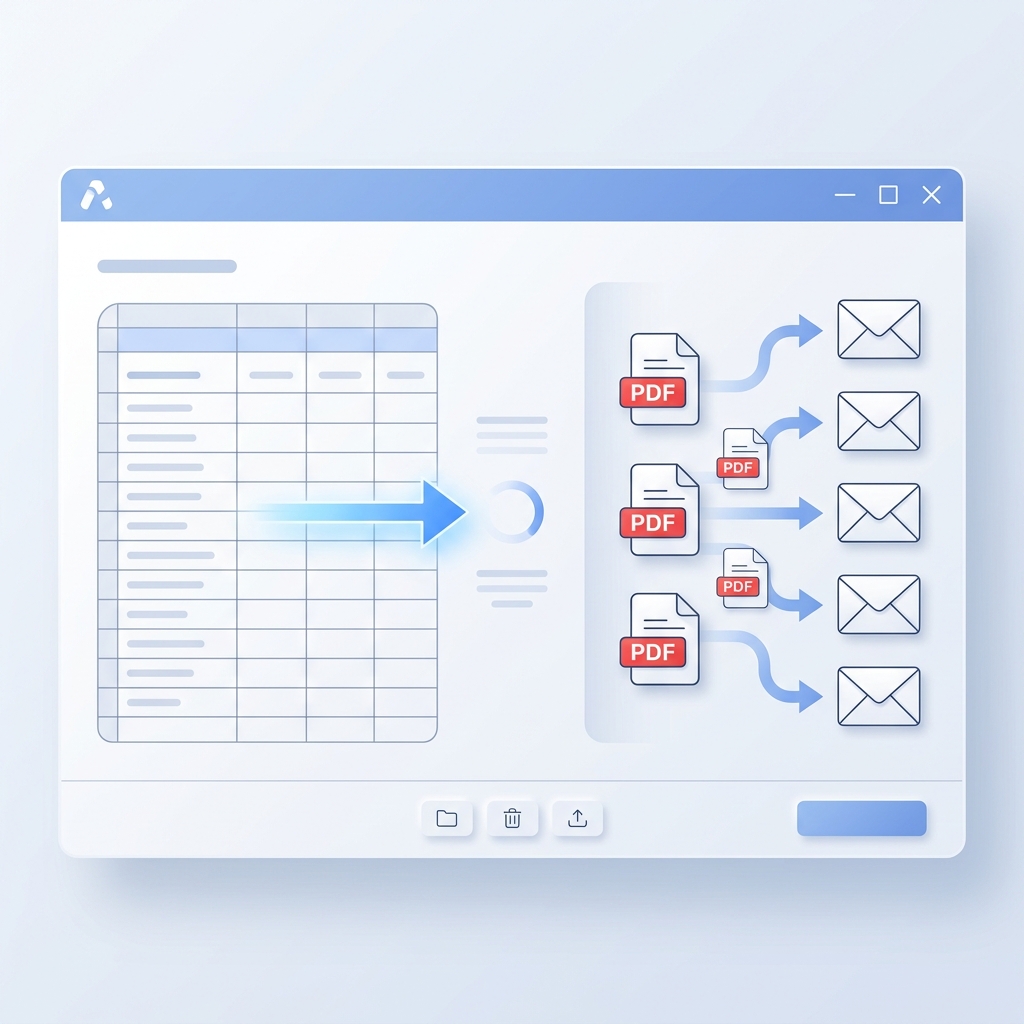
The 5-Step Settlement Publishing Protocol
- Step 1: Export Your Weekly Sales Ledger to Excel/CSV:Keep your established redline and commission formulas inside Microsoft Excel, Google Sheets, or your CRM (HubSpot, JobNimbus, Monday.com, or Enerflo). Ensure each row corresponds to an individual sales rep's cycle payout with project IDs, gross spreads, milestone draws, and clawbacks.
- Step 2: Launch PayslipGen Locally: Open the desktop app on macOS or Windows. Because PayslipGen is completely offline, no customer addresses, electric meter numbers, or sales commission figures are uploaded to third-party cloud servers.
- Step 3: Map Columns Intuitively: Drag and drop your spreadsheet into PayslipGen. The visual mapper binds your Excel columns to professional paystub fields:
Rep_Name→ Employee / Contractor NameProject_ID_Description→ Line Item DescriptionGross_Commission_Earned→ Gross EarningsMilestone_Draw_Advance→ Year-to-Date Advance / Disbursed DrawDealer_Fee_Deduction→ Pre-tax Operational DeductionEscrow_Holdback→ Reserve Account DeductionCancellation_Clawback→ Post-calculation AdjustmentNet_Disbursed_Payout→ Net Take-Home Pay
- Step 4: Enable AES-256 PDF Encryption:Configure automated password protection for every generated PDF. You can set the password to each rep's date of birth (YYYYMMDD) or the last 4 digits of their SSN/EIN. This guarantees that settlement statements sent over email or Slack cannot be opened by unauthorized eyes.
- Step 5: Bulk Generate & Distribute via SMTP: Click "Generate Payslips."Within seconds, PayslipGen compiles vector-quality, branded PDF paystubs for every rep on your roster. You can instantly dispatch them using your company's own SMTP server (Google Workspace, Office 365, or private mail server) without paying per-email delivery surcharges.
Frequently Asked Questions (FAQs)
How do we legally handle commission clawbacks if a 1099 sales rep leaves the company?
For 1099 independent contractors, commission clawbacks are strictly enforceable under contract law provided your Independent Contractor Agreement contains an unambiguous clawback and negative balance offset clause. Maintaining a Rolling Escrow Reserve (typically 10% of earnings capped at $3,000 to $5,000) allows the EPC to absorb early cancellations without having to pursue legal collection against former reps.
Should solar dealer fees be deducted from gross revenue or from net commission margin?
Dealer fees are charged by lenders against the total funded contract value. Deducting the dealer fee from the gross contract price before calculating the margin spread (or reducing the net margin dollar-for-dollar) ensures the installer does not absorb the cost of homeowner financing. Your contract must explicitly specify whether dealer fees are shared proportionally between installer and sales rep or deducted entirely from the rep's redline margin.
What is the standard milestone split across M1, M2, and M3 in residential solar?
The prevailing nationwide standard is 30% at M1 (successful site survey and structural approval), 30% at M2 (building permit approved and equipment staged), and 40% at M3 (physical installation finished and utility PTO granted). Some conservative EPCs disburse 25% at M1, 25% at M2, and 50% at PTO to minimize clawback exposure on volatile projects.
Can PayslipGen handle roofing tear-off contracts alongside solar PV installations?
Yes. Because PayslipGen dynamically maps any custom Excel column, you can include roofing squares, tear-off labor line items, shingle upgrades, gutter replacements, and combined solar-roofing turnkey contracts on a single unified paystub.
Does PayslipGen charge extra when our solar sales team grows from 10 to 100 reps?
No. PayslipGen operates on a true one-time purchase of $49 for lifetime access. There are zero per-rep fees, zero per-payslip charges, and zero recurring monthly subscriptions, no matter how many hundreds of commission settlement statements you generate each month.
Streamline Your Solar & Roofing Commission Payroll
Generate transparent, password-protected PDF commission settlement sheets directly from your Excel redline formulas. 100% offline, zero data leaks, one-time payment of $49 for lifetime access.
Get PayslipGen for $49 (Lifetime Access)Conclusion: Build Trust with Flawless, Transparent Commission Settlements
In high-turnover industries like residential solar and turnkey roofing, financial transparency is your greatest recruiting and retention advantage. When sales professionals receive clear, timely, mathematically auditable settlement statements that clearly detail redline margins, milestone draws, dealer fee impacts, and escrow balances, trust flourishes.
By combining robust Excel commission modeling with the sovereign desktop power of PayslipGen, your EPC can eliminate payday friction, safeguard sensitive company financial data, and escape the predatory subscription trap of cloud payroll software.
(Need to automate settlement calculations for other complex compensation structures? Check out our guides on Commission Draw Against Commission Paystub Formats, 1099 Contractor Paystubs, and Flat-Rate Mechanic Paystubs.)