
Flat-Rate Mechanic Paystub Generator: How to Format Flag Hours, Book Time, and Minimum Wage Draws
Key Takeaways
- ✓The Minimum Wage Draw Guarantee Is Non-Negotiable: Under the Fair Labor Standards Act (FLSA) and landmark state case law (such as California\'s Gonzalez v. Downtown LA Motors), total compensation divided by actual physical clock hours worked can never fall below the statutory minimum wage in any workweek.
- ✓Standby, Diagnostic & Meeting Time Must Be Itemized: Employers cannot rely on high flag-hour jobs to cover unflagged downtime. Waiting for parts delivery, shop meetings, tool calibrations, and unbilled multi-point inspections must be separately tracked and compensated at an hourly rate.
- ✓Tool Allowances & Box Reimbursements Require Accountable Plans: To prevent heavy payroll tax leakage and comply with state mandates (like California Labor Code § 2802), tool stipends must be structured under an IRS Accountable Plan (26 U.S.C. § 62) and itemized separately from taxable gross wages.
- ✓Local Multi-Line Batch Generation with PayslipGen: Automotive repair shops and dealerships can bridge the gap between Shop Management Software (Tekmetric, Shopmonkey, Mitchell 1) and payroll by generating password-protected, audit-proof PDF paystubs in bulk using PayslipGen with zero cloud data risks and zero monthly SaaS subscriptions.
In automotive repair shops, dealership service lanes, heavy equipment garages, and collision centers across the United States, the Flat-Rate "Flag Hour" system represents the industry-standard compensation model. By paying technicians based on standardized labor guide book times (Chilton, MOTOR, ALLDATA, Mitchell 1) rather than straight clock time, shop owners incentivize speed, technical mastery, and throughput.
Under this system, a Master Diagnostic Technician who completes a 4.0-hour water pump replacement in 2.5 actual physical hours gets paid for 4.0 flag hours. Highly skilled technicians can earn exceptional compensation by flagging 50, 60, or even 70 book hours during a standard 40-hour physical workweek.
However, the automotive flat-rate model is also one of the most scrutinized, heavily litigated payroll structures in North American labor law. Sweeping federal and state wage-and-hour rulings—most notably Gonzalez v. Downtown LA Motors, California Labor Code § 226.2, Washington State rulings, and Department of Labor (DOL) FLSA enforcement actions—have firmly established that auto repair shops cannot simply pay a single flat flag rate while ignoring clock hours, standby waiting time, diagnostic hurdles, and minimum wage draw floors.
Today, if your auto shop issues payroll stubs showing only "42.5 Flag Hours @ $38.00 = $1,615.00" without recording actual physical clock hours, separate non-productive standby time, minimum wage draw reconcilements, and tax-exempt tool allowances, your business is operating on borrowed time. A single Department of Labor audit or disgruntled former technician can trigger six-figure back-wage claims, statutory wage statement penalties, and catastrophic class-action liabilities.
In this comprehensive, engineering-grade guide, we will dissect the legal mechanics of flag-hour payroll, walk through exact step-by-step calculation formulas for every technician scenario, provide a production-ready Excel payroll template, and show you how to batch-generate clean, password-protected PDF paystubs using PayslipGen.
Try Our Interactive Demo Instantly
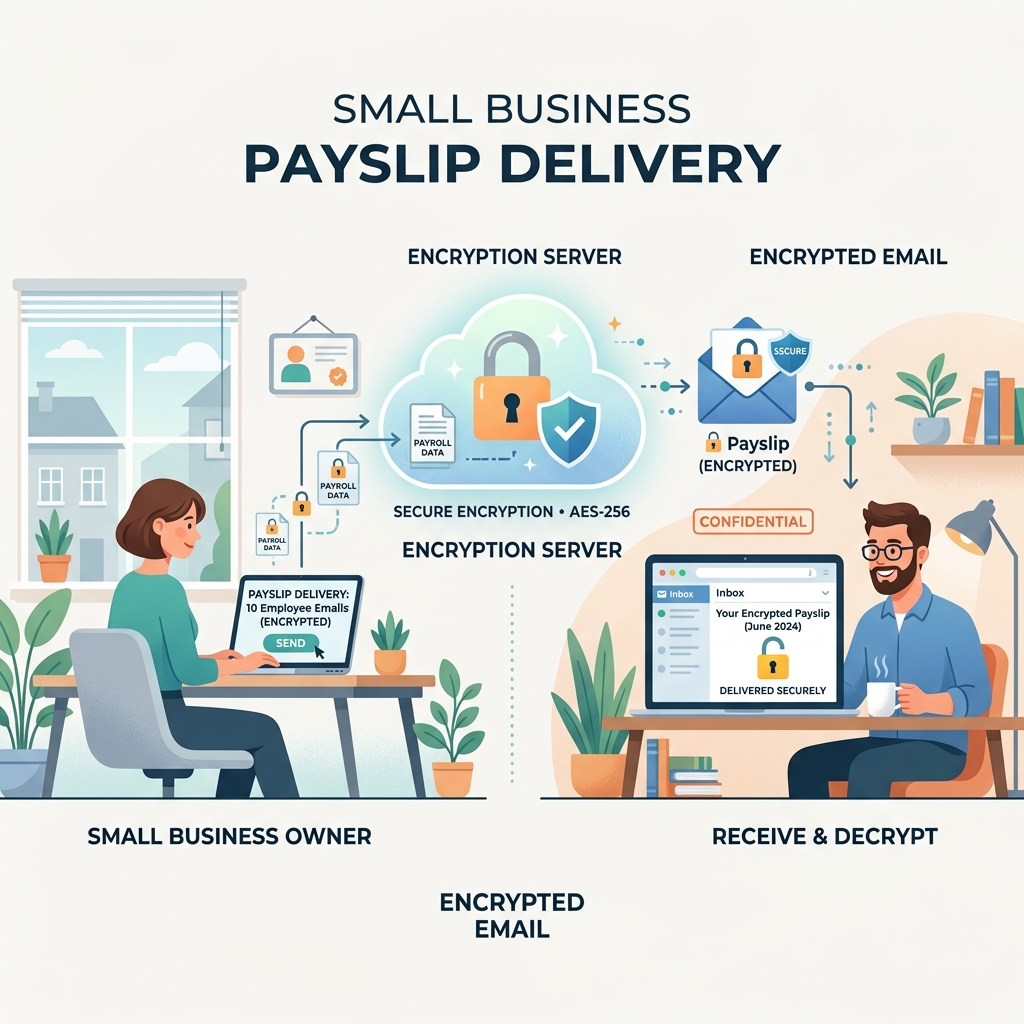
Want to see how an offline-capable, client-side payslip generator works in practice? Try our brand-new interactive demo right in your browser. Upload a sample CSV, map your columns, and generate beautifully designed PDF payslips—with zero data ever being transmitted to our servers.
Launch Free Demo NowChapter 1: The Legal Mechanics of Flag Hours vs. Clock Hours
To construct a legally bulletproof paystub for automotive technicians, shop owners, service managers, and payroll administrators must understand the intersection between commercial book time guides, shop management software (SMS), and statutory labor law.
1. How Flat-Rate "Book Time" Operates
In automotive repair, labor times are determined by third-party labor guides (such as ALLDATA, Mitchell 1 ProDemand, MOTOR Information Systems, or OEM warranty labor matrices). When a Repair Order (RO) is opened, each operation is assigned a predetermined "Book Time" or "Flag Time" in decimal hours:
- Front Brake Pad & Rotor Replacement: 2.0 Flag Hours
- Timing Belt & Water Pump Service: 4.5 Flag Hours
- Automatic Transmission Replacement: 8.2 Flag Hours
- HVAC Evaporator Core R&R: 6.8 Flag Hours
The technician is paid their agreed Flag Rate (e.g., $35.00/hour) multiplied by the total book hours flagged on closed and approved work orders, regardless of how long the vehicle occupied the physical service bay.
The Efficiency Multiplier
Technician efficiency is measured as: Efficiency = (Total Flag Hours Billed ÷ Actual Clock Hours Worked) × 100%. An "A-Level" master diagnostic tech operating at 135% efficiency might complete 54 flag hours of work while only clocking 40 physical hours in the shop, earning $2,160.00 at a $40.00 flag rate ($54.00 effective hourly rate).
2. The Minimum Wage Draw Floor (FLSA & State Law)
The most dangerous legal trap in flat-rate payroll occurs during slow business weeks, severe supply chain backorders, or inclement weather when cars aren't flowing through the service bays.
Under the Fair Labor Standards Act (FLSA 29 U.S.C. § 206) and state labor codes, an employer cannot allow a non-exempt employee's total weekly earnings divided by total physical clock hours to fall below the statutory minimum wage.
If a junior technician is physically present in the shop for 40 clocked hours (punching in at 8:00 AM and punching out at 5:00 PM), but due to low customer volume only flags 12.0 book hours @ $30.00/hr ($360.00 gross flag earnings), their effective hourly rate is only $9.00/hour ($360 ÷ 40). If the applicable minimum wage is $16.50/hour, the technician is legally owed at least $660.00 for that week.
The auto shop is legally required to provide a Minimum Wage Draw Make-Up Supplement of $300.00 ($660.00 minimum wage floor minus $360.00 flag pay).
The "Wage Averaging" Ban & Gonzalez v. Downtown LA Motors
In California, Washington, Colorado, and several other jurisdictions, courts have strictly banned "wage averaging." In the landmark ruling Gonzalez v. Downtown LA Motors (215 Cal. App. 4th 36), the California Court of Appeal ruled that flat-rate technicians must be compensated at a separate hourly rate not less than minimum wage for all hours spent on non-productive tasks (waiting for dispatch, cleaning bays, parts delays) regardless of how much they earned on flag hours during other parts of the day or week. Dividing weekly flag earnings by total hours worked to demonstrate minimum wage compliance is legally invalid in these states.
3. Standby Time, Waiting Time & Diagnostic Calibration
Modern automotive service requires extensive unbilled physical time that traditional flat-rate book systems do not capture:
- Standby / Waiting Time: Waiting for parts delivery from local warehouses, waiting for service advisor authorization, waiting for a free frame machine, alignment rack, or paint booth.
- Shop Operations: Mandatory Monday morning safety meetings, sweeping service bays, maintaining shop compressors, and disposing of hazardous chemical waste.
- Unbilled Diagnostic Time: Chasing intermittent CAN-bus communication faults, high-voltage EV isolation errors, and performing 45-point digital vehicle inspections (DVI) before customer repair approval.
To maintain audit-proof compliance, this non-productive time (NPT) must be tracked via timecard punches and displayed on the paystub as a dedicated hourly line item paid at or above the minimum wage.
4. Tool Allowance & Box Reimbursements (IRS Accountable Plans)
Automotive technicians provide their own hand tools, pneumatic gear, diagnostic tablets, and roll cabs—often representing a personal investment of $30,000 to over $100,000.
Under California Labor Code § 2802 and similar state expense reimbursement statutes, employers who require employees to provide their own tools must either:
- Pay the employee at least twice the statutory minimum wage as a base condition of employment, or
- Provide a formal, tax-free tool reimbursement allowance or depreciation stipend.
Under IRS regulations (26 U.S.C. § 62(a)(2)(A)), tool allowances structured under an IRS Accountable Plan (requiring receipts, tool truck invoices, or periodic tool audits) are 100% exempt from federal income tax, Social Security, Medicare (FICA), and FUTA/SUTA payroll taxes. If you improperly roll tool allowances into the mechanic's regular hourly flag rate, both the shop and the technician pay unnecessary payroll taxes on tool expenses.
Chapter 2: Step-by-Step Calculation Scenarios & Mathematical Proofs
Let us analyze the exact mathematical steps for three real-world automotive payroll scenarios to understand how these line items interact.
Scenario A: The High-Efficiency Master Tech (Over-Flagging)
Marcus is an ASE Master Certified Diagnostic Technician at an independent European specialty shop in Dallas, Texas. His agreed retail flag rate is $44.00/flag hour. His shop also provides an IRS Accountable Plan tool reimbursement of $125.00/week.
During a busy 1-week pay period, his time records show:
- Actual Physical Clock Time: 36.0 hours on the shop floor.
- Flag Hours Billed: 52.0 retail book hours completed (144.4% efficiency).
- Mandatory Shop Meeting & Cleanliness: 2.0 clock hours @ $22.00/hr straight hourly rate.
Scenario B: Slow-Week / Apprentice Tech (Triggering Minimum Wage Draw)
Dave is a junior brake and suspension technician at an auto service center in California. His flag rate is $28.00/flag hour, and the state statutory minimum wage is $16.50/hour.
During a slow week in January, Dave reports to work every day and clocks a full 40.0 physical hours. However, due to low customer volume and parts supplier delays, Dave is only dispatched repair orders totaling 14.0 flag hours.
Legal Rule: No Unlawful "Clawback" Deductions
Many shop owners make the critical mistake of treating this $268.00 draw as a "debt" or loan, attempting to deduct it from Dave's paycheck the following week when he flags 50 hours. In states like California, Washington, New York, and Illinois, clawing back minimum wage draw payments is strictly illegal. The draw ensures minimum wage compliance for that specific workweek; it cannot be recovered from future production wages.
Scenario C: Hybrid Dealership Tech (Warranty vs. Customer-Pay Retail Rates)
Elena is a master transmission technician at a franchised Ford dealership in Ohio. Franchised dealerships operate with dual labor rate structures:
- Customer-Pay (CP) Retail Labor: Paid at Elena's full flag rate of $42.00/flag hour.
- OEM Factory Warranty Labor: Factory warranty repair times are tighter and reimbursed at the dealership's negotiated warranty flag rate of $34.00/flag hour.
- Dedicated Diagnostic Hourly Time: Electrical troubleshooting billed at $30.00/clock hour.
- Non-Productive Standby Time: 3.0 hours waiting on back-ordered TCU modules @ $20.00/hour.
In a single week, Elena logs 43.0 total physical clock hours:
- Customer-Pay Flag Hours: 24.0 hours @ $42.00 = $1,008.00
- Warranty Flag Hours: 14.0 hours @ $34.00 = $476.00
- Diagnostic Clock Time: 2.0 hours @ $30.00 = $60.00
- Standby Waiting Time: 3.0 hours @ $20.00 = $60.00
Chapter 3: The Compliant Automotive Paystub Blueprint
To satisfy Department of Labor auditors, IRS payroll examiners, and state labor commissioners, an automotive repair paystub must feature eight distinct itemized components.
Total physical hours punched on the shop time clock, providing the legal baseline for minimum wage floor verification and FLSA overtime thresholds.
Separate line items for Customer-Pay Retail Flag Hours, OEM Warranty Flag Hours, and Internal Shop Reconditioning Flag Hours with their respective unit pay rates.
Recorded hours spent waiting for parts, attending safety briefings, cleaning service bays, or performing shop maintenance, paid at the agreed hourly rate.
Straight-time hourly compensation for complex electrical, ADAS radar calibration, or EV high-voltage troubleshooting that cannot be billed as standard book time.
An explicit, positive adjustment line item that brings total production wages up to the statutory minimum wage floor whenever technician flag earnings fall short.
Tax-exempt reimbursement for technician-provided hand tools, diagnostic software subscriptions, and roll cab depreciation under IRS Accountable Plan guidelines.
The statutory 0.5x overtime premium calculated using the employee's true weighted regular rate across all clock hours worked beyond 40 in a workweek.
Federal, state, and local income tax withholdings, FICA Social Security and Medicare, uniform rental payroll deductions, health insurance, and cumulative YTD totals.
| Earning Category | Hours / Units | Pay Rate | Total Gross | Tax Treatment |
|---|---|---|---|---|
| Retail Customer-Pay Flag Hours | 32.0 hrs | $42.00 | $1,344.00 | Taxable |
| OEM Warranty Flag Hours | 12.0 hrs | $34.00 | $408.00 | Taxable |
| Dedicated Diagnostic Clock Time | 3.5 hrs | $30.00 | $105.00 | Taxable |
| Standby / Parts Delay Waiting Time | 2.5 hrs | $20.00 | $50.00 | Taxable |
| FLSA Overtime Premium (0.5x on 2.0 hrs) | 2.0 hrs | $22.70 | $45.40 | Taxable |
| Tool Allowance (IRS Accountable Plan) | 1.0 unit | $125.00 | $125.00 | Non-Taxable |
| Total Physical Clock Hours: 42.0 hrs | Gross Production Pay: | $2,077.40 | Total Disbursed | |
Chapter 4: Master Auto Shop Excel Payroll Template
To eliminate human calculation mistakes and protect your shop from wage audits, implement this structured column architecture in your master payroll workbook.
| Column Header | Data Type | Description & Formula |
|---|---|---|
| Tech_ID | Text | Unique technician identifier (e.g., T-104) |
| Tech_Name | Text | Full name of the technician |
| Clock_Hours_Worked | Decimal | Total physical hours clocked on the timecard (e.g., 42.0) |
| Flag_Hours_Retail | Decimal | Total customer-pay retail book hours billed |
| Flag_Rate_Retail | Currency | Technician retail flag rate (e.g., $42.00) |
| Flag_Gross_Retail | Currency | =Flag_Hours_Retail * Flag_Rate_Retail |
| Flag_Hours_Warranty | Decimal | Total OEM warranty book hours billed |
| Flag_Rate_Warranty | Currency | Warranty labor rate (e.g., $34.00) |
| Flag_Gross_Warranty | Currency | =Flag_Hours_Warranty * Flag_Rate_Warranty |
| Standby_Hours | Decimal | Non-productive parts delays, shop cleaning, or meeting hours |
| Standby_Rate | Currency | Agreed standby hourly wage (at or above statutory minimum wage) |
| Standby_Gross | Currency | =Standby_Hours * Standby_Rate |
| Diagnostic_Hours | Decimal | Electrical/high-voltage diagnostic clock time |
| Diagnostic_Gross | Currency | =Diagnostic_Hours * Diagnostic_Rate |
| Min_Wage_Floor | Currency | =Clock_Hours_Worked * Statutory_Min_Wage |
| Draw_Makeup_Pay | Currency | =MAX(0, Min_Wage_Floor - (Flag_Gross_Retail + Flag_Gross_Warranty + Standby_Gross + Diagnostic_Gross)) |
| Total_Straight_Pay | Currency | =Flag_Gross_Retail + Flag_Gross_Warranty + Standby_Gross + Diagnostic_Gross + Draw_Makeup_Pay |
| Overtime_Hours | Decimal | =MAX(0, Clock_Hours_Worked - 40) |
| Blended_Regular_Rate | Currency | =Total_Straight_Pay / Clock_Hours_Worked |
| OT_Premium_Gross | Currency | =Overtime_Hours * (Blended_Regular_Rate * 0.5) |
| Tool_Allowance_Accountable | Currency | Non-taxable tool reimbursement (IRS Accountable Plan) |
| Total_Taxable_Gross | Currency | =Total_Straight_Pay + OT_Premium_Gross |
| Mechanic personal email for automatic dispatch | ||
| Password_PIN | Text | Dynamic security PIN (e.g., Tech ID + Last 4 SSN) for AES-256 PDF encryption |
Chapter 5: Bridging Shop Management Software to Batch PDF Payslips with PayslipGen
While modern cloud shop management platforms—such as Tekmetric, Shopmonkey, Mitchell 1 Manager SE, ALLDATA Shop Manager, Protractor, CDK Global, and Reynolds & Reynolds—excel at inventory, repair orders, parts ordering, and flag hour tracking, they do not function as dedicated, compliant payroll statement generators.
Conversely, generic payroll SaaS platforms like QuickBooks Payroll, Gusto, and ADP force shops into standard hourly or salary templates, failing to render multi-tier flag rates, diagnostic lines, draw make-ups, and tool allowances on a single transparent voucher.
This is where PayslipGen bridges the gap.
Export Flag & Clock Data from Your SMS
Export your closed Repair Orders (ROs) and technician flag hour summary from Tekmetric, Shopmonkey, or Mitchell 1 as a .csv or .xlsx file. Paste the data into your Master Auto Shop Excel Template.
Ingest into PayslipGen & Map Multi-Tier Columns
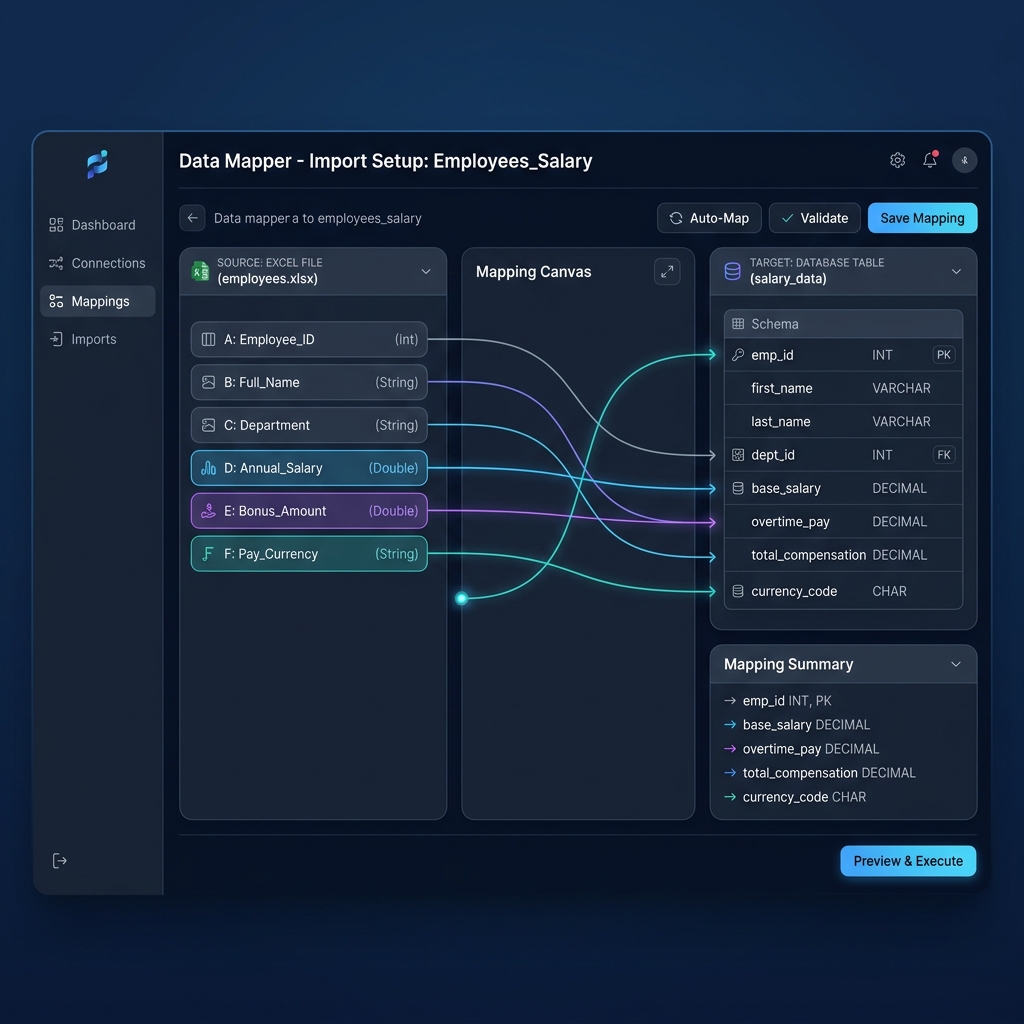
Open PayslipGen locally on your desktop. Drag and drop your calculated spreadsheet. Use the visual column mapper to bind retail flag hours, warranty flag hours, standby downtime, draw make-up supplements, tool stipends, and deductions to individual earnings line items.
Upload Auto Shop Branding & Digital Signatures
Add your automotive repair shop logo, official business address, ASE certified badge, and authorized service manager signature in crisp PNG format.
Enforce Per-Technician AES-256 PDF Encryption
Map the Password_PINcolumn to protect each mechanic's earnings statement. PayslipGen compiles every PDF with bank-grade AES-256 encryption, ensuring confidential wage data remains secure when delivered to technicians.
One-Click Batch Compilation & Direct SMTP Email Dispatch
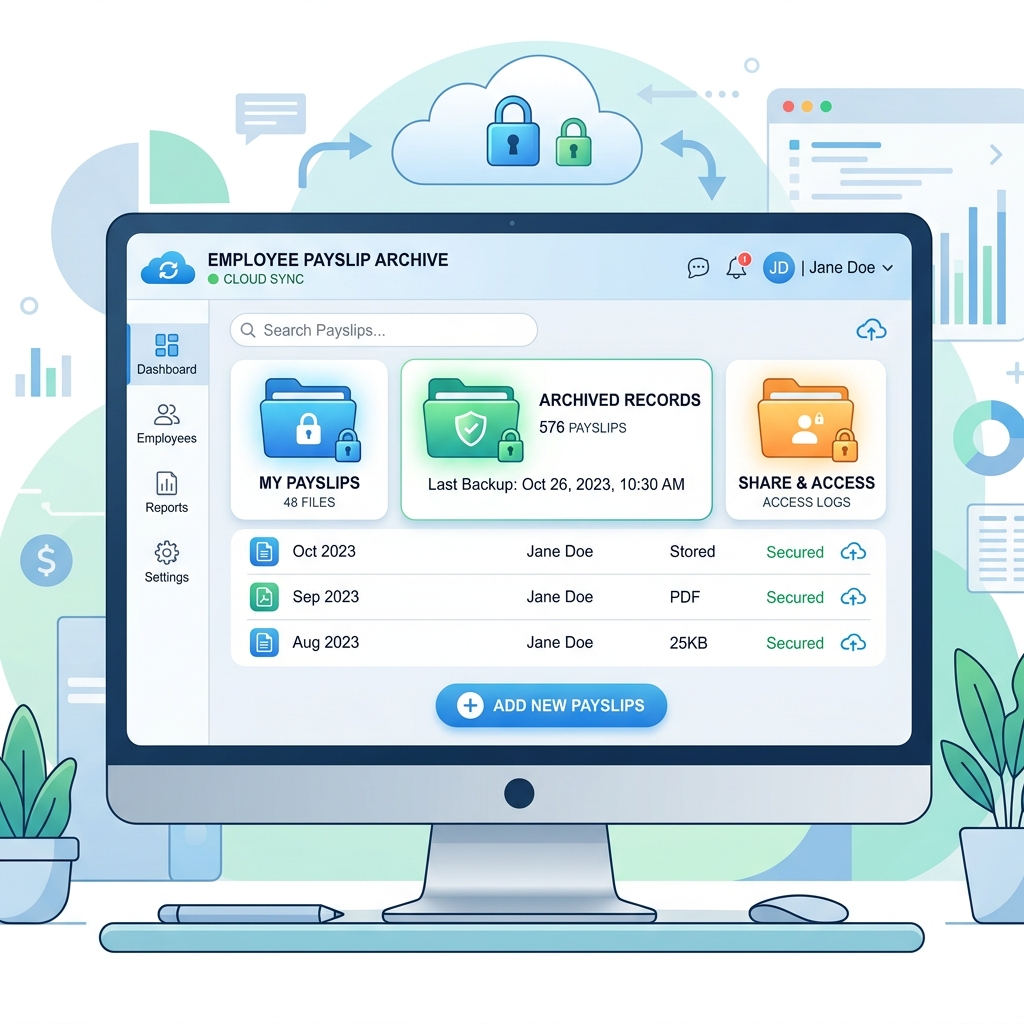
Click Generate Payslips. PayslipGen instantly compiles 10, 50, or 200+ individualized PDF paystubs locally in seconds. You can save them into an organized local archive or automatically dispatch them to each mechanic's inbox using custom SMTP (Google Workspace, Amazon SES, SendGrid, or Microsoft 365).
Chapter 6: Top 5 Wage-and-Hour Audit Traps in Automotive Repair
When state labor commissioners or Department of Labor wage-and-hour investigators audit auto repair shops and dealerships, they search for specific structural non-compliance patterns:
Trap 1: Off-the-Clock Teardown & Diagnostic Time
Allowing technicians to perform vehicle teardown, multi-point inspections, or electrical troubleshooting "off-the-clock" before customer repair approval. All time under employer control is compensable clock time.
Trap 2: Averaging High-Flag Days to Cover Slow Waiting Days
In jurisdictions with strict piece-rate statutes (like California Labor Code § 226.2), you cannot justify $0 pay during an unflagged 4-hour parts wait on Tuesday simply because the tech flagged 12 hours on Wednesday. Non-productive time must be explicitly itemized.
Trap 3: Unlawful Minimum Wage Draw Clawbacks
Treating minimum wage draw make-up pay as a negative balance or advance against future earnings. Attempting to claw back statutory draw supplements in subsequent pay periods constitutes an illegal wage kickback under federal and state law.
Trap 4: Calculating Overtime from Base Flag Rate Instead of Blended Regular Rate
Calculating overtime pay by simply multiplying minimum wage by 1.5x, rather than computing the true weighted regular rate of pay (Total Straight Time Earnings ÷ Total Physical Clock Hours) across all hours worked.
Trap 5: Commingling Tool Allowances into Taxable Gross Wages
Failing to execute a formal IRS Accountable Plan for technician tool stipends. Unstructured tool allowances are treated as taxable income by default, forcing both the shop and the mechanic to pay unnecessary payroll taxes on tool expenses.
Chapter 7: Automotive Labor Compliance FAQs
Can auto shops pay different flag rates for warranty work vs customer retail repairs?
Yes. Multi-tier flag rates are standard practice in dealerships and collision centers. However, both tiers must be clearly defined in the written compensation agreement and itemized as separate lines on the paystub with their respective flag hours, unit rates, and gross totals.
How does the FLSA Section 7(i) retail commission exemption apply to mechanics?
Under 29 U.S.C. § 207(i), automotive technicians employed by retail service establishments may be exempt from FLSA overtime if: (1) Their regular rate of pay exceeds 1.5 times the statutory minimum wage for all hours worked, and (2) More than half of their total compensation represents commissions (flag hours billed directly to customer repair orders). However, state laws (such as California) do not recognize 7(i) exemptions for flat-rate mechanics, requiring standard daily/weekly overtime regardless.
What rate must auto shops pay for non-productive standby time?
The rate for non-productive time (NPT) is determined by mutual agreement between employer and employee, but it can never be lower than the applicable statutory minimum wage (federal, state, or municipal, whichever is highest). Many progressive auto shops pay an agreed base rate of $18.00 to $25.00/hour for meetings, parts waiting, and shop maintenance to maintain technician retention.
Are mechanics entitled to separate compensation for mandatory rest breaks?
In California (under Labor Code § 226.2), Washington State, and Colorado, flat-rate pieceworkers must be compensated separately for mandatory 10-minute rest breaks at the higher of the statutory minimum wage or their average piece-rate regular rate of pay. Under federal FLSA, rest breaks of 20 minutes or less count as compensable clock hours.
How do uniform rental deductions work on technician paystubs?
Uniform laundering or rental fees can only be deducted if authorized in writing by the technician and if the deduction does not reduce the employee's effective hourly earnings below the statutory minimum wage for that workweek. In some states (e.g., California), mandatory safety gear and corporate uniforms with company logos must be provided 100% free of charge by the employer.
Can PayslipGen process data exported directly from Mitchell 1 or Tekmetric?
Yes. PayslipGen accepts standard .csv and .xlsx spreadsheets exported from any shop management software or DMS. Its visual column mapper allows you to map custom column headers (such as RO Numbers, Flag Hours, Book Rates, and Tool Stipends) into standardized, professional paystub line items in seconds.
Why is local offline payroll software safer than cloud payroll for auto shops?
Automotive paystubs contain sensitive employee data including Social Security Numbers, home addresses, bank details, and wage records. Cloud platforms expose this data to third-party server breaches and recurring monthly subscription fees ($40 base + $6/tech/month). PayslipGen runs 100% locally on your computer—zero cloud storage, zero data leaks, zero monthly fees.
Automate Audit-Proof Flat-Rate Mechanic Paystubs Today
Generate professional, multi-line, password-protected automotive paystubs in bulk directly from your spreadsheets and shop management exports—with complete data sovereignty and zero recurring SaaS subscriptions.
Get PayslipGen TodayConclusion
The flat-rate "flag hour" model remains one of the most effective compensation frameworks in the automotive industry—driving technician output, maximizing shop bay throughput, and rewarding mechanical skill. However, operating flat-rate payroll with outdated, single-rate paystubs creates catastrophic exposure to wage-and-hour litigation, minimum wage draw penalties, and PAGA class actions.
By capturing physical clock hours alongside flagged book time, separating non-productive standby time, calculating blended overtime rates, and establishing tax-free IRS Accountable Plans for tool allowances, auto repair shops and dealerships can achieve total regulatory compliance.
Pairing your master Excel payroll ledger with the local, high-speed batch compilation of PayslipGen empowers your service department to generate audit-ready, password-protected PDF paystubs in seconds—protecting your business from costly labor audits while delivering pristine transparency to your technicians.
(Managing other specialized payroll models? Explore our guides on Piece-Rate Paystub Templates & Rest Breaks, Hourly Employee Payslips & Shift Rates, or 1099 Contractor Payment Advice Stubs.)