
Pilot & Flight Crew Paystub Generator: How Regional Charters Track Block Hours, Duty Rig Pay & GSA Per Diems in Excel
Key Takeaways
- ✓Block Time vs. Duty Time: Flight crews are not compensated like standard office staff. The primary currency of aviation compensation is Block Hours (door closure to door opening or chocks away to chocks under) governed under FAA Part 135 / Part 121 regulations, requiring precise time-tracking separate from total gate duty periods.
- ✓Duty Rigs & Trip Rigs (1:2 and 1:3.5): When bad weather, mechanical delays, or air traffic control holds ground an aircraft, pilots rely on contractual duty rigs (e.g., 1 hour of pay for every 2 hours of on-duty sit time) and trip rigs (1 hour of pay for every 3.5 hours away from base) to ensure fair compensation for ground delays.
- ✓IRS Publication 463 & Special Transportation Per Diems: Flight crew per diem meal allowances qualify for special federal transportation substantiation rates under IRS Notice 2023-68 ($69/day CONUS, $74/day OCONUS). These non-taxable stipends must be strictly bifurcated on paystubs from taxable flight wages to prevent employee tax penalties.
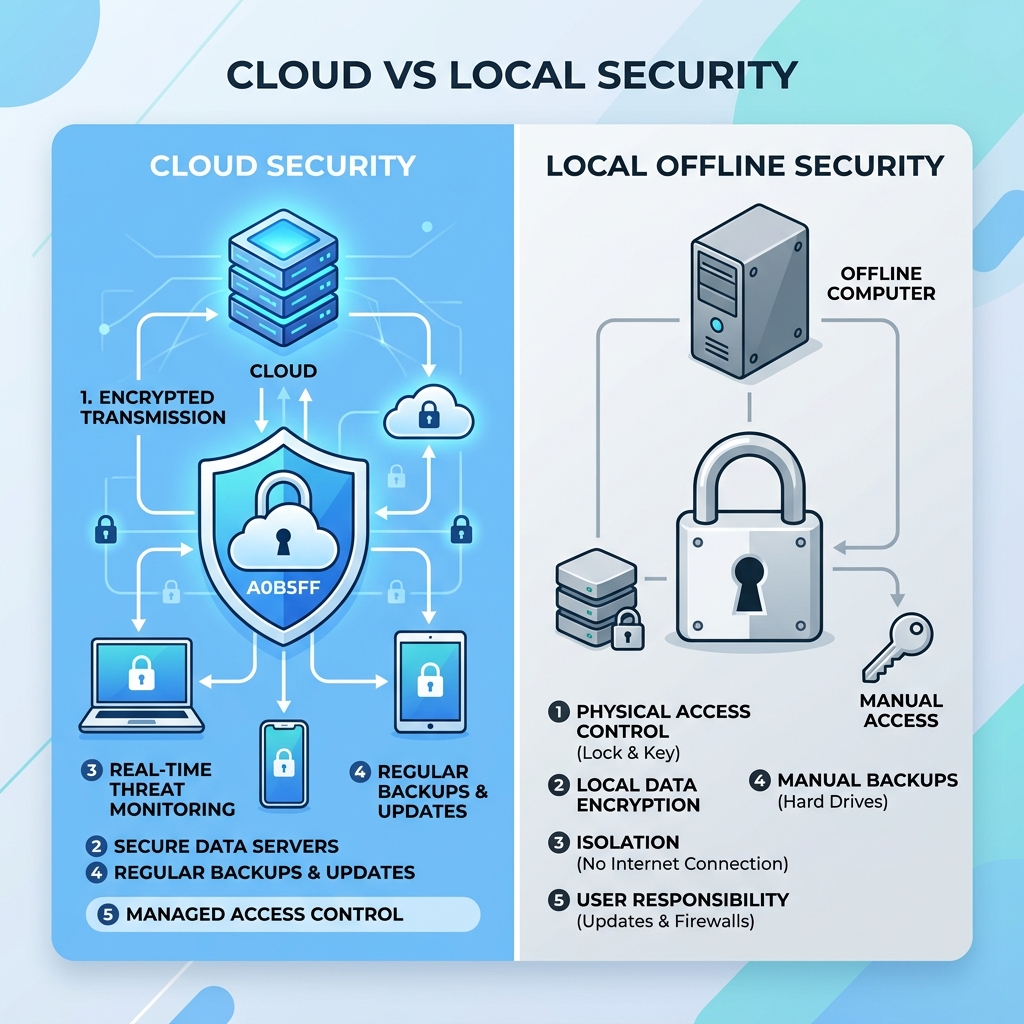
- ✓Sovereign Ramp & Hangar Payroll: General aviation charters, Part 135 on-demand operators, and corporate flight departments operate across remote FBOs and international ramps without reliable connectivity. PayslipGen runs 100% offline on any local laptop for a one-time $49 fee, generating bulk password-protected PDF paystubs without monthly SaaS tolls.
At an FBO executive terminal in Teterboro, Van Nuys, or Scottsdale, a twin-turbine business jet touches down after a cross-country repositioning flight. For Captains, First Officers, and corporate flight attendants, flying the aircraft is only one component of a grueling multi-day duty rotation.
Aviation crew compensation is widely recognized by certified payroll professionals as one of the most mathematically intricate pay systems in the modern economy. Unlike standard hourly employees or salaried corporate executives, flight crew compensation combines:
- Block-to-Block Flight Hours: The exact airborne and taxi duration recorded from the moment the aircraft cabin doors latch and parking brakes release until the chocks are inserted at the destination gate.
- Minimum Monthly Flight Guarantees (MMG): Baseline monthly retainers (commonly 60, 70, or 75 block credit hours) paid regardless of whether an airframe is grounded for unscheduled turbine inspections, avionics overhauls, or blizzards.
- Duty Rigs & Trip Rigs: Contractual minimum credit multipliers that protect flight crews from sitting unpaid for 9 hours in an airport crew lounge during an extended maintenance hold.
- Non-Taxable Federal Per Diems: IRS Publication 463 meal and incidental expense (M&IE) reimbursements calculated across hours away from home base (Time Away From Base, or TAFB).
- FAA Recurrent Training Stipends: Specialized daily pay allowances awarded when crew members report to FlightSafety or CAE simulators for mandatory Part 135 / Part 121 checkrides.
Standard commercial payroll software—such as Gusto, Paychex, or QuickBooks Online—is fundamentally incapable of modeling aviation duty rigs, block hour credit minimums, or transportation per diems without messy, error-prone manual spreadsheets.
In this comprehensive guide, we dissect the federal aviation regulations and IRS tax rules governing flight crew pay, walk through the exact mathematical logic of block hours and duty rigs, provide a production-ready master Excel blueprint, and demonstrate how charter operators use PayslipGen to generate audit-ready, password-protected PDF flight crew paystubs completely offline.
Try Our Interactive Demo Instantly
Want to see how an offline-capable, client-side payslip generator works in practice? Try our brand-new interactive demo right in your browser. Upload a sample CSV, map your columns, and generate beautifully designed PDF payslips—with zero data ever being transmitted to our servers.
Launch Free Demo NowChapter 1: The Anatomy of Aviation Pay: Block Hours vs. Duty Periods
To understand aviation payroll, one must first master the fundamental operational distinction codified under Federal Aviation Administration (FAA) Regulations (14 CFR Parts 91, 121, and 135):
1. Block-to-Block Hours (Flight Pay Hours)
Under standard aviation definitions, Block Time begins when the aircraft moves under its own power (or is pushed back by a tug with cabin doors closed) for the purpose of flight, and ends when the aircraft comes to a complete rest at the parking ramp with chocks placed or doors opened.
In aircraft flight logs and Aircraft Flight Logs (AMLs), this is measured using automated ACARS sensors or manual flight log entries (Out-Off-On-In times):
- OUT: Aircraft pushes back from the gate or chocks are removed.
- OFF: Wheels lift off the runway surface (Weight-off-wheels squat switch).
- ON: Main landing gear touches the destination runway.
- IN: Aircraft parks at the ramp, parking brake is set, and chocks are secured.
The difference between OUT and IN represents the Block Time. Pilots and flight attendants are paid their contractual flight hourly rate (e.g., $145/hour for a Citation X Captain; $85/hour for a First Officer) based strictly on these block hours.
2. Duty Time (The Duty Period)
A pilot's working day is vastly longer than their flight time. The Duty Period begins when the crew member is required to report to the airport, FBO, or briefing facility (typically 45 to 60 minutes prior to scheduled departure for preflight weather briefings, weight-and-balance calculations, fueling supervision, and walk-around safety inspections).
The duty period continues through all intermediate ground turns, de-icing delays, customer luggage staging, and post-flight engine shutdowns, concluding 15 to 30 minutes after the final block-in of the day.
Under FAA Part 135.267, commercial on-demand flight crews are limited to a maximum 14-hour duty day with at least 10 consecutive hours of rest. While an FAA duty day may span 13.5 hours, the pilot may only log 3.8 hours of actual block flight time!
Aviation Compensation Hazard: Unpaid Ground Sit Time
If an operator pays flight crews strictly on block hours without duty rig protections, a crew that reports at 06:00, waits through a 6-hour ATC ground stop, and flies 1.5 hours before returning at 18:00 would only receive 1.5 hours of pay for a 12-hour workday! In competitive charter markets, operators who fail to incorporate duty rig credit guarantees face catastrophic crew attrition and pilot retention crises.
Chapter 2: Minimum Monthly Guarantees (MMG) & Rig Formulas
To protect flight crews from flight cancellations and seasonal charter slumps, professional aviation agreements implement a dual safety net: Minimum Monthly Guarantees and Rig Credits.
1. The Minimum Monthly Guarantee (MMG)
In Part 135 on-demand operations and corporate jet departments, full-time pilots are contracted under a baseline guarantee—typically 60, 70, or 75 credit hours per month.
If a pilot flies only 42 block hours due to aircraft annual maintenance, they still receive the full 70 credit hours of base salary. If they fly 86 credit hours, they receive their 70-hour base guarantee plus 16 hours of Over-Guarantee Pay (often paid at straight time or 1.25x–1.5x premium depending on the company pilot agreement).
2. Duty Rigs (The 1-for-2 Standard)
A Duty Rig guarantees that a pilot receives a minimum credit hour for every given block of on-duty time. The standard charter duty rig is 1:2 (one hour of flight pay credit for every two hours of duty).
Example: A crew reports at 07:00 and completes duty at 19:00 (12.0 total duty hours). Because of heavy head winds and ground holding patterns, they only logged 3.5 block hours.
- Actual Flown Block Hours = 3.5 hours
- Duty Rig Calculation = 12.0 / 2 = 6.0 credit hours
- Payable Credit Hours = 6.0 hours (The operator pays the higher of actual block hours vs. the duty rig credit).
3. Trip Rigs (The 1-for-3.5 Away-From-Base Formula)
When a flight crew is assigned a multi-day charter pairing with a Remain Overnight (RON) in Bermuda, Aspen, or London, the aircraft may sit on the tarmac for three days while the client attends a conference. The crew is not on active duty, but they are away from their home base and families.
The Trip Rig (typically 1:3.5 or 1:4) calculates credit hours based on total Time Away From Base (TAFB):
If a trip pairing spans 70 hours from initial departure to final return, the Trip Rig guarantees at least 70 / 3.5 = 20.0 credit hours of pay, even if the total round-trip flight only required 8 block hours.

Chapter 3: IRS Publication 463 & Special Transportation Industry Per Diems
Few payroll subjects cause more audits than crew per diems. When pilots and flight attendants travel away from their "tax home" (domicile or home airport base), their meals and incidental expenses are reimbursable on a tax-exempt basis under Internal Revenue Code § 62(a)(2)(A).
The Special Transportation Industry M&IE Rate
Because commercial flight crews move across multiple cities and states in a single afternoon, tracking individual restaurant receipts is administratively unfeasible.
Under IRS Publication 463 and annual revenue notices (e.g., IRS Notice 2023-68), the IRS provides a simplified Special Transportation Industry Per Diem Rate:
| Travel Region | IRS Transportation M&IE Daily Rate | Hourly Equivalent Rate | Taxability on Form W-2 |
|---|---|---|---|
| Continental US (CONUS) | $69.00 / day | $2.875 / hour away from base | 100% Non-Taxable (Accountable Plan) |
| Outside Continental US (OCONUS / Foreign) | $74.00 / day | $3.083 / hour away from base | 100% Non-Taxable (Accountable Plan) |
| Day Trips (Zero Overnight / Same-Day) | Standard meal allowance | Variable | 100% Taxable Income (No overnight rest rule) |
The Critical "Overnight Rest" Rule
Under long-standing Supreme Court precedent (United States v. Correll), meal allowances are only non-taxable if the trip requires the taxpayer to obtain substantial sleep or rest away from home.
If a pilot flies from Atlanta to Chicago at 08:00, turns the plane around, and lands back in Atlanta at 17:00 on the same day, any "per diem" paid for lunch is legally taxable wages subject to federal income tax, Social Security, and Medicare withholding. Conflating day-trip meal stipends with non-taxable overnight per diems is a frequent trigger for IRS payroll audits.
Chapter 4: Master Excel Aviation Payroll Blueprint (With Real Formulas)
To eliminate manual payroll errors and ensure compliance with FAA duty limits and IRS Publication 463, aviation operators should utilize an automated master Excel workbook.
Below is the exact production architecture for an on-demand charter operator managing a fleet of midsize business jets:
| Line # | Field Header | Sample Value | Accounting Classification | Excel Formula Specification |
|---|---|---|---|---|
| 01 | Crew_Name_Rank | Capt. Harrison Cole (PIC) | Pilot Roster | Text string |
| 02 | Monthly_Flight_Rate | $140.00 / credit hr | Contract Base | Fixed rate |
| 03 | Monthly_Guarantee_Hrs | 70.00 hrs | Base MMG Floor | Fixed contract value |
| 04 | Actual_Block_Hours | 64.50 hrs | Flight Logbook (AML) | Logged Out-to-In total |
| 05 | Duty_Rig_Earned_Hours | 76.20 credit hrs | 1:2 Duty Period Formula | =Total_Duty_Hours/2.0 |
| 06 | Trip_Rig_Earned_Hours | 68.00 credit hrs | 1:3.5 TAFB Formula | =Total_TAFB_Hours/3.5 |
| 07 | Payable_Flight_Credit_Hours | 76.20 credit hrs | Greater of Block, Rig or MMG | =MAX(B3, B4, B5, B6) |
| 08 | Total_Taxable_Flight_Pay | $10,668.00 | W-2 Box 1 Taxable Wages | =B7*B2 |
| 09 | Simulator_Recurrent_Stipend | $1,200.00 | Part 142 Training (2 days) | =Sim_Days*600.0 |
| 10 | Non_Taxable_Per_Diem_CONUS | $690.00 | 10 Days RON @ $69/day | =RON_Days*69.0 |
| 11 | TOTAL_GROSS_DISBURSEMENT | $12,558.00 | Wages + Stipends + Per Diem | =B8+B9+B10 |
Flight Department Roster Summary Table
When applied across a regional charter roster (Captains, First Officers, and Flight Attendants), the spreadsheet ensures complete transparency:
| Crew Member | Position | Flown / Rig Credit | Taxable Flight Wages | Training Stipend | Non-Taxable Per Diem | Net Paystub Check |
|---|---|---|---|---|---|---|
| Harrison Cole | Captain (PIC) | 76.20 cr hrs | $10,668.00 | $1,200.00 | $690.00 | $9,842.14 |
| Elena Rostova | First Officer (SIC) | 70.00 cr hrs (MMG) | $5,950.00 | $0.00 | $621.00 | $5,248.50 |
| Julian Mercer | Captain (PIC) | 84.00 cr hrs (Over-G) | $11,760.00 | $0.00 | $828.00 | $9,944.20 |
| Chloe Bennett | Corporate Flight Attendant | 72.00 cr hrs | $3,960.00 | $350.00 | $690.00 | $4,115.30 |
| FLEET TOTALS | 302.20 cr hrs | $32,338.00 | $1,550.00 | $2,829.00 | $29,150.14 | |
Chapter 5: Why Cloud Payroll Breaks Down in Hangar and Ramp Operations
Corporate flight operations directors and chief pilots routinely face insurmountable hurdles when attempting to run aviation payroll on general-purpose cloud web applications:
1. Ramp Connectivity & International Roaming Blocks
Aviation operations take place on tarmac ramps, international FBO lounges, and in remote hangar facilities where cellular data is spotty and corporate firewalls block foreign IP addresses. Cloud SaaS applications (Gusto, QuickBooks Online, Rippling) enforce heavy web interfaces, frequent session timeouts, and mandatory two-factor authentication (SMS push). If you are dispatching aircraft across Europe, the Caribbean, or remote Canadian runways, relying on cloud-only web applications invites administrative paralysis.
2. High Base Fees for Low-Headcount Aviation Teams
A private Part 135 charter operator managing four aircraft may only employ 10 to 14 total pilots and flight attendants. Yet cloud payroll platforms impose expensive "Enterprise" tiers to unlock multi-rate job costing, custom deduction formulas, and advanced reporting. Spending $150 to $350 per month just to process 12 monthly paystubs represents an indefensible operational expense.
3. Rigid Tax Rules That Botch Transportation Per Diems
Mainstream platforms automatically classify every non-salary payment as standard W-2 Box 1 compensation unless an accountant completes complex manual mapping. If the software inadvertently subjects your pilots' IRS Notice 2023-68 per diems to 7.65% FICA withholding and state income taxes, your flight crews are improperly penalized hundreds of dollars per trip.
Chapter 6: 5-Year Financial Analysis: $49 Lifetime License vs. Cloud SaaS Subscriptions
Let's compare the 5-year total financial outlay for an aviation charter operator employing 12 flight crew members:
| Cost Component | Gusto Plus Aviation Setup | ADP Run Aviation Tier | PayslipGen (One-Time Desktop License) |
|---|---|---|---|
| Monthly Base Platform Fee | $80.00 / mo ($960/yr) | $175.00 / mo ($2,100/yr) | $0.00 (Zero recurring subscriptions) |
| Per-Crew Monthly Seat Fee (12 Staff) | $12.00 / crew / mo ($1,728/yr) | $16.00 / crew / mo ($2,304/yr) | $0.00 (Unlimited crew members) |
| Contractor / 1099 Relief Pilot Fees | $6.00 / contractor / mo | $8.50 / contractor / mo | $0.00 (Process company & contract crew) |
| Internet & Web Browser Dependency | Mandatory cloud connection | Mandatory cloud connection | 100% Offline Ramp Operation |
| Year 1 Net Cost | $2,688.00 | $4,404.00 | $49.00 total |
| Year 3 Cumulative Cost | $8,064.00 | $13,212.00 | $49.00 total |
| Year 5 Cumulative Cost | $13,440.00 | $22,020.00 | $49.00 (Lifetime) |
Over five years, an aviation operator saves between $13,000 and $22,000in unnecessary SaaS tolls. That capital is far better utilized for Pratt & Whitney turbine overhauls, Garmin avionics upgrades, or simulator subscriptions.
Chapter 7: Step-by-Step Workflow: Generating Pilot Paystubs from Excel
Here is how aviation operations managers use PayslipGen to produce audit-proof, password-protected PDF flight crew paystubs in seconds:
Step 1: Maintain Your Flight Operations Log in Excel
Record each pairing's block hours, duty time, and layover days in your flight department spreadsheet. Use standard formulas (=MAX(MMG, Block, DutyRig, TripRig)) to calculate total payable credit hours.
Step 2: Launch PayslipGen on Your Local Hangar PC
Open PayslipGen on your Windows, Mac, or Linux computer. Configure your aviation enterprise profile: legal charter entity, FAA Part 135 certificate number, corporate logo, and registered office address.
Step 3: Drag & Drop Your Flight Workbook
Drag your .xlsx or .csv spreadsheet directly into PayslipGen. The desktop software parses all rows locally—no flight logs or passenger manifests ever touch the internet.
Step 4: Map Aviation Earnings Columns
Match your spreadsheet headers to PayslipGen's itemized payroll fields:
Payable_Flight_Credit_Hours→ Regular Hours / UnitsTotal_Taxable_Flight_Pay→ Basic Flight EarningsSimulator_Recurrent_Stipend→ Additional Taxable AllowanceNon_Taxable_Per_Diem_CONUS→ Non-Taxable ReimbursementCrew_Email→ Employee Email Address
Step 5: Apply AES-256 PDF Password Encryption & Export
Set the PDF password encryption rule to the pilot's Date of Birth (YYYYMMDD) or FAA Airman Certificate Number. Click Generate Paystubs. Within seconds, PayslipGen compiles high-resolution, vector PDF paystubs ready for offline printing or automated SMTP dispatch.
Frequently Asked Questions (FAQs)
What is the difference between Block Hours, Flight Time, and Duty Time on a pilot paystub?
Block Hours represent the duration from when aircraft doors close and chocks are pulled until doors open and chocks are set at the destination. Flight Time (or airborne time) measures strictly wheels-up to wheels-down. Duty Time spans the pilot's entire operational day, beginning 45 to 60 minutes before scheduled departure and ending after post-flight wrap-up. Flight pay is calculated on credit hours derived from block time and duty rigs, not total duty time alone.
Are aviation per diem reimbursements taxable on Form W-2?
Under IRS Publication 463 and IRS Notice 2023-68, overnight travel per diems paid within federal transportation industry rates ($69/day CONUS, $74/day OCONUS) under an accountable plan are 100% tax-free and excluded from Form W-2 Box 1 wages. However, any meal allowance paid for single-day trips with zero overnight rest is legally taxable compensation subject to income and employment taxes.
How is overtime calculated for flight crew under the Railway Labor Act (RLA) vs FLSA?
Commercial airlines and many certified Part 135 air carriers are governed by Title II of the Railway Labor Act (45 U.S.C. § 181) and are explicitly exempt from the Fair Labor Standards Act (FLSA) 40-hour statutory overtime rules under Section 13(b)(3). Instead, flight crew overtime and premium pay rules are determined strictly by individual employment agreements, flight operations manuals, or collective bargaining agreements (CBAs).
What happens when a pilot is grounded for scheduled recurrent simulator training?
Operators typically maintain full base salary during FAA Part 142 training under the Minimum Monthly Guarantee (MMG). In addition, operators pay a specialized training daily stipend ($400 to $600 per simulator day) plus travel per diems and hotel accommodations. These items should be itemized on the pilot's paystub under dedicated earnings lines.
Can flight attendants and corporate cabin servers use this same block-hour and duty rig Excel template?
Yes. Corporate flight attendants typically operate under identical block credit structures, minimum monthly guarantees, and IRS overnight per diem rates as pilots, with adjustments to hourly flight rates. PayslipGen allows operators to manage pilots, flight attendants, and ground maintenance mechanics within the same workbook.
Command Your Aviation Payroll with Sovereign Offline Precision
Generate compliant, itemized pilot and flight crew paystubs directly from your Excel flight logs. 100% offline ramp security, zero monthly SaaS tolls, one-time payment of $49 for lifetime access.
Get PayslipGen for $49 (Lifetime Access)Conclusion: Professional Flight Operations Demand Transparent Paystubs
Piloting multi-million-dollar turbine aircraft through turbulent weather, complex airspace, and tight charter itineraries requires elite professional skill. Flight crews who safeguard high-net-worth passengers, corporate executives, and airframe assets deserve crystal-clear visibility into how their block credits, duty rigs, and per diems are calculated.
By leveraging our master aviation Excel blueprint and generating secure, password-protected PDF paystubs with PayslipGen, chief pilots and charter business owners maintain complete regulatory compliance, keep proprietary flight logs private, and protect their bottom line from perpetual SaaS subscription creep.
(Managing mobile, remote, or specialized personnel across other regulated industries? Explore our practical guides on Travel Nurse GSA Per Diem Stipends, Commercial Fishing Lay Shares, and Cloud vs. Offline Payroll Security.)