
Commercial Fishing Crew Settlement Generator: How to Calculate Lay Shares, Trip Deductions & Form 1099-MISC from Excel
Key Takeaways
- ✓The Federal Maritime Mandate (46 U.S.C. §§ 10601–10602): Federal law requires the master or owner of any commercial fishing vessel over 20 gross tons to execute a written agreement prior to departure, and mandates an itemized written settlement sheet delivered to each fisherman upon voyage completion. Failure to provide this written accounting opens the vessel to maritime liens under federal admiralty jurisdiction.
- ✓IRS Exemption & Form 1099-MISC Box 5: Under Internal Revenue Code § 3121(b)(20) and § 3306(c)(20), crew members on vessels normally operating with fewer than 10 individuals who receive compensation solely as a share of the catch are exempt from FICA and FUTA withholding. Their earnings must be reported on Form 1099-MISC Box 5 (Fishing boat proceeds), not Form 1099-NEC or W-2.
- ✓Clear Lay Settlement Mechanics: Gross Stock (pounds landed × dock price per pound) minus Shared Trip Expenses (fuel, ice, bait, food, landing taxes, lumpers) equals Net Voyage Stock. The net stock is divided between the Boat Share (e.g., 50%) and Crew Pool (50%), with individual deckhand percentages allocated before subtracting personal slop chest advances.
- ✓Zero-Internet Wheelhouse Operation: Off-the-shelf cloud payroll platforms (Gusto, ADP, QuickBooks Online) fail at sea due to zero satellite connectivity, two-factor auth timeouts, and rigid hourly wage assumptions. Using PayslipGen, skippers and fleet bookkeepers calculate lay shares in Excel and generate compliant, encrypted PDF crew settlement statements completely offline for a one-time $49 fee with zero off-season subscription drain.
At 2:00 AM on a rain-swept processing dock in Kodiak, New Bedford, or Newport, the fishing trip is not over when the hold is pumped. The physical labor of hauling gillnets, picking longline hooks, or sorting sea scallops on the shaker table is immediately replaced by an intense, legally binding financial reckoning: the crew settlement.
Deckhands who have endured 70-knot gales, freezing spray, and 18-hour shifts gather in the galley or the wheelhouse. They do not want vague verbal estimates or handwritten scribbles on a water-stained napkin. They want an exact, transparent, line-by-line accounting of what the fish weighed on the cannery scales, what dock price the buyer paid, what the boat burned in marine diesel, how much bait was dropped, and the exact dollar amount of their lay share after deducting their slop chest advances.
For vessel captains, skippers, and shoreside fleet bookkeepers, commercial fishing payroll is unlike any onshore payroll on earth:
- No Fixed Hourly Wages: Crew members are joint venture partners sharing the financial risks and rewards of the catch under centuries-old maritime admiralty traditions.
- Strict Federal Legal Mandates: Under Title 46 of the United States Code, delivering an itemized written settlement sheet is not a courteous suggestion—it is a federal statutory requirement backed by maritime lien penalties against the vessel itself.
- Complex Operating Deductions: Shared trip expenses ("off-the-top" deductions like fuel, groceries, ice, wharfage, and state landing taxes) must be mathematically reconciled before dividing net proceeds between the boat owner and the crew pool.
- Hostile Operating Environments: The settlement must often be calculated and printed right in the wheelhouse, tied up to a cannery tender or fuel float 60 miles beyond cellular range, without internet access or reliable satellite broadband.
Mainstream cloud payroll platforms—such as Gusto, QuickBooks Online Payroll, or ADP—are entirely incapable of handling this reality. They demand persistent web connectivity, force you into rigid bi-weekly W-2 wage frameworks, refuse to accommodate catch share arithmetic, and hit you with recurring monthly subscription fees even when your boat sits hauled out on the dry dock blocks for six months during the winter closure.
In this comprehensive engineering guide, we dissect the federal maritime laws governing commercial fishing settlements, walk through the exact mathematical formulas of the maritime lay system, provide a production-ready Excel blueprint, and demonstrate how skippers and maritime bookkeepers use PayslipGen to generate bank-grade, legally compliant crew settlement sheets completely offline on any wheelhouse laptop.
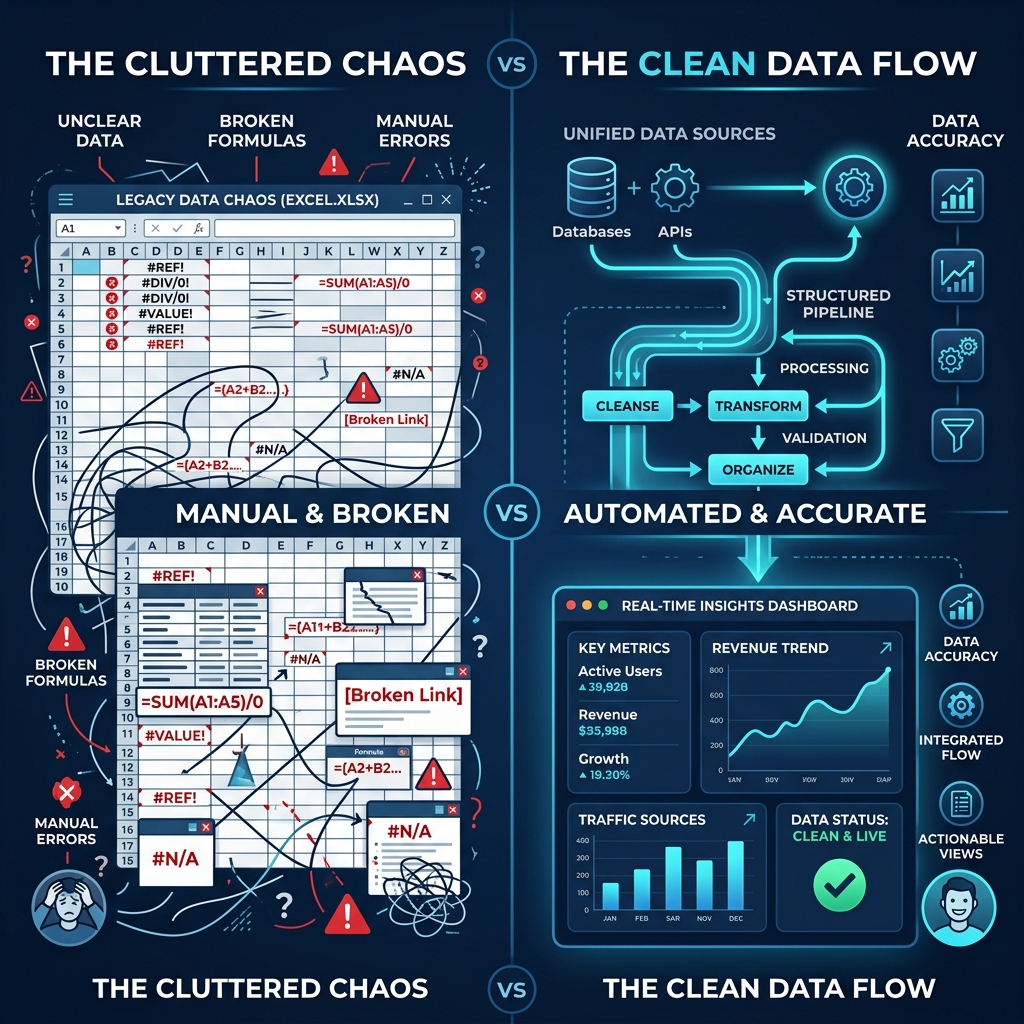
Try Our Interactive Demo Instantly
Want to see how an offline-capable, client-side payslip generator works in practice? Try our brand-new interactive demo right in your browser. Upload a sample CSV, map your columns, and generate beautifully designed PDF payslips—with zero data ever being transmitted to our servers.
Launch Free Demo NowChapter 1: The Federal Maritime Mandate: 46 U.S. Code §§ 10601 & 10602
Commercial fishing is regulated under federal maritime admiralty jurisdiction. Unlike land-based employers whose wage records are governed by the Fair Labor Standards Act (FLSA) and state labor boards, commercial fishing vessel masters and owners are bound by federal maritime statutes codified in Title 46 of the United States Code (Shipping).
Two specific sections dictate every commercial fishing trip settlement in the United States:
1. The Fishing Agreement Mandate: 46 U.S.C. § 10601
Under 46 U.S.C. § 10601, before clearing a port of the United States on a voyage to fish for catch, the master or individual in charge of any fishing vessel, fish processing vessel, or fish tender of at least 20 gross tons must make a formal written agreement with each seaman on board.
The statute requires that this agreement:
- Must be in writing and signed by the vessel owner, the master, and the fisherman.
- Must state the terms of any wage, share, or other payment arrangement agreed upon (e.g., 10% crew lay share of net proceeds).
- Must specify the voyage period or fishing season duration.
- Must enumerate the permissible deductions that may be charged against the crew member's share.
Admiralty Hazard: Verbal Agreements Invalidate Lay Terms
If a vessel of 20 gross tons or more sails without a written 46 U.S.C. § 10601 contract, federal courts hold that the verbal lay agreement is legally voidable. Under established admiralty case law (such as Seattle-First Nat'l Bank v. Lady Lynne and Bjornsson v. U.S. Dominator Inc.), a crewman without a valid written agreement can sue the vessel for the highest rate of wages paid at the port of departure, or the fair market value of their services, stripping the boat owner of contractual protections.
2. The Mandatory Written Settlement Sheet: 46 U.S.C. § 10602
Once the voyage is complete and the fish are delivered to the processor, buyer, or cannery tender, 46 U.S.C. § 10602 takes effect. The statute strictly governs the recovery of shares and mandates the delivery of an itemized settlement accounting:
"When fish caught on a voyage are delivered to the owner, master, or an agent of the owner or master, and the agreement provides for a share of the catch or proceeds of the catch for each seaman, the owner or master shall deliver to each seaman an itemized written settlement showing the sales of the fish caught on the voyage and all deductions made from the catch or proceeds."
This federal requirement means that handing a deckhand a lump-sum check or sending an electronic Venmo transfer without an itemized statement is a direct violation of federal maritime law.
The Threat of In Rem Maritime Liens
Why does this matter so intensely to vessel owners? Because under admiralty law, unpaid crew shares constitute a seaman's preferred maritime lien. A preferred maritime lien has the highest priority over almost all other maritime claims—including preferred ship mortgages held by commercial marine lenders!
If a disgruntled deckhand claims their settlement was inaccurate, missing trip receipts, or shortchanged on dock prices, they can hire a maritime attorney and file an in rem action against the vessel in federal district court. The U.S. Marshals Service will physically arrest the vessel, chaining the vessel to the pier and preventing it from leaving for the next fishing opener until bond is posted.
An airtight, itemized settlement sheet—clearly articulating gross weight, dock price, shared trip expenses, boat share, crew pool, individual lay percentage, and itemized slop chest receipts—is a vessel owner's primary legal defense against costly maritime litigation.
Chapter 2: IRS Tax Classification: IRC § 3121(b)(20) & Form 1099-MISC Box 5
One of the most persistent sources of confusion among accountants, payroll clerks, and skippers is whether commercial fishermen should be treated as W-2 employees, 1099-NEC independent contractors, or statutory non-employees.
The Internal Revenue Code contains a dedicated statutory framework specifically engineered for small-vessel commercial fishing:
| Statutory Authority | Scope & Threshold | Tax Treatment | Annual IRS Reporting Form |
|---|---|---|---|
| IRC § 3121(b)(20) | Fewer than 10 crew members; pure share of catch | Exempt from FICA (Social Security & Medicare) | Form 1099-MISC (Box 5) |
| IRC § 3306(c)(20) | Fewer than 10 crew members; pure share of catch | Exempt from FUTA (Federal Unemployment Tax) | Form 1099-MISC (Box 5) |
| IRC § 3401(a)(17) | Crew qualifying under § 3121(b)(20) | Exempt from Federal Income Tax Withholding (FITW) | Form 1099-MISC (Box 5) |
| Standard W-2 Rules | Vessels with 10+ crew, or crew paid hourly/daily wages | Subject to standard FICA, FUTA & FITW withholding | Form W-2 & Form 941 |
The 4-Prong Test for Self-Employed Crew Exemption
To classify deckhands as self-employed under IRC § 3121(b)(20) and avoid statutory employer FICA/FUTA liabilities, the vessel owner must verify that the arrangement satisfies four distinct criteria:
- Vessel Crew Size Rule: The vessel operates with an operating crew normally fewer than 10 individuals. The IRS determines this by calculating the average number of crew members on trips made during the preceding four calendar quarters.
- Catch Share Remuneration:The crew member receives compensation solely based on a share of the vessel's catch or a share of the proceeds from the sale of the catch.
- No Guaranteed Minimums: The crew member does not receive a guaranteed hourly wage, day rate, or base salary. If the boat catches zero fish, the crew receives zero lay share.
- De Minimis Additional Cash Rule: Under the Small Business Job Protection Act of 1996, crew members may receive small incidental cash bonuses—provided the cash payment does not exceed $100 per trip, is contingent on a minimum catch, and is paid solely for additional duties (such as acting as mate, engineer, or galley cook).
Why Form 1099-MISC Box 5 Is Required (Not 1099-NEC)
When the IRS created Form 1099-NEC (Nonemployee Compensation) in 2020 for general freelance and independent contractor reporting, many boat owners mistakenly started reporting fishing crew earnings on Form 1099-NEC Box 1.
This is a compliance error. IRS instructions explicitly state that payments to individuals who qualify under IRC § 3121(b)(20) must be reported on Form 1099-MISC, Box 5: "Fishing boat proceeds."
Box 5 indicates to the IRS that the income represents maritime lay shares. The crew member reports this amount on Schedule C (Form 1040) as gross business receipts, deducts their personal fishing gear and commercial license expenses, and pays Self-Employment Tax via Schedule SE (15.3% covering Social Security and Medicare).
Chapter 3: The Mechanics of the Maritime Lay System
The maritime lay system is an equitable cost-and-profit sharing framework. In commercial fishing, expenses are bifurcated into two distinct legal categories:
- Shared Voyage Operating Expenses (Off-the-Top): Operational consumables required to prosecute the voyage. These are deducted from Gross Catch Stock to arrive at Net Voyage Stock.
- Personal Crew Advances (Slop Chest / Gear):Personal expenses incurred by an individual crew member. These are deducted solely from that specific seaman's individual share.
1. Calculating Gross Stock
Gross Stock is the total cash proceeds realized from delivering the catch to the buyer, processing tender, or dockside cannery:
For example, in a Bristol Bay sockeye salmon fishery, dock tickets may distinguish between chilled slush-ice fish ($1.45/lb) and unchilled dry-hold fish ($1.15/lb), plus a floating processor quality bleed bonus of $0.15/lb.
2. Shared Trip Operating Expenses ("Off-the-Top")
Under a traditional "Clear Lay" agreement, the vessel and the crew mutually share the cost of voyage consumables. These items are deducted from the Gross Stock before the boat and crew split the proceeds:
- Marine Diesel & Lube Oil: Fuel pumped into main propulsion tanks and auxiliary generators, plus engine lube oil and hydraulic fluid consumed during the voyage.
- Ice / RSW Energy: Crushed dockside flake ice, salt, or refrigeration consumables used to preserve catch quality in the hold.
- Bait: Frozen herring, squid, mackerel, or chum used for longlining, potting, or crabbing.
- Galley Provisions (Grub): Food, drinking water, and groceries purchased for the crew galley during the voyage.
- Lumpers & Offloading Wharfage: Labor fees paid to dockside lumper crews or cannery crane operators to pump or hoist fish from the vessel hold to the scales.
- Fisheries Assessment & Landing Taxes: Mandatory state or regional conservation landing taxes (e.g., Alaska Fisheries Business Tax, Maine Sea Run taxes) deducted at the point of landing.
3. The Division of Net Stock: Boat Share vs. Crew Share Pool
Once Net Voyage Stock is determined, it is split according to the vessel's contractual lay ratio. The two most common divisions in North American fisheries are:
- The 50/50 Lay (Standard Inshore / Gillnet / Crab): 50% of Net Stock is allocated to the Vessel Owner (Boat Share) to service vessel debt, hull insurance, engine depreciation, shipyard haul-out costs, and fishing permits. The remaining 50% forms the Crew Share Pool.
- The 40/60 or 45/55 Lay (High-Capital / Offshore Trawler / Scallop): In fisheries requiring massive capital investments in electronics, winches, and refrigeration plants, the Boat Share may be 55% or 60%, with 40% to 45% distributed to the crew.
4. Allocating Individual Crew Lay Shares
The Crew Share Pool is distributed among the crew members based on their experience, vessel responsibilities, and signed 46 U.S.C. § 10601 agreements. Typical share points include:
- Skipper / Captain: 15% – 20% of the crew pool (if hired; if owner-operator, the skipper frequently takes the Boat Share plus a navigating share).
- Deck Boss / Lead Fisherman: 12% – 14% of the crew pool.
- Full Share Deckhand: 10% of the crew pool (experienced hands who know hydraulics, net mending, and deck safety).
- Half Share / Greenhorn: 5% – 6% of the crew pool (first-year deckhands learning gear operation and boat keeping).
5. Individual Personal Deductions: The Slop Chest & Port Advances
Once an individual deckhand's gross lay share is calculated, personal charges are subtracted. Under maritime custom dating back to 19th-century whaling ships, the vessel maintains a "Slop Chest"—a stock of personal gear, foul weather gear, and tobacco sold to crew members during the season:
- Commercial Deck Gear: Grundéns oilskins, Xtratuf commercial boots, deck knives, work gloves, and headlamps purchased through the boat's commercial supply account.
- Personal Communications: Maritime Starlink data allowances, sat-phone minutes, or satellite inReach messaging tokens.
- Port Cash Advances: Emergency cash draws taken by the crewman against future earnings prior to sailing.
- Personal Fines / Non-Shared Expenses: Costs resulting from personal neglect (e.g., lost survival gear or personal transport to port).
Chapter 4: Master Excel Fishing Settlement Spreadsheet Blueprint (With Real Formulas)
To eliminate calculation errors and comply with 46 U.S.C. § 10602, skippers and maritime bookkeepers should maintain a structured voyage spreadsheet.
Below is the exact production architecture for a 5-man commercial longliner landing Pacific Halibut and Sablefish (Black Cod). This table details the row logic, source data, and exact Excel formulas:
| Line # | Accounting Category | Item Description | Trip Values | Excel Formula Specification |
|---|---|---|---|---|
| 01 | Catch Proceeds | Pacific Halibut (H&G) | 18,450 lbs @ $7.25/lb | =B10*C10 ($133,762.50) |
| 02 | Catch Proceeds | Sablefish (Black Cod) | 9,800 lbs @ $5.80/lb | =B11*C11 ($56,840.00) |
| 03 | Catch Proceeds | Chilled RSW Quality Bonus | 28,250 lbs @ $0.10/lb | =B12*C12 ($2,825.00) |
| 04 | GROSS VOYAGE STOCK | Total Fish Sales Value | $193,427.50 | =SUM(E1:E3) |
| 05 | Trip Expense | Marine Gas Oil / Diesel | 3,200 gal @ $3.85/gal | $12,320.00 |
| 06 | Trip Expense | Frozen Squid / Herring Bait | 120 boxes | $4,850.00 |
| 07 | Trip Expense | Galley Food / Provisions | Harbor Grocery Invoice | $2,450.00 |
| 08 | Trip Expense | Lumpers & Port Wharfage | Dock offload labor | $1,950.00 |
| 09 | Trip Expense | State Landing / Resource Tax | 3.0% on landed catch | =E4*0.03 ($5,802.83) |
| 10 | TOTAL TRIP EXPENSES | Total Off-The-Top Costs | $27,372.83 | =SUM(E5:E9) |
| 11 | NET VOYAGE STOCK | Distributable Catch Pool | $166,054.67 | =E4-E10 |
| 12 | Vessel Allocation | Boat Share (50.0%) | $83,027.34 | =E11*0.50 |
| 13 | CREW SHARE POOL | Crew Distribution Pool (50.0%) | $83,027.34 | =E11*0.50 |
Individual Crew Member Share Allocation Table
Once Line 13 establishes the $83,027.34 Crew Share Pool, the wheelhouse spreadsheet breaks out individual shares and personal slop chest deductions:
| Crew Member | Billet / Role | Lay Share % | Gross Lay Share | Slop Chest & Gear | Port Advances | Net Settlement Check |
|---|---|---|---|---|---|---|
| Erik Lindqvist | Hired Skipper | 34.00% | $28,229.30 | -$185.00 | -$2,000.00 | $26,044.30 |
| Caleb Thorne | Deck Boss / Lead | 22.00% | $18,266.01 | -$320.00 | -$1,000.00 | $16,946.01 |
| Travis Vance | Full Deckhand | 18.00% | $14,944.92 | -$415.50 | -$500.00 | $14,029.42 |
| Mateo Silva | Full Deckhand / Cook | 16.00% | $13,284.37 | -$140.00 | -$750.00 | $12,394.37 |
| Noah Gallagher | Greenhorn (Half Share) | 10.00% | $8,302.73 | -$580.00 | -$250.00 | $7,472.73 |
| TOTALS | 100.00% | $83,027.33 | -$1,640.50 | -$4,500.00 | $76,886.83 | |
Handling "The Hole" (Broken Trips and Negative Stock)
In commercial fishing, a trip where shared expenses exceed the gross value of the catch is known as a broken trip or ending "in the hole." This occurs when an engine throws a rod, weather forces an early abort, or gear is parted by a submerged obstruction.
Under standard admiralty law and written fishing agreements, crew members cannot be forced to pay the boat owner cash out-of-pocket for negative trip operating expenses. However, the deficit may be carried forward against the crew pool in subsequent trips within the same agreed season, provided the signed 46 U.S.C. § 10601 agreement expressly contains a "cumulative seasonal lay" provision. Personal slop chest gear advances, however, remain a valid personal debt owed by the crewman to the vessel owner.
Chapter 5: Why Offline Wheelhouse Software is Essential for Skippers and Fleets
Every year, marine vessel owners attempt to run their payroll using modern web applications like Gusto, Rippling, or QuickBooks Online. By the second trip of the season, the experiment ends in total operational collapse:
1. The Zero-Internet Realities of Offshore Waters
Commercial fishing vessels operate 20 to 200 miles offshore. Even with modern low-earth-orbit satellite systems (like Starlink Maritime), satellite connections are frequently degraded by severe weather, vessel rolling, heavy superstructure obstructions, or bandwidth rationing to save power.
Cloud SaaS platforms enforce heavy JavaScript web bundles, constant background API calls, and mandatory two-factor authentication (SMS or authenticator push). When you are sitting in Dutch Harbor, Kodiak, or offshore on Georges Bank with intermittent connectivity, an application that requires 2FA to generate a settlement sheet is dead software.
2. The Off-Season Dry Dock Billing Drain
Commercial fishing is intensely seasonal:
- Bristol Bay sockeye salmon runs for roughly 6 to 8 intense weeks in June and July.
- West Coast Dungeness crab runs primarily from December through March.
- Gulf of Mexico shrimp fleets face statutory seasonal closures.
For 6 to 9 months of the year, the vessel is tied up at the marina or blocked up on timber in a boatyard. During this downtime, the vessel has zero active payroll. Yet cloud platforms continue billing $40 to $120 per month just to maintain access to your historical records! If you cancel your subscription to save money during the off-season, your crew payment history and payroll archives are permanently locked behind a paywall.
3. Operational Secrecy & Data Air-Gapping
Catch records, ex-vessel dock prices negotiated with individual processing managers, seasonal poundage totals, and crew Social Security Numbers are high-value proprietary commercial assets. Uploading your fish tickets, buyer settlement vouchers, and crew banking details to multi-tenant cloud servers creates unnecessary regulatory and competitive risk.
With PayslipGen, the entire calculation and PDF generation engine runs 100% locally on your wheelhouse laptop (Mac, Windows, or Linux). Zero data packets ever leave your machine. You can calculate lay shares, generate compliant settlement sheets, and print them to a local USB printer at anchor with zero internet connection.

Chapter 6: 5-Year Financial Analysis: $49 Lifetime vs. Cloud SaaS Subscriptions
Let's analyze the total cost of ownership for an owner-operator running a 6-man commercial fishing vessel over a 5-year operating lifecycle:
| Cost Component | Gusto / ADP Cloud Payroll | QuickBooks Online + Payroll | PayslipGen (One-Time Desktop License) |
|---|---|---|---|
| Monthly Base Software Fee | $45.00 / mo ($540/yr) | $95.00 / mo ($1,140/yr) | $0.00 (Forever) |
| Per-Deckhand Seat Fee | $6.00 / man / mo ($432/yr) | $6.00 / man / mo ($432/yr) | $0.00 (Unlimited crew) |
| Off-Season Dormant Fees | Required to retain history | Required to retain history | $0.00 (Data stored locally) |
| Internet Connection Required? | 100% Mandatory (Cloud only) | 100% Mandatory (Cloud only) | ZERO (100% Offline Capable) |
| Form 1099-MISC Box 5 Native Support | Awkward workaround (Defaults to W-2) | Poor (Forces standard vendor checks) | Native Maritime Lay Support |
| Year 1 Net Software Cost | $972.00 | $1,572.00 | $49.00 total |
| Year 3 Cumulative Cost | $2,916.00 | $4,716.00 | $49.00 total |
| Year 5 Cumulative Cost | $4,860.00 | $7,860.00 | $49.00 (Lifetime) |
Over 5 years, using generic cloud payroll drains between $4,800 and $7,800from a single fishing vessel's operating account—money that should be reinvested in bottom paint, new net panels, or fuel reserves.

Chapter 7: Step-by-Step Workflow: Generating Crew Settlement Sheets from Excel
Here is how skippers and fleet bookkeepers use PayslipGen to produce audit-proof maritime settlement statements in under 60 seconds:
Step 1: Record Your Trip in Excel or CSV
During or immediately following the voyage, open your wheelhouse spreadsheet. Enter the landed species weights, fish ticket dock prices, shared trip expense invoices (fuel slips, ice tickets, grocery receipts), and any individual slop chest advances drawn by the crew.
Step 2: Set Up Your Vessel Profile in PayslipGen
Launch PayslipGen on your wheelhouse laptop. Under "Company Profile," input your vessel details:
- Vessel Legal Name: (e.g., F/V Northern Sentinel)
- USCG Documentation Number / State CFEC Vessel Number: (Mandatory under 46 U.S.C. § 10601)
- Homeport & Managing Entity: (e.g., Petersburg, Alaska / Sentinel Fisheries LLC)
- Federal Tax EIN: (For year-end Form 1099-MISC Box 5 filing)
Step 3: Drag and Drop the Voyage Workbook
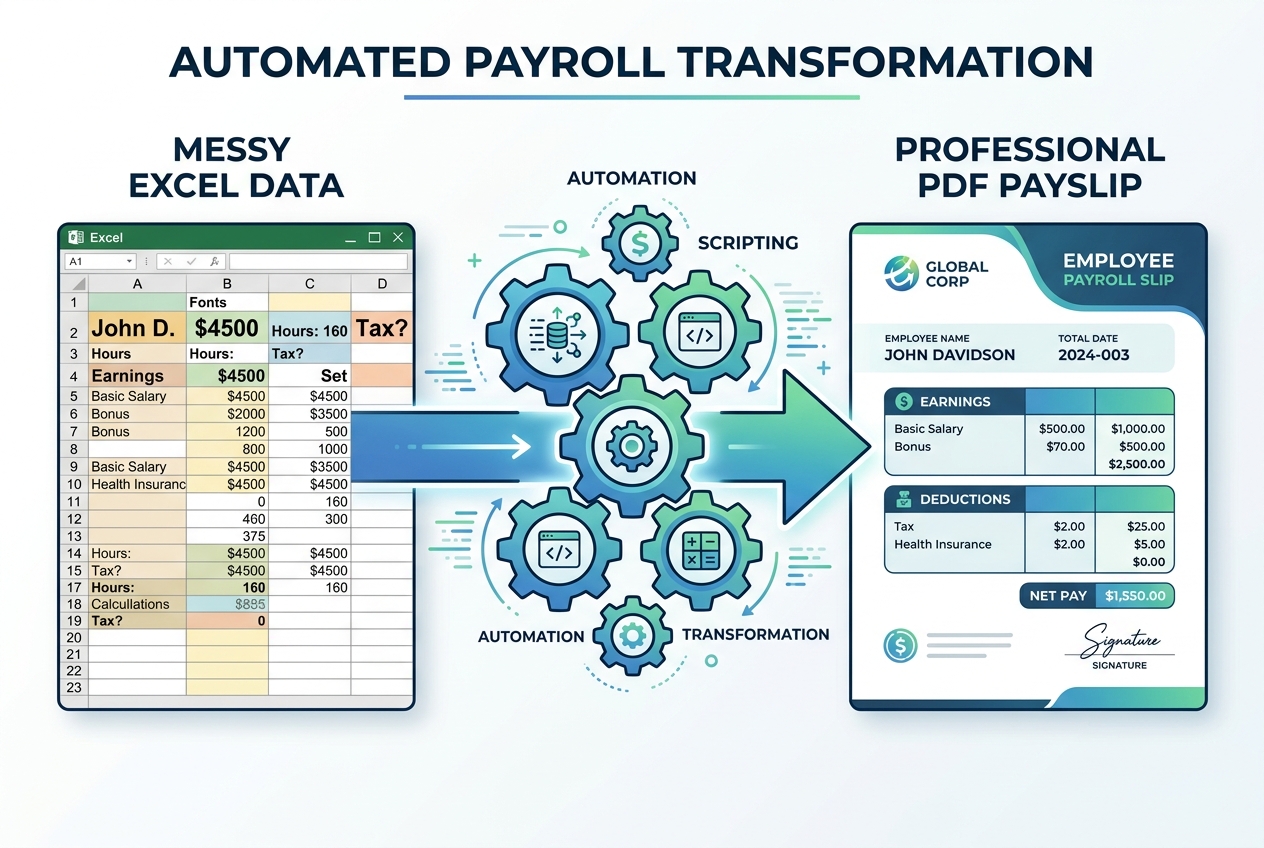
Drag your Excel (.xlsx) or CSV file directly into PayslipGen. The desktop engine instantly parses your columns without requiring an active internet connection.
Step 4: Confirm Column Mappings
Match your spreadsheet headers to PayslipGen's itemized payroll fields:
Crew_Name→ Employee NameRole_Billet→ Job Title / RatingGross_Lay_Share→ Gross EarningsSlop_Chest_Gear→ Other Deduction 1 (Pre-tax / Non-taxable)Port_Cash_Advance→ Other Deduction 2Net_Settlement→ Net Pay
PayslipGen automatically saves this mapping schema for your vessel profile permanently. For every subsequent trip of the season, you simply drag and drop the sheet—no remapping required.
Step 5: Apply PDF Encryption & Export
To protect seaman privacy when emailing settlement PDFs over coastal LTE or distributing them on USB drives, configure AES-256 PDF encryption using each crew member's Date of Birth or the last 4 digits of their SSN as the password.
Click "Generate Settlement Sheets". Within 2 seconds, PayslipGen compiles vector-quality, print-ready PDF settlement sheets formatted with your vessel's name, USCG registration, itemized trip disclosures, and signed delivery acknowledgment blocks.
Frequently Asked Questions (FAQs)
What specific items must legally appear on a crew settlement sheet under 46 U.S.C. § 10602?
Under 46 U.S.C. § 10602, the itemized settlement must explicitly show: (1) total fish caught and landed on the voyage, broken down by species, weight, and ex-vessel sale price; (2) all shared operating deductions made from the catch or proceeds (fuel, ice, bait, food, landing taxes, lumpers); (3) the net proceeds and contractual lay percentage split between boat and crew; (4) the seaman's specific lay share percentage; and (5) all personal deductions made from that seaman's share (slop chest items, gear purchases, cash advances). Omitting any of these details violates the federal statute.
Why shouldn't fishing crew compensation be reported on Form 1099-NEC?
Form 1099-NEC is reserved for general non-employee compensation under common-law independent contractor rules. Commercial fishing crew operating under IRC § 3121(b)(20) have a dedicated, statutory tax designation. The IRS explicitly instructs vessel owners to report catch share proceeds in Box 5 of Form 1099-MISC ("Fishing boat proceeds"). Reporting on 1099-NEC can trigger automated IRS CP2000 matching notices questioning FICA/FUTA non-withholding.
Can a vessel owner deduct broken fishing gear or engine repairs from crew shares?
Generally, NO. Vessel maintenance, hull repairs, engine overhauls, electronics upgrades, and ordinary gear depreciation are the sole legal responsibility of the vessel owner, compensated through the Boat Share. Deducting capital vessel repairs or lost nets from the crew's operating pool without an explicit, pre-trip written agreement violates maritime custom and may expose the owner to wrongful withholding claims under admiralty law.
How do I handle a greenhorn who left the vessel mid-trip or mid-season?
If a crew member quits or is discharged for cause before a voyage is complete, their compensation depends strictly on the terms of their signed 46 U.S.C. § 10601 agreement. Typically, agreements specify a pro-rated day-equivalent share or forfeiture of seasonal bonuses, minus transportation expenses back to the port of hire. All deductions must be meticulously itemized on their final settlement sheet to prevent maritime lien claims.
Does PayslipGen work on a vessel without any internet or satellite connection?
Yes, 100%. PayslipGen is a native, offline desktop application. It does not require internet access, browser connectivity, cloud logins, or external API verification. You can generate, preview, and print vector PDF crew settlement sheets in the wheelhouse 200 miles offshore on a laptop running on 12V or 24V marine inverter power.
Can I manage multiple vessels or skiffs under a single PayslipGen license?
Yes. A single PayslipGen license supports unlimited vessel profiles, unlimited crew members, and unlimited voyages. Fleet owners operating multiple seiners, tenders, or crabbers can maintain separate profiles for each hull with distinct USCG numbers, homeports, and lay formulas without paying additional fees.
Command Your Vessel Payroll Without Cloud SaaS Tolls
Generate compliant, itemized commercial fishing crew settlement sheets directly from Excel in the wheelhouse. 100% offline, zero internet required, one-time payment of $49 for lifetime access.
Get PayslipGen for $49 (Lifetime Access)Conclusion: Protect Your Vessel with Sovereign Maritime Settlement Sheets
Commercial fishing is one of the world's most demanding, capital-intensive professions. The men and women who haul gear on your deck risk life and limb for their catch share. They deserve absolute financial transparency when the vessel hits the dock.
By mastering the mechanics of the maritime lay system, complying with the federal mandates of 46 U.S.C. §§ 10601–10602, and generating itemized settlement sheets using PayslipGen, you eliminate galley disputes, protect your vessel from preferred maritime liens, and retain thousands of dollars in wasted cloud software fees.
(Looking to streamline other complex payroll and settlement workflows? Explore our dedicated guides on Truck Driver Per-Mile Settlement Sheets, 1099 Contractor Paystubs, or how to Generate Paystubs Without QuickBooks Payroll Subscriptions.)