
Funeral Home & Mortuary Staff Paystub Generator: How to Itemize First-Call Removal Stipends, Embalming Case Rates & On-Call Pay in Excel
Key Takeaways
- ✓The Hybrid Death Care Pay Structure: Funeral home payroll merges base salaried arrangements for licensed funeral directors with hourly apprentice wages, night-shift first-call removal stipends ($60 to $125 per dispatch), and per-body trade embalming contract case rates.
- ✓FLSA On-Call Legal Doctrine (29 CFR § 785.17): Department of Labor rules strictly differentiate between "waiting to be engaged" (carrying an on-call phone at home while free to sleep or run errands) versus "engaged to be waiting" (mandatory presence at the mortuary or severe geographic response constraints requiring full minimum wage and overtime).
- ✓Regular Rate Overtime Blending: Paying non-exempt mortuary apprentices flat $75 first-call stipends requires blending that incentive into their weekly regular rate under 29 CFR § 778.110 when total working hours exceed 40, avoiding costly wage-and-hour lawsuits.
- ✓Air-Gapped Local Mortuary Privacy: Independent family-owned funeral homes handle sensitive community bereavement data and confidential staff earnings that should never be stored on multi-tenant cloud servers. PayslipGen operates 100% offline for a one-time $49 fee, generating bulk password-protected PDF paystubs directly from your Excel payroll records with zero recurring SaaS costs.
The bedside telephone rings at 2:45 AM. An on-call funeral apprentice picks up the receiver. A local hospice care facility reports a passing. Within thirty minutes, two staff members in dark suits depart in a professional transfer van to perform a respectful first-call removal.
In the death care and mortuary profession, service to grieving families does not adhere to a Monday-through-Friday 9-to-5 schedule. Death care is a 24-hour, 365-day solemn calling. However, behind the dignified tranquility of the viewing parlor and chapel lies an exceptionally complicated payroll workflow.
Independent funeral homes, crematory operations, and regional mortuary services must manage intricate compensation variables across diverse staff classifications:
- Dual-Licensed Funeral Directors & Embalmers: Salaried or hourly licensed professionals overseeing arrangements, family counseling, and preparation room operations.
- First-Call Removal Dispatches: After-hours per-dispatch stipends ($50 to $125 per decedent transfer) varying between straightforward hospital morgues and complex private home removals.
- Trade Embalming Case Rates: Per-body technical preparation fees ($150 to $250 per case) performed by independent trade embalmers or staff handling off-hours cases, with premium rates for autopsied or organ-donor restorative art.
- 24/7 On-Call Rotation Pay: Navigating federal Fair Labor Standards Act (FLSA) rules regarding pager duty, phone triage, and physical emergency response.
- Pre-Need & Merchandise Incentives: Commission spiffs awarded for pre-need insurance contracts, specialized vault upgrades, or custom floral arrangements.
Traditional cloud payroll platforms like Gusto or QuickBooks Online are ill-suited for independent funeral homes. They lack native support for piece-rate embalming cases, misunderstand on-call stipend overtime blending, and charge perpetual monthly subscription tolls that drain independent funeral home cash reserves.
In this guide, we analyze the labor laws and payroll mathematics governing modern mortuary operations, provide a master production Excel blueprint, and demonstrate how independent funeral homes use PayslipGen to generate audit-proof, password-protected PDF paystubs completely offline on their local office computers.
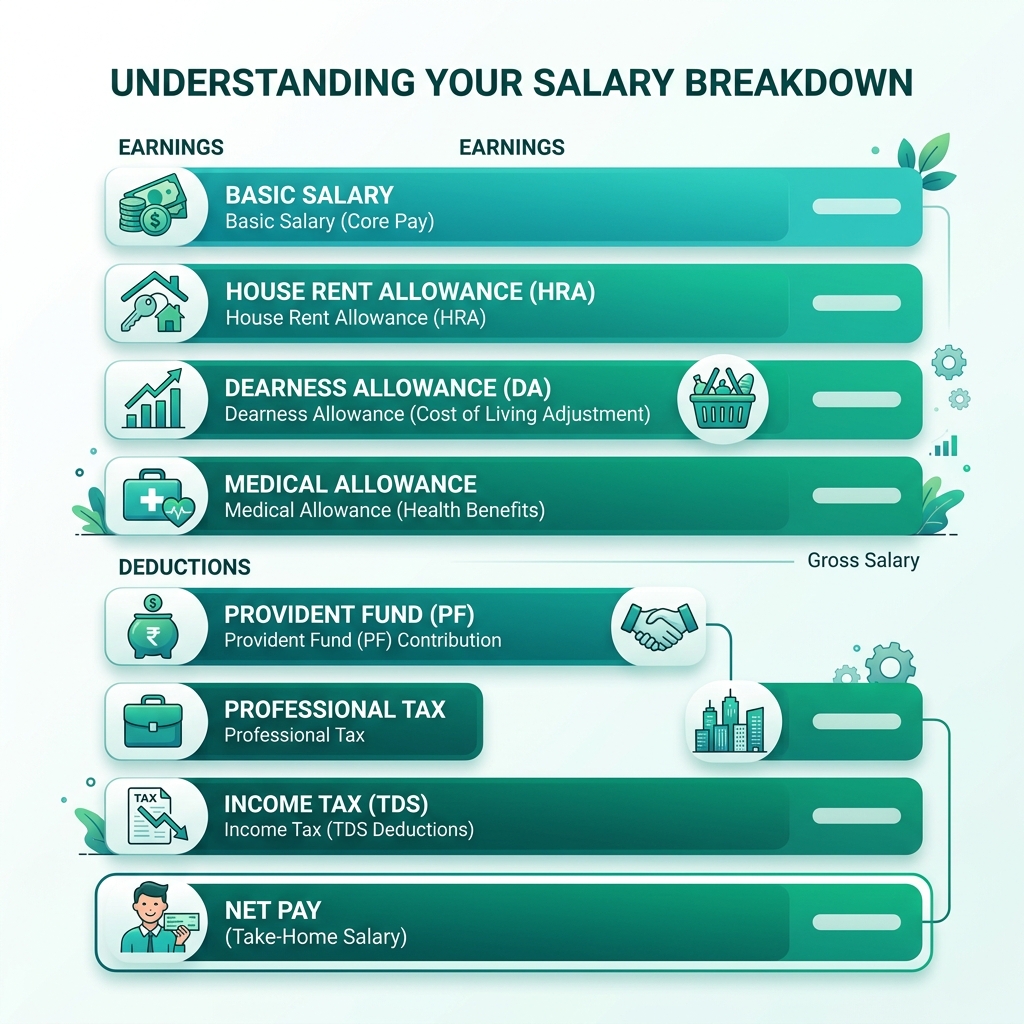
Try Our Interactive Demo Instantly
Want to see how an offline-capable, client-side payslip generator works in practice? Try our brand-new interactive demo right in your browser. Upload a sample CSV, map your columns, and generate beautifully designed PDF payslips—with zero data ever being transmitted to our servers.
Launch Free Demo NowChapter 1: The Multi-Faceted Compensation Structure of Modern Mortuaries
Operating an independent funeral home requires distinct roles that demand vastly different payroll and labor law treatments:
1. Licensed Funeral Directors & Embalmers
Licensed directors guide grieving families through funeral arrangements, coordinate with cemeteries, officiate services, and ensure legal burial transit permits are secured. Under federal FLSA regulations (29 CFR § 541.300), licensed funeral directors and embalmers may qualify for the Learned Professional Exemption from overtime only if:
- They are licensed by the state board of funeral directors and embalmers.
- Their licensure required at least one year of specialized mortuary science collegiate study following formal undergraduate education.
- They are paid on a true salary basis meeting the federal salary threshold ($844/week or $1,128/week under updated DOL rules).
If a licensed director is paid hourly or fails the rigorous state educational licensing test, they must be treated as non-exempt, entitled to statutory overtime for all hours worked over 40.
2. Mortuary Apprentices & Transfer Technicians
Apprentice embalmers, student interns, and removal specialists are strictly non-exempt hourly employees. They cannot be placed on salary to avoid overtime, regardless of job title or industry custom.
| Staff Role | FLSA Exemption Status | Primary Compensation Method | Typical Variable Add-Ons |
|---|---|---|---|
| Dual-Licensed Director / Embalmer | Exempt (Learned Professional, if qualified) | Bi-weekly / Semi-monthly Base Salary | Weekend service stipends, pre-need commission spiffs. |
| Apprentice Embalmer / Resident Intern | Non-Exempt (Subject to OT) | Hourly Base Wage + 1.5x Overtime | First-call removal stipends, night telephone on-call pay. |
| First-Call Removal Driver / Tech | Non-Exempt (Subject to OT) | Hourly base or per-run stipend with OT floor | Mileage differentials, residence extraction premium. |
| Contract Trade Embalmer | Independent Contractor (1099-NEC) | Per-Case Contract Fee ($175–$250/body) | Autopsy restorative surcharge ($75–$125). |
Chapter 2: The FLSA On-Call Dilemma: 29 CFR § 785.17 in Funeral Service
In funeral service, someone must answer death notification calls 24 hours a day, 7 days a week. How that on-call duty is structured dictates whether it must be compensated at full hourly minimum wage or via modest on-call stipends.
1. Waiting to Be Engaged (Non-Working On-Call Time)
Under 29 CFR § 785.17, an employee who is merely required to leave word at home or carry an on-call mobile phone is "waiting to be engaged."
If an apprentice can sleep in their own bed, watch television, eat dinner with family, and run personal errands, with the sole requirement that they answer dispatch calls and report to the funeral home within a reasonable window (e.g., 30 to 45 minutes), the passive on-call waiting hours are not considered compensable working hours under federal law.
Many generous funeral homes pay a flat "On-Call Readiness Stipend" (e.g., $35 per overnight shift) for holding the phone.
2. Engaged to Be Waiting (Mandatory Compensable Time)
Conversely, if the funeral home requires the apprentice to remain physically on the premises of the funeral home overnight, or enforces such restrictive response constraints (e.g., requiring arrival at the morgue in suit and tie within 10 minutes), the courts hold that the worker is "engaged to be waiting."
Under Department of Labor precedent, every single hour of that overnight shift must be compensated at least at the statutory minimum wage, and counted toward weekly overtime calculations!
FLSA Hazard: First-Call Removal Overtime Regular Rate Blending
When an hourly non-exempt apprentice is dispatched on an overnight first-call removal and paid a $75 removal stipend, that $75 is non-discretionary wage compensation. Under 29 CFR § 778.110, the stipend must be added into the employee's total weekly earnings before dividing by total hours worked to calculate the true regular rate of pay for overtime. Paying overtime strictly at 1.5x base hourly rate while excluding removal stipends is a widespread violation discovered during mortuary wage audits.
Chapter 3: First-Call Removal Stipends & Trade Embalming Case Rates
Variable incentive fees provide the operational backbone of death care staffing:
1. First-Call Removal Rates
When a death occurs outside standard mortuary office hours, staff dispatched to recover the deceased receive an incentive stipend:
- Hospital / Nursing Home / Hospice Removal: Typically $50 to $75 per staff member. These institutional removals involve commercial loading docks, hospital morgues, and service elevators.
- Private Residence Removal: Typically $75 to $125 per staff member. Home extractions present physical hazards (staircases, tight hallways) and intense emotional encounters with grieving family members, demanding seasoned professionalism.
- Long-Distance Transfer Differentials: Removals exceeding a 40-mile radius often carry an additional $0.65 to $0.85 per mile vehicle transport allowance.
2. Trade Embalming Case Rates
Independent mortuaries frequently engage freelance trade embalmers, or pay off-duty staff per case prepared:
- Standard Unautopsied Embalming: $150.00 – $200.00 per case.
- Autopsied / Organ Donor Case: $225.00 – $300.00 per case (requiring multi-point vascular injection, cranial restoration, and extensive visceral cavity treatment).
- Restorative Art Surcharges: $50.00 – $100.00 additional for significant trauma reconstruction.
Chapter 4: Master Excel Mortuary Staff Payroll Blueprint (With Real Formulas)
To maintain audit-proof compliance with Department of Labor regulations and provide transparent accounting to mortuary staff, funeral homes should operate a structured master payroll workbook.
Below is the exact production architecture for an independent family funeral home operating with funeral directors, apprentices, and transfer technicians:
| Line # | Field Header | Sample Value | Classification | Excel Formula Specification |
|---|---|---|---|---|
| 01 | Employee_Name | Christian Vance | Staff Roster | Text string |
| 02 | Position_Classification | Apprentice Embalmer (Non-Exempt) | Job Title | Text entry |
| 03 | Clocked_Shift_Hours | 44.00 hrs | Weekly Timecard | Total physical hours |
| 04 | Base_Hourly_Rate | $22.00 / hr | Agreed Base Pay | Fixed rate |
| 05 | Straight_Base_Pay | $880.00 | First 40 Hours | =MIN(40, B3)*B4 |
| 06 | First_Call_Removals_Pay | $225.00 | 3 Dispatches @ $75/call | =Removals_Qty*75.0 |
| 07 | On_Call_Readiness_Stipend | $105.00 | 3 Nights Phone Standby @ $35 | =Nights_Standby*35.0 |
| 08 | Total_Straight_Remuneration | $1,210.00 | Base + Removal + On-Call | =(B3*B4)+B6+B7 |
| 09 | Blended_Regular_Rate | $27.50 / hr | FLSA 29 CFR § 778.110 Rate | =B8/B3 |
| 10 | Overtime_Premium_HalfTime | $55.00 | 4.0 OT Hours × (Rate × 0.5) | =MAX(0, B3-40)*(B9*0.5) |
| 11 | TOTAL_GROSS_EARNINGS | $1,265.00 | Taxable Compensation | =B8+B10 |
Mortuary Staff Payroll Summary Table
Here is how an independent funeral home tracks varied staff positions across a two-week pay cycle:
| Employee Name | Role | Base Pay Basis | Removal Stipends | Embalming Fees | Gross Earnings | Net Pay |
|---|---|---|---|---|---|---|
| Evelyn St. Claire | Funeral Director (Exempt) | $2,800.00 (Salary) | $0.00 | $0.00 | $2,800.00 | $2,198.40 |
| Christian Vance | Apprentice Embalmer | $935.00 (Hourly+OT) | $225.00 | $105.00 | $1,265.00 | $1,024.65 |
| Derrick Thorne | Removal Technician | $720.00 (Hourly) | $375.00 | $0.00 | $1,095.00 | $892.42 |
| Marcus Holloway | Trade Embalmer (1099) | $0.00 (Contract) | $0.00 | $1,450.00 (7 cases) | $1,450.00 | $1,450.00 (Gross 1099) |
| MORTUARY TOTALS | $4,455.00 | $600.00 | $1,555.00 | $6,610.00 | $5,565.47 | |
Chapter 5: Why Funeral Homes Require Sovereign, Air-Gapped Offline Software
Independent family funeral homes occupy a sacred position of trust in their communities. Entrusting mortuary payroll to multi-tenant cloud SaaS vendors poses substantial risks:
1. Extreme Data Confidentiality & Privacy
Mortuary compensation records frequently contain sensitive details: executive ownership draws for family-held funeral homes, casket sales commissions, and personal staff tax IDs. Uploading this data to cloud databases creates unnecessary vulnerability to third-party data breaches and corporate phishing campaigns.
2. Low-Headcount Subscription Discrimination
Most independent mortuaries employ between 5 and 12 total staff members. Commercial payroll vendors (such as ADP, Paychex, or Gusto) charge exorbitant monthly base software platform fees ($50 to $160/month) simply to unlock multi-rate support or generate custom paystubs. Spending $1,200 to $2,500 every single year to print a dozen monthly pay stubs is an inefficient drain on mortuary operating cash.
3. Complete Independence from SaaS Cloud Outages
When payroll is due on a Friday morning, the funeral director cannot afford to wait while a cloud payroll website suffers an outage or demands SMS verification codes on an administrator's personal mobile device. With PayslipGen, the entire generation engine resides on your desktop computer, executing instantly with zero internet requirement.
Chapter 6: 5-Year Financial Analysis: $49 Lifetime License vs. Cloud SaaS Subscriptions
Let's evaluate the total five-year financial outlay for an independent funeral home employing 8 staff members:
| Cost Component | Gusto Plus Mortuary Tier | QuickBooks Online + Payroll | PayslipGen (One-Time Desktop License) |
|---|---|---|---|
| Monthly Base Platform Toll | $80.00 / mo ($960/yr) | $95.00 / mo ($1,140/yr) | $0.00 (Zero recurring fees) |
| Per-Staff Monthly Seat Fee (8 Staff) | $12.00 / employee / mo ($1,152/yr) | $10.00 / employee / mo ($960/yr) | $0.00 (Unlimited staff members) |
| 1099 Trade Embalmer Filing Fees | $6.00 / contractor / mo | $5.00 / contractor / mo | $0.00 (Process W-2 & 1099 without fees) |
| Data Sovereignty & Offline Privacy | Cloud database storage | Cloud database storage | 100% Air-Gapped Local Privacy |
| Year 1 Net Cost | $2,112.00 | $2,100.00 | $49.00 total |
| Year 3 Cumulative Cost | $6,336.00 | $6,300.00 | $49.00 total |
| Year 5 Cumulative Cost | $10,560.00 | $10,500.00 | $49.00 (Lifetime) |
Over five years, an independent funeral home saves more than $10,500 by eliminating recurring cloud software tolls. That capital is far better invested in hearse vehicle maintenance, embalming facility equipment upgrades, or continuing education for staff apprentices.
Chapter 7: Step-by-Step Workflow: Generating Mortuary Paystubs from Excel
Here is how funeral directors and mortuary administrators use PayslipGen to produce compliant, encrypted PDF paystubs in under two minutes:
Step 1: Enter Case Logs & Hours in Excel
Maintain your staff timecard entries, night removal counts, and embalming case tallies in your master spreadsheet (.xlsx or .csv).
Step 2: Open PayslipGen on Your Office Workstation
Launch PayslipGen on your office PC or Mac. Enter your funeral home corporate details: legal entity name, state funeral board establishment license number, company emblem, and registered office address.
Step 3: Drag & Drop Your Mortuary Workbook
Drag your payroll file directly into PayslipGen. The desktop software parses all entries instantly without transmitting staff records over third-party networks.
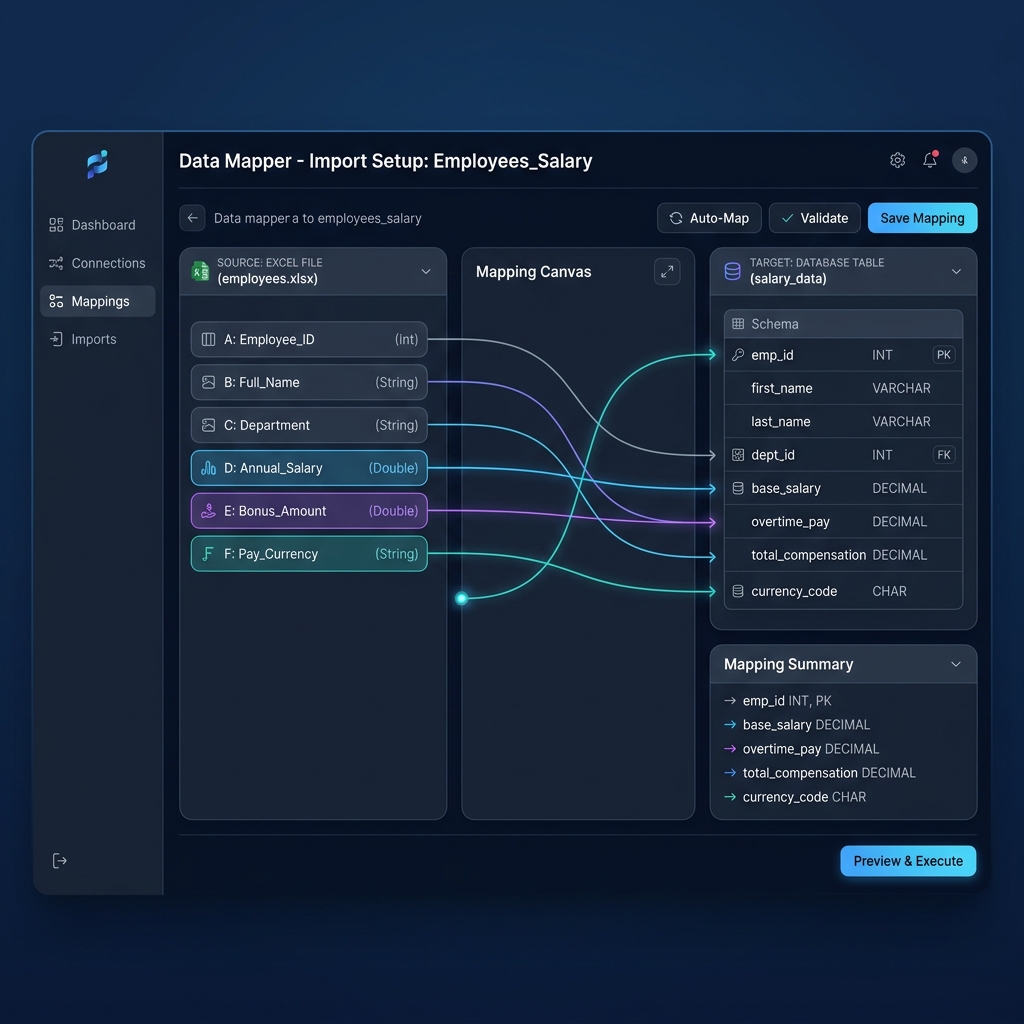
Step 4: Map Funeral Payroll Fields
Link your spreadsheet headers to PayslipGen's itemized payroll fields:
Straight_Base_Pay→ Regular Salary / WagesFirst_Call_Removals_Pay→ Removal Dispatch StipendTrade_Embalming_Fees→ Technical Case EarningsOvertime_Premium_HalfTime→ Blended Overtime PayEmployee_Email→ Staff Email (for private encrypted SMTP delivery)
Step 5: Apply AES-256 PDF Password Protection & Print
Secure each employee's pay statement using AES-256 encryption with their Date of Birth (YYYYMMDD) or last 4 digits of their SSN. Click Generate Paystubs. Within seconds, PayslipGen produces elegant, vector PDF paystubs ready to print in the funeral home office or email securely to staff.
Frequently Asked Questions (FAQs)
Are funeral directors exempt professionals under the FLSA?
Under federal Department of Labor regulations (29 CFR § 541.300 and 2004 revisions), licensed funeral directors and embalmers may qualify for the Learned Professional Exemption only if: (1) their state licensing board requires at least one year of specialized mortuary science study following formal post-secondary coursework, (2) they are licensed, and (3) they are paid on a true salary basis meeting the federal salary threshold ($844/week or higher). Mortuary interns, apprentices, and non-licensed removal techs are non-exempt employees entitled to 1.5x overtime.
How do we treat after-hours first-call removal fees for overtime calculations?
Removal stipends paid to non-exempt hourly employees are non-discretionary wage compensation. Under FLSA 29 CFR § 778.110, you must add the total removal stipends earned in a workweek into the employee's total straight-time earnings, then divide by total hours worked to determine their true regular rate. Overtime hours must then receive the half-time premium based on that blended regular rate. Excluding removal stipends from overtime calculations violates federal wage law.
Can trade embalmers be paid on Form 1099-NEC as independent contractors?
Yes, provided they operate a genuine independent trade embalming business. If the trade embalmer holds an independent business entity, maintains their own embalming instruments, carries their own professional liability insurance, and serves multiple funeral homes on a true per-case basis, they are properly classified as 1099 independent contractors. However, regular staff apprentices working in the preparation room under direct supervision must be paid as W-2 employees.
What is the legal standard for paying on-call stipends when an apprentice carries the dispatch phone?
If the apprentice is free to stay at home, sleep, and engage in personal activities while carrying the phone ("waiting to be engaged" under 29 CFR § 785.17), the passive on-call hours are not compensable work hours. The funeral home may pay an agreed flat on-call stipend (e.g., $35/night). However, the moment the apprentice receives a dispatch and departs for a removal, their clock begins, and all physical travel and transfer time must be paid at their hourly rate.
Does PayslipGen keep sensitive funeral home compensation data private?
Yes, 100%. PayslipGen is an air-gapped desktop software application that executes locally on your office PC or Mac. It never uploads staff salaries, case volumes, or social security numbers to cloud databases or external servers. Your funeral home's financial records remain entirely within your building.
Sovereign Mortuary Payroll Without Perpetual Cloud Tolls
Generate compliant, itemized funeral home and mortuary staff paystubs directly from your Excel spreadsheet. 100% offline security, zero monthly SaaS tolls, one-time payment of $49 for lifetime access.
Get PayslipGen for $49 (Lifetime Access)Conclusion: Dignified Service Deserves Transparent, Compliant Payroll
The profession of death care is built on dignity, compassion, and immaculate attention to detail. The funeral directors, embalmers, and apprentices who answer the call in the middle of the night to serve grieving families deserve equal care and transparency in their compensation.
By formalizing your first-call removal stipends, complying with FLSA regular rate overtime blending rules, and generating encrypted PDF paystubs with PayslipGen, you safeguard your funeral home against Department of Labor audits, protect staff trust, and eliminate thousands of dollars in recurring software tolls.
(Looking to streamline payroll across other high-trust or specialized professions? Check out our guides on Healthcare Travel Nurse Paystubs, Firefighter & EMS 207(k) Paystubs, and How to Create Password-Protected Payslips Automatically.)