
Firefighter & EMS Paystub Generator: How to Master FLSA Section 207(k) Work Periods & Kelly Days in Excel
Key Takeaways
- ✓The Statutory 207(k) Exemption: Under 29 U.S.C. § 207(k) and 29 CFR Part 553, public fire protection agencies are exempt from the standard 40-hour workweek, establishing flexible statutory work periods between 7 and 28 consecutive days.
- ✓Statutory Maximum Overtime Thresholds: Under 29 CFR § 553.230, fire personnel trigger statutory overtime after 212 hours in a 28-day cycle (106 hours in a 14-day cycle, or 53 hours in a 7-day cycle, based on a 7.57-hour daily ratio). Law enforcement and separate EMS cycles trigger overtime at 171 hours per 28 days (85.5 hours per 14 days).
- ✓Shift Schedules & Kelly Day Mathematics: Standard 3-platoon rotating shifts (24/48 and 48/96) produce 56 scheduled hours per week (224 hours per 28 days). Departments use scheduled "Kelly Days" (shift reduction days) every 7th to 14th shift to balance average hours down to 50.4, 52, or 53 hours and mitigate structural overtime deficits.
- ✓True FLSA Regular Rate of Pay (RROP): Under 29 CFR § 778.207, computing overtime solely from base hourly rates is illegal. Paramedic stipends, hazardous materials pay, longevity step pay, and acting officer differentials must be included in total remuneration before calculating the hourly overtime rate.
- ✓Sovereign Public Safety Payroll for $49 Lifetime: Fire districts and municipal departments do not need to spend $15,000 to $50,000+ on monolithic enterprise ERPs (Tyler Incode, BS&A, Kronos TeleStaff). With an audited Excel workbook and PayslipGen, payroll administrators can batch-generate compliant, AES-256 encrypted PDF paystubs locally with zero recurring SaaS fees.
Administering payroll for fire departments, emergency medical services (EMS), and municipal rescue districts is widely recognized by certified payroll professionals as the single most complex operational domain in American wage and hour law.
Unlike conventional corporate enterprises operating on clean 40-hour Monday-through-Friday schedules, fire rescue agencies operate 24 hours a day, 365 days a year. First responders live at firehouses in 24-hour, 48-hour, or 72-hour tours of duty, rotate through intricate multi-platoon shifts, receive specialized stipends for paramedic and hazardous materials certifications, trade shifts informally with colleagues, and take contractual "Kelly Days" to bring average weekly hours into structural alignment.
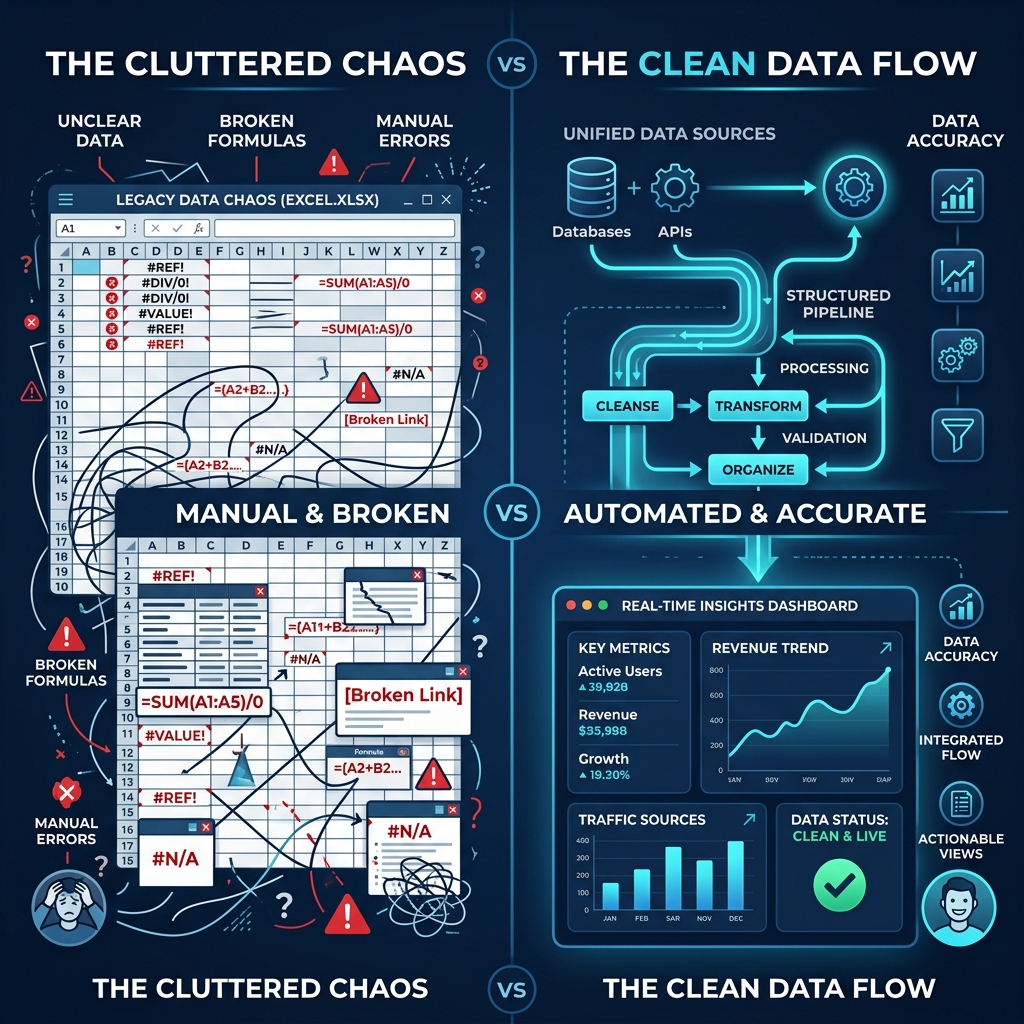
When municipal treasurers and fire district clerks attempt to force these specialized public safety workflows into off-the-shelf commercial payroll SaaS platforms like QuickBooks Online, Gusto, or Paychex, the systems fail catastrophically:
- The 40-Hour Flaw: Commercial payroll software hardcodes an immutable 40-hour weekly threshold. When a firefighter clocks 112 scheduled hours across a two-week pay period, commercial software automatically flags 32 hours of overtime at time-and-a-half—wrecking municipal budgets and triggering union grievances.
- The Miscalculated Regular Rate: When firefighters receive longevity steps, paramedic differentials, or acting-captain pay, commercial payroll systems routinely calculate overtime pay using only the worker's base hourly rate. Under the Fair Labor Standards Act (FLSA), this constitutes a systemic wage underpayment that triggers mandatory double damages and three-year retroactive backpay liability.
- The Kelly Day Dilemma: Commercial software has no native concept of an unpaid or pre-paid scheduled shift reduction day ("Kelly Day") designed to rebalance a 56-hour average workweek down to an FLSA-compliant target.
To avoid these pitfalls, municipalities have traditionally believed their only choice was surrendering tens of thousands of taxpayer dollars to legacy municipal ERP vendors like Tyler Technologies (Incode), BS&A Software, or Kronos/UKG TeleStaff.
In this comprehensive engineering and regulatory handbook, we dissect the statutory mechanics of 29 U.S.C. § 207(k) and 29 CFR Part 553, walk through the exact mathematical equations governing 24/48 and 48/96 shift cycles, provide a production-ready Excel payroll blueprint, and demonstrate how to generate institution-grade, encrypted PDF paystubs for entire fire protection districts using PayslipGen—completely offline on your desktop workstation for a one-time $49 lifetime license.
Try Our Interactive Demo Instantly
Want to see how an offline-capable, client-side payslip generator works in practice? Try our brand-new interactive demo right in your browser. Upload a sample CSV, map your columns, and generate beautifully designed PDF payslips—with zero data ever being transmitted to our servers.
Launch Free Demo NowChapter 1: The Statutory Architecture of FLSA Section 207(k) & 29 CFR Part 553
The baseline overtime requirement of federal wage law is codified in Section 7(a) of the Fair Labor Standards Act (29 U.S.C. § 207(a)). It mandates that covered non-exempt employees receive overtime compensation at a rate not less than one and one-half times their regular hourly rate for all hours worked in excess of 40 hours during a standard 7-day workweek.
In 1974, Congress recognized that applying a rigid 40-hour workweek to municipal fire and police departments was structurally impossible due to the around-the-clock nature of emergency response. Congress enacted Section 7(k) of the FLSA (29 U.S.C. § 207(k)), creating a partial overtime exemption specifically tailored to public agencies employing personnel in fire protection and law enforcement activities.
The Legal Meaning of a "Work Period"
Under 29 CFR § 553.224, an agency adopting Section 207(k) replaces the standard 7-day workweek with a designated "work period." A 207(k) work period is an established and regularly recurring period of any number of consecutive days between 7 and 28 days:
- The work period can start on any calendar day of the week and at any hour of the day (e.g., beginning at 07:00 on alternating Tuesdays).
- Once established, the work period remains fixed regardless of individual shift rotations. It cannot be manipulated or retroactively altered between pay cycles to avoid paying overtime.
- A department's pay period does not have to match its 207(k) work period. However, matching them (such as running a 14-day payroll alongside a 14-day 207(k) work period, or a 28-day work period that reconciles two consecutive 14-day biweekly paychecks) dramatically simplifies payroll reconciliation and general ledger reporting.
Who Qualifies as an "Employee in Fire Protection Activities"?
One of the most litigated questions in municipal labor law is whether emergency medical technicians (EMTs) and paramedics employed by a city or district qualify for the 207(k) fire exemption. In 1999, Congress clarified this standard by amending the FLSA to add 29 U.S.C. § 203(y).
Under Section 203(y), an employee qualifies under the 207(k) fire protection exemption if and only if they satisfy a strict four-part test:
- They are trained in fire suppression techniques (e.g., holding state Firefighter I or II certifications);
- They have the legal authority and responsibility to engage in fire suppression;
- They are employed by a fire department of a municipality, county, fire district, or state; and
- They are engaged in the prevention, control, and extinguishment of fires or response to emergency situations where life, property, or the environment is at risk.
The Dual-Role vs. Single-Role Distinction: If your department employs cross-trained Firefighter/Paramedics who gear up on fire engines, fight structure fires, and operate on ambulances, they qualify squarely under the 212-hour fire exemption. However, if your agency operates a separate, "third-service" municipal EMS department staffed by single-role civilian paramedics who are not trained or legally authorized to suppress fires, they do not qualify for the 212-hour fire exemption under § 203(y). Single-role medics must either be compensated under the standard 40-hour rule of § 207(a) or, under narrow circumstances, the law enforcement threshold if permanently assigned to tactical police response units.
The Department of Labor Maximum Hour Standards (29 CFR § 553.230)
The Department of Labor (DOL) Wage and Hour Division codifies the exact maximum non-overtime hour thresholds for any work period length between 7 and 28 days in 29 CFR § 553.230.
These statutory ceilings are derived from nationwide actuarial ratios established by Congress:
- Fire Protection Ratio: 212 hours ÷ 28 days = 7.5714 hours per day.
- Law Enforcement Ratio: 171 hours ÷ 28 days = 6.1071 hours per day.
Any hours worked beyond these statutory caps within the designated work period must be compensated at not less than 1.5 times the employee's regular rate of pay:
| Work Period (Days) | Statutory Fire Threshold (Hours) | Statutory Law Enforcement / EMS Threshold (Hours) | Calculation Basis (29 CFR § 553.230) |
|---|---|---|---|
| 28 Days | 212.0 hrs | 171.0 hrs | Full statutory cycle benchmark |
| 21 Days | 159.0 hrs | 128.0 hrs | 3 calendar weeks (21 × 7.5714) |
| 14 Days | 106.0 hrs | 85.5 hrs | Most common biweekly fire cycle |
| 10 Days | 76.0 hrs | 61.0 hrs | 10-day specialized tour rotation |
| 9 Days | 68.0 hrs | 55.0 hrs | 9-day shift rotation cycle |
| 7 Days | 53.0 hrs | 43.0 hrs | Weekly public safety cycle (7 × 7.5714) |
Chapter 2: Tour of Duty Mechanics: 24/48, 48/96, and Kelly Day Engineering
To maintain continuous 24/7/365 coverage without ballooning headcount, career fire departments divide frontline personnel into three operational platoons—traditionally designated as A Shift, B Shift, and C Shift.
The 56-Hour Mathematical Dilemma
The two most prevalent shift schedules in modern American fire services are:
- The 24/48 Rotation: Personnel work 24 consecutive hours on duty (07:00 to 07:00), followed by 48 consecutive hours off duty.
- The 48/96 Rotation: Personnel work 48 consecutive hours on duty (two back-to-back 24-hour shifts), followed by 96 consecutive hours (4 full calendar days) off duty.
Both schedules follow an identical 3-day repeating mathematical cycle (1 day on, 2 days off). Across a standard year:
Annual Scheduled Shifts: 365.25 days ÷ 3 platoons = 121.75 shifts per firefighter per year
Annual Scheduled Hours: 121.75 shifts × 24 hours = 2,922 hours per year
Average Weekly Hours: 2,922 hours ÷ 52.14 weeks = 56.0 hours per week
Now compare that 56-hour average schedule against the statutory FLSA Section 207(k) thresholds:
- In a 14-day work period, a 56-hour workweek yields 112 scheduled hours (or fluctuates between 96 hours and 120 hours depending on platoon rotation). The statutory FLSA fire cap under 29 CFR § 553.230 is 106 hours. Every 14-day cycle, the department incurs 6 hours of mandatory FLSA overtime per employee—even when no emergency alarms, holdovers, or storm recalls occur!
- In a 28-day work period, a 56-hour schedule yields 224 scheduled hours. The statutory FLSA cap is 212 hours. That creates 12 hours of built-in statutory overtime every 28 days per firefighter.
The Invention and Engineering of the "Kelly Day"
In 1936, Chicago Mayor Edward J. Kelly introduced scheduled shift-reduction days to lower the grueling work hours of Chicago firefighters without requiring the municipal treasury to fund full fourth platoons. Today, throughout the fire service, a "Kelly Day" refers to a regularly scheduled 24-hour tour of duty that a firefighter is granted off work to reduce their total scheduled hours.
By inserting Kelly Days into the platoon rotation, fire district leadership and union collective bargaining agreements (CBAs) mathematically calibrate average weekly hours down from 56 to an agreed contractual baseline:
| Kelly Schedule Frequency | Shifts Off Per Year | Annual Net Work Hours | Average Workweek | Statutory Overtime Impact (28-Day Cycle) |
|---|---|---|---|---|
| None (Standard 24/48 or 48/96) | 0 shifts | 2,922 hrs | 56.0 hrs/wk | 12 hrs structural FLSA OT every 28 days |
| 1 shift off every 14th shift (6 weeks) | 8.7 shifts | 2,713 hrs | 52.0 hrs/wk | Net 208 hrs/28 days (below 212 cap; 0 structural OT) |
| 1 shift off every 9th shift (3.8 weeks) | 13.5 shifts | 2,598 hrs | 49.8 hrs/wk | Net 199 hrs/28 days (eliminates structural FLSA OT) |
| 1 shift off every 7th shift (3 weeks) | 17.4 shifts | 2,504 hrs | 48.0 hrs/wk | Net 192 hrs/28 days (zero structural FLSA OT) |
How Kelly Days Appear on an Auditable Paystub
A major source of employee confusion and labor disputes is how Kelly Days are recorded on the paystub. Depending on the collective bargaining agreement, Kelly Days are managed under one of two distinct accounting philosophies:
- The Levelized Annualized Salary Model: The firefighter receives a fixed biweekly salary based on 2,922 annual hours (or an agreed contractual baseline such as 2,756 hours). When a Kelly Day occurs during a pay period, it is treated as a paid non-working day (coded as
KELLY_PAID). Because the hours are not actually worked, they do not count toward the statutory 106-hour or 212-hour threshold under FLSA regulations. - The Scheduled Hours Offset Model: The employee is scheduled for 120 hours in a 14-day cycle. A 24-hour Kelly Day is deducted (coded as
KELLY_DED_24), leaving 96 net hours worked. If an emergency recall subsequently requires them to work 12 hours of storm standby, their total actual hours worked becomes 108 hours. Since 108 exceeds the statutory 106-hour cap, exactly 2 hours of FLSA overtime are generated.
Chapter 3: Mastering the FLSA Regular Rate of Pay (RROP) and Specialty Differentials
If an auditor from the U.S. Department of Labor or a plaintiff's labor attorney inspects a municipal fire department's payroll records, the first item they scrutinize is the Regular Rate of Pay (RROP).
Under 29 U.S.C. § 207(e) and 29 CFR Part 778, the overtime rate of 1.5 times the regular rate cannot be calculated simply by multiplying an employee's base hourly wage by 1.5. Instead, the FLSA requires that all forms of remuneration paid to or on behalf of the employee during the work period must be aggregated into total compensation before computing the true regular rate.
Mandatory Inclusions in Public Safety Regular Rate (29 CFR § 778.207)
In public safety environments, collective bargaining agreements routinely furnish specialized stipends to compensate personnel for hazardous duties, academic degrees, and critical clinical certifications. The following components must be included in the FLSA regular rate calculation:
- Paramedic Certification Differentials: Monthly or biweekly stipends (e.g., $350 biweekly or $3.00/hr) paid to firefighters maintaining active EMT-Paramedic licensure.
- Hazardous Materials (Hazmat) & Technical Rescue Stipends: Additional compensation for active members of regional hazmat, dive rescue, or urban search and rescue (USAR) strike teams.
- Longevity / Step Pay: Automatic percentage or fixed-dollar pay escalators awarded based on cumulative years of municipal service.
- Acting Officer-in-Charge (OIC) Differentials: Premium pay earned when a Firefighter steps up to act as an Engineer, or an Engineer steps up to act as Captain during a shift.
- Educational Incentives: Contractual incentives paid for holding an Associate's or Bachelor's Degree in Fire Science, Public Administration, or Paramedicine.
- Physical Fitness / Wellness Stipends: Non-discretionary bonuses paid for passing annual physical agility tests (CPAT) or annual medical evaluations.
What May Be Lawfully Excluded? (29 U.S.C. § 207(e))
The statute specifically permits municipal employers to exclude a narrow list of payments from the regular rate:
- Reimbursements for legitimate business expenses incurred in the service of the department (e.g., mileage, uniform allowances, per diem travel under 29 CFR § 778.217).
- Irrevocable employer contributions made to bona fide third-party retirement, pension, or health insurance welfare trusts (e.g., state PERS, FPPA, or 457(b) match under 29 CFR § 778.215).
- Discretionary gifts made at Christmas or on special occasions not tied to hours worked, production, or efficiency (29 CFR § 778.212).
- True premium pay paid for working outside regular scheduled hours, provided that the premium rate is already at least 1.5 times the bona fide hourly rate established for similar work.
The Legal Danger: A Real-World Mathematical Case Study
To see why ignoring specialty differentials triggers catastrophic liability, consider this real-world scenario from a career fire department:
Employee Profile: Lieutenant/Paramedic Marcus Vance
- Work Period: 14 consecutive days (FLSA 207(k) fire cap = 106 hours)
- Contractual Biweekly Base Salary: $3,600.00 (based on 106 scheduled hours = $33.9623/hr nominal base)
- Biweekly Paramedic Assignment Differential: $300.00
- Biweekly Hazmat Specialist Differential: $150.00
- Biweekly Longevity Pay (12 Years Service): $200.00
- Actual Hours Worked in 14-Day Cycle: 120 hours (106 scheduled shift hours + 14 hours of mandatory emergency holdover)
The payroll clerk ignores the stipends and calculates overtime using only the base hourly wage:
Base Rate = $3,600 ÷ 106 = $33.96/hr
OT Rate = $33.96 × 1.5 = $50.94/hr
14 OT Hours = 14 × $50.94 = $713.16
Total Gross Pay: $4,963.16
All non-excludable stipends are aggregated into total straight-time compensation:
Total Comp = $3,600 + $300 + $150 + $200 = $4,250.00
True Regular Rate (RROP) = $4,250 ÷ 106 = $40.0943/hr
True OT Rate = $40.0943 × 1.5 = $60.1415/hr
14 OT Hours = 14 × $60.1415 = $841.98
Lawful Gross Pay: $5,091.98
The Underpayment Differential: $841.98 − $713.16 = $128.82 per pay period for this single employee.
In a department of 45 career firefighters over a 3-year statutory lookback window (78 biweekly pay periods), this single systemic software miscalculation produces:
45 employees × 78 pay periods × $128.82 = $452,158.20 in unpaid back wages.
Under 29 U.S.C. § 216(b), employers who fail to pay proper FLSA overtime are automatically assessed 100% liquidated damages (doubling the debt to $904,316.40) plus mandatory plaintiff legal fees. When municipal payroll errors trigger union grievances, the liability routinely forces emergency municipal bond issuances or deep cuts to capital apparatus funds.
Chapter 4: Sleep Time, Mutual Shift Swaps, and Compensatory Time Rules
Beyond basic hourly calculations, public safety agencies must navigate unique statutory exceptions regarding sleep deductions, voluntary trades, and public sector comp time.
Sleep Time Deductions Under 29 CFR § 553.222
Can a fire department deduct 8 hours of sleep time from a 24-hour firefighter shift to avoid paying wages for the full day?
Under 29 CFR § 553.222 and 29 CFR § 785.22, sleep time may be excluded from hours worked on shifts of 24 hours or more only if strict statutory conditions are met:
- There must be an express or implied agreement between the employer and the employee (typically codified in an active union collective bargaining agreement). Without an explicit agreement, sleep time cannot be deducted.
- The department must provide adequate sleeping facilities where the firefighter can enjoy an uninterrupted night's sleep.
- Call Interruptions Count as Work: Any interruption of the sleep period to respond to an emergency alarm, dispatch, or administrative duty must be counted and paid as hours worked.
- The 5-Hour Rule: If emergency interruptions prevent the employee from obtaining at least 5 consecutive hours of uninterrupted sleep during the designated 8-hour sleep window, the entire 8-hour sleep period must be counted as paid hours worked.
Because structural and medical calls occur unpredictably throughout the night, career departments rarely attempt to deduct sleep time. Most career departments pay all 24 hours of every tour. However, volunteer and combination departments that staff part-time overnight medics often run afoul of the 5-hour rule when trying to classify overnight standby shifts as unpaid sleep.
Mutual Shift Trades Under 29 U.S.C. § 207(p)(1)
Firefighters frequently trade shifts (also known as "shift swaps" or "mutuals") to accommodate family commitments, paramedic continuing education classes, or medical appointments.
Under standard private-sector FLSA rules, if Worker B substitutes for Worker A and works 72 hours in a week, the employer would owe Worker B 32 hours of overtime. However, Congress enacted 29 U.S.C. § 207(p)(1) specifically to protect public safety shift trades.
Under § 207(p)(1), when two individuals employed in fire protection or law enforcement activities voluntarily agree—solely at their own option and with agency approval—to substitute for one another during scheduled work hours:
- The hours worked by the substituting employee (Worker B) are excluded from Worker B's hours worked for overtime calculation purposes.
- The hours are credited to the employee who was originally scheduled to work (Worker A).
- The agency pays both employees as if each had worked their normal scheduled shift. The obligation to "pay back" the trade is a personal agreement between the two firefighters; the fire department is not legally responsible for tracking or enforcing trade repayments.
In your Excel payroll workbook, shift trades must be recorded with two corresponding entries: Worker A receives paid scheduled hours, while Worker B's shift attendance is tagged as TRADE_COVERAGE with zero additional payroll hours to prevent accidental double-billing of overtime.
Compensatory Time Off ("Comp Time") Under 29 U.S.C. § 207(o)
Private employers are legally prohibited from offering comp time in lieu of cash overtime. However, public agencies are granted statutory authority under 29 U.S.C. § 207(o) to provide compensatory time off at a rate of not less than 1.5 hours for each hour of overtime worked, provided there is a collective bargaining agreement or prior written agreement.
Key legal boundaries for public safety comp time include:
- The 480-Hour Public Safety Cap: Under § 207(o)(3)(A), employees engaged in public safety, emergency response, or seasonal activity may accrue up to 480 hours of comp time (representing 320 hours of actual overtime worked). Civilian employees are capped at 240 hours. Once a firefighter reaches 480 hours, all subsequent overtime must be paid in cash.
- Retirement Payout Rule: Upon retirement or separation, unused comp time must be cashed out at the higher of: (1) the average regular rate received by the employee during the last 3 years of employment, or (2) the final regular rate received by the employee (29 U.S.C. § 207(o)(4)).

Chapter 5: The Master Public Safety Payroll Spreadsheet Blueprint
To maintain absolute transparency, complete mathematical accuracy, and an unbreakable audit trail, fire district administrators and city finance clerks can construct a master public safety payroll workbook in Microsoft Excel or Google Sheets.
Below is the exact architectural blueprint of columns, data structures, and formula logic required to model 14-day or 28-day 207(k) cycles with Kelly Days and certification differentials:
| Col | Header Name | Data Type / Example | Excel Formula or Logic | Purpose & Statutory Role |
|---|---|---|---|---|
| A | Emp_ID | FD-104 | Static identifier | Unique first responder personnel ID |
| B | Full_Name | Marcus Vance | Text | Employee name for paystub header |
| C | Rank_Platoon | Lt / Platoon B | Text | Departmental rank and shift assignment |
| D | Cycle_Days | 14 | Integer (14 or 28) | 207(k) statutory work period length |
| E | Base_Salary | $3,600.00 | Currency | Contractual straight-time salary |
| F | Medic_Diff | $300.00 | Currency | Paramedic license differential stipend |
| G | Hazmat_Diff | $150.00 | Currency | Hazmat technician assignment pay |
| H | Longevity_Pay | $200.00 | Currency | Contractual seniority step adjustment |
| I | Total_RROP_Comp | $4,250.00 | =SUM(E2:H2) | Total remuneration under 29 CFR § 778.207 |
| J | Sched_Shift_Hrs | 120.0 | Hours (e.g., 5 shifts × 24) | Roster scheduled tour hours |
| K | Kelly_Hrs_Ded | 24.0 | Hours (0 or 24) | Scheduled shift reduction deduction |
| L | Net_Tour_Hrs | 96.0 | =J2-K2 | Net scheduled tour hours worked |
| M | Emergency_OT_Hrs | 24.0 | Hours | Holdover, 2nd alarm recall, storm standby |
| N | Total_Actual_Hrs | 120.0 | =L2+M2 | Total actual physical hours on duty |
| O | FLSA_207k_Cap | 106.0 | =IF(D2=14, 106, IF(D2=28, 212, ROUND(D2*7.5714, 1))) | Statutory maximum non-overtime threshold |
| P | FLSA_OT_Hrs | 14.0 | =MAX(0, N2-O2) | Hours exceeding statutory 207(k) cap |
| Q | Regular_Rate | $40.0943 | =ROUND(I2/O2, 4) | True statutory RROP (Total Comp ÷ Base Cap) |
| R | FLSA_OT_Earnings | $841.98 | =ROUND(P2*(Q2*1.5), 2) | Statutory time-and-a-half overtime pay |
| S | Gross_Pay | $5,091.98 | =I2+R2 | Total gross taxable first responder earnings |
| T | FPPA_PERS_Pension | $509.20 | =ROUND(S2*0.10, 2) | Statutory public safety pension deduction (10%) |
| U | Net_Pay | $3,420.45 | =S2-T2-Taxes | Net direct deposit disbursed to first responder |
By isolating these computational formulas in your Excel master workbook, your district maintains a permanent, verifiable audit ledger that perfectly reflects the legal realities of 29 CFR Part 553.
Chapter 6: Financial Analysis: $49 Lifetime Desktop vs $15,000+ Municipal Enterprise Software
For decades, municipal IT directors and city councils have been sold the myth that public safety payroll can only be processed by purchasing gargantuan enterprise municipal ERP software suites like Tyler Technologies (Incode), BS&A Software, Kronos/UKG TeleStaff, or CentralSquare.
When fire protection districts examine the true 5-year cost of ownership for these legacy cloud solutions, the financial toll on taxpayers is staggering:
| Expenditure Category | Typical Municipal Enterprise ERP (Tyler / BS&A / Kronos) | Sovereign Excel + PayslipGen Desktop | 5-Year Taxpayer Savings |
|---|---|---|---|
| Year 1 Implementation & Onboarding | $8,500.00 – $15,000.00 | $0.00 (Self-directed Excel setup) | Save up to $15,000.00 |
| Annual Software Subscription (Base Fee) | $6,000.00 / year ($30,000.00 over 5 yrs) | $49.00 one-time lifetime license | Save $29,951.00 |
| Per-User / Per-Headcount Monthly Tolls | $8.00/head/mo (50 FF = $4,800/yr = $24,000) | $0.00 (Unlimited employees & runs) | Save $24,000.00 |
| Specialized 207(k) Rule Engine Module | $3,500.00 add-on fee + annual maintenance | $0.00 (Modeled natively in Excel formulas) | Save $3,500.00+ |
| Mandatory Annual Maintenance & Cloud Fees | $2,400.00 / year ($12,000.00 over 5 yrs) | $0.00 (Offline, zero server dependency) | Save $12,000.00 |
| Total 5-Year Financial Outlay | $78,000.00 – $104,500.00 | $49.00 total lifetime | Save $77,951.00 – $104,451.00 |
Beyond saving almost $100,000 over five years, sovereign desktop payroll eliminates municipal vendor lock-in. When cloud software vendors suffer outages, deploy buggy updates, or face ransomware attacks—such as the high-profile cyberattacks that have paralyzed city governments across the United States—municipalities with cloud payroll cannot disburse paychecks to their first responders.
With an audited Excel workbook and PayslipGen, your payroll system is 100% air-gapped on your local encrypted workstation. You maintain full ownership of your data, zero vulnerability to third-party outages, and complete operational sovereignty.
Chapter 7: Step-by-Step Workflow: Generating 207(k) PDF Paystubs with PayslipGen
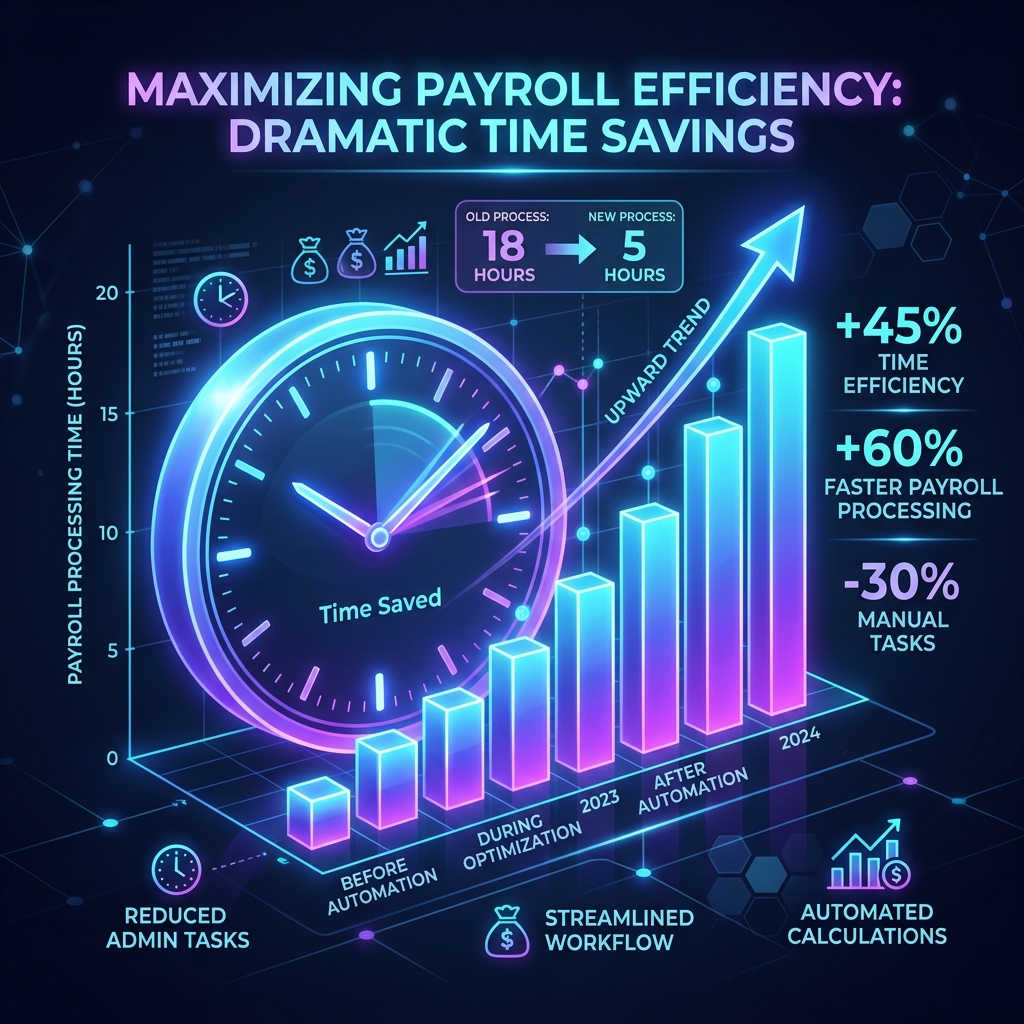
Executing an error-free, legally compliant public safety payroll run with PayslipGen takes less than two minutes from start to finish:
- Update the Master Excel Schedule:Open your district's master payroll workbook at the conclusion of the 14-day or 28-day 207(k) work period. Record any emergency holdover hours, mandatory storm recalls, or Kelly Day deductions on the calculation tab.
- Export or Save as CSV/XLSX:Export the "PayslipGen_Export" tab containing employee names, ranks, badge numbers, base salaries, paramedic stipends, FLSA overtime earnings, and net disbursements.
- Drop the File into PayslipGen: Launch the native PayslipGen desktop application on your Windows, macOS, or Linux workstation and drag your spreadsheet directly into the import window.
- Permanent Column Mapping: Map your spreadsheet columns (e.g.,
Total_RROP_Compto Gross Pay,FLSA_OT_Earningsto Overtime Pay,FPPA_PERS_Pensionto Pension Deduction). PayslipGen remembers your column schema permanently; next pay period, your file maps automatically in one click. - Configure Bank-Grade AES-256 Encryption: In the security settings, select the password protection mask. You can instantly lock each firefighter's paystub with their Badge ID Number, Date of Birth (YYYYMMDD), or Last 4 Digits of SSN. When paystubs are emailed or placed on shared station terminals, sensitive salary and personal identifying information (PII) is completely shielded from unauthorized eyes.
- One-Click Batch PDF Generation: Click "Generate All Payslips."Within 15 to 30 seconds, PayslipGen generates crisp, vector-rendered, professional PDF paystubs for every member of the department, complete with your city or fire district's official seal, detailed year-to-date (YTD) earnings accumulators, and transparent FLSA overtime breakdowns.
Frequently Asked Questions (FAQs)
What is the difference between contractual overtime and FLSA statutory 207(k) overtime?
Contractual overtime is governed by your department's union collective bargaining agreement (CBA) or municipal personnel policy (for instance, paying overtime whenever a firefighter works more than 24 consecutive hours or is called back on a scheduled day off). FLSA statutory 207(k) overtime is a federal mandate under 29 CFR § 553.230 that requires time-and-a-half once total actual hours exceed the statutory cap (e.g., 106 hours in 14 days or 212 hours in 28 days). Contractual overtime premiums that equal or exceed 1.5 times the regular rate may be credited toward meeting your federal FLSA statutory overtime obligations under 29 U.S.C. § 207(h).
Does an agency need formal DOL approval to adopt a Section 207(k) work period?
No. An agency does not need to submit an application or obtain formal permission from the Department of Labor. However, federal courts require that the agency make an affirmative, bona fide adoption of a specific 207(k) work period (such as passing a formal resolution of the Board of Fire Commissioners, incorporating the work period into town council bylaws, or memorializing the 14-day or 28-day cycle in a signed CBA). If a department cannot prove it formally adopted a 207(k) cycle, courts will evaluate the agency under the default 40-hour standard of Section 207(a), triggering catastrophic retroactive overtime liabilities.
Do Kelly Days count as "hours worked" when calculating statutory FLSA overtime?
Under federal wage law (29 CFR § 778.218), paid time off for vacations, holidays, illness, or scheduled non-working days (including Kelly Days) does not count as actual hours worked when calculating whether an employee has crossed the statutory 106-hour or 212-hour overtime threshold. Only physical hours actually worked on duty count toward the FLSA cap. However, local union contracts may negotiate more generous terms that treat Kelly Days as constructive hours worked for contractual overtime purposes.
Are single-role municipal paramedics covered under the 212-hour fire exemption?
No. Under 29 U.S.C. § 203(y), an emergency responder only qualifies for the 212-hour fire protection exemption if they have been trained in fire suppression and have the legal authority and responsibility to engage in fire suppression activities. Single-role civilian paramedics or third-service ambulance workers who do not have fire suppression responsibilities are governed by the general 40-hour overtime standard of Section 207(a), meaning they must receive overtime after 40 hours in a 7-day workweek.
How do mutual shift trades impact overtime calculations under 29 U.S.C. § 207(p)(1)?
When two qualified firefighters voluntarily trade shifts with management approval, federal law dictates that the hours worked by the substituting firefighter are completely excluded from their own overtime calculation. Instead, the hours are attributed to the firefighter who was regularly scheduled to work. The public employer pays each employee their normal scheduled wages as if no trade occurred, completely shielding the agency from unbudgeted overtime liabilities arising from voluntary shift trades.
Can volunteer firefighters receive stipends without triggering FLSA minimum wage and overtime?
Under 29 CFR § 553.106, bona fide volunteers may receive reimbursement for legitimate expenses, reasonable benefits (such as group life or health insurance), and a "nominal fee" per call or shift. However, the DOL Wage and Hour Division maintains an strict rule: the nominal fee cannot exceed 20% of the total compensation that a full-time career firefighter would receive to perform the same service in the same municipal jurisdiction. If a volunteer stipend exceeds this 20% threshold, the volunteer is legally reclassified as an employee entitled to retroactive minimum wage and statutory overtime.
Master Public Safety Payroll Without Enterprise Software Tolls
Generate unlimited, compliant, password-protected PDF paystubs for your firefighters, medics, and officers directly from Excel. One-time payment of $49, lifetime access, zero monthly subscriptions.
Get PayslipGen for $49 (Lifetime Access)Conclusion: Fiscal Responsibility and Sovereign Public Safety Administration
Fire chiefs, district board trustees, and city finance officers bear a sacred dual obligation: protecting the emergency first responders who put their lives on the line for their communities, and safeguarding the hard-earned tax dollars of the citizens who fund public safety operations.
Surrendering tens of thousands of dollars each year to cloud payroll conglomerates that fail to grasp the basic legal reality of 29 U.S.C. § 207(k) is neither fiscally responsible nor legally sound. When municipal payroll engines miscalculate regular rates or mismanage Kelly Days, the resulting liability falls directly on municipal balance sheets.
By combining the analytical flexibility of Microsoft Excel with the bank-grade PDF rendering and AES-256 encryption of PayslipGen, your department achieves complete statutory compliance, eliminates recurring enterprise software tolls, and delivers immaculate, professional paystubs to your first responders every single cycle.
(Looking to streamline other complex payroll workflows? Explore our comprehensive guides on Bulk Payslip Generation for Bookkeepers, Generating 500 Payslips from Excel, or how to Protect Sensitive Payroll Data with Air-Gapped Desktop Security.)