
Final Paycheck & Termination Paystub: State Rules, Accrued PTO Payouts, and Severance Formatting
Key Takeaways
- ✓Hyper-Strict Statutory Deadlines: Involuntary terminations trigger immediate, same-day final pay obligations in states like California, Colorado, and Missouri, while voluntary resignations range from immediate to 72 hours or the next scheduled payroll run.
- ✓Catastrophic Waiting Time Penalties: Under statutes such as California Labor Code § 203, failing to pay all final wages and accrued vacation at termination accrues a penalty of a full day's wage (8 hours) for every calendar day delayed, up to a maximum of 30 days plus legal fees.
- ✓Accrued Vacation Is Earned Compensation: Over 24 states legally classify accrued vacation as non-forfeitable earned wages; in jurisdictions like CA, IL, CO, and MT, "use-it-or-lose-it" policies are strictly void, requiring 100% cash-out at the employee's final base rate.
- ✓Rigid SaaS Payroll Bottlenecks: Cloud platforms like Gusto, ADP, and Paychex enforce 2–4 day ACH cutoff windows and charge $25–$100 off-cycle fees, creating massive compliance exposure during unscheduled dismissals.
- ✓Instant Local Off-Cycle Resolution: Using PayslipGen, HR managers and finance teams can generate a standalone, legally itemized, password-encrypted termination paystub from a spreadsheet in under 60 seconds with zero SaaS fees.
In human resources and enterprise payroll management, no operational event carries higher legal liability, financial exposure, and audit scrutiny than employee separation. Whether an exit is an amicable resignation, an executive severance package, a reduction in force (RIF), or an immediate involuntary dismissal for cause, the final paycheck is governed by an unforgiving web of state wage-and-hour statutes.
Failing to remit final wages on time—or failing to provide a comprehensively itemized final paystub detailing accrued Paid Time Off (PTO), separation allowances, and statutory withholdings—can trigger severe penalties. In aggressive jurisdictions like California, statutory "waiting time penalties" can escalate a minor $150 payroll oversight into a $9,000+ legal award, class-action lawsuit, or state labor commissioner investigation.
Compounding this challenge is the rigid architecture of modern cloud SaaS payroll providers. With automated Automated Clearing House (ACH) batch cutoff windows requiring 2 to 4 business days of advance lead time, human resource professionals and small business controllers are often left stranded when a termination must take effect immediately.
In this definitive guide, we break down the complex legal requirements governing final paychecks across the United States, dissect the math behind accrued PTO calculations and severance taxation, and demonstrate how you can generate compliant, itemized termination paystubs instantly on-demand using PayslipGen.
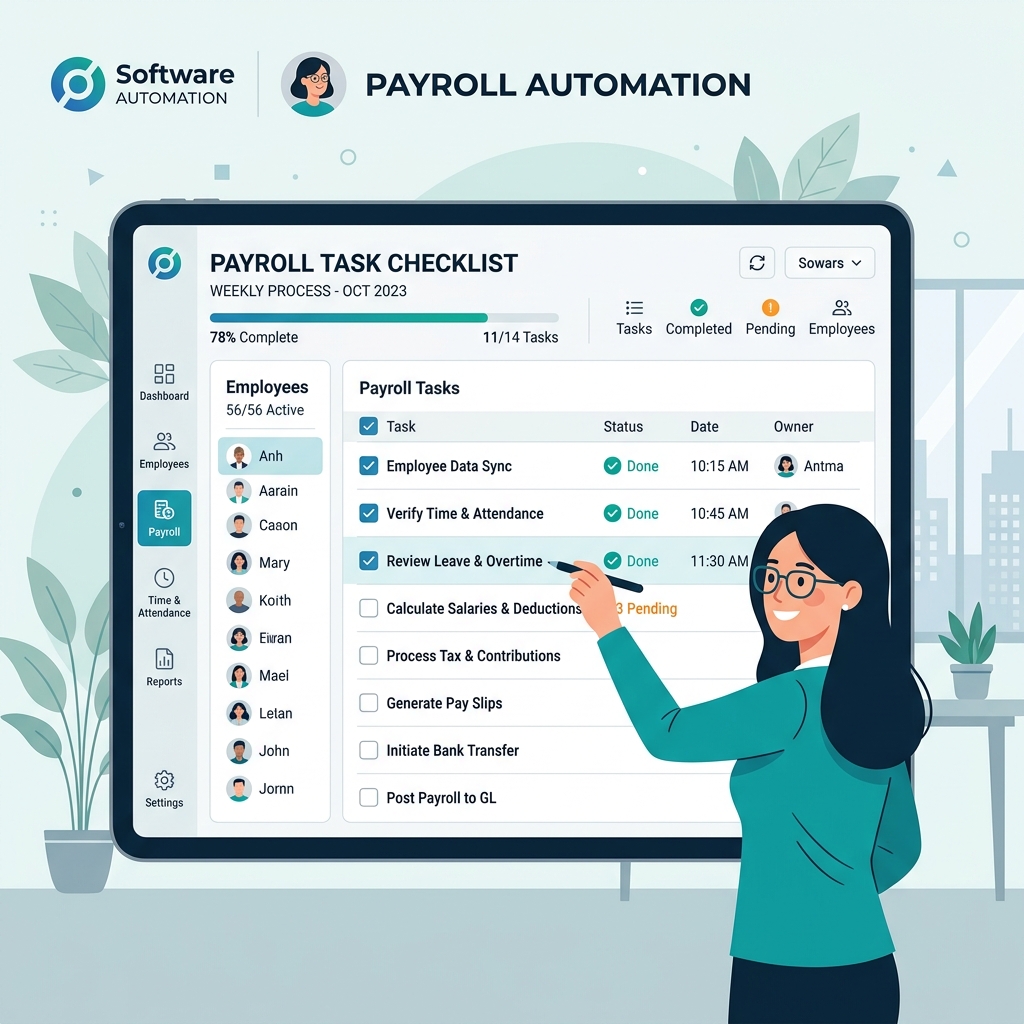
Try Our Interactive Demo Instantly
Want to see how an offline-capable, client-side payslip generator works in practice? Try our brand-new interactive demo right in your browser. Upload a sample CSV, map your columns, and generate beautifully designed PDF payslips—with zero data ever being transmitted to our servers.
Launch Free Demo NowChapter 1: The Problem — State Deadlines, SaaS Lockouts, and Waiting Time Penalties
The fundamental friction in termination payroll stems from a structural mismatch: state labor departments operate under strict statutory timelines measured in hours, while commercial cloud payroll engines operate in rigid multi-day banking cycles.
The Legal Anatomy of Termination Deadlines
Unlike standard recurring payroll—where companies disburse pay bi-weekly or semi-monthly on regular schedules—final wage obligations differ sharply based on whether the separation is involuntary (fired, laid off, or discharged) or voluntary (resignation or retirement):
- Immediate Same-Day Payout (Involuntary): In states such as California (Cal. Lab. Code § 201), Colorado (C.R.S. § 8-4-109), Hawaii, Missouri, and Nevada, an employer who terminates an employee must hand over all earned wages—including base salary, overtime, shift differentials, and 100% of accrued, unused vacation—at the exact moment and location of termination.
- 72-Hour Window (Resignation Without Notice): In California and Oregon, if an employee resigns without prior notice, the employer has up to 72 hours to compile the final wages and issue payment. However, if the employee gives at least 72 hours of advance notice, the final check is due on their last working day.
- Next Regular Payday: States such as Texas (Tex. Lab. Code § 61.014), New York (NY Lab. Law § 191), Florida, Washington, and Ohio permit payment by the next scheduled payroll cycle or within 6 to 15 days following the termination event.
The Devastating Math of Waiting Time Penalties (Labor Code § 203)
Consider an employer in California who terminates an operational supervisor earning $35.00/hour ($280.00/day). The company processes payroll through a standard cloud provider, planning to deliver the final check on the regular bi-weekly payday 14 calendar days later.
Statutory Delay: 14 calendar days (including weekends)
Waiting Time Penalty: 14 days × $280.00 = $3,920.00
Maximum Statutory Exposure (30 days): 30 × $280.00 = $8,400.00 + Attorney Fees
Under California Labor Code § 203, waiting time penalties accumulate for every single calendar day (including Saturdays, Sundays, and holidays) until fully paid, capped at 30 days. Under the Private Attorneys General Act (PAGA), these claims can be escalated into devastating multi-plaintiff representative actions.
The SaaS Payroll Bottleneck
Why do well-intentioned businesses frequently fail these statutory deadlines? Because standard cloud payroll systems (such as Gusto, Rippling, ADP Run, or Paychex) are built for scheduled, multi-employee batch disbursements. When a manager makes the decision to dismiss an underperforming worker at 3:00 PM on a Tuesday:
- ACH Direct Deposit Cutoffs:The Federal Reserve ACH settlement window requires standard deposits to be submitted by 4:00 PM EST, taking 2 to 4 business days to clear into the worker's bank account. An ACH deposit initiated Tuesday afternoon will not settle until Thursday or Friday—violating same-day payout mandates.
- Costly Off-Cycle Run Fees:Cloud platforms charge $25 to $100+ for every "off-cycle" or manual out-of-sequence payroll run, discouraging small businesses from processing single checks immediately.
- Software Seat Lockouts: Terminating an employee inside a cloud SaaS platform often restricts access to their payroll history or incurs ongoing monthly platform seat charges ($6–$15/seat/month) just to maintain access to historical termination wage reports.
Chapter 2: State-by-State Final Paycheck & PTO Regulations Matrix
To maintain rock-solid compliance across multi-state workforces and distributed teams, HR leaders must reference the governing statutes for every jurisdiction where remote or on-site personnel operate. Below is a comprehensive state comparison table detailing involuntary termination deadlines, resignation notice periods, and accrued PTO payout mandates:
| State | Involuntary Termination Deadline | Voluntary Resignation Deadline | Accrued PTO Payout Required? | Use-It-Or-Lose-It Legal? |
|---|---|---|---|---|
| California | Immediately (Same Day) | 72 hours (or immediate if ≥72h notice given) | YES (Mandatory by Statute) | ILLEGAL & VOID |
| Colorado | Immediately (Same Day) | Next regular payday | YES (Non-waivable earned wage) | ILLEGAL (Nieto v. Clark) |
| Illinois | Next regular payday | Next regular payday | YES (Mandatory by Statute) | ILLEGAL & VOID |
| Massachusetts | Immediately (Same Day) | Next regular payday (or following Sat) | YES (Mandatory by Statute) | Restricted (Policy Notice Req.) |
| New York | Next regular payday | Next regular payday | Per Written Employer Policy | Legal if clearly disclosed in writing |
| Texas | Within 6 calendar days | Next regular payday | Per Written Employer Policy | Legal if clearly stated in handbook |
| Florida | Next regular payday | Next regular payday | No state statute (Policy controls) | Legal (Employer discretion) |
| Washington | End of regular pay period | End of regular pay period | Per Written Employer Policy | Legal if outlined in policy |
| Missouri | Immediately (Same Day) | Next regular payday | Per Written Employer Policy | Legal if stated in contract |
| Montana | Immediately (or within 4 hrs) | Next regular payday | YES (Earned wage principle) | ILLEGAL & VOID |
| Nevada | Immediately (Same Day) | Within 7 days or next payday | Per Written Agreement | Legal if agreed in writing |
| Pennsylvania | Next regular payday | Next regular payday | Per Written Employer Policy | Legal under written terms |
Chapter 3: Deep Dive — Accrued PTO, Vacation Payouts & Calculation Math
One of the most litigated areas of final wage administration is the calculation and payout of accrued, unused Paid Time Off (PTO) and vacation days. Understanding the distinction between "earned deferred wages" and discretionary employer benefits is essential.
The Earned Wage Doctrine vs. Use-It-Or-Lose-It
In landmark rulings such as Suastez v. Plastic Dress-Up Co. (California Supreme Court) and Nieto v. Clark's Market, Inc. (Colorado Supreme Court), the courts established that vacation time is not a gratuity bestowed by the employer, but a form of deferred compensation for labor already performed.
Under this doctrine:
- Vacation pay vests continuously with every hour of labor performed by the employee.
- Once vested, it cannot be stripped away, forfeited, or erased by arbitrary year-end deadlines ("use-it-or-lose-it" policies).
- Upon termination (whether voluntary, involuntary, with cause, or without cause), all accrued, unused vacation hours must be cashed out at 100% of the employee's final regular rate of pay.
Accrual Calculation Formula & Math Example
Suppose an employee earns a salary of $78,000 per year ($37.50/hour based on 2,080 annual hours) and accrues 15 vacation days (120 hours) per full calendar year on a bi-weekly payroll cycle (26 pay periods/year).
120 annual hours ÷ 26 pay periods = 4.6154 hours accrued / pay period
2. Partial Period Mid-Cycle Termination:
Employee worked 6 full working days (48 hours) of an 80-hour bi-weekly period before termination.
Prorated Accrual = (48 hrs worked ÷ 80 standard hrs) × 4.6154 hrs = 2.7692 hours
3. Total Accrued Balance Payout:
Beginning Unused Balance: 42.5000 hours
Prorated Current Accrual: + 2.7692 hours
Total Unused Accrued Vacation: 45.2692 hours
Final PTO Payout Amount: 45.2692 hrs × $37.50/hr = $1,697.60 Gross
Note: In states requiring final rate inclusion, non-discretionary bonuses, shift differentials, and guaranteed commission averages earned during the prior 90 days must frequently be incorporated into the base hourly calculation.
Unified PTO Banks vs. Segregated Sick Leave
Under statutory paid sick leave laws—such as California's Healthy Workplaces Healthy Families Act, New York Paid Sick Leave, and Washington Paid Sick Leave—employers are generally not required to cash out unused statutory sick leave upon separation, provided the sick time is maintained in a distinct, segregated ledger.
However, if an employer adopts a unified "All-in-One PTO Bank" (combining vacation, personal days, and sick leave into one single balance pool), labor departments treat the entire unified balance as vacation pay. Consequently, the employer must cash out 100% of the combined balance at termination.
Chapter 4: Severance Pay, Separation Agreements & Supplemental Tax Withholding
When a company offers severance pay—whether as part of a formal Reduction in Force (RIF), executive transition, or negotiated mutual separation—the financial disbursement must be structured accurately on the final wage statement.
1. The Nature of Severance Payments
Severance pay is legally defined as consideration provided to a departing employee in exchange for executing a signed general release of claims and separation agreement. Under the federal Older Workers Benefit Protection Act (OWBPA) and Age Discrimination in Employment Act (ADEA), employees aged 40 and older must be provided:
- A minimum of 21 calendar days to review individual separation agreements (or 45 days in group layoffs / RIFs).
- A mandatory 7-day post-execution revocation period during which the employee may cancel the agreement.
Because of this statutory revocation window, severance payments cannot be combined into the immediate final paycheck for wages. Final earned wages and accrued PTO must be paid immediately on the termination date, while severance funds are disbursed in a secondary payment after the 7-day revocation window lapses.
2. Federal & State Supplemental Wage Withholding (IRS Pub. 15-T)
Under IRS tax regulations, severance payments, separation bonuses, and accrued vacation payouts are classified as Supplemental Wages. Employers can calculate federal income tax withholding using one of two approved methods:
| Withholding Method | IRS Calculation Rule | Pros & Best Use Cases |
|---|---|---|
| Flat Rate Method (Optional) | Flat 22% Federal Withholding (37% on amounts > $1,000,000) | Simplest calculation; ideal when severance is paid as a standalone check separate from regular wages. |
| Aggregate Method | Combine severance + regular wages; calculate tax using Form W-4 wage brackets; subtract tax on regular wages. | Required when supplemental pay is bundled directly into regular wages without separate identification. |
In addition to federal income tax, severance pay is fully subject to:
- Social Security Tax (OASDI): 6.2% on wages up to the annual IRS wage base ceiling.
- Medicare Tax (HI): 1.45% on all earnings (plus 0.9% Additional Medicare on wages exceeding $200,000 for single filers).
- Federal & State Unemployment (FUTA / SUTA): Counted towards employer annual wage thresholds.
- State Supplemental Tax Withholding: E.g., California enforces a flat 6.6% supplemental state withholding (or 10.23% on stock/bonuses), while New York applies supplemental brackets based on NYS-50-T.
Chapter 5: Itemizing the Final Paystub — Permitted vs. Prohibited Deductions
Under FLSA regulations and state wage statement statutes (such as California Labor Code § 226, New York Labor Law § 195, and Texas Labor Code § 62.003), every departing worker must receive an itemized wage statement detailing specific legal data points.
Mandatory Fields on a Legally Compliant Final Paystub
A compliant termination paystub must explicitly itemize:
- Employer Identification: Legal entity name, registered physical corporate address, and Federal EIN.
- Employee Information: Full legal name and employee identification code (or truncated last 4 digits of SSN).
- Pay Period Dates: Specific start and end dates of the concluding pay cycle, plus the explicit termination/check issue date.
- Gross Final Wages: Itemized breakdown of regular hours, hourly rates, overtime hours (1.5x), double-time hours (2.0x), and gross base pay.
- Accrued Vacation / PTO Payout: Explicit line item indicating hours cashed out and hourly rate.
- Severance / Separation Allowance: Distinct line item detailing gross severance disbursement.
- Itemized Statutory Deductions: Separate rows for Federal Income Tax, OASDI, Medicare, State Income Tax (SIT), and State Disability (SDI/SUI).
- Itemized Voluntary Deductions: 401(k) contributions, medical/dental premium portions, and authorized HSA deposits.
- Non-Taxable Expense Reimbursements: Validated accountable business expense reimbursements (travel, mileage, phone stipends) clearly marked as non-taxable.
- Net Wages Disbursed: The exact net amount remitted via paper check, wire transfer, or direct deposit.
Critical Compliance Alert: Prohibited Wage Deductions
A common and dangerous mistake made by business owners during contentious terminations is withholding wages to cover unreturned laptops, lost keys, damaged inventory, or register cash shortages.
- No Equipment Cost Offsets: Under federal law and almost all state statutes, you cannot deduct the value of unreturned equipment if it reduces the employee's earnings below minimum wage. In states like California, New York, and Illinois, equipment deductions are completely prohibited without a formal civil court judgment.
- No Cash Register Shortage Offsets: Business losses, cash drawer shortages, and inventory shrinkage are recognized as cost-of-doing-business risks and cannot be docked from final wages.
- Strict Written Authorization Required: Even for legitimate loans or advances, deductions require an explicit, written authorization agreement signed by the employee at the time the loan was issued.
Chapter 6: The Solution — Instant On-Demand Final Paystub Generation with PayslipGen
When faced with an immediate same-day termination requirement or an off-cycle executive separation, relying on slow cloud payroll schedules or paying $100 SaaS off-cycle fees is unnecessary. By pairing a master spreadsheet with PayslipGen, your HR team can generate a flawless, legally itemized final paystub in seconds directly on your local computer.
The Master Final Paycheck Spreadsheet Schema
To process a termination paystub, maintain a dedicated "Final_Paycheck" tab in your Excel or Google Sheets workbook. Below is the field structure optimized for single or multi-employee termination runs:
| Column Header | Sample Value | Purpose / Description |
|---|---|---|
| Employee_ID | EMP-8842 | Internal personnel ID |
| Employee_Name | Marcus Vance | Full legal name of departing employee |
| Pay_Period | Sep 01, 2026 - Sep 02, 2026 | Partial concluding pay period |
| Termination_Date | Sep 02, 2026 | Official date of separation |
| Final_Regular_Wages | 600.00 | 16 hours worked @ $37.50/hr |
| Accrued_PTO_Payout | 1697.60 | 45.2692 hours unused vacation @ $37.50 |
| Severance_Allowance | 3000.00 | Separation package (if applicable) |
| Expense_Reimbursement | 145.50 | Non-taxable travel/cell reimbursement |
| Tax_Federal_Withholding | 1165.47 | Supplemental & regular federal tax |
| Tax_FICA_Medicare | 405.27 | 6.2% OASDI + 1.45% Medicare on taxable gross |
| Tax_State_Withholding | 349.64 | State income tax (SIT + SDI) |
| Net_Final_Payout | 3522.72 | Net negotiable funds remitted to employee |
| PDF_Password | MV1989! | AES-256 dynamic document encryption key |
Step-by-Step Generation with PayslipGen
- Import Data Locally: Load your CSV or Excel file directly into PayslipGen. Because the software runs 100% locally on your desktop (Windows, macOS, Linux), sensitive separation terms and employee PII never leave your firewall.
- Apply Corporate Identity: Embed your transparent corporate logo, company address, digital signature, and legal seal to ensure the document is bank-verifiable and legally authoritative.
- Enable AES-256 Cryptographic Protection: Map the
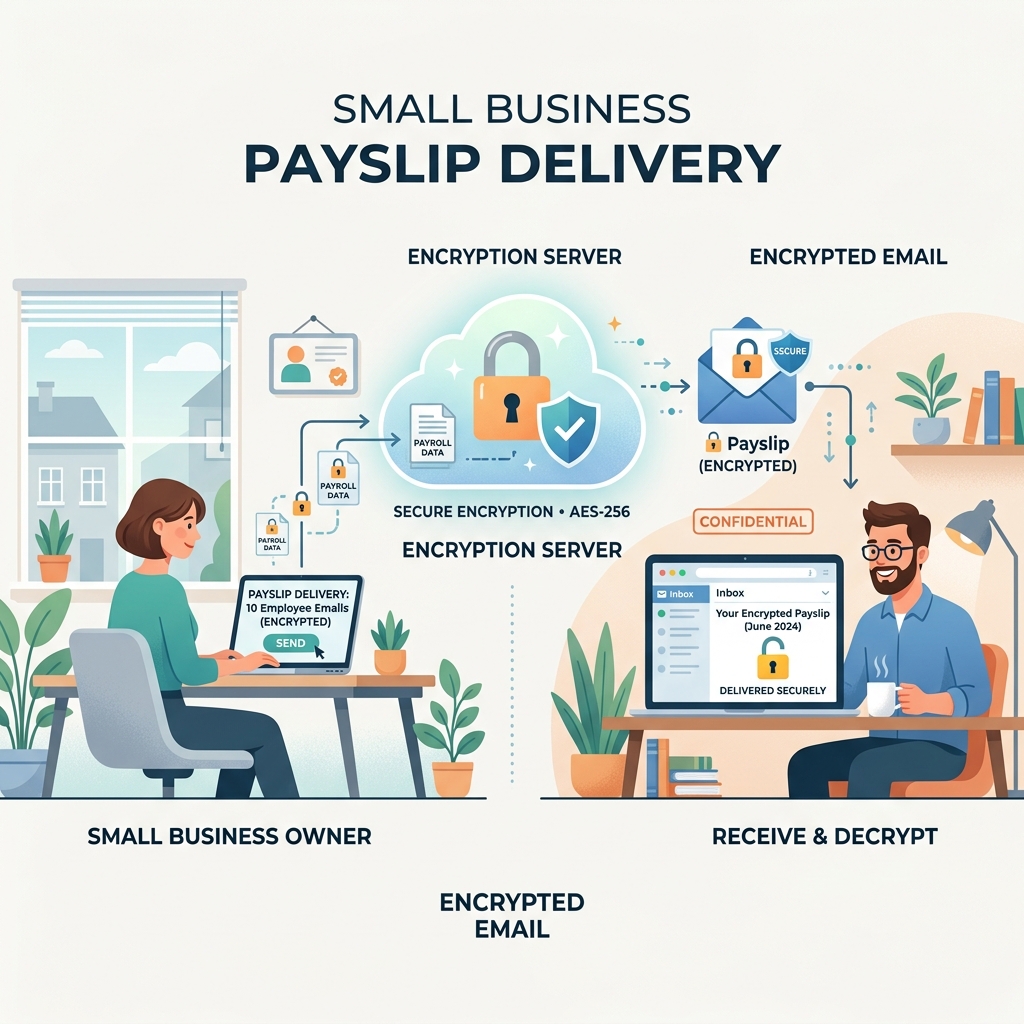
PDF_Passwordcolumn to automatically lock the PDF with military-grade encryption, protecting the departing employee's privacy in accordance with GDPR, HIPAA, and CCPA standards. - Instant PDF Compilation: Click Generate to produce a pixel-perfect PDF payslip within 1 second. You can print the document instantly to accompany a physical live check or dispatch it directly via your corporate SMTP server (Google Workspace, Office 365, Amazon SES, or SendGrid).
Chapter 7: The Master HR Termination Payroll Checklist
To ensure zero operational oversights, HR managers should execute this three-phase pre-flight checklist for every departing employee:
Phase 1: Pre-Termination Audit (48–72 Hours Prior)
- Verify the governing state labor jurisdiction based on where the employee performs services.
- Audit timecard logs, approved overtime, and meal/rest period premium penalties.
- Calculate total vested accrued PTO/vacation hours down to the decimal fraction.
- Review separation agreement terms and confirm severance payment schedules (accounting for the 7-day revocation period).
- Gather and audit all pending accountable business expense reimbursement receipts.
Phase 2: Day of Termination Execution (The Payout)
- Generate the final itemized termination paystub using PayslipGen.
- Prepare the negotiable payment instrument (live paper check, verified same-day wire, or verified ACH).
- Deliver the paystub and payment at the exit interview, obtaining a signed acknowledgment of receipt.
- If the employee is remote, dispatch the AES-256 encrypted PDF via secure email and initiate electronic payment with confirmation timestamps.
Phase 3: Post-Termination Compliance & Record Retention
- Issue mandatory state separation notices (e.g., California EDD Form DE 2320, New York Form IA 12.3).
- Furnish federal COBRA or state mini-COBRA health continuation election paperwork within statutory deadlines.
- Archive the final payroll calculations, timesheets, and itemized paystubs in an encrypted archive for at least 4 to 6 years.
- Verify year-end Form W-2 data mapping to ensure severance and PTO payouts align with IRS Box 1, 3, and 5 totals.
Frequently Asked Questions (FAQs)
What happens if a terminated employee refuses to accept or pick up their final paycheck?
If an employee refuses to accept their final check upon termination, the employer must document the tender of payment immediately. Under state labor laws (such as California Labor Code § 201), the employer satisfies its statutory duty if the funds and itemized paystub were made available on the mandated deadline. If the employee refuses a physical check or direct handover, send the final check and paystub via certified mail with return receipt requested to their last known address, or execute an electronic direct deposit if authorized in writing, preserving all tracking timestamps as audit evidence against waiting time penalties.
Can an employer deduct the cost of an unreturned laptop, keycard, or company equipment from the final paycheck?
In the vast majority of jurisdictions (including California, New York, Illinois, Texas, and Washington), employers cannot unilaterally deduct the replacement cost of unreturned company equipment, uniforms, or property from an employee's final wages. Even with a signed handbook policy, deductions that bring an employee below minimum wage violate the FLSA, and state laws strictly prohibit wage offsets for ordinary negligence, losses, or property claims without a formal court judgment. Employers must pay full final wages and pursue equipment recovery through civil remedies.
Is an employer legally required to pay out accrued unused sick leave upon termination?
Generally, no. Most state and municipal paid sick leave statutes (including California's Healthy Workplaces Healthy Families Act, New York Paid Sick Leave, and Washington Paid Sick Leave) do not require employers to cash out unused statutory sick days upon separation, provided the employer maintains segregated sick leave balances. However, if an employer bundles sick time into a unified Paid Time Off (PTO) or Annual Leave bank, the entire combined balance is legally classified as earned vacation wages and must be paid out in full in mandatory payout states.
How should severance pay be taxed on a final paystub—aggregate or flat supplemental rate?
Under IRS Publication 15-T, severance pay is categorized as supplemental wages. Employers can choose between two calculation methods: (1) The Flat Rate Method, applying a flat 22% federal income tax withholding rate for amounts up to $1 million (37% above $1M), or (2) The Aggregate Method, combining severance with regular final pay and withholding taxes as if the combined sum were a single standard payroll distribution. Both methods are subject to FICA (6.2% Social Security up to the annual wage cap and 1.45% Medicare, plus 0.9% Additional Medicare where applicable) and applicable state supplemental withholding rates.
Can final paychecks be distributed via Direct Deposit or must they be a physical paper check?
Direct deposit is legally permissible for final wages only if the employee has previously authorized direct deposit in writing and the electronic funds actually settle in the employee's bank account on or before the statutory deadline. If standard Automated Clearing House (ACH) batch processing cycles would delay fund availability past the statutory deadline (such as California's same-day rule), the employer must issue an immediate physical check, execute an instant same-day Fedwire transfer, or hand-deliver a live negotiable payroll check accompanied by an itemized paystub.
How long must businesses retain records of final paystubs, PTO calculations, and severance agreements?
Under the federal Fair Labor Standards Act (FLSA) and Equal Employment Opportunity Commission (EEOC) regulations, employers must preserve basic payroll records, collective bargaining agreements, and sales/purchase records for at least three years. Records on which wage computations are based (including timesheets, piece work tickets, wage rate tables, work schedules, and additions to or deductions from wages) must be preserved for two years. Many state statutes of limitations for wage claims (such as California Labor Code § 226 and New York Labor Law § 198) require maintaining itemized paystubs, PTO accrual ledgers, and termination settlement records for four to six years.
Generate Compliant Off-Cycle Final Paystubs Instantly
Never miss an immediate state termination deadline again. Create itemized, password-protected PDF payslips on-demand from your spreadsheets with zero cloud subscriptions.
Get PayslipGen for $49 (Lifetime Access)Conclusion
Navigating employee separations requires a delicate balance of human empathy and rigorous statutory precision. By understanding state-by-state final paycheck deadlines, respecting the non-forfeitable nature of accrued PTO, correctly applying supplemental tax withholding rules to severance packages, and avoiding illegal wage deductions, businesses can protect themselves against costly labor audits and waiting time penalties.
When an urgent termination arises, don't let rigid SaaS payroll batch windows or $100 off-cycle fees delay statutory compliance. With a master spreadsheet and PayslipGen, you have complete control over your payroll pipeline—generating secure, bank-verifiable, and legally compliant termination wage statements in seconds.
(Looking to streamline your wider payroll operations? Explore our in-depth guides on Hourly Employee Overtime Calculations, GDPR-Compliant Payslip Email Distribution, and 1099 Contractor Payment Advice Formatting.)