
Film Crew Paystub Generator: How to Calculate 10/12-Hour Day Rates, Kit Rental Fees & Meal Penalties from Excel
Key Takeaways
- ✓The Legal Illusion of the "Day Rate": Under the Fair Labor Standards Act (FLSA 29 CFR § 778.112) and state labor codes (such as California Labor Code § 510), flat day rates for non-exempt crew do not waive overtime. Every day rate must be deconstructed into straight time, 1.5x overtime, and 2.0x Golden Time.
- ✓The 14-Hour & 11-Hour Divisor Formulas: A guaranteed 12-hour day rate must be divided by 14 to determine the true base hourly rate (8 regular hours + 4 hours at 1.5x = 14 straight-time equivalents). A guaranteed 10-hour day rate must be divided by 11.
- ✓Protecting Kit Rentals Under IRC § 62(a)(2)(A): Equipment and box rentals must be paid under a formal Accountable Plan with itemized gear inventories. Failing to separate kit rentals on paystubs subjects equipment to payroll taxes and inflates expensive Workers' Compensation premiums by 4% to 9%.
- ✓IWC Wage Order 12 & Turnaround Compliance: Commercial and indie sets must strictly account for meal penalties when lunch is delayed past the 6-hour mark, as well as invaded turnaround ("forced call") rest violations.
- ✓Escape 4%–8% Entertainment Payroll Surcharges: Independent producers and commercial houses can bypass predatory payroll processing fees from Entertainment Partners or Cast & Crew by managing master timecards in Excel and batch-generating bank-grade, encrypted PDF paystubs locally with PayslipGen for $49 lifetime.
On film, television, and commercial production sets, Friday wrap brings a familiar wave of accounting chaos. Line producers, production coordinators, and independent filmmakers open their production inbox to find a flood of freelancer deal memos and hand-scrawled call sheets.
A Director of Photography submits an invoice for "$950/12-hour day + $250 RED camera kit rental." A Gaffer bills "$700/12-hour day + 2 hours Golden Time + 1 Meal Penalty." A Sound Mixer lists "$850/12-hour day + $175 sound package + 45 miles portal-to-portal travel."
To an inexperienced producer, cutting a check for the flat total seems straightforward. But to labor commissioners, the IRS, and workers' compensation insurance auditors, paying a flat "day rate" without an itemized hourly breakdown is an illegal labor violation waiting to trigger crippling financial penalties.
Under federal law, below-the-line film crew members are non-exempt statutory employees. Writing "Day Rate: $700" on a paystub or issuing an informal 1099-NEC does not eliminate the legal mandate for daily overtime, weekly overtime, meal penalties, and audited equipment expense reimbursements.
For decades, Hollywood production houses like Entertainment Partners (EP), Cast & Crew, CAPS, and Wrapbook have charged commercial production companies and independent filmmakers massive 4% to 8% payroll handling surcharges to perform these calculations. On a modest $500,000 annual production payroll, these fees siphon $20,000 to $40,000 away from the screen into SaaS software tolls.
In this definitive operational guide, we break down the legal reality of film crew day rates under FLSA 29 CFR § 778.112, establish the mathematical formulas for 10-hour and 12-hour deconstructions, detail the tax structure of non-taxable kit rentals, audit California IWC Wage Order 12 meal penalties, provide a complete Excel timecard blueprint, and demonstrate how to generate compliant, encrypted film crew paystubs locally using PayslipGen.
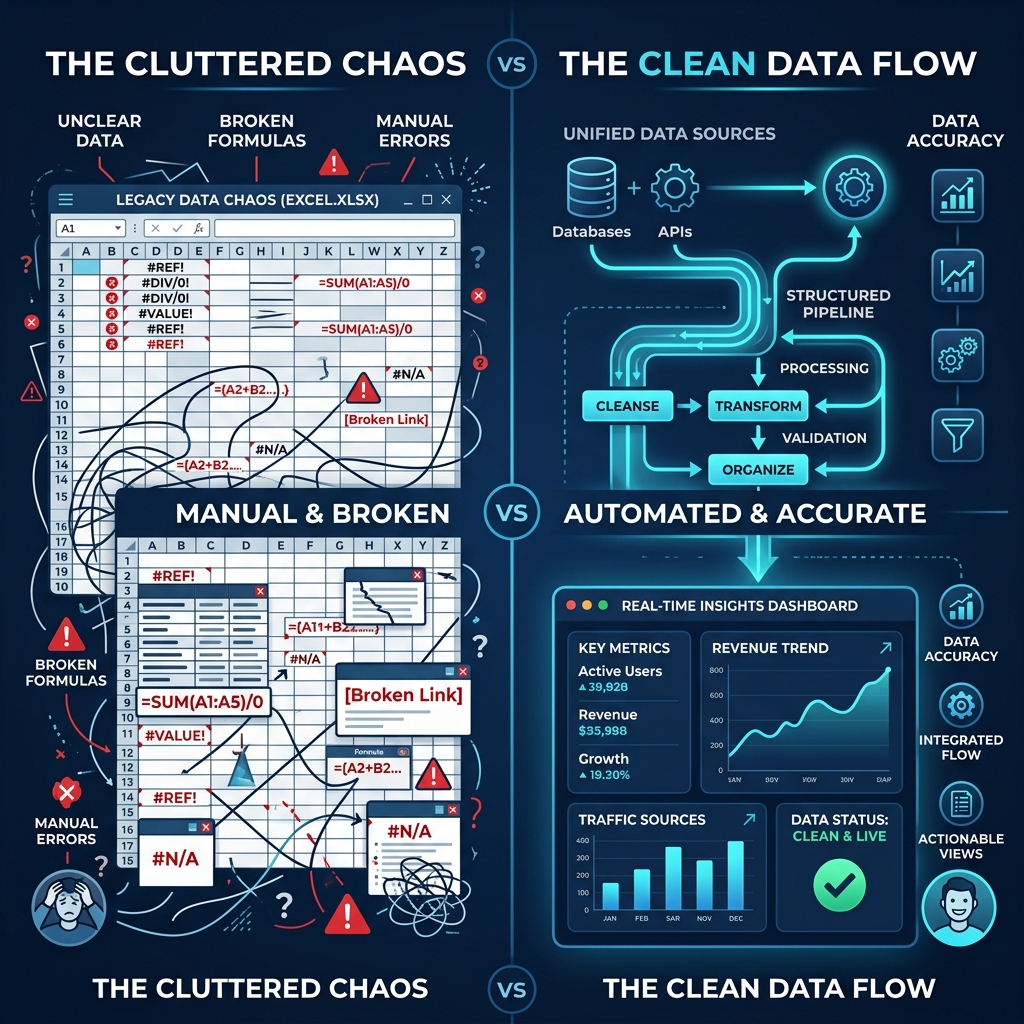
Try Our Interactive Demo Instantly
Want to see how an offline-capable, client-side payslip generator works in practice? Try our brand-new interactive demo right in your browser. Upload a sample CSV, map your columns, and generate beautifully designed PDF payslips—with zero data ever being transmitted to our servers.
Launch Free Demo NowChapter 1: The Legal Myth of the Film Crew "Day Rate" Under FLSA
The entertainment industry speaks almost exclusively in day rates: "What's your 10? What's your 12?" Agents, line producers, and department heads negotiate deals based on a guaranteed daily sum. However, from a statutory labor perspective, a flat day rate for non-exempt technicians does not legally exist.
The Federal Standard: 29 CFR § 778.112
Under the Fair Labor Standards Act (FLSA), specifically codified in Title 29 of the Code of Federal Regulations, Section 778.112:
"If the employee is paid a flat sum for a day's work or for doing a particular job, without regard to the number of hours worked in the day or at the job, and if he receives no other form of compensation for services, his regular rate is determined by totaling all the sums received at such day rates or job rates in the workweek and dividing by the total hours actually worked. He is then entitled to extra half-time pay at this rate for all hours worked in excess of 40 in the workweek."
Crucially, 29 CFR § 778.112 clarifies that a day rate only compensates for straight-time hours. It cannot legally incorporate advance payment for overtime hours unless explicitly deconstructed into regular and overtime hourly rates in a written employment agreement or deal memo.
Who on a Production Set Is Legally Non-Exempt?
Production companies frequently attempt to classify crew members as "exempt professionals" under the FLSA administrative or creative exemptions (29 CFR Part 541). The Department of Labor (DOL) and state labor boards have repeatedly struck down this classification for below-the-line crew:
- Camera Department: Camera Operators, 1st Assistant Cameras (1st AC / Focus Puller), 2nd ACs, Digital Imaging Technicians (DIT), and Loaders.
- Lighting & Grip: Gaffers, Best Boy Electrics, Electricians, Key Grips, Best Boy Grips, Dolly Grips, and Rigging Grips.
- Audio / Sound: Production Sound Mixers, Boom Operators, and Utility Sound Technicians.
- Art & Wardrobe: Prop Masters, Set Dressers, Leadmen, Costume Designers, Wardrobe Supervisors, Key Hair & Makeup Artists.
- Production & Logistics: Production Assistants (PAs), Script Supervisors, Craft Service Coordinators, and Drivers.
None of these technicians exercise the independent business judgment or administrative executive authority required for overtime exemption. Their compensation is tied directly to physical attendance and hourly execution on set.
The Catastrophic Reclassification Penalty
What happens when an independent producer pays a Gaffer a flat $700 for a 14-hour shoot day and writes "Day Rate: $700" on the check stub?
If that crew member files a wage claim with the California Division of Labor Standards Enforcement (DLSE) or the federal DOL:
- The Flat Rate is Ruled Base Straight Pay: The labor commissioner will rule that the $700 paid only covered the worker's base 8 hours of work (yielding an hourly base of $87.50/hr).
- Retroactive Overtime Is Assessed: The production owes 4 hours of overtime at 1.5x ($131.25/hr = $525.00) plus 2 hours of double time ("Golden Time") at 2.0x ($175.00/hr = $350.00). Total wages owed: $1,575.00 instead of $700.00.
- Statutory Wage Statement Penalties: Under California Labor Code § 226(e), failing to show the exact hourly rates and hours worked on the paystub triggers a statutory penalty of $50 for the initial pay period and $100 per employee for each subsequent violation, up to $4,000 per crew member.
- Waiting Time Penalties: Under California Labor Code § 203, if wages are withheld after termination (and freelance crew are legally terminated at the end of each shoot), the employer owes up to 30 days of full daily wages as a continuing penalty.
On a 15-person crew over a 5-day commercial shoot, a simple "flat day rate" oversight can explode into over $100,000 in statutory labor penalties.
Chapter 2: The Mathematical Blueprint: Deconstructing Guaranteed Day Rates
To remain 100% compliant while respecting the entertainment industry's standard negotiation language, production accountants and line producers must use the contractual guarantee deconstruction method.
When a deal memo states "$700 for a guaranteed 12-hour day," it must be translated into an agreed contract guaranteeing:
- 8 hours of straight time at base hourly rate $R$
- 4 hours of daily overtime at $1.5 \times R$

The 12-Hour Day Rate Formula: Divide by 14
Let $R$ represent the employee's base straight-time hourly rate. A guaranteed 12-hour day consists of 8 hours at $1.0\times$ plus 4 hours at $1.5\times$:
Total Guaranteed Compensation = (8 × R) + (4 × 1.5 × R)
Total Guaranteed Compensation = 8R + 6R = 14R
Base Hourly Rate (R) = Agreed 12-Hour Day Rate ÷ 14
Why 14? Because 4 hours of overtime at time-and-a-half is economically equivalent to 6 hours of straight time. $8 + 6 = 14$ straight-time equivalent hours.
| Agreed 12-Hr Day Rate | Divisor | Base Hourly Rate (R) | Overtime Rate (1.5x) | Golden Time Rate (2.0x) | Paystub Line Item Verification |
|---|---|---|---|---|---|
| $350.00 (PA / Runner) | 14 | $25.000 / hr | $37.500 / hr | $50.000 / hr | (8 × $25.00) + (4 × $37.50) = $350.00 |
| $600.00 (Key Grip / 2nd AC) | 14 | $42.857 / hr | $64.286 / hr | $85.714 / hr | (8 × $42.86) + (4 × $64.29) = $600.00 |
| $700.00 (Gaffer / 1st AC) | 14 | $50.000 / hr | $75.000 / hr | $100.000 / hr | (8 × $50.00) + (4 × $75.00) = $700.00 |
| $850.00 (Sound Mixer) | 14 | $60.714 / hr | $91.071 / hr | $121.428 / hr | (8 × $60.71) + (4 × $91.07) = $850.00 |
| $1,050.00 (Director of Photography) | 14 | $75.000 / hr | $112.500 / hr | $150.000 / hr | (8 × $75.00) + (4 × $112.50) = $1,050.00 |
The 10-Hour Day Rate Formula: Divide by 11
On commercial shoots, music videos, and European-style continuous shoots, 10-hour guarantees are common. The deconstruction follows identical mathematical principles:
Total Guaranteed Compensation = (8 × R) + (2 × 1.5 × R)
Total Guaranteed Compensation = 8R + 3R = 11R
Base Hourly Rate (R) = Agreed 10-Hour Day Rate ÷ 11
For example, a Key Hair & Makeup artist billing a $660/10-hour guarantee has a base rate of $660 / 11 = $60.00 per hour. Their paystub reflects:
- Regular Hours: 8.00 hrs @ $60.00/hr = $480.00
- Overtime Hours: 2.00 hrs @ $90.00/hr = $180.00
- Total Gross Wages for 10 Hours: $480.00 + $180.00 = $660.00
Handling "Golden Time" (Double Time) Past 12 Hours
In production hubs like California, California Labor Code § 510 mandates that all hours worked beyond 12 hours in a single workday must be paid at no less than twice the regular rate of pay (2.0x). In entertainment union agreements (such as IATSE Local 600, 728, and 80), this is colloquially called Golden Time.
Let's examine what happens when our Gaffer on a $700/12-hour guarantee works an arduous 14.5-hour night shoot:
- Straight-Time Base (Hours 1–8): 8.0 hrs × $50.00/hr = $400.00
- Overtime 1.5x (Hours 9–12): 4.0 hrs × ($50.00 × 1.5) = 4.0 × $75.00 = $300.00
- Golden Time 2.0x (Hours 13–14.5): 2.5 hrs × ($50.00 × 2.0) = 2.5 × $100.00 = $250.00
- Total Earned Wages for the Day: $400.00 + $300.00 + $250.00 = $950.00
If the producer had written a flat check for $700 or failed to compute the 2.5 hours of Golden Time at $100.00/hr, the production is in direct violation of state wage statutes.
Chapter 3: Kit & Box Rental Reimbursements: Tax Shields vs. Workers' Comp Traps
Film and video production relies heavily on crew-owned tools. Sound Mixers bring tens of thousands of dollars in Sound Devices recorders, Lectrosonics wireless transmitters, and Schoeps boom microphones. DPs provide custom monitor rigs, wireless Teradek transmitters, and cine lenses. Hair and makeup artists supply high-end cosmetic kits, prosthetics, and styling tools.
The payment for this gear—negotiated as a Kit Rental or Box Rental(typically $50 to $350+ per day)—is fraught with tax and workers' compensation pitfalls.
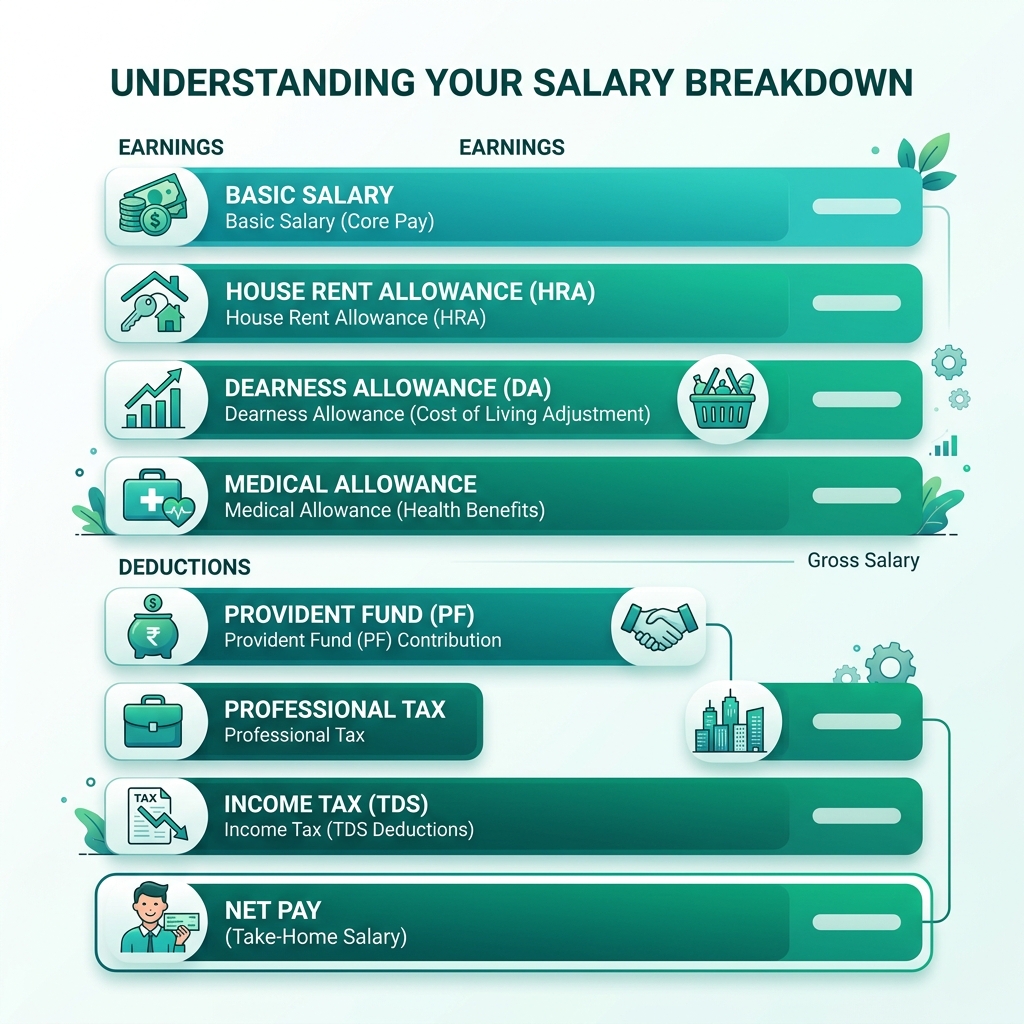
The Legal Basis: IRC § 62(a)(2)(A) Accountable Plans
Under Internal Revenue Code § 62(a)(2)(A) and Treasury Regulation § 1.62-2, an employer may reimburse an employee for legitimate business expenses on a completely tax-free basis, provided the arrangement satisfies the three prongs of an Accountable Plan:
- Business Connection: The equipment must be required for the crew member to perform their production duties.
- Substantiation: The crew member must provide a signed Kit Rental Inventory Form detailing the itemized equipment, serial numbers, and fair market daily rental values.
- Return of Excess: Any advance or unearned reimbursement must be returned to the production company.
When these conditions are met, kit rental payments are excluded from gross income on Form W-2 (Box 1) and are exempt from employee and employer FICA taxes (Social Security and Medicare), federal unemployment (FUTA), and state unemployment (SUTA).
The Three Devastating Kit Rental Mistakes
Mistake 1: Rolling Kit Rentals into Gross W-2 Wages
Many novice producers simply add the $200 kit rental to the crew member's gross wages line. This harms both parties:
- The Employee Loses 30%+: The crew member pays federal income tax, state income tax, and 7.65% FICA on money intended to cover the wear, tear, and depreciation of their personal equipment.
- The Employer Overpays Taxes: The production pays an unneeded 7.65% employer FICA match, FUTA, and SUTA on equipment expense.
- The Workers' Comp Overpayment: In motion picture production, Workers' Compensation insurance rates range from 4% to 9% of gross payroll. Paying a $200 kit rental inside gross wages burns an extra $8 to $18 per day in unrecoverable insurance premiums!
Mistake 2: Issuing an Informal 1099-MISC Box 1 (Rent) to a W-2 Worker
Some production accountants attempt to pay labor on W-2 and kit rental via a separate 1099-MISC (Box 1 - Royalties/Rent). While permissible if the crew member operates a separate registered LLC with a distinct EIN and commercial liability equipment policy, issuing a 1099 to an individual W-2 employee without formal lease agreements triggers intense IRS scrutiny. Auditors often treat it as an illegal attempt to disguise wages and avoid payroll tax withholding.
The Compliant Solution: Itemized Non-Taxable Reimbursement Line
The gold standard of entertainment accounting is to itemize the kit rental as a distinct line item directly on the employee's paystub: Kit Rental Reimbursement (Non-Taxable). It is paid alongside net wages in a single transaction, clearly segregated from taxable gross pay, ensuring workers' comp auditors exclude it from assessable payroll.
Chapter 4: California IWC Wage Order 12: Meal Penalties & Turnaround Rest Violations
Nowhere are labor standards more strictly enforced than in California's motion picture industry, governed by the Industrial Welfare Commission (IWC) Wage Order 12-2001 and California Labor Code §§ 226.7 and 512.
The Strict 6-Hour Meal Rule
Under IWC Wage Order 12, an employer cannot require an employee to work more than 6 consecutive hours without a meal period of not less than 30 minutes (nor more than one hour).
- First Meal: Must be called no later than 6.0 hours after the employee's call time (or report time).
- Second Meal: Must be called no later than 6.0 hours after the completion of the first meal period.
- The 12-Minute Grace Period: In commercial and union production, an allowance of up to 12 minutes is recognized if the director and camera crew are actively completing a take or camera setup in progress when the 6-hour mark arrives. If lunch is called at 6 hours and 13 minutes, the grace period is voided and the full penalty is incurred.
The NDB (Non-Deductible Breakfast) Technique
To synchronize meal windows across crew members with staggered call times (e.g., grips and electrics called at 6:00 AM for pre-rigging, but camera called at 7:30 AM), production companies utilize an NDB (Non-Deductible Breakfast).
Under IWC rules, if the production provides a hot breakfast within 2 hours of general call and allows crew at least 15 minutes of uninterrupted eating time on the clock (without deducting wages), the production may establish the end of the NDB as the new baseline for the 6-hour lunch countdown.
Calculating Meal Penalties in Excel
When production fails to call meal break within 6 hours, statutory penalties accrue. Under California Labor Code § 226.7, an employer must pay one additional hour of compensation at the employee's regular base hourly rate for each workday that the meal period is missed or delayed.
Alternatively, under union agreements (IATSE Basic Agreement) and commercial production customs, meal penalties follow a progressive half-hour graduated scale:
- 1st half-hour of delay (0.1 to 30 mins late): $7.50
- 2nd half-hour of delay (31 to 60 mins late): $10.00
- 3rd and each subsequent half-hour: $12.50
For non-union indie productions operating in California, relying on the statutory one hour of regular base pay under Labor Code § 226.7 is the safest legal posture.
Turnaround Penalties: Invaded Rest Periods ("Forced Calls")
Production wrap often stretches late into the night. Under standard entertainment labor practices, crew members are entitled to an uninterrupted daily rest period known as turnaround:
- Studio Zone / Local Turnaround: Minimum 10 consecutive hours of rest between wrap time and the next day's call time.
- Distant Location Turnaround: Minimum 12 consecutive hours of rest (or 14 hours if extensive travel is required).
If a production wraps on set at 11:30 PM on Thursday, the crew cannot be called back before 9:30 AM on Friday. If the producer schedules a 7:30 AM call time, the production has invaded turnaround by 2.0 hours.
This is legally classified as a Forced Call. For every invaded hour until the required rest duration would have elapsed, the crew member is compensated at an augmented premium rate—often straight time additional or automatic double-time (2.0x base rate)—on top of their regular earnings for that day.
Chapter 5: Master Production Timecard Spreadsheet Blueprint
To eliminate human calculation errors, line producers and production accountants maintain a standardized Excel timecard workbook. Below is the exact structural blueprint for an institutional-grade production crew payroll sheet.
| Crew_Name | Department | Role | Day_Rate_Agreed | Guarantee_Hrs | Base_Rate | Worked_Hrs | Reg_Hrs | OT_1.5x | Gold_2.0x | Meal_Penalties | Kit_Rental | Gross_Payable |
|---|---|---|---|---|---|---|---|---|---|---|---|---|
| Marcus Vance | Camera | Dir. of Photography | $1,050.00 | 12 | $75.00 | 13.5 | 8.0 | 4.0 | 1.5 | $0.00 | $250.00 | $1,525.00 |
| Elena Rostova | Sound | Sound Mixer | $850.00 | 12 | $60.71 | 12.0 | 8.0 | 4.0 | 0.0 | $60.71 | $175.00 | $1,085.71 |
| Devon Reed | Lighting | Gaffer | $700.00 | 12 | $50.00 | 14.0 | 8.0 | 4.0 | 2.0 | $0.00 | $75.00 | $975.00 |
| Jamal Washington | Grip | Key Grip | $600.00 | 12 | $42.86 | 12.0 | 8.0 | 4.0 | 0.0 | $42.86 | $50.00 | $692.86 |
| Chloe Vance | HMU | Key Hair & Makeup | $660.00 | 10 | $60.00 | 11.0 | 8.0 | 3.0 | 0.0 | $0.00 | $125.00 | $875.00 |
| Samir Patel | Production | Set PA | $350.00 | 12 | $25.00 | 13.0 | 8.0 | 4.0 | 1.0 | $25.00 | $0.00 | $425.00 |
Core Production Formulas for Your Spreadsheet
To automate your production workbook in Microsoft Excel or Google Sheets, embed these standard formulas into your payroll calculation columns:
- Base Hourly Rate:
=D2 / IF(E2=12, 14, IF(E2=10, 11, 8)) - Regular Hours (Capped at 8):
=MIN(G2, 8) - Overtime Hours (Hours between 8 and 12):
=MIN(MAX(G2 - 8, 0), 4) - Golden Time Hours (Hours past 12):
=MAX(G2 - 12, 0) - Total Taxable Labor Wages:
=(H2 * F2) + (I2 * F2 * 1.5) + (J2 * F2 * 2.0) + K2 - Total Disbursed (Labor + Kit Rental):
=Labor_Wages + Kit_Rental
Chapter 6: The 5-Year Cost Comparison: PayslipGen vs. Hollywood Payroll Houses
For decades, independent commercial production companies and boutique video agencies had no choice but to use legacy Hollywood payroll service companies: Entertainment Partners (EP), Cast & Crew, CAPS, or newer VC-backed web platforms like Wrapbook.
These services bill a processing / handling surcharge of 4.0% to 8.0%on total gross payroll, on top of statutory employer tax contributions and workers' comp rates.
Let's analyze the 5-year financial impact for an active boutique commercial production company running $500,000 in annual freelance crew payroll:
| Production Horizon | Legacy Payroll House (EP / Cast & Crew @ 5.5% Fee) | Modern Web SaaS (Wrapbook @ 4.0% Fee) | PayslipGen (One-Time Desktop License) |
|---|---|---|---|
| Year 1 ($500k Payroll) | $27,500.00 | $20,000.00 | $49.00 (Total) |
| Year 3 ($1.5M Cumulative) | $82,500.00 | $60,000.00 | $49.00 (Total) |
| Year 5 ($2.5M Cumulative) | $137,500.00 | $100,000.00 | $49.00 (Total) |
| Surcharge on Equipment Rentals | Yes (often billed at 2%–4% handling) | Yes (included in fee volume) | ZERO ($0.00) |
| Data Privacy & Offline Access | Third-party cloud servers | Third-party cloud servers | 100% Local Air-Gapped Machine |
Over a five-year production window, shifting from percentage-based payroll software to local spreadsheet automation retains over $100,000 to $137,000 in bottom-line production profit. That capital can fund new camera packages, elevate art department budgets, or expand your producer reserve.
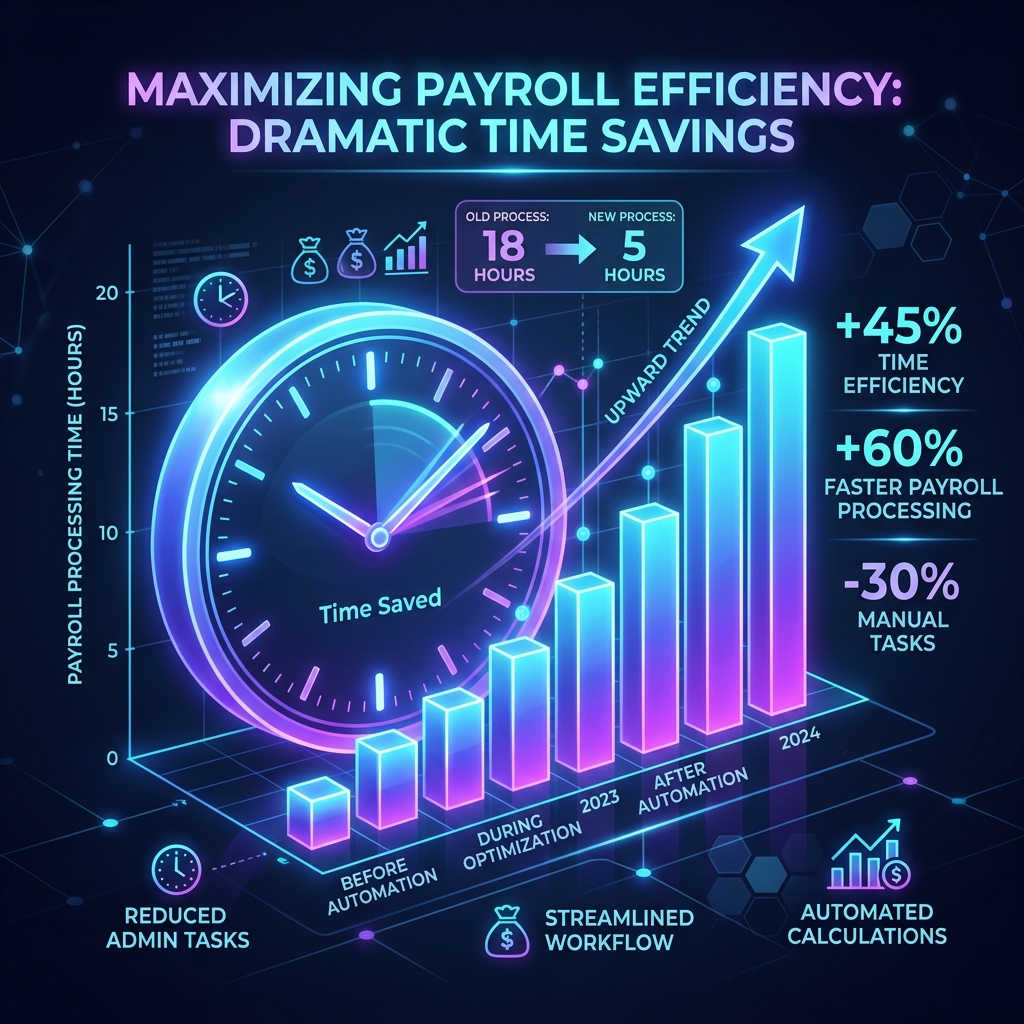
Chapter 7: How Independent Producers Generate Film Crew Paystubs in Seconds with PayslipGen
Generating compliant, institutional-grade paystubs for a 30-person crew shouldn't require hours of manual PDF formatting. With PayslipGen, production coordinators complete the entire paystub distribution pipeline in minutes:
- Step 1: Finalize Your Master Production Timecard:
Maintain your shoot records in Microsoft Excel or Google Sheets. Tally daily hours, overtime hours, Golden Time, meal penalties, and approved kit rental reimbursements. - Step 2: Drag & Drop into PayslipGen:
Open PayslipGen on your macOS, Windows, or Linux workstation. Drag your.xlsxor.csvproduction timecard directly into the app window. - Step 3: One-Time Intelligent Column Mapping:
Map your spreadsheet columns (e.g.,Base_Rate,OT_Hours,Kit_Rental,Meal_Penalties) to PayslipGen's institutional earnings and non-taxable reimbursement fields. PayslipGen saves this mapping profile permanently for all future production shoots. - Step 4: Custom Production Company Branding:
Upload your production company's corporate logo, EIN, physical address, and film project title (e.g., "Neon Horizon - Commercial Shoot Day 1–3"). - Step 5: Apply AES-256 PDF Password Encryption:
Safeguard crew Social Security numbers and personal compensation records by automatically password-protecting each individual PDF using the crew member's Date of Birth (YYYYMMDD) or Call Sheet ID. - Step 6: Instant Offline Batch Generation:
Hit "Generate." PayslipGen's native engine renders 30+ vector-sharp, professional PDF paystubs in under 2 seconds. Export them directly into organized production department folders (/Camera/,/Grip_Electric/,/Sound/) or batch email them to crew via your private SMTP server.
Frequently Asked Questions (FAQs)
Why can't I just issue a 1099-NEC to my film crew to avoid calculating day rate overtime?
Because it is illegal under federal and state worker classification laws. Under the IRS 20-factor common law test and state statutes like California's AB 5, below-the-line crew (grips, camera operators, PAs, sound mixers) are directed on set regarding call times, equipment placement, and artistic execution. They are statutory employees. Misclassifying film crew as 1099 independent contractors exposes the production company to severe penalties, back employer payroll taxes, unpaid overtime judgments, and personal liability for company directors.
Can kit rental reimbursements be paid on the same paystub as wages?
Yes, provided the paystub explicitly itemizes the payment under a distinct non-taxable reimbursement category. On a PayslipGen paystub, taxable wages (Straight Time, OT, Golden Time) are computed in the Gross Taxable Earnings column, while the Kit Rental appears in a designated "Non-Taxable Reimbursements"section. This gives workers' compensation auditors and tax authorities verifiable proof that the equipment fee was not assessable payroll.
What is an NDB (Non-Deductible Breakfast) and how does it prevent meal penalties?
An NDB is a paid meal break provided within 2 hours of general crew call. To be legally valid, production must provide a hot meal and give crew at least 15 uninterrupted minutes to eat on company time (without deducting pay). The conclusion of the NDB establishes the official "zero hour" for the 6-hour countdown to lunch, synchronizing meal break schedules for crew members who arrived early for pre-lighting or camera prep.
How should portal-to-portal travel time and mileage be calculated on location shoots?
When shooting outside the designated 30-mile studio production zone, travel time from the studio perimeter to the filming location is legally compensable work time that counts toward daily overtime and Golden Time thresholds. Vehicle travel reimbursements should follow the standard IRS mileage rate (e.g., $0.67/mile) and appear on the paystub as a separate non-taxable expense reimbursement line item.
What happens if a crew member wraps early (e.g., worked only 6 hours of a 12-hour guarantee)?
If the crew member agreed to a guaranteed 12-hour day rate in their deal memo, the production company must pay the full guaranteed sum regardless of early wrap. On the paystub, this is reflected as 8.0 regular hours plus 4.0 overtime hours at the established base rate. You cannot unilaterally reduce a guaranteed day rate when production finishes ahead of schedule.
How does PayslipGen prevent workers' compensation overpayment on equipment rentals?
Workers' compensation insurance auditors audit your annual payroll reports. If your paystubs lump kit rentals into total gross earnings, the auditor will assess 4% to 9% premiums across the entire amount. PayslipGen outputs separate columns for Taxable Labor Gross versus Non-Taxable Reimbursements on every paystub and summary report, providing pristine documentation to exclude gear rentals from your audit base.
Stop Surrendering 5% of Your Production Budget to Payroll Tolls
Generate compliant, itemized, password-protected PDF paystubs for your entire film and commercial crew directly from your master Excel timecard. One-time payment of $49, lifetime access, zero percentage surcharges forever.
Get PayslipGen for $49 (Lifetime License)Conclusion: Put Your Production Capital on the Screen, Not in SaaS Subscriptions
In modern film, commercial, and television production, margins are won or lost in the line items. Every dollar lost to recurring payroll percentage surcharges or wasted on miscategorized workers' compensation premiums is a dollar that cannot be spent on better lenses, experienced stunt coordinators, or stunning location practicals.
By mastering the legal deconstruction of 10-hour and 12-hour day rates, strictly maintaining Accountable Plans for kit rentals, and managing your crew payroll directly in Excel with PayslipGen, your production company achieves institutional compliance, protects crew trust, and eliminates software tolls forever.
(Looking to streamline other specialized compensation workflows? Explore our guides on 1099 Freelancer Paystub Generation, Calculating Blended Overtime for Multi-Role Crews, or how to Manage Multi-Entity Payroll Without SaaS Subscriptions.)