
DSP Delivery Driver Paystub Generator: How Last-Mile Fleets Calculate Stop Rates, Rescue Pay & Peak Bonuses in Excel
Key Takeaways
- ✓The 10-Hour Daily Guarantee Dilemma: Most delivery service partners (DSPs) offer delivery associates (DAs) a 10-hour route guarantee. If a driver finishes a 190-stop route in 7.5 hours, the 2.5-hour guarantee bonus must be categorized correctly under FLSA regulations so regular rate and overtime calculations remain audit-proof.
- ✓Route Rescue Compensation Mechanics: Mid-shift sweepers and rescue drivers assist struggling vans by taking 25 to 50 stops. Whether paid as a piece-rate stipend ($1.00 per package rescued) or a flat route rescue bonus ($25 per sweep), these non-discretionary incentives must be blended into the driver's regular hourly rate.
- ✓Fantastic Plus Safety Bonus Pass-Throughs: DSP owners earn carrier scorecard bonuses when the fleet achieves "Fantastic Plus" metrics across Netradyne camera scores, customer feedback, and delivery completion rates (DCR). Structuring driver safety kickbacks requires clear itemization on weekly pay stubs.
- ✓High Turnover Without Cloud SaaS Subscriptions: With last-mile delivery fleet turnover exceeding 100% annually and seasonal peak volume swelling payroll by 50 drivers in Q4, per-seat cloud payroll platforms like Gusto or ADP drain thousands in dead subscription fees. PayslipGen provides an offline, one-time $49 desktop license to generate bulk password-protected PDF paystubs directly from your master dispatch spreadsheet.
Every morning at 5:45 AM, dispatch staging zones at delivery stations across North America turn into high-velocity operational hubs. Drivers inspect branded cargo vans, sync hand-held scanner devices, load three-tier rolling carts containing 300 packages, and study their route itinerary consisting of 185 residential stops, commercial suites, and multi-story apartment lockers.
Behind this massive logistical machine are independent Delivery Service Partner (DSP) owners. DSP owners operate small-to-medium fleet corporations employing between 30 and 120 Delivery Associates (DAs). While package routing and GPS tracking are governed by sophisticated corporate logistics algorithms, DSP payroll administration is often an operational headache. Fleet dispatch managers must juggle complex compensation agreements:
- 10-Hour Route Guarantees: Paying drivers for a full 10-hour day even when an athletic driver hustles and cleans their route in 7.2 hours.
- Rescue Sweeper Stipends: Incentivizing high-performing drivers to take 30 stops off a struggling peer after completing their own manifest without encouraging intentional route slowing ("sandbagging").
- Tiered Safety Scorecards: Passing through weekly bonuses tied to AI-powered Netradyne in-cab camera metrics (speeding events, stop-sign compliance, following distance, seatbelt clicks) and customer delivery satisfaction scores.
- Strict Wage & Hour Regulations: Complying with Department of Labor (DOL) Fair Labor Standards Act (FLSA) regular rate blending rules and state laws governing deductions for lost scanners, uniform uniforms, or vehicle side-mirror damage.
Trying to force these complex logistics variables into rigid, generic cloud payroll platforms leads to payroll errors, disgruntled drivers, and steep monthly SaaS bills that penalize high seasonal turnover.
In this guide, we break down last-mile DSP driver payroll mechanics, provide an audit-ready Excel formula architecture, examine Department of Labor overtime compliance rules, and demonstrate how fleet dispatchers use PayslipGen to generate professional, password-protected PDF driver paystubs completely offline for a one-time $49 fee.
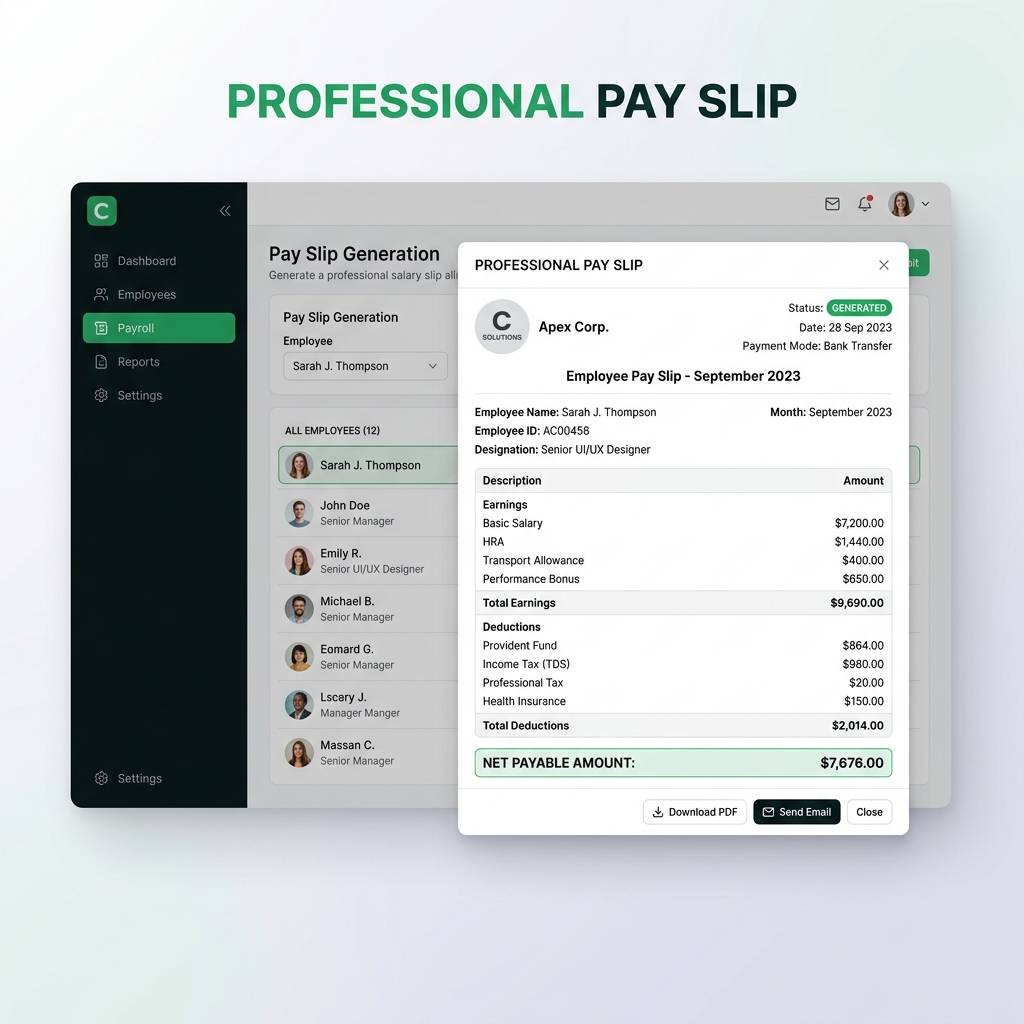
Try Our Interactive Demo Instantly
Want to see how an offline-capable, client-side payslip generator works in practice? Try our brand-new interactive demo right in your browser. Upload a sample CSV, map your columns, and generate beautifully designed PDF payslips—with zero data ever being transmitted to our servers.
Launch Free Demo NowChapter 1: The Complex Economics of Last-Mile Delivery Service Partners (DSPs)
The modern Delivery Service Partner model represents an outsourced franchise-style structure. The parent carrier provides the delivery contracts, customer dispatch manifests, leased cargo vans, and routing software. The DSP business owner provides the corporate operating entity, fleet management, and direct employer relationship for a team of non-exempt Delivery Associates (DAs).
Under carrier service agreements, DSPs are paid through a combination of contractual revenues:
- Fixed Route Rates: A fixed baseline payment per scheduled route dispatched out of the delivery hub.
- Variable Per-Package or Per-Stop Drops: A fractional reimbursement per package successfully delivered or attempted within strict delivery time windows.
- Weekly Quality Performance Multipliers: Substantial bonus tiers awarded when the fleet achieves aggregate scorecard rankings such as "Fantastic" or "Fantastic Plus."
To maintain high delivery success rates, recruit dependable drivers in tight labor markets, and keep cargo vans moving, DSP owners implement incentive compensation packages. However, translating these incentives into legally sound employee paychecks creates significant payroll friction.
The 10-Hour Daily Guarantee vs. Actual Hours Clocked
The industry standard recruiting promise is the 10-hour daily guarantee. In a typical four-day, 40-hour work week, drivers are assigned a 10-hour block route. If a driver works efficiently, navigates effectively, and finishes their route in 7.5 hours, the DSP owner guarantees pay for the full 10 hours as an incentive bonus.
However, this guarantee creates an accounting pitfall under the Fair Labor Standards Act (FLSA). When an employee works fewer hours than their guaranteed block, how should the variance be classified on the pay stub?
- Productive Work Hours: The actual 7.5 hours recorded on the digital timeclock punch.
- Route Efficiency Bonus (Guarantee Differential): The 2.5 unpaid actual hours multiplied by the driver's base hourly rate, paid out as an incentive stipend.
FLSA Warning: The 10-Hour Guarantee Overtime Trap
If a driver works a fifth day during peak season and clocks 46 actual physical hours, the DSP cannot simply pay 40 hours straight time and 6 hours overtime while ignoring earlier efficiency guarantees. Under 29 CFR § 778.110, non-discretionary bonuses and productivity guarantee payments must be included in the total remuneration before dividing by total actual hours worked to establish the true statutory regular rate of pay for overtime calculations!
Chapter 2: Route Rescues, Sweepers & Piece-Rate Incentive Compensation
No last-mile route plan survives contact with real-world road conditions. Flat tires, unexpected traffic gridlock, locked residential gate codes, severe thunderstorms, or inexperienced drivers cause routes to fall behind schedule. In delivery station terminology, a driver falling more than 15 stops behind schedule is "in the red."
To prevent package delivery delays and avoid station SLA penalties, DSP dispatchers coordinate rescues. An athletic driver who finishes their 180 stops early, or a designated "sweeper" driver dispatched without a dedicated morning route, is routed to rendezvous with the struggling van and take 20 to 50 packages off their racks.
Two Prevailing Rescue Compensation Models
Fleet owners utilize two primary structures to compensate drivers for rescue missions:
| Compensation Model | Standard Industry Rate | Operational Pros | Payroll Calculation Requirement |
|---|---|---|---|
| Per-Package Rescue Piece Rate | $0.75 – $1.25 per package rescued | Directly rewards heavy physical effort; highly attractive to top tier drivers. | Count × $/Package; non-discretionary; adds to FLSA regular rate. |
| Flat Route Rescue Stipend | $20.00 – $35.00 per rescue run | Easy to budget; prevents cherry-picking easy envelopes vs heavy overflow boxes. | Rescues Completed × Flat Rate; tracked as non-hourly earning line item. |
| Hourly Overtime Sweeper | Standard hourly rate + 1.5x OT | Eliminates piece-rate complexity; driver remains on digital clock. | Standard punch time tracking; increases payroll spend if drivers pace slowly. |
Eliminating "Sandbagging" with Clear Paystub Itemization
Without transparent payroll accounting, route rescues breed toxic workplace friction. Drivers who push hard to complete full routes resent seeing peers intentionally slow down ("sandbag") to trigger a rescue while still collecting their 10-hour guarantee.
Smart DSP operators tie route guarantee eligibility directly to rescue willingness: if a driver finishes their route in 7 hours and refuses a reasonable dispatch request to execute a 20-package rescue, their 10-hour efficiency guarantee is forfeited for that shift, and they are paid strictly for the 7 actual hours worked.
Documenting these line items clearly on an itemized paystub—showing actual hours, guarantee bonus adjustments, and rescue compensation—eliminates dispatch disputes and provides ironclad proof during state labor audits.
Chapter 3: Scorecards, Fantastic Plus Safety Bonuses & Disallowed Deductions
Every delivery station operates on a weekly quality scorecard that aggregates data across hundreds of variables collected by cargo van sensors and handheld delivery applications.
The Anatomy of the Netradyne & Mentor Safety Scorecard
Fleet vans are equipped with multi-lens telematics cameras (such as Netradyne Driver-i) and telematics apps (e.g., eDriving Mentor). These systems monitor driving habits in real-time, calculating a driver safety score based on:
- Speeding Events: Driving 10+ MPH over the posted speed limit, or sustained speeding in school and residential zones.
- Stop Sign & Signal Violations: Failing to come to a complete mechanical stop at posted intersections.
- Following Distance: Trailing the vehicle ahead with fewer than 0.6 seconds of stopping distance.
- Distracted Driving: Cell phone manipulation, looking down into the lap, or reaching across the console while the vehicle is in gear.
- Seatbelt Infractions: Operating the delivery van without the shoulder harness fastened across the chest.
When a DSP fleet achieves Fantastic Plus status for the week, the carrier issues a substantial financial performance payout to the DSP business. Successful fleet owners pass a significant portion of this payout directly to their drivers as a weekly Safety & Compliance Bonus (typically $50 to $150 per driver per week).
Qualifying Criteria for Driver Safety Bonuses
To qualify for the weekly bonus, a driver must meet strict thresholds:
- Zero Tier-1 safety infractions (no camera-recorded stop sign violations or mobile phone touches).
- Delivery Completion Rate (DCR) exceeding 99.0% on assigned manifests.
- Customer Delivery Feedback rating maintaining 95%+ positive customer interactions ("Delivered with Care," "Followed Delivery Instructions").
The Legal Hazard of Equipment & Uniform Deductions
Operating a fleet of 40 cargo vans navigating narrow residential alleys and busy apartment complexes inevitably results in damaged side mirrors, scratched body panels, lost handheld scanners ("Rabbits"), and missing gas fleet cards.
DSP owners often wonder: "Can I deduct the $350 cost of a lost scanner or a $15 uniform deposit from the driver's weekly paystub?"
State Labor Law Warning: Illegal Wage Deductions
In almost all jurisdictions (notably California, New York, Washington, and Illinois), state wage protection statutes strictly prohibit employers from deducting cash shortages, broken tools, lost scanners, or van collision damage from non-exempt employee paychecks. Even in states where deductions are permitted with prior written consent, the deduction cannot reduce the driver's effective hourly wage below the statutory federal or state minimum wage (FLSA Field Operations Handbook § 30c01). Doing so invites treble-damage class action wage claims.
Chapter 4: Master Excel DSP Payroll Blueprint (With Real Formulas)
To manage route hours, 10-hour guarantees, rescue fees, and safety bonuses without spreadsheet breakdown, DSP fleet dispatchers should structure a comprehensive payroll tracking workbook.
Below is an audit-ready Excel formula blueprint for a delivery team operating out of a regional logistics hub:
| Line # | Column Header | Sample Value | Data Source / Nature | Excel Formula Specification |
|---|---|---|---|---|
| 01 | Driver_Name | Marcus Vance | Driver Roster | Text entry |
| 02 | Scheduled_Routes | 4 routes | Dispatch Schedule | Integer entry (4 days) |
| 03 | Actual_Hours_Clocked | 32.50 hrs | Timeclock Export | Decimal punch hours |
| 04 | Guaranteed_Target_Hours | 40.00 hrs | 10-Hr Rule | =B2*10.0 |
| 05 | Base_Hourly_Rate | $21.50 / hr | Wage Agreement | Fixed rate |
| 06 | Regular_Clock_Pay | $698.75 | Gross Actual Hours | =B3*B5 |
| 07 | Guarantee_Differential_Hours | 7.50 hrs | Unworked Guarantee | =MAX(0, B4-B3) |
| 08 | Route_Guarantee_Bonus | $161.25 | Bonus Pay (if eligible) | =IF(B12="Eligible", B7*B5, 0) |
| 09 | Rescued_Packages_Delivered | 85 packages | Cortex Dispatch Log | Manual log count |
| 10 | Rescue_Incentive_Pay | $85.00 | Piece-Rate ($1.00/pkg) | =B9*1.00 |
| 11 | Safety_Fantastic_Plus_Bonus | $100.00 | Scorecard Tier Pass | =IF(AND(B13>=850, B14>=99.0), 100.0, 0) |
| 12 | TOTAL_GROSS_EARNINGS | $1,045.00 | Taxable Gross Pay | =B6+B8+B10+B11 |
Individual Driver Payroll Summary Table
Once these master formulas are executed across the fleet, the resulting roster provides a transparent, dispute-free record of team operations:
| Driver Name | Actual Clock Hrs | 10-Hr Guarantee Bonus | Rescue Pay | Safety Bonus | Gross Earnings | Net Paystub Check |
|---|---|---|---|---|---|---|
| Marcus Vance | 32.50 hrs | $161.25 | $85.00 | $100.00 | $1,045.00 | $846.45 |
| Devon Brooks | 39.00 hrs | $21.50 | $40.00 | $100.00 | $1,000.00 | $810.00 |
| Jordan Chen | 42.20 hrs | $0.00 (OT) | $110.00 | $100.00 | $1,188.46 | $958.80 |
| Aaliyah Reyes | 36.00 hrs | $86.00 | $25.00 | $0.00 (Infraction) | $885.00 | $721.28 |
| TOTALS | 149.70 hrs | $268.75 | $260.00 | $300.00 | $4,118.46 | $3,336.53 |
Chapter 5: Why Cloud Payroll Breaks Down for High-Turnover Logistics Fleets
Last-mile logistics fleets operate under structural realities that break conventional cloud SaaS payroll pricing models:
1. Massive Driver Turnover Penalties
According to American Trucking Associations and logistics industry benchmarks, annual turnover for last-mile delivery drivers frequently exceeds 100% to 150%. A 50-van DSP may hire, onboard, and offboard 80 to 120 individual drivers over a twelve-month span.
Cloud payroll services (Gusto, ADP Run, Paychex, Rippling) bill employers using a per-employee monthly fee model (often $6 to $12 per active or listed worker per month). When drivers quit after three weeks or take extended seasonal leaves, administrators frequently forget to terminate their profiles, triggering hundreds of dollars in monthly "ghost seat" billing fees.
2. Q4 Peak Season Scaling Shock
Between October and January (the holiday peak shopping surge), delivery stations double their route volume. A DSP operating with 35 core drivers suddenly scales up to 85 drivers, adding temporary peak helpers, sweepers, and weekend cycle drivers. Under SaaS subscription models, the DSP's software bill surges right when cash flow is heavily constrained by fuel invoices, van rental deposits, and overtime wages. Once peak ends in mid-January and headcount drops back to 35, cloud vendors make it difficult to downgrade tiers without losing payroll history.
3. Rigid Pay Stub Templates
Standard cloud platforms only accommodate simple "Hourly Wages" and "Overtime." They lack native line items for "10-Hour Guarantee Bonus," "Route Rescue Piece-Rate Stipends," "Netradyne Safety Multipliers," or "DOT HOS Standby." Fleet managers are forced into awkward workarounds, bundling everything into a single "Miscellaneous Bonus" bucket that triggers driver confusion, phone calls to dispatch, and frequent pay disputes.
Chapter 6: 5-Year Financial Analysis: $49 Lifetime License vs. Cloud SaaS Tolls
Let's examine the five-year total cost of ownership for an independent DSP owner running an average fleet of 45 Delivery Associates:
| Cost Component | Gusto Complete / Plus | ADP Run Logistics Tier | PayslipGen (One-Time Desktop License) |
|---|---|---|---|
| Monthly Base Platform Fee | $80.00 / mo ($960/yr) | $160.00 / mo ($1,920/yr) | $0.00 (Zero recurring fees) |
| Per-Driver Monthly Seat Fee | $12.00 / DA / mo ($6,480/yr) | $14.00 / DA / mo ($7,560/yr) | $0.00 (Unlimited drivers) |
| Q4 Holiday Peak Expansion (35 Extra DAs) | +$1,260.00 (3 months) | +$1,470.00 (3 months) | $0.00 (No seasonal penalties) |
| Terminated Driver Archive Retention | Subscription required | Archive fee or lock-out | $0.00 (Stored locally on your PC) |
| Year 1 Net Software Cost | $8,700.00 | $10,950.00 | $49.00 total |
| Year 3 Cumulative Cost | $26,100.00 | $32,850.00 | $49.00 total |
| Year 5 Cumulative Cost | $43,500.00 | $54,750.00 | $49.00 (Lifetime) |
Over a 5-year period, relying on subscription-based payroll services strips $43,000 to $54,000 directly out of a DSP owner's operating margins. With PayslipGen, a single one-time $49 payment eliminates monthly software overhead permanently.
Chapter 7: Step-by-Step Workflow: Generating DSP Driver Paystubs from Excel
Here is the exact step-by-step procedure fleet dispatchers follow to generate 50+ itemized, password-protected PDF driver paystubs in under two minutes:
Step 1: Export Weekly Shift & Incentive Data to Excel
Export your weekly punch records from your digital timeclock application and your delivery metrics from your logistics dispatch portal into your master payroll spreadsheet (.xlsx or .csv). Ensure your columns reflect driver names, base wages, actual hours, guarantee bonuses, rescue stipends, and scorecard bonuses.
Step 2: Open PayslipGen on Your Local Dispatch Computer
Launch PayslipGen on your Windows, Mac, or Linux workstation. Configure your DSP legal corporate profile: company name, logistics station code, corporate address, employer identification number (EIN), and custom fleet logo.
Step 3: Drag and Drop Your Dispatch Workbook
Drop your spreadsheet directly into the PayslipGen interface. The local engine automatically scans and parses all data rows instantly without uploading your sensitive payroll details to any remote cloud server.
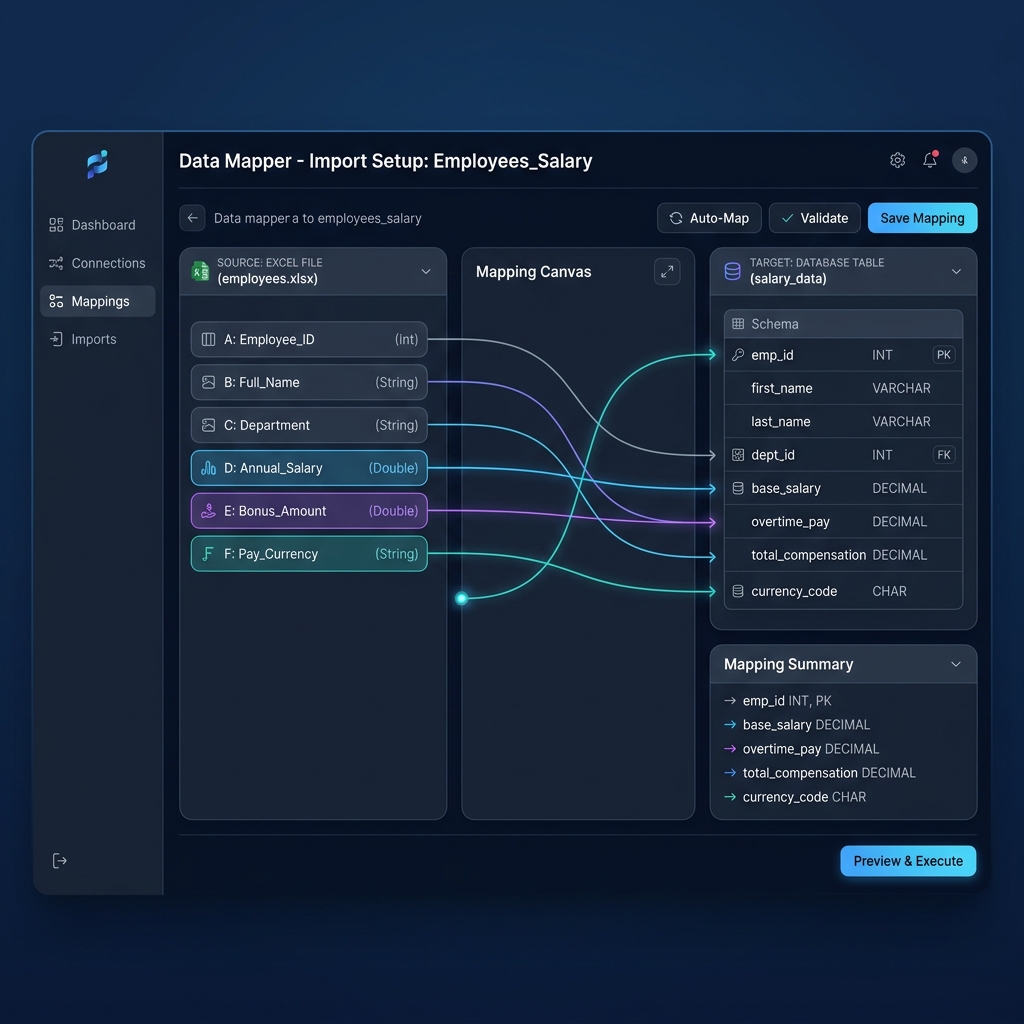
Step 4: Map Your Delivery Columns
Link your custom Excel column headers to PayslipGen's pay stub fields:
Actual_Hours_Clocked→ Regular Hours WorkedRoute_Guarantee_Bonus→ Efficiency Guarantee BonusRescue_Incentive_Pay→ Route Rescue Piece RateSafety_Fantastic_Plus_Bonus→ Netradyne Safety IncentiveDriver_Email→ Employee Email Address
Step 5: Apply AES-256 PDF Password Encryption & Export
Protect employee financial data by securing each PDF with AES-256 military-grade encryption. Set the password rule to the driver's Date of Birth (YYYYMMDD) or the last 4 digits of their Social Security Number. Click Generate Paystubs. In seconds, PayslipGen produces individual, professional PDF paystubs ready for distribution or automatic local SMTP delivery.
Frequently Asked Questions (FAQs)
How do we legally calculate overtime when drivers receive a 10-hour guarantee but finish early?
Under federal FLSA regulations, overtime is required for hours worked in excess of 40 actual physical hours in a workweek. If a driver finishes four 10-hour routes in 32 actual hours and receives an 8-hour guarantee bonus, they have not exceeded 40 actual hours worked, so no statutory overtime is required. However, if that driver works a fifth shift and clocks 43 actual hours, the guarantee bonus must be included in their total remuneration to calculate their blended regular rate before applying the 1.5x overtime multiplier for the 3 overtime hours.
Can a DSP legally deduct lost Rabbit scanners, fuel card shortages, or van damage from driver paystubs?
In most states (including California, New York, Washington, and Illinois), wage deductions for cash shortages, lost mobile equipment, or vehicle body damage are strictly illegal under state labor codes. Even in states where written deduction agreements are lawful, the deduction cannot drop the driver's effective hourly pay below the statutory minimum wage. DSPs should manage equipment accountability through disciplinary action and safety bonus eligibility rather than direct paycheck deductions.
Are Fantastic Plus safety bonuses considered discretionary or non-discretionary under the FLSA?
Because safety and scorecard bonuses are promised in advance and tied to objective metrics (e.g., zero Netradyne camera violations, 99%+ DCR), they are legally classified as non-discretionary bonuses under 29 CFR § 778.208. Non-discretionary bonuses must be allocated across the workweek in which they were earned and factored into the regular rate of pay when calculating any overtime owed.
How should rescue stipends be displayed on the driver's paystub to avoid confusion?
Rescue payments should appear as an independent, itemized earnings line labeled "Route Rescue Incentive" or "Package Rescue Stipend" showing either the package volume count or the number of completed sweeps alongside the total dollar amount. Combining rescue earnings into generic "Hourly Wages" or "Bonus" leads to frequent driver disputes and makes dispatch records harder to reconcile during payroll audits.
Can PayslipGen handle seasonal peaks where driver counts fluctuate from 35 to 85 drivers?
Yes. PayslipGen has zero per-employee limits, zero monthly subscription tiers, and zero employee seat surcharges. Whether you process payroll for 25 drivers in May or 120 drivers during the December holiday rush, your software cost remains fixed at the one-time $49 license fee forever.
Streamline Your DSP Fleet Payroll Without Cloud SaaS Tolls
Generate professional, password-protected PDF delivery driver paystubs directly from your Excel dispatch sheet. 100% offline, zero per-driver fees, one-time payment of $49 for lifetime access.
Get PayslipGen for $49 (Lifetime Access)Conclusion: Protect Your Fleet Culture with Transparent Paystubs
In the high-pressure world of last-mile logistics, your delivery associates are the heartbeat of your enterprise. Delivering hundreds of packages in freezing rain, summer heat waves, and rush-hour traffic demands intense physical endurance. Drivers deserve absolute clarity and transparency when inspecting their earnings each week.
By formalizing your 10-hour guarantee rules, cleanly calculating rescue piece rates, and generating compliant, encrypted PDF paystubs using PayslipGen, you eliminate dispatch friction, comply with state and federal wage laws, and protect your operating margins from perpetual cloud subscription tolls.
(Managing logistics, freight, or field contractors across other transportation sectors? Check out our complete engineering guides on Truck Driver Per-Mile Settlement Sheets, 1099 Contractor Paystubs, and how to Bulk Password-Protect PDF Payslips with Date of Birth.)