
Auto Body & Collision Tech Paystub Generator: How to Convert CCC/Mitchell Estimating Book Hours into Weekly Paystubs in Excel
Key Takeaways
- ✓Translating Estimating Guide Book Hours: Collision repair shops bill insurance carriers using Information Provider (IP) estimating databases—CCC ONE, Mitchell, and Audatex. Technician compensation translates these flagged labor book hours into distinct labor rate tiers: body repair ($24 to $32/flag hr), structural frame pulling ($28 to $38/flag hr), paint prep and refinish ($24 to $32/flag hr), and mechanical/ADAS calibration ($32 to $46/flag hr).
- ✓The FLSA Section 7(i) Overtime Exemption: Automotive repair establishments can exempt flat-rate technicians from standard time-and-a-half overtime pay only if they meet the strict 3-prong statutory test under 29 U.S.C. § 207(i): (1) retail/service establishment status, (2) the technician's regular hourly rate exceeds 1.5 times the statutory minimum wage for all actual clock hours worked in the workweek, and (3) more than 50% of total compensation represents commissions or flat-rate book hours.
- ✓Team Pooling & Teardown Splits: Master body technicians frequently mentor apprentice helpers or work alongside dedicated teardown/reassembly technicians. Collision paystubs must transparently document team efficiency splits (e.g., 70% master / 30% apprentice) on shared Repair Orders (ROs) to avoid heated bay disputes.
- ✓Zero-Subscription Desktop Privacy: Cloud body shop management systems (CCC ONE Payroll, Mitchell RepairCenter) charge expensive monthly SaaS tolls and lock technician wage histories behind paywalls. Shop owners who calculate flagged hours in Excel can generate professional, password-protected PDF technician paystubs completely offline using PayslipGen for a one-time $49 lifetime fee.
At 5:00 PM on Friday inside a bustling collision repair center, the production manager closes out the week's Repair Orders (ROs). Across the shop bays, frame technicians, sheet metal specialists, and paint preppers gather around the service counter with clipboards in hand. They aren't tracking the 40 physical clock hours they spent in the facility; they are tracking their flagged estimating book hours.
In an industry driven by insurance direct repair programs (DRPs), collision technicians are compensated through flat-rate production systems derived from Information Provider (IP) estimating software: CCC ONE, Mitchell, or Audatex (Solera). When an insurance adjuster approves 14.5 hours to replace a quarter panel, pull an unibody frame rail, and blend an adjacent rear door, the technician who completes that work in 9 clock hours earns the full 14.5 book hours.
However, turning complex estimating guides and closed repair orders into clean, compliant weekly paystubs is an administrative nightmare for independent body shop owners:
- Multiple Labor Rate Categories: A single RO features distinct labor codes—sheet metal body repair, structural frame pulls, refinish paint labor, and mechanical/ADAS scanning—each billed at different shop rates and paid to technicians at different flat-rate wage scales.
- Paint & Materials Cost Confusion: Insurance estimates bill "Paint & Materials" as a combined line item (e.g., $42/hour). Shop owners must carefully separate the refinish technician's labor flag rate from liquid clearcoat/basecoat inventory costs.
- Apprentice & Teardown Pooling: Master technicians frequently split flag hours with apprentice helpers (e.g., 75% master / 25% helper on heavy structural hits), requiring transparent accounting on the paystub.
- FLSA Section 7(i) Legal Exposure: If slow parts deliveries or insurance supplement delays keep a tech standing idle for 42 clock hours while flagging only 28 book hours, the shop faces severe overtime and minimum wage audit liability under federal and state wage laws.
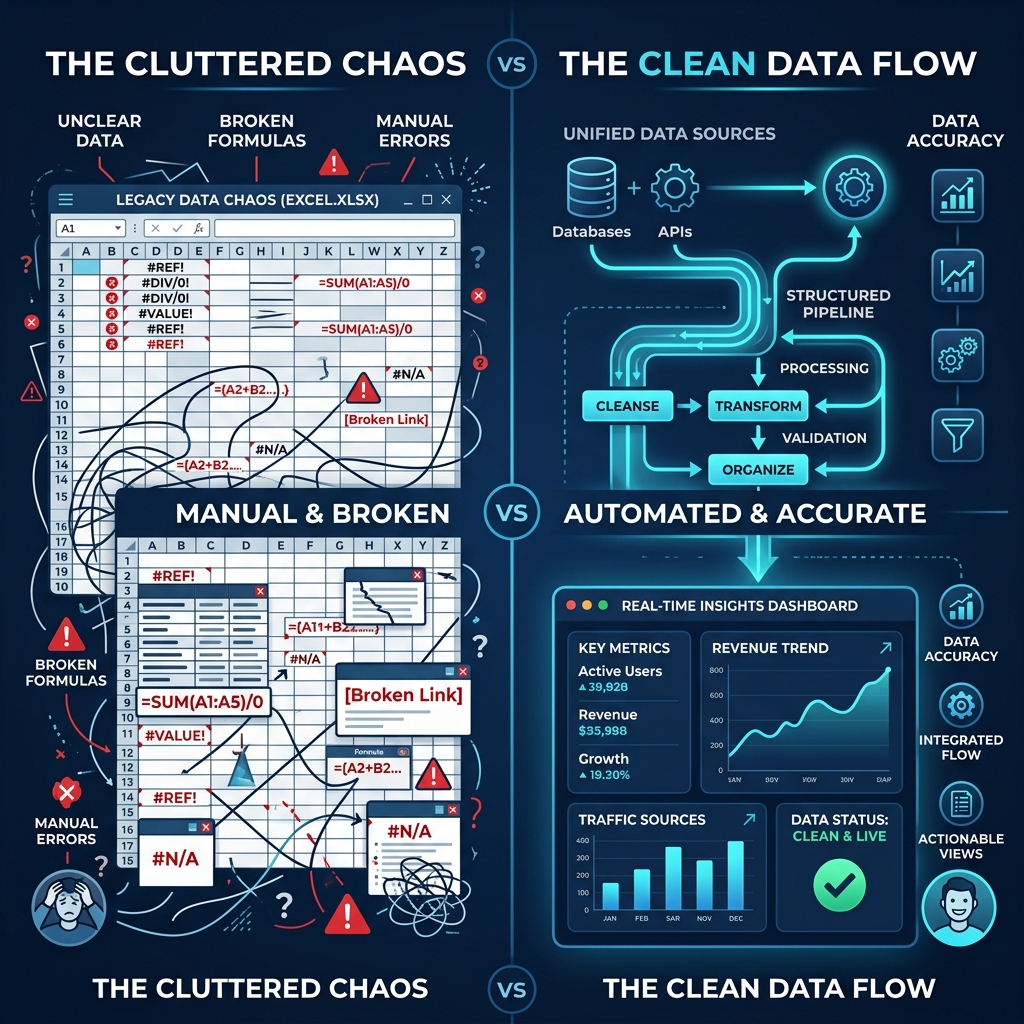
In this engineering guide, we examine the legal mechanics of the FLSA Section 7(i) flat-rate exemption, break down the mathematics of converting CCC ONE and Mitchell estimating guides into technician pay, provide a complete Excel blueprint, and show how collision shops use PayslipGen to generate audit-proof, password-protected PDF paystubs offline without recurring software tolls.
Try Our Interactive Demo Instantly
Want to see how an offline-capable, client-side payslip generator works in practice? Try our brand-new interactive demo right in your browser. Upload a sample CSV, map your columns, and generate beautifully designed PDF payslips—with zero data ever being transmitted to our servers.
Launch Free Demo NowChapter 1: The Anatomy of Collision Estimating: CCC ONE, Mitchell & Audatex
Unlike mechanical repair shops that rely on Chilton, Alldata, or factory warranty times for routine brake pads and alternators, collision repair centers operate on specialized computerized estimating platforms.
1. The Big Three Information Providers (IPs)
Every collision insurance claim in the United States and Canada is negotiated through one of three licensed software databases:
- CCC ONE (CCC Intelligent Solutions): The dominant platform used by over 75% of insurance direct repair programs (DRPs) and large MSO chains (Caliber Collision, Gerber, Crash Champions).
- Mitchell International (Enlyte): Heavily utilized by independent regional shops and carriers like Progressive and Travelers.
- Audatex / Solera: Common in international collision networks and high-end European brand-certified repair centers.
2. Understanding Book Hours vs. Clock Hours vs. Efficiency
To manage collision payroll, three terms must be clearly differentiated:
- Actual Clock Hours (Attendance Time): The physical time a technician is punched into the shop timeclock (e.g., 40.0 hours from 8:00 AM to 5:00 PM, Monday through Friday).
- Flagged Book Hours (Sold Labor Hours): The total labor hours approved on completed Repair Orders under CCC ONE or Mitchell estimating times (e.g., 56.0 flagged hours completed during that week).
- Productivity / Efficiency Ratio: The mathematical relationship between booked hours and clock hours:Technician Efficiency % = (Total Flagged Book Hours ÷ Actual Clock Hours Worked) × 100
Example: 56.0 flagged hours ÷ 40.0 clock hours = 140.0% Shop Efficiency. Top A-level structural technicians frequently achieve 130% to 160% efficiency on heavy collision repairs.
Chapter 2: The Four Distinct Labor Rate Classifications
Collision repair is not monolithic. A comprehensive estimate breaks labor into four distinct statutory and commercial categories, each commanding different billable rates to insurance and different pay rates to technicians:
| Labor Category | Estimating Operations Included | Insurance Billed Rate | Technician Flag Rate |
|---|---|---|---|
| Sheet Metal / Body (B) | Fender replacement, door skin hanging, quarter panel welding, dent repairing | $62.00 – $75.00 / hr | $24.00 – $32.00 / hr |
| Structural / Frame (S) | Laser measuring bench setup, pulling frame rails, radiator core support slicing, high-strength steel sectioning | $85.00 – $115.00 / hr | $28.00 – $38.00 / hr |
| Refinish / Paint (P) | Sanding, primer blocking, masking, basecoat spraying, clearcoat baking, color buffing | $62.00 – $75.00 / hr | $24.00 – $32.00 / hr |
| Mechanical / ADAS (M) | Suspension cradle R&I, steering rack replacement, pre/post scanning, radar sensor & front camera dynamic calibration | $110.00 – $165.00 / hr | $32.00 – $46.00 / hr |
Handling Paint & Materials (Liquid Supplies vs. Labor)
In collision estimating, the insurance estimate contains a line item for Paint & Materials (often calculated as $40 to $48 multiplied by the refinish labor hours).
Accounting Mistake: Deducting Paint Material Invoices from Tech Pay
Some shops mistakenly deduct paint material expenses (waterborne toners, clearcoat, booth intake filters, masking plastic) directly from the refinish technician's labor pay. Under federal wage law and state labor codes, materials are operational business expenses of the repair facility. The refinish technician must be paid their agreed flag rate for 100% of approved refinish labor hours; paint material allowances billed to insurance belong entirely to the shop to offset wholesale chemical invoices.
Chapter 3: The FLSA Section 7(i) Retail Service Overtime Exemption
One of the greatest legal hazards facing collision repair facilities is wage-and-hour compliance under the Fair Labor Standards Act (29 U.S.C. § 201 et seq.).
Under general FLSA rules, non-exempt employees must receive 1.5 times their regular rate of pay for all hours worked over 40 in a workweek. However, collision repair facilities frequently utilize the FLSA Section 7(i) exemption for employees paid on a commission or flat-rate book hour basis.
The 3-Prong Statutory Test of 29 U.S.C. § 207(i)
To lawfully exempt a flat-rate technician from weekly overtime premiums, the body shop must satisfy all three statutory conditions during every pay period:
Mandatory Criteria for FLSA 7(i) Overtime Exemption
- Retail or Service Establishment: The establishment must be recognized as retail in the automotive industry, deriving at least 75% of its annual dollar volume from sales of goods or services not for resale. Body shops repairing passenger vehicles directly for car owners and insurance policyholders qualify under 29 C.F.R. § 779.320.
- Regular Rate Exceeds 1.5× Minimum Wage: The technician's regular rate of pay (total gross earnings divided by actual physical clock hours worked in that specific workweek) must exceed 1.5 times the applicable federal, state, or municipal minimum wage.Regular Hourly Rate = Total Flag-Rate Earnings ÷ Actual Clock Hours Worked > (1.5 × Minimum Wage)
Example:If the state minimum wage is $16.00/hr, the technician's effective regular rate must be strictly greater than $24.00/hr for every physical clock hour worked that week. If a tech works 45 clock hours, their total weekly gross must exceed 45 × $24.00 = $1,080.00.
- More Than 50% Commission Compensation: More than half (50%) of the employee's total earnings during a representative period (typically 1 month to 1 year) must represent commissions on goods or services. Under established Department of Labor regulations (29 C.F.R. § 779.413) and federal circuit court precedent (such as Yi v. Sterling Collision Centers), automotive flat-rate flag hours qualify as commissions.
If a technician logs 48 clock hours during a parts-delayed holiday week and only flags 22 book hours, their effective regular rate may drop below 1.5× minimum wage. In that scenario, the Section 7(i) exemption fails for that workweek, and the shop must pay statutory overtime!
Chapter 4: Team Pooling: Master Tech & Teardown Apprentice Splits
In high-volume collision centers, master technicians rarely disassemble bumper covers or remove interior door panels themselves. Shops employ apprentices or express teardown technicians who dismantle damaged vehicles for blueprinting.
When an insurance estimate approves 32.0 sheet metal body hours on a heavy side swipe, the master technician and teardown helper pool the hours under one of two standard models:
- Percentage Labor Split: The master tech earns 75% of the flagged hours (24.0 hrs @ $30/hr = $720.00), while the apprentice earns 25% (8.0 hrs @ $20/hr = $160.00). Both technicians must see the shared RO number and split percentage on their individual paystubs.
- Hourly Apprentice Offset: The master technician is credited with 100% of the flagged hours, but pays an agreed hourly assistant charge (e.g., $18/hr for 10 helper hours) deducted from their gross production pool.
Chapter 5: Master Excel Auto Body Technician Payroll Blueprint (With Formulas)
Below is the exact production spreadsheet architecture used by collision center office managers to convert closed Repair Orders into weekly technician paystubs:
| Col | Header Name | Sample Value | Excel Formula Specification | Description |
|---|---|---|---|---|
| A | Tech_Name | Marcus Vance | Text input | Senior Structural Tech |
| B | Clock_Hours_Worked | 40.0 | Timeclock punch | Actual shop presence hours |
| C | Body_Flag_Hours | 24.5 | RO management tally | Sheet metal closed book hours |
| D | Body_Flag_Rate | $28.00 | Contract rate | Agreed body labor rate |
| E | Frame_Flag_Hours | 18.0 | RO management tally | Structural pulling hours |
| F | Frame_Flag_Rate | $34.00 | Contract rate | Structural premium rate |
| G | Mech_ADAS_Hours | 8.5 | RO management tally | Calibration & mechanical |
| H | Mech_ADAS_Rate | $38.00 | Contract rate | Mechanical flag rate |
| I | Total_Flag_Hours | 51.0 | =C2+E2+G2 | Total production hours flagged |
| J | Tech_Efficiency_Pct | 127.5% | =(I2/B2)*100 | Shop productivity indicator |
| K | GROSS_PRODUCTION_PAY | $1,621.00 | =(C2*D2)+(E2*F2)+(G2*H2) | Flag rate gross before splits |
| L | Apprentice_Helper_Offset | -$140.00 | =-7.0*20.00 | 7 hrs @ $20 to helper |
| M | ADJUSTED_GROSS_EARNINGS | $1,481.00 | =K2+L2 | Subject to FICA/FITW |
| N | FLSA_7i_Effective_Rate | $37.03 / hr | =M2/B2 | > $24.00 (Exemption Valid!) |
Chapter 6: Why Cloud Collision Software Fails at Technician Paystubs
Collision repair centers already pay enormous software subscriptions for shop management systems like CCC ONE Repair Workflow, Mitchell RepairCenter, or Audatex AutoWatch. Yet when it comes to generating technician paystubs, these platforms fall flat:
1. The Inflexible "Black Box" Payroll Module
Most shop management systems generate crude, unformatted batch text summaries that list dozens of raw Repair Order numbers without grouping them into clean labor categories (Body, Frame, Paint, Mechanical).
Technicians find these printouts unreadable. They spend an hour every Monday morning arguing with the office manager over missing paint blending supplements or disputing how an apprentice split was applied.
2. Escalating Cloud Subscription Fees
Connecting your shop management system to cloud payroll providers like ADP Run or QuickBooks Online Payroll adds another $80 to $200 every single month. Over 3 years, an independent 12-bay collision shop wastes $4,500 to $7,200 on recurring payroll software subscriptions alone.
| Cost Comparison Metric | ADP Run / Paychex Flex | CCC ONE Integrated Payroll Add-On | PayslipGen Desktop Software |
|---|---|---|---|
| Monthly Software Fee | $59.00 – $120.00 / month | $75.00 – $150.00 / month | $0.00 (Forever) |
| Per-Technician Fee | $6.00 / tech / month | Bundled or tiered | $0.00 (Unlimited technicians) |
| Labor Category Itemization | Manual single-line entry | Rigid proprietary format | 100% Custom Excel Fields |
| Data Privacy & Offline Operation | Cloud dependent | Requires continuous internet | 100% Offline & Local on Shop PC |
| 3-Year Cumulative Cost (12 Technicians) | $4,716.00 | $5,400.00 | $49.00 (One-Time) |
Chapter 7: Step-by-Step Collision Paystub Automation with PayslipGen
By combining your shop's Excel tracking sheet with PayslipGen, you can produce crystal-clear, password-protected PDF paystubs in seconds:
Step 1: Export Closed RO Labor from CCC or Mitchell into Excel
At the end of the pay period, export your completed repair order labor hours from your estimating software into an Excel or CSV file. Ensure you have columns for Tech Name, Clock Hours, Body Hours, Frame Hours, Paint Hours, Mechanical Hours, Helper Deductions, and Gross Pay.
Step 2: Open PayslipGen on Your Office PC
Launch PayslipGen on your Windows or Mac desktop. Because the software is 100% offline, sensitive employee wage data, Social Security Numbers, and shop billing rates never touch external web servers.
Step 3: Map Columns Visually
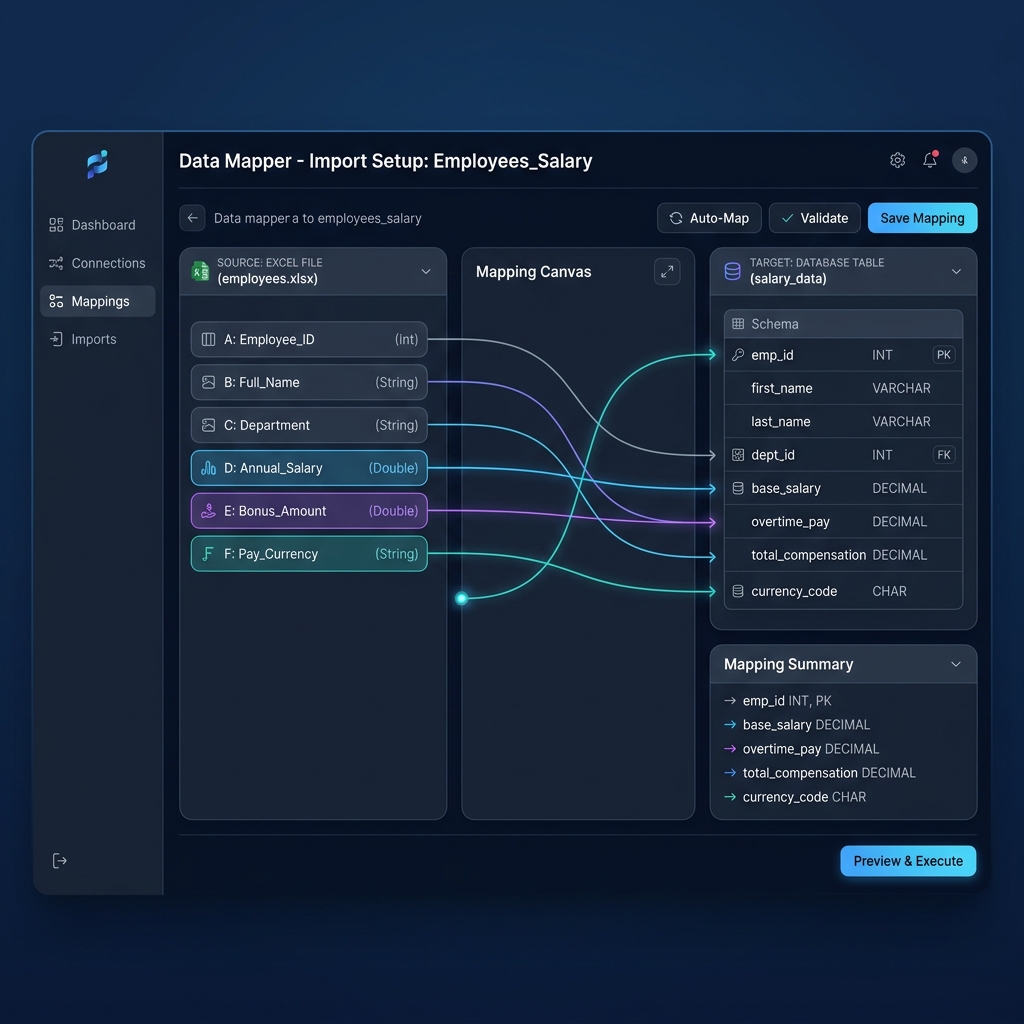
Drag your workbook into PayslipGen. The visual mapper pairs your spreadsheet headers with standard payroll fields:
Tech_Name→ Employee NameClock_Hours_Worked→ Regular Hours WorkedTotal_Flag_Hours→ Overtime / Production UnitsGROSS_PRODUCTION_PAY→ Gross Production EarningsApprentice_Helper_Offset→ Pre-Tax DeductionADJUSTED_GROSS_EARNINGS→ Net Gross Pay
Step 4: Enable AES-256 PDF Password Encryption
Auto body technicians frequently look at coworkers' clipboards. Prevent wage friction by checking "Password Protect PDFs". Encrypt each technician's paystub with their Date of Birth or the last 4 digits of their SSN.
Step 5: Batch Generate and Email
Click "Generate All Payslips". PayslipGen compiles high-resolution, print-ready PDF paystubs in under 2 seconds. Print them for Friday distribution or dispatch them automatically via your shop's existing email account (Google Workspace, Microsoft 365, or local SMTP) with zero per-email fees.
Frequently Asked Questions (FAQs)
What is the difference between flat-rate hours and actual clock hours in a body shop?
Actual clock hours represent the physical attendance time a technician is punched into the shop timeclock (e.g., 40.0 hours per week). Flat-rate hours (flag hours) are the standardized labor units approved on closed Repair Orders based on Information Provider estimating guides (CCC ONE, Mitchell, or Audatex). A technician who works 40 clock hours but flags 52 book hours is paid for 52 hours of production.
How does a body shop qualify for the FLSA Section 7(i) overtime exemption?
Under 29 U.S.C. § 207(i), the body shop must meet three statutory prongs: (1) operate as a retail/service establishment, (2) ensure the technician's effective regular hourly rate (total gross earnings divided by actual physical clock hours) exceeds 1.5 times the statutory minimum wage in that workweek, and (3) derive more than 50% of the employee's total compensation from commissions or flat-rate flag hours.
Can a shop owner deduct paint materials from a refinish technician's pay?
No. Liquid paint supplies, clearcoat, primers, sandpaper, masking tape, and spray booth consumables are general shop operating expenses. Refinish technicians must be paid their full contracted labor flag rate for all approved refinish labor hours. Deducting wholesale paint invoices from technician wages violates state wage deduction statutes and FLSA anti-kickback provisions.
What happens if parts delays prevent a flat-rate tech from flagging enough hours?
If backordered parts or insurance supplement delays prevent a technician from flagging hours, their weekly compensation cannot drop below the statutory minimum wage for the physical clock hours they were required to remain on the shop floor. If flag earnings fall below minimum wage, the shop must pay an hourly makeup differential. Furthermore, if the regular rate drops below 1.5× minimum wage, the shop loses the FLSA 7(i) exemption and must pay statutory overtime for hours worked over 40.
Can PayslipGen display multiple labor rate categories on a single paystub?
Yes. PayslipGen allows shop owners to map separate lines for Sheet Metal Hours, Structural Frame Hours, Paint Refinish Hours, and Mechanical/ADAS Hours, showing the specific rate and subtotal for each category right on the technician's PDF paystub.
Automate Body Shop Flat-Rate Paystubs Without Monthly Fees
Convert CCC ONE, Mitchell, and Audatex estimating hours into professional, password-protected PDF paystubs directly from Excel. 100% offline, zero internet required, one-time payment of $49 for lifetime access.
Get PayslipGen for $49 (Lifetime Access)Conclusion: Operational Precision Powers Collision Shop Growth
In a collision repair industry grappling with severe technician shortages and complex ADAS technologies, skilled structural and refinish technicians gravitate toward shops that provide prompt, transparent, and accurate payroll.
By tracking your CCC ONE and Mitchell estimating book hours in Excel and generating branded, encrypted PDF paystubs using PayslipGen, you maintain complete mathematical flexibility, protect your business against FLSA 7(i) wage audits, and eliminate thousands of dollars in wasteful recurring cloud software tolls.
(Looking to streamline other complex hourly or incentive payroll workflows? Explore our guides on Flat-Rate Mechanic Paystub Flag Hours, Blended Overtime Weighted Average Paystubs, or how to Generate Paystubs Without QuickBooks Subscriptions.)