
Superyacht & Charter Crew Paystub Generator: How Yacht Masters Comply with MLC 2006, Offshore Seafarer Tax Rules & APA Tip Splits in Excel
Key Takeaways
- ✓MLC 2006 Standard A2.2 Mandate: The International Labour Organization (ILO) Maritime Labour Convention mandates that all seafarers on commercial and commercially registered charter yachts receive monthly itemized accounts of their payments and permitted deductions. Failure to produce auditable wage slips during Port State Control (PSC) inspections can trigger vessel detention.
- ✓Cross-Border Seafarer Tax Exemptions: Crew compensation intersects with strict national offshore tax statutes, including the UK Seafarers' Earnings Deduction (SED) under ITEPA 2003 and US Foreign Earned Income Exclusions (IRC § 911). Meticulously documenting sea time, vessel flag state, and foreign port calls on each pay statement is vital for tax-free qualification.
- ✓MYBA Charter Tip Splits & Multi-Currency Conversion: Guest gratuities derived from the Advanced Provisioning Allowance (APA) under Mediterranean Yacht Brokers Association (MYBA) guidelines (10% to 15% of charter fee) must be distributed equitably across deck, interior, engineering, and galley, converted from charter currencies (EUR/USD) to crew home currencies (GBP/AUD/ZAR/NZD).
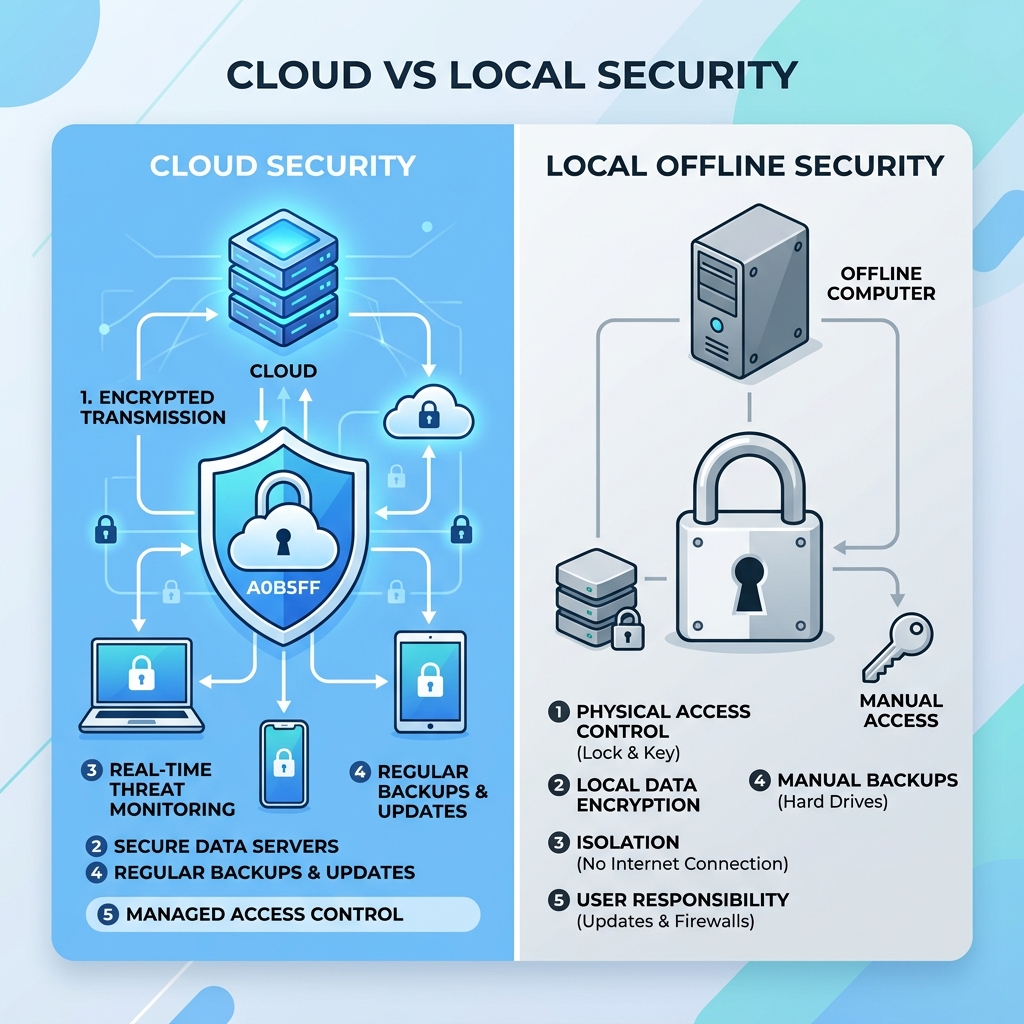
- ✓Zero-Satellite Offline Generation: When anchored in the Exumas, Tuamotus, or Norwegian fjords with limited or costly satellite bandwidth, cloud payroll systems fail. PayslipGen empowers Yacht Masters and Pursers to generate encrypted, bank-grade PDF crew paystubs directly from Excel on wheelhouse laptops completely offline for a one-time fee of $49.
Operating a 50-meter to 100-meter superyacht is equivalent to managing a boutique seven-star floating hotel, a high-voltage power plant, and an ocean-going naval vessel simultaneously. Yet while guests marvel at midnight anchorages in Saint-Tropez or St. Barths, the vessel's Captain, First Officer, and Purser face a relentless administrative obligation: maritime crew payroll.
Superyacht crew payroll is one of the most legally intricate compensation environments on earth. Crew members hail from South Africa, the United Kingdom, New Zealand, Australia, France, the Philippines, and the United States. They live and work under the flag state laws of maritime registries such as the Cayman Islands, Isle of Man, Marshall Islands, or Malta.
Under the Maritime Labour Convention (MLC 2006), every crew member on a commercially operated yacht must be provided with a monthly itemized wage slip detailing base pay, leave pay accruals, overtime allowances, social security deductions, and charter tip distributions. A single missing paystub during an inspection by French Maritime Affaires, the UK Maritime and Coastguard Agency (MCA), or the US Coast Guard (USCG) can result in a deficiency notice or the catastrophic detention of a multi-million-dollar charter yacht.
Compounding this complexity, mega-yachts frequently operate far beyond cellular reach. Relying on fragile satellite connections to access bloated cloud payroll SaaS platforms like Gusto, ADP, or Deel leads to broken sessions, two-factor authentication failures, and exorbitant monthly per-crew subscription bills.
In this engineering guide, we dissect the maritime legal requirements under MLC 2006 Standard A2.2, examine cross-border tax exemptions like the UK Seafarers' Earnings Deduction and US IRC Section 911, establish an exact Excel superyacht payroll formula blueprint, and explain how to create secure, encrypted crew paystubs completely offline using PayslipGen.
Try Our Interactive Demo Instantly
Want to see how an offline-capable, client-side payslip generator works in practice? Try our brand-new interactive demo right in your browser. Upload a sample CSV, map your columns, and generate beautifully designed PDF payslips—with zero data ever being transmitted to our servers.
Launch Free Demo NowChapter 1: The Maritime Labour Convention (MLC 2006) Standard A2.2 Mandate
The global superyacht fleet operates under the strict oversight of the International Labour Organization's Maritime Labour Convention, 2006 (MLC 2006), commonly referred to as the "Seafarers' Bill of Rights."
For any vessel engaged in commercial charter operations—or private yachts voluntarily surveyed for compliance—Regulation 2.2 and Standard A2.2 establish legally binding requirements for seafarer wages:
1. Standard A2.2.1: Monthly Itemized Account
The convention states unequivocally:
"Each Member shall require that seafarers employed on ships that fly its flag are given a monthly account of the payments due to them and the amounts paid, including wages, additional payments and the rate of exchange used where payment has been made in a currency or at a rate different from the one agreed to."
This means a verbal wire confirmation or a casual WhatsApp notification is legally non-compliant. Flag state surveyors and Port State Control Officers (PSCO) require a formal, written or encrypted digital wage slip for every calendar month worked aboard.
2. Mandatory Components of the Seafarer Wage Slip
Under MCA Marine Guidance Note (MGN) 474 and Cayman Islands Shipping Registry guidelines, every compliant superyacht pay statement must explicitly display:
- Vessel Identification: Vessel Name, IMO Number, Official Registry Number, and Flag State.
- Seafarer Employment Agreement (SEA) Reference: Crew member's rank/billet (Captain, Chief Engineer, Bosun, Chief Stewardess, Deckhand), seafarer discharge book number, and SEA commencement date.
- Basic Monthly Wage: The contractual base rate specified in the signed SEA.
- Consolidated Overtime / Hours: Clarification of whether overtime is consolidated into the monthly wage (standard on yachts) or calculated based on hours logged in the MLC Record of Hours of Work.
- Paid Annual Leave Accrual: MLC 2006 mandates a minimum paid leave entitlement of 2.5 calendar days per month of employment (30 days per year), which must be tracked and itemized.
- Permitted Deductions: Advances, onboard slop chest purchases, uniform deductions (where contractually permitted), or wire transfer charges.
- Exchange Rates: If the SEA specifies compensation in Euros (EUR) or US Dollars (USD) but the crew member receives disbursements in British Pounds (GBP) or South African Rand (ZAR), the exact spot conversion rate used must be documented.
Chapter 2: Offshore Seafarer Tax Exemptions: UK SED & US IRC § 911
Unlike shore-based workers whose employers automatically withhold income taxes and social security at the source, international yacht crew frequently operate in tax-exempt or tax-deferred offshore jurisdictions. However, claiming these exemptions requires rigorous proof of sea service.
1. The UK Seafarers' Earnings Deduction (SED)
For British seafarers resident in the UK for tax purposes, Section 384 of the Income Tax (Earnings and Pensions) Act 2003 (ITEPA 2003)provides the Seafarers' Earnings Deduction. Under SED, 100% of foreign earnings can be exempt from UK income tax if the crew member meets three strict criteria:
- The Qualifying Period (365-Day Rule): The seafarer must complete a continuous qualifying period of at least 365 days outside the UK.
- The Half-Day Rule: During the qualifying period, time spent in the UK must not exceed half of the total cumulative days elapsed since the start of the period.
- Foreign Port Call Requirement: Each employment must include at least one voyage to or from a foreign port (a port outside the UK territorial waters).
HMRC routinely audits yacht crew claiming SED. The crew member must provide HM Revenue & Customs with their Seaman's Discharge Book, flight tickets, vessel logbooks, and monthly employer wage slips verifying that compensation was paid for bona fide maritime employment on a vessel capable of navigation at sea.
2. US Citizens, Green Card Holders & IRC § 911
American citizens and permanent residents are subject to US federal taxation on their worldwide income regardless of where they reside. However, seafarers working on foreign-flagged yachts operating in international waters may qualify for the Foreign Earned Income Exclusion (FEIE) under Internal Revenue Code Section 911:
- Physical Presence Test: The seafarer must be physically present in a foreign country or foreign territorial waters for at least 330 full 24-hour days during any period of 12 consecutive months.
- The International Waters Trap: The IRS holds that time spent on the high seas (international waters outside any country's 12-nautical-mile territorial limit) does not count as presence in a foreign country. Crew members must document exact port calls in foreign jurisdictions (e.g., cruising between Italian and Greek territorial waters).
Accurate, monthly yacht payslips itemizing vessel location, foreign currency equivalents, and employment dates provide critical substantiating documentation when filing IRS Form 2555.
Chapter 3: Advanced Provisioning Allowance (APA) & MYBA Charter Tip Splits
On charter yachts, crew income is dramatically enhanced by guest gratuities. Managing these funds with total transparency is essential for maintaining crew harmony on tight voyages.
1. The Mechanics of the APA
When a client charters a luxury yacht, they pay the base charter fee plus an Advanced Provisioning Allowance (APA)—typically 25% to 35% of the charter price. The Captain manages the APA in an escrow cash account or designated card to cover fuel, gourmet provisions, fine wines, berthing fees, and pilotage.
2. The MYBA Charter Tip Standard
At the conclusion of a successful charter, guests customarily present a gratuity to the Captain. The Mediterranean Yacht Brokers Association (MYBA) recommends a gratuity between 10% and 15% of the net charter fee.
For example, on a one-week charter with a net fee of €120,000, a 12% tip yields €14,400 in cash or wired funds.
Yacht captains allocate this tip pool among all permanent and seasonal crew members who contributed to the voyage. Common distribution frameworks include:
- Equal Split System: Every crew member—from Chief Engineer to Green Deckhand—receives an equal share. On a 10-person crew, €14,400 yields €1,440 per crew member.
- Point-Based Rating System: Points are weighted by responsibility (e.g., Captain 1.5 points, HODs 1.25 points, Junior Crew 1.0 point).
Because charter tips can equal or exceed a junior crew member's monthly base salary during peak Mediterranean or Caribbean seasons, they must be recorded transparently on the monthly paystub. This protects both the owner from accusations of withholding funds and the seafarer when verifying declared income for bank mortgages and credit approvals.
Chapter 4: Master Excel Superyacht Crew Payroll Blueprint (With Real Formulas)
To maintain compliance with MLC 2006 Standard A2.2 and satisfy maritime flag state audits, Yacht Masters and Pursers should utilize a structured multi-currency payroll spreadsheet.
Below is the exact production architecture for a commercially registered Cayman Islands charter yacht with 8 crew members, operating in Euros with multi-currency home dispatches:
| Line # | MLC Payroll Category | Operational Parameter | Monthly Values | Excel Formula Specification |
|---|---|---|---|---|
| 01 | Basic Wage (SEA) | Bosun Monthly Contract Rate | €3,800.00 | Manual Input (Cell C1) |
| 02 | Leave Pay Accrual | MLC Minimum (2.5 Days / Mo) | €316.67 | =(C1/30)*2.5 |
| 03 | Consolidated Overtime | Charter Season Night Watches | €450.00 | Manual Input (Cell C3) |
| 04 | Charter Tip Distribution | MYBA Charter Tip (1/8th Pool) | €1,800.00 | Manual Input (Cell C4) |
| 05 | GROSS MARITIME EARNINGS | Total Monthly Remuneration | €6,366.67 | =SUM(C1:C4) |
| 06 | Slop Chest Advance | Crew Mess Bar / Gear Advance | -€120.00 | Manual Input (Cell C6) |
| 07 | Offshore Wire Fee | SWIFT Intermediary Banking Charge | -€25.00 | Manual Input (Cell C7) |
| 08 | Cash Drawn in Port | Monaco Port Shore Leave Cash | -€300.00 | Manual Input (Cell C8) |
| 09 | NET PAYABLE (EUR BASE) | Vessel Operating Currency | €5,921.67 | =C5+C6+C7+C8 |
| 10 | Exchange Rate Used | EUR to GBP Spot Conversion | 0.8550 | Manual Input (Cell C10) |
| 11 | NET DISBURSED TO CREW | Disbursed to UK Bank (GBP) | £5,063.03 | =C9*C10 |

Chapter 5: How Yacht Masters & Purser Desks Generate Encrypted Crew Payslips with PayslipGen
High-net-worth yacht owners and management companies prioritize two things above all else: operational excellence and total privacy. Cloud payroll software introduces unacceptably high risks on both fronts.
Transmitting confidential crew salaries, passport scans, and international bank accounts across third-party SaaS cloud platforms exposes the yacht to data breaches. Furthermore, relying on internet-dependent cloud services means that when your vessel is navigating an offshore passage from Gibraltar to Antigua, you cannot generate mandatory paystubs if satellite internet encounters heavy rain-fade or bandwidth throttling.
PayslipGen eliminates these challenges through an offline desktop architecture engineered for sovereign maritime data privacy.
The Wheelhouse Workflow: From Spreadsheet to Encrypted PDF
- Step 1: Maintain Your Excel Voyage Payroll Sheet: Track your monthly base wages, leave accruals, APA charter tips, and multi-currency conversions in your existing workbook.
- Step 2: Run PayslipGen Offline: Launch PayslipGen on the wheelhouse laptop (macOS or Windows). No internet connection is needed. Zero telemetry, zero cloud synchronization.
- Step 3: Map Maritime Columns in Seconds: Drag and drop your Excel or CSV file. Map the columns directly:
Crew_Name→ Employee Full NameBillet_Rank→ Job Title / RatingVessel_Name_Official_No→ Company Name / Vessel IDBasic_Salary_EUR→ Basic WageLeave_Pay_Accrual→ Leave Pay AllowanceAPA_Charter_Tip→ Bonus / GratuityWire_Fee_Slop_Chest→ Total DeductionsNet_Disbursed_GBP→ Net Take-Home Pay
- Step 4: Encrypt Each Payslip with Passport or Seaman Book Number:Set the automated PDF encryption key to each crew member's Seaman's Discharge Book number or Passport number. Even if the paystub is shared over the crew mess Wi-Fi or saved on a communal vessel drive, unauthorized crew members cannot view their colleagues' salaries.
- Step 5: Instant Export for Port State Control (PSC) & Crew Delivery:Generate high-resolution, vector PDF payslips with a single click. Print physical copies for the vessel's official MLC documentation binder or distribute them digitally via the vessel's local mail server.
Frequently Asked Questions (FAQs)
What happens if Port State Control finds crew without monthly pay statements during an inspection?
Under MLC 2006 Standard A2.2 and Regulation 5.2.1, failure to produce monthly itemized wage slips is classified as an actionable deficiency. In severe cases or where seafarer complaints regarding unpaid wages or unitemized deductions are substantiated, Port State Control officers have the legal authority to detain the vessel in port until crew accounts are rectified.
Can superyacht charter tips be paid in cash without appearing on the wage slip?
While charter tips are frequently handed to the Captain in cash at the end of a charter, failing to record them on official crew wage slips is highly problematic. International banking compliance requires documented proof of funds for bank deposits exceeding €10,000, and seafarers require documented income when applying for mortgages or declaring taxes under national exemption schemes.
Does MLC 2006 permit deductions for broken vessel equipment or ruined guest china?
Generally, NO. Standard A2.2.3 permits deductions only if they are expressly authorized by national law, collective bargaining agreements, or the seafarer's employment agreement. Deducting the cost of accidental equipment damage or operational breakage from a crew member's wage violates maritime labor law and standard flag state regulations.
How do we handle exchange rates on crew payslips under MLC Standard A2.2?
MLC 2006 Standard A2.2.1 specifically requires that if wages are disbursed in a currency different from the contractual SEA currency, the wage statement must explicitly state the exchange rate applied. The exchange rate must reflect market rates (e.g., European Central Bank official fix or published interbank rates) without hidden unfavorable markups by the employer.
Does PayslipGen require any satellite internet connection while at sea?
No. PayslipGen is 100% offline software installed locally on your laptop. It does not check license servers at runtime, does not require internet access to process Excel files, and will never lock you out due to satellite network drops or remote anchorage conditions.
Command Yacht Payroll with 100% Sovereign Offline Control
Generate MLC 2006-compliant, password-encrypted PDF crew wage slips directly from your Excel voyage accounts in the wheelhouse. One-time payment of $49, zero monthly subscriptions.
Get PayslipGen for $49 (Lifetime Access)Conclusion: Ensure Flawless Compliance and Protect Seafarer Data
Navigating global maritime regulations demands absolute precision. By maintaining a structured Excel voyage payroll ledger, complying with MLC 2006 Standard A2.2, and generating professional, encrypted wage slips with PayslipGen, Yacht Masters and Pursers uphold the highest standards of maritime administration.
Safeguard your vessel against Port State Control deficiencies, protect your crew's offshore tax-exempt status, and eliminate recurring cloud software fees with a proven offline tool built for sovereign operations.
(Looking to streamline other offshore and specialty payroll operations? Explore our guides on Commercial Fishing Crew Lay Settlements, Multi-Currency Payslip Generators, or how to manage Bulk Password-Protected PDF Payslips.)