
Statutory Sick Pay & Paid Family Leave on Paystubs: Accrual Tracking and Wage Deductions
Key Takeaways
- ✓Mandated Leave Balance Transparency: Jurisdictions such as California (Labor Code § 246(i)), New York, Washington, and Oregon legally mandate displaying available paid sick leave balances on every employee paystub or accompanying wage statement. Failure to do so triggers statutory penalties up to $4,000 per worker.
- ✓UK Statutory Sick Pay (SSP) Rules: Employers must pay £116.75 per week for up to 28 weeks after 3 unpaid Qualifying Days (QDs). SSP must be itemized as taxable earnings subject to PAYE income tax and Class 1 National Insurance Contributions (NICs).
- ✓US State PFML Payroll Withholdings: Mandatory state programs (such as California SDI/PFL, New York PFL, Washington PFML, and Massachusetts PFML) require precise employee wage deductions and employer premium splits that must be clearly itemized on pay statements as distinct post-tax deductions.
- ✓4-Pillar Leave Ledger Architecture: Compliant wage statements must itemize: Beginning Balance, Current Period Accrual, Current Period Usage, and Ending Available Balance to withstand labor audits and union grievances.
- ✓Local Desktop Automation: Using PayslipGen, HR teams and payroll administrators can automate statutory leave ledgers and complex PFML deductions from Excel/CSV templates with per-file AES-256 encryption and zero recurring SaaS subscription fees.
Over the past decade, statutory employment mandates have fundamentally reshaped payroll accounting across the United States, the United Kingdom, and global jurisdictions. What was once considered an optional employer perk—paid time off for illness, medical emergencies, and family caregiving—has become an aggressive, heavily audited regulatory regime. From California's expanded Healthy Workplaces, Healthy Families Act to New York's Paid Family Leave and the UK's Statutory Sick Pay (SSP) framework, governments now impose strict legal duties on employers not just to pay leave benefits, but to transparently itemize accrual balances, usage, and statutory deductions directly on every single paystub.
Yet, many small businesses, growing startups, and mid-sized enterprises remain trapped in a hazardous compliance gap. Accounting teams frequently calculate sick leave behind closed doors in spreadsheets or back-office software, but omit the statutory leave ledger from the employee's physical or digital wage statement. Alternatively, companies blindly trust enterprise payroll SaaS platforms, only to discover that statutory deductions like Washington PFML or California SDI are mislabeled, or leave balances are buried in inaccessible employee portals rather than printed on statutory wage statements as required by law.
Under statutes like California Labor Code § 226 and § 246, failing to provide an accurate, itemized statement of available paid sick leave carries statutory damages of up to $4,000 per employee, plus mandatory attorney fees and civil penalties under the Private Attorneys General Act (PAGA). In the UK, improper recording of Statutory Sick Pay can trigger HMRC compliance reviews, statutory interest, and severe tribunal awards.
In this definitive guide, we will examine the statutory legal frameworks governing sick leave and Paid Family & Medical Leave (PFML) paystub disclosures, dissect the exact mechanics of UK SSP and US state PFML withholdings, provide a blueprint for a 4-pillar leave accrual ledger, and demonstrate how you can batch-generate 100% legally compliant, encrypted payslips using spreadsheet workflows and PayslipGen.
Try Our Interactive Demo Instantly
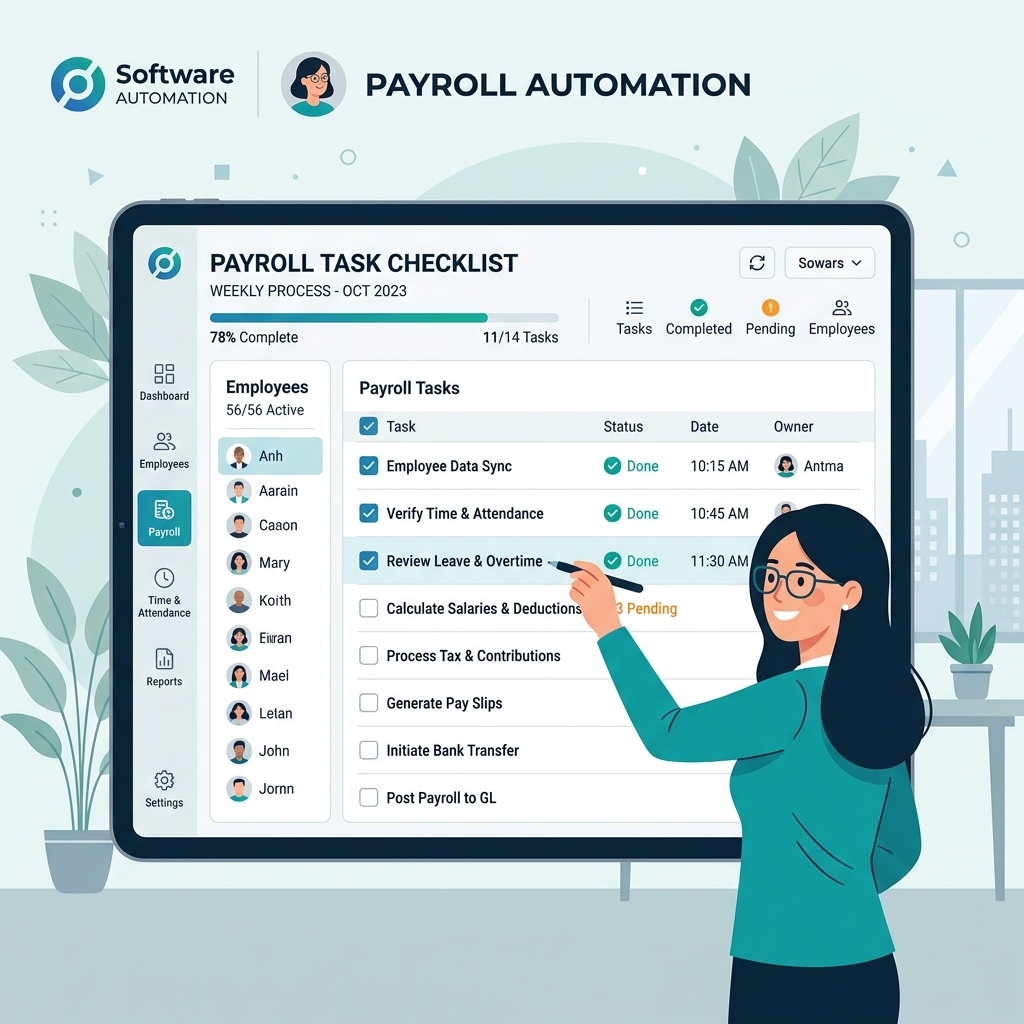
Want to see how an offline-capable, client-side payslip generator works in practice? Try our brand-new interactive demo right in your browser. Upload a sample CSV, map your columns, and generate beautifully designed PDF payslips—with zero data ever being transmitted to our servers.
Launch Free Demo NowChapter 1: The Legal Mandate for Paystub Leave Itemization
A paystub is not merely a courtesy receipt or a record of bank transfers; under modern labor jurisprudence, it is a formal legal instrument. When labor enforcement agencies or employment attorneys audit a company, the itemized wage statement is the primary piece of documentary evidence used to establish whether statutory rights were respected or suppressed.
The Evolution of Statutory Wage Statement Laws
Historically, paystubs were only required to show gross wages, tax withholdings, and net disbursements. However, as state legislatures recognized that employees could not exercise their right to paid sick leave without knowing how many hours they had accrued, statutory disclosure requirements were enacted across multiple tier-one jurisdictions.
Let's analyze the core statutory disclosure requirements governing paid leave and deductions across key global jurisdictions:
| Jurisdiction | Statutory Authority | Mandatory Paystub Disclosure Requirement | Non-Compliance Penalty |
|---|---|---|---|
| California | Labor Code § 246(i) & § 226(a) (SB 616) | Must display available paid sick leave balance on the paystub or on a separate written document provided on payday. Must show at least 40 hours / 5 days available. | $50 for first violation, $100 per subsequent pay period up to $4,000 per employee + PAGA civil penalties. |
| New York | NY Labor Law § 196-b & NY PFL WCL Art. 9 | Must track accrued, used, and remaining sick hours. Must provide summary within 3 business days of request. PFL employee deductions must be separately itemized. | Civil penalties up to $50 per violation under § 198, plus statutory restitution for unpaid leave. |
| Washington | RCW 49.46.210 & WAC 296-128-620 | Written notice at least monthly showing: (1) Total accrued since last notice, (2) Used since last notice, (3) Current available balance, (4) Unused hours applied. | Department of Labor & Industries (L&I) administrative citations, back pay plus 1% monthly interest. |
| Oregon | ORS 653.601 - 653.661 & Paid Leave OR | Quarterly written notice of available sick time balance (commonly provided on bi-weekly paystubs). Paid Leave Oregon employee contributions must be itemized. | BOLI enforcement actions, statutory civil penalties, and private right of action for lost wages. |
| United Kingdom | Employment Rights Act 1996 § 8 & SSCBA 1992 | Itemized pay statement must show gross earnings, all deductions (PAYE, NICs, student loans), net pay, and distinct breakdown of Statutory Sick Pay (SSP) amounts paid. | HMRC penalty notices, Statutory Sick Pay dispute rulings, and Employment Tribunal compensation awards. |
The Online Portal Trap: Why Web Logins Do Not Fulfill Legal Paystub Requirements
A frequent and dangerous misconception among HR administrators is assuming that an employee self-service cloud portal (like Workday, BambooHR, or Gusto) eliminates the requirement to print sick leave balances on the paystub itself.
State labor commissioners and appellate courts have repeatedly affirmed that an employee must receive the statutory disclosure contemporaneously with their wages. In California, for example, the Labor Commissioner has issued explicit guidance stating that providing an electronic paystub without leave balances—and expecting the worker to navigate to a separate "Time Off" module on an intranet—violates Labor Code § 246(i). The leave balance must appear directly on the face of the wage statement or on a dedicated written addendum delivered on payday.
Chapter 2: Deconstructing UK Statutory Sick Pay (SSP) Mechanics
In the United Kingdom, Statutory Sick Pay (SSP) represents a mandatory social safety net administered directly through company payroll. Unlike the US system, which relies on state-run disability insurance funds funded by payroll taxes, UK employers are legally required to pay SSP out of company operating funds without direct government reimbursement.
Core Rules for UK Statutory Sick Pay (SSP)
- Current Statutory Weekly Rate:£116.75 per week (standard UK statutory rate).
- Maximum Duration:Up to 28 weeks for any single Period of Incapacity for Work (PIW) or linked periods.
- Earnings Threshold (LEL):Employee Average Weekly Earnings (AWE) must equal or exceed the Lower Earnings Limit (£123.00 per week).
- Waiting Days Rule:The first 3 Qualifying Days (QDs) in a PIW are unpaid "waiting days" unless linked to a prior sick period within 8 weeks.
Calculating Qualifying Days (QDs) and Daily SSP Rates
SSP is paid for qualifying days—days the employee is contracted to work. The daily SSP rate is calculated by dividing the statutory weekly rate (£116.75) by the number of qualifying days in the employee's standard working week.
| Working Pattern | Qualifying Days / Week | Daily Statutory Rate Formula | Calculated Daily Rate (£) |
|---|---|---|---|
| Standard Full-Time | 5 Days (Mon - Fri) | £116.75 ÷ 5 | £23.35 per day |
| Compressed 4-Day Week | 4 Days | £116.75 ÷ 4 | £29.19 per day |
| Part-Time 3-Day Shift | 3 Days | £116.75 ÷ 3 | £38.92 per day |
| Weekend / Part-Time 2-Day | 2 Days | £116.75 ÷ 2 | £58.38 per day |
| Single Day Casual/Regular | 1 Day | £116.75 ÷ 1 | £116.75 per day |
Taxability and Paystub Itemization of SSP
A critical rule under UK tax law is that SSP is classified as taxable employment income. When formatting a UK payslip:
- Gross Pay Breakdown: SSP must be itemized as a separate line item under Payments / Earnings (e.g., "Statutory Sick Pay (4 Days @ £23.35) = £93.40") rather than commingled invisibly with Basic Salary.
- PAYE & NIC Withholding: SSP is fully subject to standard Pay As You Earn (PAYE) income tax deductions, Class 1 Primary (Employee) National Insurance Contributions, and Student Loan deductions.
- Occupational Sick Pay (OSP) Top-Ups: If your company offers contractual sick pay (e.g., full salary during illness), the paystub should clearly distinguish the statutory base from the company top-up (e.g., Basic Salary: £1,906.60, Statutory Sick Pay: £93.40, Total Gross: £2,000.00). This transparent itemization protects the company during HMRC audit inspections.
Chapter 3: US State Paid Family & Medical Leave (PFML) & Disability Deductions
In the United States, in the absence of a federal paid leave program, states have created comprehensive Paid Family and Medical Leave (PFML) and State Disability Insurance (SDI) programs. These state programs are financed through mandatory payroll taxes—often assessed as percentage deductions against employee wages, sometimes with matching employer contributions.
Under state payroll laws, employers are legally obligated to withhold these exact statutory percentages, remit them to state revenue departments, and itemized every specific deduction code on the employee paystub. Grouping these state withholdings into a generic "Other Taxes" or "Misc Deductions" bucket is a violation of wage statement transparency regulations.
| State & Program | Standard Paystub Deduction Code | Employee Withholding Rate | Employer Contribution Rate | Annual Wage Cap / Limit |
|---|---|---|---|---|
| California SDI / PFL | CASDI / CA-SDI-EE | 1.1% - 1.2% (varies annually) | 0.00% (100% Employee funded) | NO CAP (SB 951 eliminated wage ceiling) |
| New York PFL | NYPFL / NY-PFL-EE | 0.373% of gross wages | 0.00% (Employee funded) | Capped at statewide average weekly wage max ($333.25/yr) |
| Washington PFML | WAPFML / WA-PFML-EE | ~0.74% total (Split: 71.43% EE / 28.57% ER) | Employer pays 55% of Medical Leave portion | Social Security Wage Base ($168,600+) |
| Massachusetts PFML | MAPFML / MA-PFML-EE | 0.46% (0.18% Family + 0.28% Medical) | 0.42% (Employers with 25+ staff) | Social Security Wage Base limit |
| New Jersey FLI / TDI | NJFLI / NJTDI | 0.09% (FLI) + Variable (TDI) | Experience rated (TDI only) | NJ State Taxable Wage Base ($161,400+) |
| Colorado FAMLI | COFAMLI / CO-FAMLI-EE | 0.45% of gross wages | 0.45% (Employers with 10+ staff) | Social Security Wage Base limit |
Pre-Tax vs. Post-Tax Classification on Pay Statements
A frequent error in payroll spreadsheet design is treating state PFML deductions as pre-tax deductions like Section 125 health insurance or 401(k) retirement contributions.
Under IRS Revenue Rulings and federal tax law, mandatory employee contributions to state family leave and disability funds (e.g., CA SDI, NY PFL, WA PFML) are classified as post-tax statutory payroll withholdings. They do not reduce the employee's Federal Taxable Gross wages for Federal Income Tax (FIT), Social Security, or Medicare withholding purposes. On a properly formatted paystub, these must appear in the "Statutory Taxes & Mandatory Deductions" column alongside Federal and State income taxes, clearly distinguished from voluntary pre-tax benefits.
Chapter 4: Itemizing Sick Leave Accruals: The 4-Pillar Ledger Architecture
Whether your company operates under California's statutory accrual rate (1 hour of paid sick leave per 30 hours worked), New York's tier-based annual requirement (up to 56 hours for large employers), or an upfront frontloading policy, your paystubs must present a clean, verifiable accrual ledger.
To guarantee bulletproof compliance during state Department of Labor or union audits, every employee wage statement should incorporate the 4-Pillar Leave Ledger Architecture:
Beginning Available Balance
The exact number of available leave hours carried forward from the prior pay period before any current earnings or leave events are processed.
Current Period Accrual
The precise hours earned during the current pay period based on hours worked (e.g. 80 regular hours ÷ 30 = +2.67 hours) or lump-sum grant.
Hours Taken / Used This Period
The total hours of paid sick or family leave claimed by the employee during this specific pay cycle, matched against compensation paid.
Ending Available Balance
The net remaining balance available for immediate use in subsequent pay cycles (Beginning + Accrued - Used).
Example: Bi-Weekly Paystub Leave Ledger Format
Here is how a compliant leave ledger appears when integrated into a modern paystub layout:
| Leave Plan Category | Beginning Balance | Earned / Accrued | Taken / Used | Ending Available | Statutory Notes |
|---|---|---|---|---|---|
| Statutory Paid Sick Leave (CA) | 24.50 hrs | +2.67 hrs | -8.00 hrs | 19.17 hrs | Accrual rate: 1 hr per 30 hrs worked |
| Company Paid Vacation / PTO | 40.00 hrs | +3.33 hrs | 0.00 hrs | 43.33 hrs | Annual accrual cap: 120.00 hrs |
| Floating Holiday / Wellness | 8.00 hrs | 0.00 hrs | 0.00 hrs | 8.00 hrs | Expires Dec 31 annually |
Impact on Regular Rate of Pay (RROP) Calculations
When an employee uses paid sick leave during a pay period in which they also earn non-discretionary bonuses, shift differentials, or commissions, employers must be extremely careful when setting the sick leave hourly pay rate. Under California Labor Code § 246(l), paid sick leave for non-exempt employees must be paid either:
- Calculated in the same manner as the regular rate of pay for the workweek in which the employee uses sick time, OR
- Calculated by dividing the employee's total wages (excluding overtime premiums) by total hours worked in the full pay periods of the prior 90 days of employment.
Failing to itemize the exact hourly rate paid for sick leave hours taken on the paystub prevents workers from verifying this calculation—frequently serving as the catalyst for class-action wage statement lawsuits.
Chapter 5: The SaaS Tax Trap - Why Cloud Payroll Providers Drain Operational Margins
When small-to-medium businesses realize they must comply with complex leave itemization and multi-state PFML deductions, their standard reaction is to sign up for cloud payroll platforms like Gusto, Rippling, ADP Run, or Paychex.
Let's analyze the true financial overhead of using recurring cloud SaaS subscriptions for an organization employing 40 staff members:
Annual Recurring SaaS Payroll Expense (40 Employees)
- Cloud Platform Alpha (e.g. Gusto Plus):$80 base + $12/user/month × 40 = $560/mo ($6,720/year)
- Cloud Platform Beta (e.g. Rippling HR):$35 base + $15/user/month × 40 = $635/mo ($7,620/year)
- Cloud Platform Gamma (e.g. ADP Run):Average small business package = $720/mo ($8,640/year)
- PayslipGen (Local Desktop Automator):One-time desktop software license = $49 (Lifetime ownership, $0/mo forever)
Over a 5-year operating horizon, a company pays $33,600 to $43,200 in SaaS subscription fees just to calculate straightforward formulas and render PDF wage statements. Furthermore, cloud platforms create persistent security liabilities by storing sensitive employee personal identification (Social Security Numbers, home addresses, bank accounts, and medical leave notes) on third-party cloud servers vulnerable to data breaches.
By combining a cleanly structured Excel or Google Sheet with a dedicated local desktop generator like PayslipGen, businesses achieve 100% statutory compliance, per-file AES-256 PDF encryption, and total data sovereignty—while completely eliminating recurring SaaS bills.
Chapter 6: Step-by-Step Implementation: Building a Compliant Payroll Ledger in Excel + PayslipGen
Setting up an automated, legally compliant payroll generation workflow takes less than 15 minutes. Follow this step-by-step implementation guide:
Step 1: Structure Your Master Payroll Spreadsheet
In Microsoft Excel or Google Sheets, create your master payroll file. Include explicit columns for base earnings, statutory sick pay adjustments, state PFML withholdings, and the 4-pillar leave ledger:
| Column Header | Sample Cell Value | Formula / Calculation Logic |
|---|---|---|
| Employee_ID | EMP-1048 | Unique employee identifier |
| Employee_Name | Elena Rostova | Full legal name for wage records |
| Regular_Hours | 72.00 | Bi-weekly regular working hours |
| Hourly_Rate | 35.00 | Standard hourly compensation |
| Paid_Sick_Hours_Used | 8.00 | Statutory sick hours claimed in period |
| Gross_Pay | 2800.00 | =(Regular_Hours + Paid_Sick_Hours_Used) * Hourly_Rate |
| CA_SDI_PFL_Tax | 33.60 | =Gross_Pay * 0.012 (CA SDI 1.2% rate) |
| Sick_Beginning_Bal | 24.50 | Available hours from prior cycle |
| Sick_Accrued_Period | 2.67 | =ROUND(Regular_Hours / 30, 2) |
| Sick_Ending_Bal | 19.17 | =Sick_Beginning_Bal + Sick_Accrued_Period - Paid_Sick_Hours_Used |
| PDF_Password | ER1048! | Individual cryptographic key for PDF encryption |
Step 2: Launch PayslipGen & Import Spreadsheet
Open the PayslipGen desktop application on Windows, macOS, or Linux. Click Import Spreadsheet and select your .xlsx or .csv file. PayslipGen parses the entire dataset entirely offline in system memory, ensuring that zero employee data is uploaded to external cloud endpoints.
Step 3: Map Columns & Design Compliant Template
In PayslipGen's visual template designer:
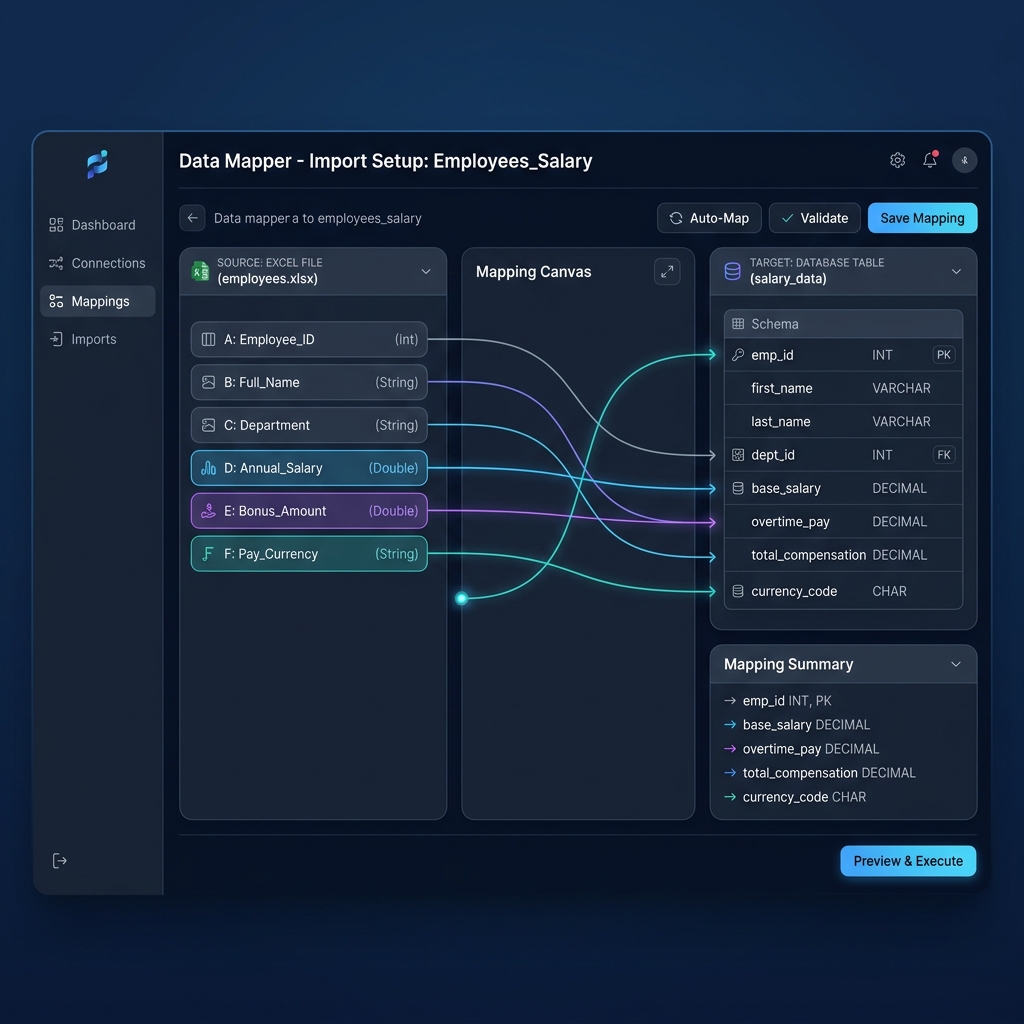
- Map Earnings: Bind Regular Pay, Overtime, and Statutory Sick Pay lines to your spreadsheet columns.
- Map Statutory Taxes: Assign Federal Income Tax, Social Security, Medicare, and State PFML/SDI deductions to the dedicated deductions section.
- Enable Leave Balance Table: Select the pre-built Leave Accrual Ledger widget and map Beginning Balance, Period Accrual, Period Used, and Ending Available Balance.
- Embed Corporate Stamp & Signature: Upload transparent PNG assets for your company seal and authorized payroll manager signature to provide legal authenticity for employee mortgage or visa verifications.
Step 4: Configure AES-256 PDF Password Encryption
Under the Security & Encryption tab, check "Encrypt Generated PDF Documents". Map the encryption password to your PDF_Password column (or configure an automatic formula such as First 2 Letters of Name + Last 4 of Employee ID). PayslipGen applies military-grade AES-256 encryption to each individual PDF file before writing to disk.
Step 5: Batch Generate & Distribute via Custom SMTP Relay
Click Generate All Payslips. Within seconds, PayslipGen renders crisp, pixel-perfect, password-protected PDF files into your local output directory.
Navigate to the Email Distribution module. Connect your company's authenticated SMTP relay (such as Amazon SES, SendGrid, Google Workspace, or Microsoft 365) and click Dispatch Batch. Each employee receives their personalized, encrypted paystub directly in their inbox with 99.9% deliverability.
Chapter 7: Comprehensive Solutions Comparison Matrix
Here is how local desktop payroll automation compares against traditional alternatives for statutory leave and PFML wage statement compliance:
| Compliance & Operational Criteria | Manual Word / PDF Editing | Online Paystub Websites | Enterprise Cloud SaaS (Gusto / ADP) | PayslipGen (Local Automator) |
|---|---|---|---|---|
| Pricing Model | Free (Extremely high labor cost) | $8 - $15 per single stub | $500 - $800+ monthly recurring | $49 One-time (Lifetime ownership) |
| Leave Accrual Ledger Itemization | Manual copy-paste (Error prone) | Not supported | Supported (Often buried in web portal) | Full 4-Pillar Ledger on PDF face |
| Multi-State PFML / SSP Customization | Manual formatting | Generic tax fields only | Rigid pre-set rules | 100% dynamic spreadsheet mapping |
| Data Privacy & PII Sovereignty | Local machine | Harvested on third-party cloud | Multi-tenant cloud server | 100% Offline (Zero cloud leakage) |
| Automated PDF Encryption | Manual per file | None | Web login required | Automated AES-256 batch encryption |
| Batch Speed (100 Employees) | 8 - 12 hours | Manual input | Cloud batch run | < 30 seconds local render |
Frequently Asked Questions (FAQs)
Can an employer satisfy state sick leave notice laws by directing employees to an online portal?
In most strict jurisdictions like California and Washington, the answer is no. Under California Labor Code § 246(i), the paid sick leave balance must be displayed on the actual itemized wage statement provided on payday or on a separate written document delivered with the paycheck. Directing an employee to log into an external web portal or HR intranet to look up their sick hours does not meet statutory compliance and can expose the employer to Labor Code § 226 wage statement penalties.
Are state Paid Family and Medical Leave (PFML) employee deductions pre-tax or post-tax?
State PFML employee withholdings (such as California SDI, New York PFL, Washington PFML, and Massachusetts PFML) are classified as post-tax statutory payroll deductions under federal tax law. They must be deducted from gross wages after Federal Income Tax (FIT), Social Security (FICA), and Medicare taxes are calculated. On the payslip, they should be clearly listed under statutory taxes and deductions rather than voluntary pre-tax benefit deductions.
How is UK Statutory Sick Pay (SSP) taxed on an employee's payslip?
Statutory Sick Pay (SSP) in the UK is treated as ordinary taxable earnings. When calculated on a payslip, SSP is added to gross pay and is fully subject to standard PAYE income tax withholding, Class 1 Employee National Insurance Contributions (NICs), and student loan repayment deductions. It should be listed as a distinct earnings line item so the employee and HMRC auditors can distinguish statutory sick pay from regular basic wages.
What happens to accrued statutory sick leave when an employee leaves the company?
Unlike accrued vacation time or general Paid Time Off (PTO), standard statutory sick leave in states like California, New York, and Washington is not legally required to be cashed out upon separation or termination, unless company policy or a collective bargaining agreement explicitly states otherwise. However, if an employee is rehired within 12 months in California, their previously accrued unused sick leave balance must be reinstated on their payroll ledger.
How do I handle negative leave balances on employee payslips?
If an employer advances sick leave to an employee before it is earned, the ending available balance could mathematically become negative. However, displaying a negative balance on a statutory wage statement can create legal confusion regarding whether the employee owes money back to the company. Best practice is to display the statutory leave balance as 0.00 hours and record any advanced leave in an internal tracking ledger or separate loan agreement, complying with local wage deduction limits.
Can PayslipGen batch generate payslips for employees in different states with different PFML rules?
Yes. Because PayslipGen dynamically maps data directly from your master spreadsheet, you can create state-specific deduction columns (e.g. CA_SDI, NY_PFL, WA_PFML) and leave balance fields for each worker. When generating batch PDF payslips, PayslipGen conditionally renders the appropriate deduction items and leave ledgers for each specific employee based on their spreadsheet row.
Master Statutory Paystub Compliance Without Recurring SaaS Fees
Generate 100% legally compliant, password-encrypted PDF payslips with 4-pillar leave accrual ledgers and state PFML deductions in bulk from your spreadsheets.
Get PayslipGen Lifetime License ($49)Conclusion
Statutory sick pay tracking and Paid Family & Medical Leave payroll deductions are no longer optional HR administrative details. In an era of aggressive state labor audits, heightened wage transparency legislation, and steep statutory non-disclosure penalties, providing clear, itemized wage statements with an explicit 4-pillar leave ledger is essential for risk mitigation.
Achieving full compliance does not require committing your business to thousands of dollars in monthly cloud software subscriptions. By structuring a robust master payroll spreadsheet and leveraging the local, privacy-first processing power of PayslipGen, you can produce enterprise-grade, encrypted, audit-proof payslips in seconds—keeping your company completely compliant while protecting your operational bottom line.
(Looking to streamline other areas of your payroll? Check out our comprehensive guide on Hourly Employee Payslips with Overtime or learn how to Archive Thousands of Payslips for Tax Audit Season.)