
Barber & Hair Salon Commission Paystub Generator: How to Balance Tiered Service Rates, Backbar Product Fees & Retail Spiffs in Excel
Key Takeaways
- ✓Three-Tiered Compensation Stacks: Modern high-end salons and barbershops rarely rely on flat hourly wages. Stylist paystubs combine graduated service commission brackets (e.g., 45% up to $3,000, 50% up to $5,000, and 55% above $5,000), separate retail product sales spiffs (10% to 20%), and direct credit card tip pass-throughs.
- ✓Strict Backbar Chemical Fee Compliance: Deducting professional color bowls, lightener foils, and bond builders (Olaplex, K18) from stylist earnings requires precise accounting. Under the Fair Labor Standards Act (FLSA Section 3(m)) and state wage theft statutes, backbar product charge-backs cannot drop an employee's effective wage below statutory minimum wage, nor violate employer indemnification laws (such as California Labor Code § 2802).
- ✓Credit Card Processing Fee Apportionment: Federal law allows salon owners to deduct the actual credit card processing fee (e.g., 2.5% to 2.8%) from an employee's charged tips, but state statutes in California, Massachusetts, Maine, and New York strictly prohibit taking any merchant fee slice out of employee gratuities.
- ✓Zero-Subscription Desktop Generation: Cloud salon software suites (Boulevard, Vagaro, Phorest) charge recurring SaaS fees and lock pay records behind paywalls. Salon owners who maintain their master service tallies in Excel can generate confidential, password-protected PDF paystubs offline using PayslipGen for a one-time $49 lifetime license.
Every Saturday evening across barbershops, hair styling studios, and medical spas, salon managers confront a mathematical minefield. A senior colorist may have generated $6,400 in gross hair services, sold $1,250 in premium shampoos and ceramic irons, mixed 38 bowls of bleach and toner requiring backbar supply adjustments, and earned $940 in credit card gratuities.
Turning these disparate data points into a clear, legally compliant bi-weekly paystub is one of the most frustrating administrative burdens in the beauty industry. Stylists demand absolute transparency: they want to verify how their sliding commission brackets were calculated, confirm their retail spiffs were honored, and ensure backbar chemical product fees were not arbitrarily deducted.
Simultaneously, salon owners face intense scrutiny from state labor commissioners and the Department of Labor (DOL). From California's strict rest and recovery break mandates for piece-rate workers (California Labor Code § 226.7) to federal wage-and-hour rules governing employer equipment deductions under FLSA 29 C.F.R. Part 531, improperly configured salon paystubs can quickly trigger class-action wage audits.
In this comprehensive technical manual, we break down the regulatory mathematics of salon payroll, explain how to structure sliding commission scales and chemical charge-backs in Excel, and demonstrate how salon owners use PayslipGen to generate private, password-protected PDF paystubs directly from spreadsheets without paying recurring SaaS software tolls.
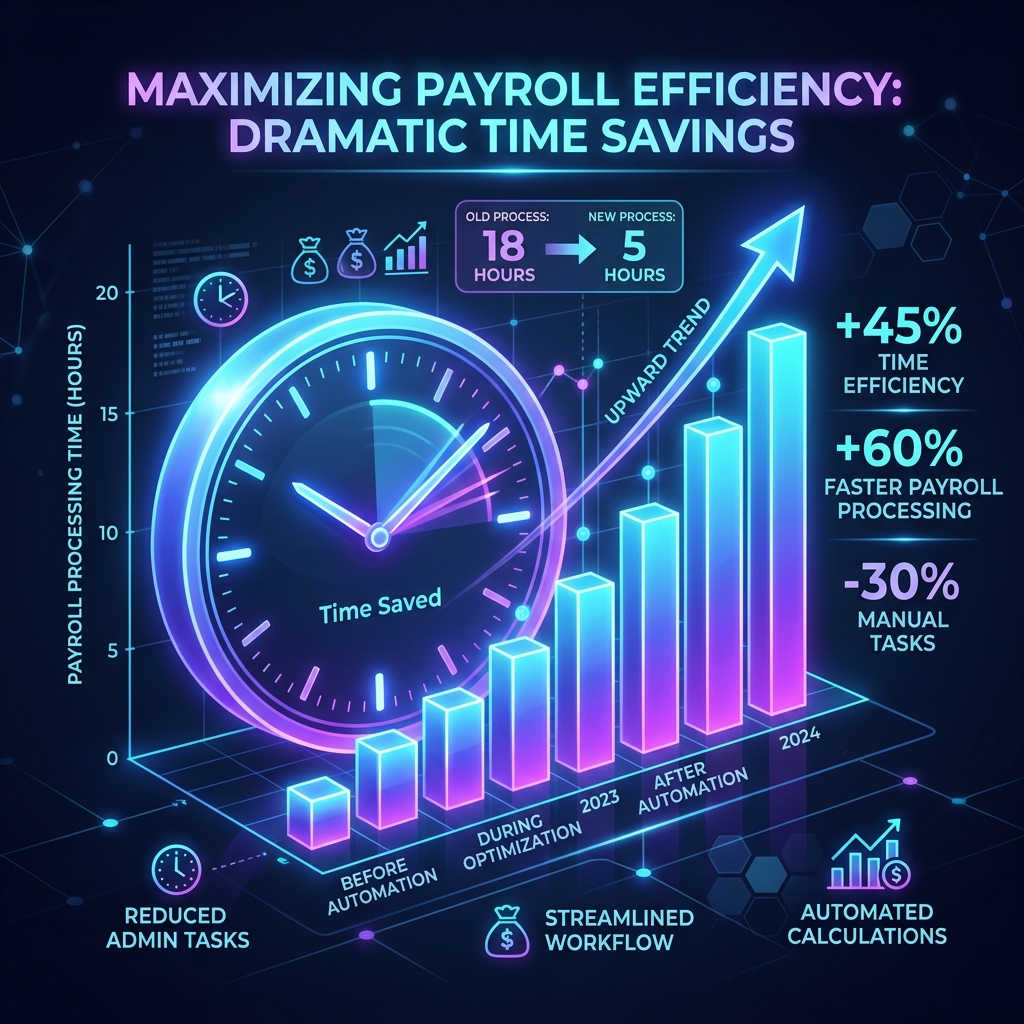
Try Our Interactive Demo Instantly
Want to see how an offline-capable, client-side payslip generator works in practice? Try our brand-new interactive demo right in your browser. Upload a sample CSV, map your columns, and generate beautifully designed PDF payslips—with zero data ever being transmitted to our servers.
Launch Free Demo NowChapter 1: The Modern Salon Compensation Architecture: Booth Rental vs. Commission W-2
To structure a compliant paystub, you must first clarify the legal worker classification under Internal Revenue Code rules and state ABC tests (such as California AB 5 and New Jersey wage laws). The salon industry operates under two primary employment models:
1. The 1099 Booth Rental Model (Independent Chair Lease)
Under a genuine booth rental arrangement, the barber or stylist is an independent small business owner (sole proprietor or single-member LLC). The stylist:
- Sets their own operating hours, service menu, and pricing.
- Maintains an independent business license, city tax certificate, and state cosmetology license.
- Collects payments directly from clients via their own merchant terminal (Square, Clover, or Stripe).
- Pays a fixed weekly or monthly chair rental fee (e.g., $250 to $450/week) to the salon landlord.
- Receives an annual Form 1099-MISC (Box 1: Rents) from the salon owner if rent is paid, or no tax form if the salon is merely leasing commercial real estate.
Worker Misclassification Risk in Beauty Salons
If a salon owner dictates dress codes, enforces mandatory schedule shifts, requires stylists to attend mandatory team meetings, or processes all client credit cards through the house merchant account while treating the stylist as an independent 1099 contractor, labor departments will classify the arrangement as unlawful worker misclassification. Back taxes, unpaid workers' compensation premiums, and statutory overtime penalties can destroy an independent salon.
2. The Commission W-2 Employee Model
Most reputable luxury hair studios, franchise barbershops, and full-service beauty salons operate on a W-2 employment structure. Stylists enjoy workers' compensation protection, statutory unemployment insurance, and structured career ladders.
However, W-2 salon compensation is rarely a simple hourly rate. Instead, it is a hybrid performance engine comprising four distinct components:
- Tiered Service Commission: A graduated percentage of gross service revenue that increases as the stylist crosses bi-weekly production thresholds.
- Backbar Chemical Deductions: Adjustments applied to offset expensive color tubes, bleaching powders, peroxides, and bond-building treatments consumed during high-ticket chemical processes.
- Retail Product Spiffs: A 10% to 20% incentive commission paid on take-home hair care products, styling tools, and boutique retail merchandise sold at checkout.
- Direct Gratuity Pass-Throughs: Client tips charged on credit cards, reconciled against merchant processing fee apportionments where permitted by law.
Chapter 2: Sliding Commission Scales: Rewarding High-Volume Production
To encourage chair utilization, client retention, and pre-booking, salon owners implement sliding commission brackets. Rather than paying a flat 50% across the board, progressive tiers incentivize stylists to push past baseline salon overhead.
Standard Sliding Commission Bracket Structure
Consider a standard bi-weekly pay cycle with the following graduated service commission schedule:
| Bi-Weekly Service Gross | Commission Rate | Production Level | Effective Margin Rationale |
|---|---|---|---|
| $0.00 – $3,000.00 | 45.0% | Baseline / Associate | Covers baseline salon overhead (rent, front desk, booking software, utilities). |
| $3,000.01 – $5,000.00 | 50.0% | Senior Stylist / Master Barber | Overhead is fully amortized; higher margins shared directly with talent. |
| $5,000.01 and Above | 55.0% | Artistic Director / Top Producer | Retains star producers who might otherwise consider renting private salon suites. |
Cumulative vs. Retroactive Commission Brackets
Salon agreements must explicitly state whether commission brackets operate cumulatively (marginal tax-bracket style) or retroactively (cliff-based):
- Marginal Cumulative: The stylist earns 45% on the first $3,000, 50% on the amount between $3,000.01 and $5,000, and 55% only on the dollar volume exceeding $5,000. This avoids dramatic earnings cliffs.
- Retroactive Cliff: Once gross services exceed $5,000, the full $5,000+ volume is paid out at 55%. While attractive to ambitious stylists, retroactive cliffs can cause massive volatility and internal disputes if a client refund or chargeback occurs after payroll is closed.
Chapter 3: Backbar Chemical Fee Deductions: Legal Standards & Calculation Methods
In modern color-focused salons, chemical product inventory represents between 8% and 15% of total operating expenses. A complex multi-process balayage with high-lift lightener, bond multipliers, gloss toners, and deep conditioning treatments can consume $25 to $45 worth of chemical raw materials.
To prevent stylists from over-dispensing product or wasting inventory, salons implement backbar product fee deductions. However, executing these deductions incorrectly creates immediate liability under federal and state wage laws.
1. The Two Industry Methods for Backbar Deductions
Salons typically handle chemical supply deductions using one of two accounting workflows:
- Pre-Commission Net Calculation (The Recommended Standard): The backbar product cost is subtracted from the gross service ticket before applying the commission percentage.Stylist Service Commission = (Gross Chemical Services - Itemized Backbar Fee) × Commission Rate %
Example: A $220 color service uses $20 in chemical product. The net commissionable service base is $200. At a 50% commission rate, the stylist earns $100. Both the house and the stylist share the product cost equitably.
- Post-Commission Direct Wage Deduction (The High-Risk Approach):The commission is calculated on the full gross service, and then 100% of the backbar fee is deducted directly from the stylist's earned paycheck.Net Earnings = (Gross Chemical Services × Commission Rate %) - Full Backbar Fee
Legal Hazard: In states like California, New York, and Illinois, post-wage deductions for business supplies are strictly forbidden. California Labor Code § 221 states: "It shall be unlawful for any employer to collect or receive from an employee any part of wages theretofore paid by said employer." Furthermore, California Labor Code § 2802 requires employers to indemnify employees for all necessary business expenditures. Therefore, salon owners must structure backbar adjustments as pre-commission service splits, not post-tax paycheck garnishments!
2. FLSA Section 3(m) Minimum Wage Floor Protection
Under federal law (FLSA 29 C.F.R. § 531.35), deductions for tools of the trade or employer operational supplies are considered kickbacks to the employer if they reduce the employee's net hourly wage below the federal minimum wage ($7.25/hr) or applicable state minimum wage (e.g., $16.00/hr in California, $15.00/hr in New York).
If a junior stylist works 40 hours during a slow week, generates only $800 in services, and incurs $200 in backbar chemical deductions, their net wages before taxes cannot drop below 40 hours × statutory minimum wage. If the commission minus backbar fees falls below the statutory threshold, the salon must pay a minimum wage makeup differential.
Chapter 4: Retail Product Spiffs, Credit Card Tips & Rest Break Mandates
A sustainable salon relies on front-desk retail velocity. Selling take-home hair masks, purple toners, pomades, and styling irons generates pure profit margin with zero chemical wear-and-tear on salon chairs.
1. Retail Spiff Structures
Salons motivate retail recommendations through graduated retail spiffs:
- $0 – $500 Retail Sales: 10% commission on retail gross.
- $501 – $1,000 Retail Sales: 15% commission on retail gross.
- $1,001+ Retail Sales: 20% commission on retail gross.
Because retail products are sold over the counter without chemical backbar consumption, retail spiffs are never subject to backbar fee deductions. They are added as direct gross earnings.
2. Credit Card Tip Processing Fee Deductions: Federal vs. State Rules
When a salon guest leaves a $40 tip on a credit card, the merchant payment gateway (Square, Stripe, Worldpay) charges the salon an interchange processing fee averaging 2.6% + $0.10.
Can the salon owner deduct the 2.6% transaction fee from the stylist's tip payout?
- Federal FLSA Standard: The DOL Wage and Hour Division permits employers to deduct the actual credit card processing fee charged on the tip portion (DOL Fact Sheet #15). If the card fee is 2.5%, the salon can pay out $39.00 of a $40.00 tip. The salon cannot deduct more than the actual third-party fee.
- State Prohibitions: Several states override federal guidelines and strictly forbid taking any processing fee out of employee tips. In California (Labor Code § 351), Massachusetts (M.G.L. c. 149 § 152A), Maine (26 M.R.S. § 664), and New York (Labor Law § 196-d), the employer must absorb 100% of the merchant credit card processing fee and pay the employee the full face value of the charged tip.
3. Rest and Recovery Break Compliance for Commission Stylists
In states like California and Washington, commission-only and piece-rate workers must be separately compensated for non-productive time, rest breaks, and recovery periods.
Following landmark rulings such as Vaquero v. Stoneledge Furniture LLC, an employer cannot claim that a stylist's high commission earnings "cover" their mandatory 10-minute rest breaks. The salon paystub must explicitly itemize:
- Total hours worked.
- Number of statutory rest break minutes taken.
- Rest break compensation calculated at the stylist's regular rate of pay (total commission divided by total hours worked in the workweek).
Chapter 5: Master Excel Salon Payroll Blueprint (With Formulas)
Below is the production-tested payroll model for an 8-stylist salon processing a bi-weekly cycle. It illustrates how to structure columns in Excel or Google Sheets to automatically calculate service tiers, backbar offsets, retail spiffs, tip fees, and net pay:
| Col | Header Name | Sample Value | Excel Formula Specification | Description |
|---|---|---|---|---|
| A | Stylist_Name | Elena Rostova | Text entry | Master Colorist |
| B | Gross_Services | $5,850.00 | Raw POS total | Total cuts, color, extensions |
| C | Backbar_Product_Fee | $345.00 | Inventory log | Chemical bowls & toner charges |
| D | Net_Commissionable_Base | $5,505.00 | =B2-C2 | Net services after pre-split fee |
| E | Tier_Commission_Rate | 55.0% | =IFS(D2<=3000, 0.45, D2<=5000, 0.50, D2>5000, 0.55) | Graduated rate based on net |
| F | Earned_Service_Commission | $3,027.75 | =D2*E2 | Gross service commission |
| G | Retail_Gross_Sales | $1,200.00 | POS retail report | Take-home product sales |
| H | Retail_Spiff_Rate | 20.0% | =IFS(G2<500, 0.10, G2<=1000, 0.15, G2>1000, 0.20) | Retail tier threshold formula |
| I | Retail_Spiff_Pay | $240.00 | =G2*H2 | Product incentive earnings |
| J | Credit_Card_Tips | $880.00 | POS tip summary | Credit card gratuities collected |
| K | CC_Fee_Deduction | -$22.88 | =-(J2*0.026) | 2.6% merchant fee (where legal) |
| L | Net_Tip_PassThrough | $857.12 | =J2+K2 | Pass-through gratuity |
| M | TOTAL_GROSS_PAY | $4,124.87 | =F2+I2+L2 | Subject to statutory FICA/FITW |
Chapter 6: Why Cloud Salon Platforms Fail at Custom Commission Payroll
Many salon owners rely on POS and booking suites such as Boulevard, Vagaro, Phorest, or Mindbody. While these tools excel at scheduling haircuts and storing client color formulas, their payroll modules are notoriously frustrating:
1. The Inflexible Calculation Engine
Most cloud salon POS systems offer rigid payroll options: either a flat commission percentage across all services or an inflexible tiered structure that cannot accommodate pre-commission chemical splits, complex assistant apprenticeship pooling, or custom product spiff overrides.
As a result, salon managers export raw CSV reports into Excel anyway, perform 45 minutes of manual formula calculations, and then face the miserable task of manually typing those calculated numbers back into Gusto or QuickBooks Payroll.
2. The Multi-Store SaaS Tax: $600 to $1,800 Annual Drain
Cloud payroll platforms enforce aggressive monthly subscription models. A salon with 10 stylists typically pays $45 base plus $6 per employee per month, totaling over $1,260 every single year. For growing beauty brands operating 2 or 3 boutique locations, recurring payroll SaaS fees easily drain $3,500 annually.
| Cost Comparison Metric | Gusto / QuickBooks Online | Vagaro / Phorest Integrated Payroll | PayslipGen Desktop Application |
|---|---|---|---|
| Base Monthly Fee | $45.00 – $90.00 / month | $50.00 – $110.00 / month | $0.00 (Forever) |
| Per-Stylist Monthly Fee | $6.00 / stylist / month | $8.00 / stylist / month | $0.00 (Unlimited staff) |
| Multi-Location Support | Separate subscription per LLC | Add-on tier pricing | Unlimited salon locations |
| Data Privacy & Offline Access | Stored on third-party cloud | Requires continuous internet | 100% Offline & Local on Mac/PC |
| 3-Year Cumulative Cost (10 Stylists) | $3,780.00 | $4,680.00 | $49.00 (One-Time) |
Chapter 7: Step-by-Step Salon Paystub Automation with PayslipGen
With PayslipGen, salon owners preserve total mathematical freedom in Excel while delivering beautiful, vector-crisp, password-protected PDF paystubs to their styling team:
Step 1: Export or Maintain Your Spreadsheet
Pull your bi-weekly report from your booking software or maintain your custom master calculation sheet in Excel. The sheet should contain columns for Stylist Name, Email, Base Guarantee (if applicable), Service Commission, Backbar Adjustment, Retail Spiff, CC Tips, and Net Pay.
Step 2: Launch PayslipGen on Your Computer
Open the PayslipGen desktop application on your Mac or Windows laptop. Because PayslipGen is 100% offline, you do not need to sign in, verify 2FA codes, or upload sensitive stylist Social Security numbers to an external web server.
Step 3: Map Your Columns in Seconds
Drag and drop your .xlsx or .csv file into PayslipGen. The visual mapper matches your column headers directly to standard paystub fields:
Stylist_Name→ Employee NameEarned_Service_Commission→ Commission IncomeRetail_Spiff_Pay→ Incentive BonusBackbar_Product_Fee→ Pre-Tax Deduction / Supply FeeNet_Tip_PassThrough→ Gratuities / TipsTOTAL_GROSS_PAY→ Gross Earnings
Step 4: Enable AES-256 PDF Password Protection
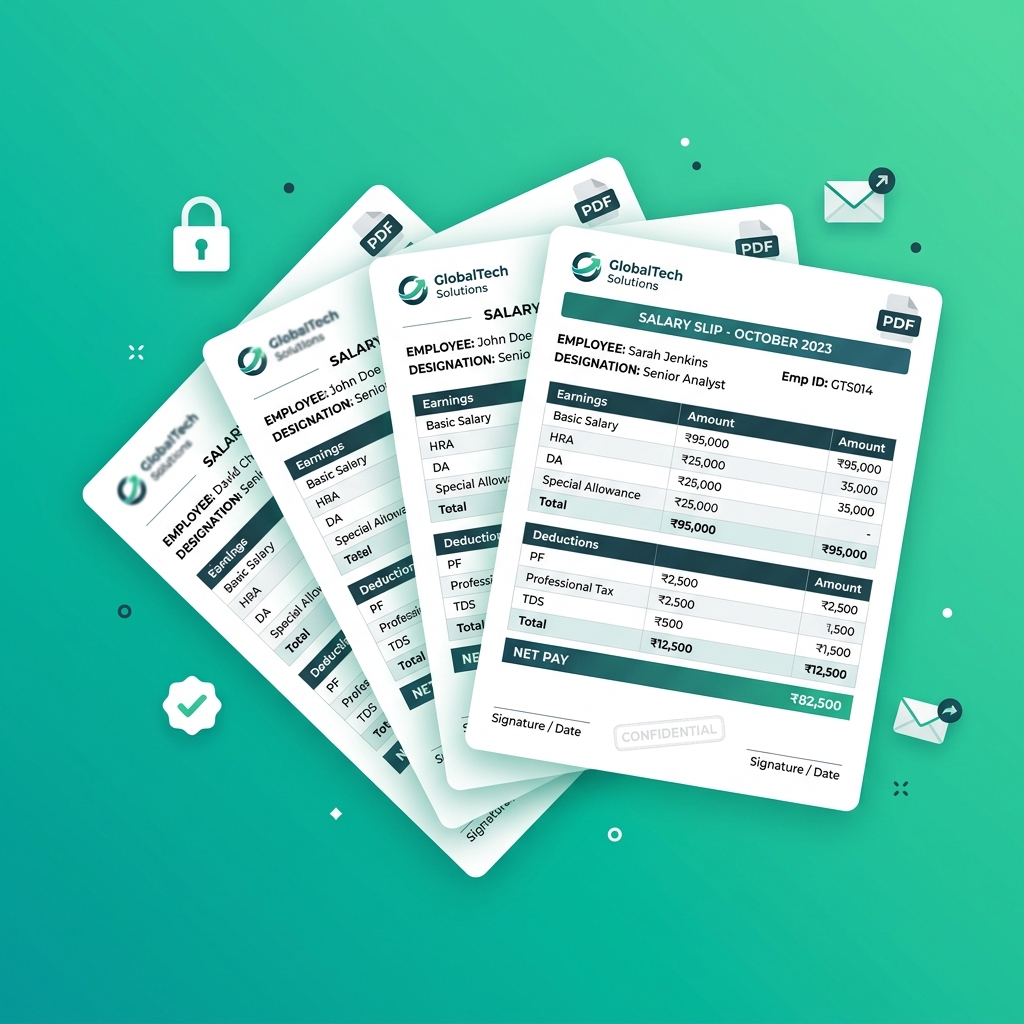
Stylists frequently compare paychecks, creating toxic salon gossip. Protect employee confidentiality by checking "Password Protect PDFs" in PayslipGen. The app can automatically encrypt each individual PDF using the stylist's Date of Birth (YYYYMMDD) or the last four digits of their SSN.
Step 5: Bulk Generate and Dispatch via Private SMTP
Click "Generate All Payslips". Within 3 seconds, PayslipGen renders individualized, branded PDF paystubs complete with your salon's logo and contact info. You can save them directly to a local folder or dispatch them via your salon's existing business email account (Google Workspace, Microsoft 365, or private SMTP) with zero third-party branding.
Frequently Asked Questions (FAQs)
Can a salon owner legally deduct backbar product costs from a W-2 stylist?
Yes, but the deduction must be structured correctly. In most jurisdictions, backbar product fees must be calculated as a pre-commission split(reducing the commissionable gross service base before applying the commission percentage). Deducting 100% of product fees directly from post-tax paychecks violates state wage-deduction statutes (such as California Labor Code § 221 and § 2802). Furthermore, deductions can never reduce a stylist's effective earnings below the applicable statutory minimum wage under FLSA Section 3(m).
Is it legal to deduct credit card processing fees from employee tips?
Under federal law, employers may deduct the actual third-party transaction fee charged by the card processor (typically 2.0% to 2.9%) on the tip amount. However, state laws often override this rule. States like California, Massachusetts, Maine, and New York explicitly prohibit employers from making any deduction from gratuities, requiring the salon owner to absorb all merchant processing fees on tips.
How do we handle rest break pay for commissioned hair stylists?
In jurisdictions following the Vaquerodoctrine (such as California), commission-paid stylists cannot have their mandatory 10-minute rest breaks bundled into their commission earnings. The salon must track hours worked, calculate the stylist's regular rate of pay (total gross earnings divided by total hours worked during the workweek), and pay for rest break time at that regular rate on the paystub.
What happens if a stylist's commission fails to meet the minimum wage?
If a stylist's bi-weekly commission, retail spiffs, and hourly earnings divide out to less than the statutory minimum wage for all hours worked during the pay period, the salon owner is legally required to pay a minimum wage makeup allowance. You cannot carry forward negative balances or withhold makeup pay under federal FLSA rules.
Can I generate paystubs for booth renters using PayslipGen?
Yes. If your salon processes central payments for booth renters and remits net earnings after deducting weekly chair rent, you can create 1099 settlement disbursement statements in Excel and export itemized PDF receipts via PayslipGen without triggering employee tax withholding blocks.
Master Salon Payroll Without Recurring Software Fees
Calculate sliding service commission tiers, chemical backbar deductions, retail product spiffs, and gratuities in Excel. Convert your sheet into bulk password-protected PDF paystubs offline for a one-time payment of $49.
Get PayslipGen for $49 (Lifetime License)Conclusion: Professional Transparency Builds a Loyal Salon Team
Talented hair stylists and barbers are the lifeblood of any successful beauty business. When paystubs are confusing, inconsistent, or missing itemized backbar and retail breakdowns, trust erodes, leading to high chair turnover and recruitment struggles.
By structuring your commission scales, chemical supply offsets, and gratuity pass-throughs cleanly in Excel—and generating elegant, encrypted PDF paystubs using PayslipGen—you provide bank-grade transparency, protect your salon against costly wage claims, and retain complete control over your salon's financial data.
(Looking to streamline other complex commission and bonus workflows? Check out our guides on Dental Hygienist Production Bonus Paystubs, Commission Draw Against Commission Formats, or how to Bulk Password-Protect PDF Payslips with Date of Birth.)