
Excel Payroll Processing Mistakes That Cost Companies Hours Every Month
Key Takeaways
- ✓Nearly 90% of complex corporate spreadsheets contain errors, often caused by silent formula overwrites and broken cell references.
- ✓Emailing localized Excel payroll files triggers version control conflicts and exposes sensitive employee PII on unsecured drives.
- ✓Failing to update hardcoded tax tables in spreadsheets leads to statutory non-compliance, tax audit penalties, and withholding errors.
- ✓Automated payslip generators ingest spreadsheet data directly, eliminating manual data re-entry while applying AES-256 encryption and delivery telemetry.
In the modern business landscape, efficiency is not just a buzzword; it is a fundamental requirement for survival and growth. Yet, astonishingly, a significant number of organizations continue to rely on antiquated, highly manual methods for one of their most critical operational tasks: payroll processing. When utilizing traditional spreadsheet software such as Microsoft Excel or Google Sheets as the primary engine for calculating wages, taxes, and deductions, HR and finance departments inadvertently expose themselves to a labyrinth of hidden dangers, silent errors, and catastrophic time-sinks that quietly drain company resources month after month.
The allure of spreadsheets is entirely understandable. They are ubiquitous, seemingly free, and offer an incredibly flexible canvas for data manipulation. Most professionals have spent years familiarizing themselves with basic formulas, pivot tables, and conditional formatting, leading to a false sense of security when it comes to managing complex financial data. However, as an organization scales from a handful of founders to a robust workforce of dozens or hundreds of employees, the fragile ecosystem of a payroll spreadsheet inevitably begins to crack under the pressure of intricate tax laws, overtime calculations, prorated salaries, and disparate bonus structures.
Try Our Interactive Demo Instantly
Want to see how an offline-capable, client-side payslip generator works in practice? Try our brand-new interactive demo right in your browser. Upload a sample CSV, map your columns, and generate beautifully designed PDF payslips—with zero data ever being transmitted to our servers.
Launch Free Demo NowIt is crucial to recognize that payroll is not merely a mathematical exercise; it is a profound responsibility that directly impacts employee morale, legal compliance, and the overall financial health of the enterprise. A single misplaced decimal point, a broken cell reference, or an outdated tax bracket formula can trigger a devastating chain reaction of consequences, ranging from disgruntled employees and compromised trust to severe financial penalties imposed by regulatory authorities. In this comprehensive analysis, we will delve deep into the most common and damaging Excel payroll processing mistakes that consistently cost companies hundreds of hours in administrative overhead and countless dollars in remediations, while ultimately presenting a transformative strategy to eradicate these inefficiencies forever.
The Fragility of Complex Formulas and Broken Links
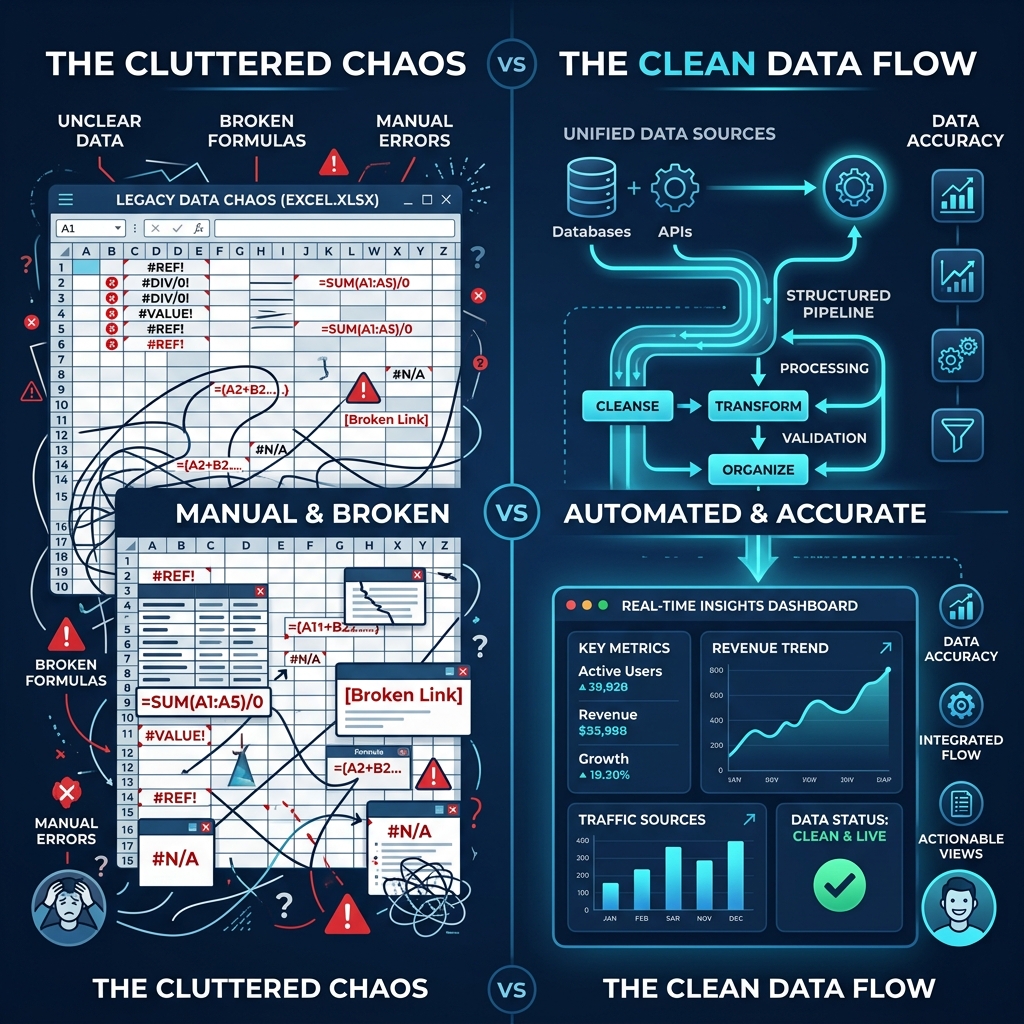
At the heart of every Excel-based payroll system lies a complex, often poorly documented web of formulas, cross-sheet references, and precarious data linkages. As different HR professionals and financial controllers inherit and modify these documents over time, the spreadsheet morphs into an impenetrable black box of proprietary logic that only its original creator might truly understand. This phenomenon, often referred to as "key person dependency," creates a massive operational vulnerability where the entire payroll process grinds to a halt if a specific individual is on vacation, falls ill, or leaves the company entirely.
Moreover, the inherent mechanical fragility of these spreadsheets means that even the most meticulous data entry can lead to disastrous outcomes. A simple, unintentional drag-and-drop action can overwrite a critical formula with a static value, silently breaking the calculation engine for a specific employee without triggering any immediate visual alerts or error messages. Unlike dedicated software systems that enforce strict data validation and structural integrity, spreadsheets are wildly permissive, allowing users to make fundamental structural alterations with a single keystroke.
When these errors eventually surface—usually after the payroll has already been disbursed and an employee notices a discrepancy—the investigation process is nothing short of an archaeological expedition. Administrators must painstakingly trace precedent and dependent cells, comparing historical versions of the document, and manually recalculating values to pinpoint the exact moment the logic failed. This forensic accounting exercise routinely consumes dozens of hours every month, severely detracting from more strategic, high-impact HR initiatives.
The Silent Danger of Static Overwrites
Studies indicate that nearly 90% of complex corporate spreadsheets contain significant errors. In payroll processing, a common mistake involves manually typing over a formula to apply a one-time adjustment, only to forget to restore the formula for the subsequent pay period, resulting in perpetual miscalculations.
Version Control Nightmares and Data Silos
Another prevalent and incredibly costly mistake in spreadsheet-driven payroll is the catastrophic breakdown of version control. In environments where multiple stakeholders—such as department managers, HR generalists, and external accountants—must collaborate on the payroll data, the traditional method involves emailing files back and forth with increasingly convoluted naming conventions (e.g., Payroll_Master_Final_V4_Reviewed_John.xlsx). This chaotic workflow virtually guarantees that, at some point, crucial data will be overwritten, ignored, or entered into an outdated version of the document.
Imagine a scenario where the HR department updates an employee's base salary in their localized version of the spreadsheet, while simultaneously, the finance team processes a departmental bonus structure in a parallel copy. Merging these conflicting datasets manually is an error-prone, anxiety-inducing task that requires meticulous line-by-line comparison. If a discrepancy slips through the cracks, the resulting payroll run will inevitably be flawed, necessitating immediate manual intervention, expedited supplementary bank transfers, and awkward conversations with the affected personnel.
Furthermore, relying on localized spreadsheet files creates dangerous data silos that inherently lack robust security and access controls. Sensitive personally identifiable information (PII), such as social security numbers, home addresses, and bank account details, is routinely stored in poorly encrypted files residing on vulnerable local hard drives. This not only violates basic data hygiene principles but also exposes the organization to severe regulatory compliance risks, particularly in regions governed by strict data protection frameworks like the GDPR or CCPA.
The Hidden Cost of Manual Data Re-entry
One of the most insidious ways Excel payroll processing steals time from HR departments is through the continuous, mind-numbing necessity of manual data re-entry. Because spreadsheets are inherently disconnected from other vital corporate systems—such as time and attendance trackers, performance management platforms, and employee self-service portals—administrators are forced to act as human middleware, painstakingly copying and pasting data from one system into another.
This repetitive manual labor is not just intensely demoralizing for highly skilled HR professionals; it is a primary vector for human error. Transposing digits while migrating overtime hours, incorrectly copying a newly updated bank routing number, or forgetting to manually apply a recently approved tax deduction are all routine occurrences when humans are tasked with large-scale manual data migration. The time spent executing these data transfers is staggering, but it pales in comparison to the time required to rectify the inevitable mistakes that follow.
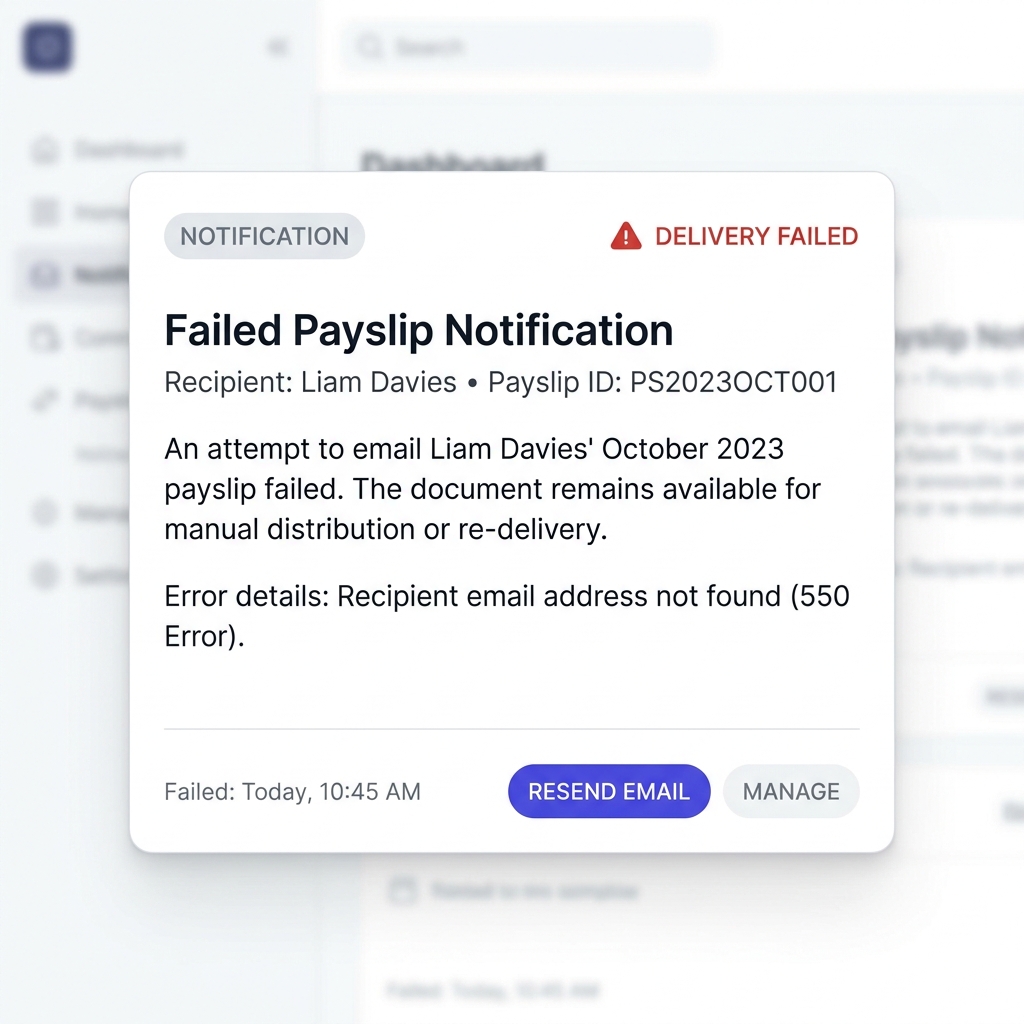
Moreover, the manual creation and distribution of payslips themselves represents a colossal administrative burden. After the final calculations are complete, many organizations manually generate individual PDF documents using convoluted mail-merge processes, secure them with generic passwords, and dispatch them via standard email clients. This fractured, highly manual distribution pipeline is agonizingly slow, completely lacks delivery telemetry, and provides no streamlined mechanism for handling bounces or delivery failures, forcing administrators into a purely reactive, incredibly inefficient support posture.
Regulatory Compliance and the Tax Table Trap
Payroll is governed by a dynamic, endlessly complex web of federal, state, and local tax regulations that are subject to frequent and often unannounced changes. When utilizing a spreadsheet-based payroll system, the burden of monitoring these legislative shifts and manually updating the underlying calculation logic falls squarely on the shoulders of the internal HR and finance teams. This is a monumentally risky proposition, as a failure to correctly implement a revised tax bracket or an updated statutory deduction can immediately push the organization out of compliance.
The "Tax Table Trap" occurs when a company unwittingly processes multiple pay cycles using obsolete tax formulas embedded deep within their spreadsheet logic. The resulting underpayment or overpayment of corporate taxes and employee withholdings can trigger aggressive audits, compounding financial penalties, and significant reputational damage. Unlike modern, automated payroll systems that seamlessly update their tax logic in the cloud, an Excel spreadsheet provides no inherent safety net, leaving the organization entirely exposed to the devastating consequences of human oversight and legislative ignorance.
Embracing Automation to Reclaim Lost Hours
The overwhelming administrative burden, the constant threat of formulaic errors, the vulnerability of data silos, and the severe compliance risks collectively render manual Excel payroll processing an unsustainable business practice for any organization aiming to scale efficiently. To permanently eradicate these costly inefficiencies, companies must fundamentally shift their approach and embrace the transformative power of targeted automation.
By implementing an automated generation system, organizations can gracefully transition away from the chaos of manual spreadsheets without completely abandoning their familiar data structures. Modern solutions allow HR administrators to securely ingest clean, validated data directly from their existing spreadsheets and instantly transform that raw information into pristine, mathematically flawless, and securely encrypted payslip documents. This paradigm shift entirely removes the human element from the actual document generation and distribution process, guaranteeing absolute consistency and accuracy across every single pay period.
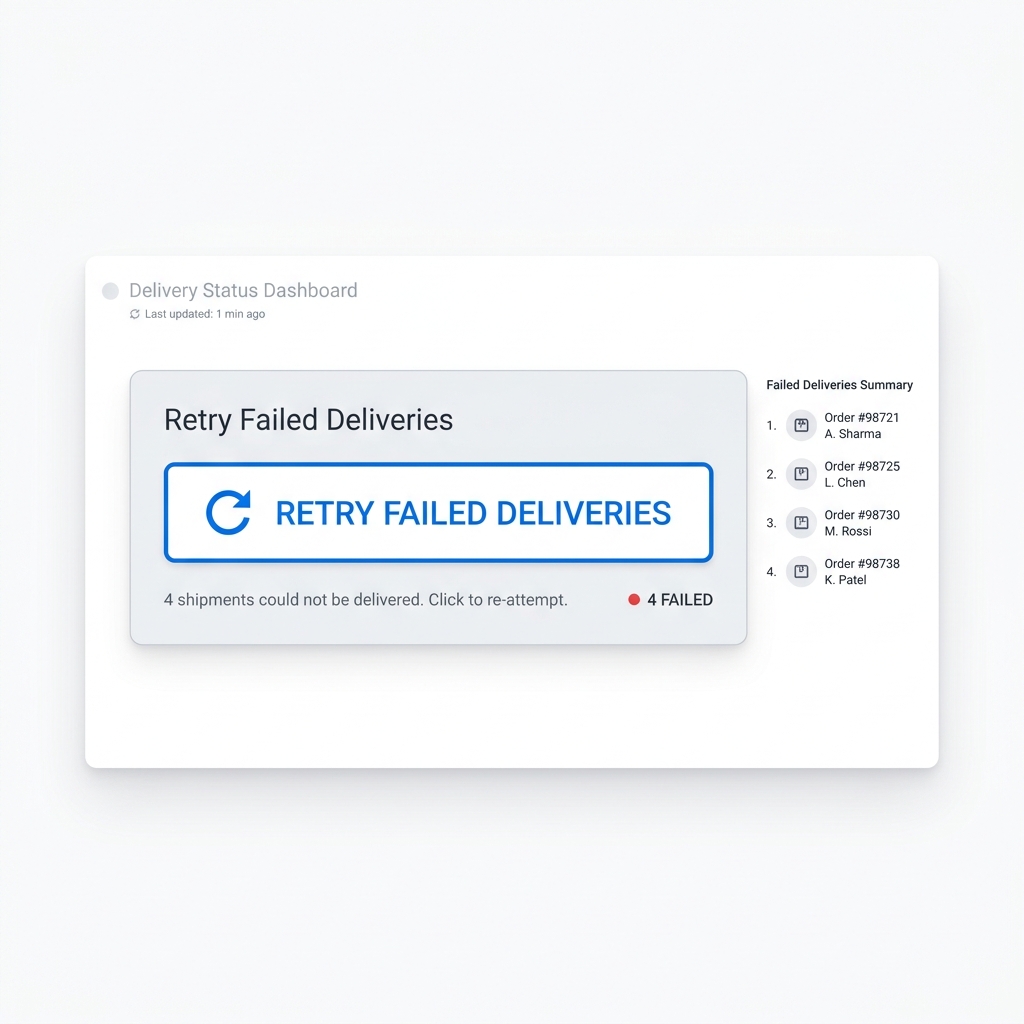
Furthermore, automated systems inherently resolve the distribution nightmares associated with manual workflows. By leveraging advanced SMTP integrations and real-time delivery telemetry, these platforms can dispatch hundreds of personalized, password-protected documents in seconds, providing administrators with a transparent, highly actionable dashboard that instantly flags delivery failures and enables seamless one-click retries. The result is a hyper-efficient, incredibly resilient payroll pipeline that saves HR teams hundreds of hours every month, empowering them to redirect their focus toward strategic initiatives that drive true organizational value rather than constantly fighting the fires of manual spreadsheet management.
Automate payroll generation from existing spreadsheets.
Upgrade your workflow today. Eliminate manual data entry, prevent costly formula errors, and generate thousands of secure, encrypted payslips with a single click while seamlessly tracking delivery status.
Start Automating Now