
Equine Trainer & Stable Groom Paystub Generator: How to Manage FLSA Agricultural Housing, Mount Fees & Stakes Shares in Excel
Key Takeaways
- ✓The Agricultural Overtime Myth: While thoroughbred breeding and broodmare foaling farms generally qualify for the federal FLSA Section 13(a)(6) agricultural overtime exemption, racetrack training barns frequently lose this exemption once horses enter active competition. Furthermore, state laws (e.g., California IWC Wage Order 14, New York FLFLPA) strictly enforce agricultural overtime after 40 or 48 hours.
- ✓Lodging Credits under 29 U.S.C. § 203(m): Providing tack-room housing, trailers, or backstretch dormitories allows trainers to take wage credits only if the credit represents the actual operational cost without employer profit, is authorized in writing, and does not violate state minimum wage floors.
- ✓Exercise Rider Piece-Rate Mount Fees: Gallop riders working morning workouts per mount ($18 to $25 per horse) are legally classified as piece-rate workers under 29 CFR § 778.111, requiring careful regular rate blending to ensure total earnings satisfy statutory minimum wage and overtime rules.
- ✓Zero-Internet Tack-Room Payroll: Barn aisles, training tracks, and rural equestrian facilities suffer from dead cellular zones and lack high-speed Wi-Fi. With PayslipGen, horse trainers and barn managers calculate wages in Excel and generate audit-proof, password-protected PDF paystubs completely offline on a barn laptop for a one-time $49 fee with zero monthly subscription drains.
At 4:45 AM along the backstretch of Churchill Downs, Belmont Park, or Santa Anita, the barn is already wide awake. Steam rises from equine breath in the chill morning air. Grooms pick hooves, bandage legs, and muck stalls, while exercise riders adjust their stirrup leathers preparing to gallop Grade 1 stakes prospects over the training track.
In the racing, breeding, and sport horse industry, horsemanship is an art, but barn payroll is a legal minefield. In recent years, the U.S. Department of Labor Wage and Hour Division (WHD), alongside state labor commissioners in California, New York, Florida, and Kentucky, has conducted aggressive multi-million-dollar wage-and-hour compliance audits across thoroughbred training barns.
Trainers and barn managers face severe penalties when navigating equine compensation variables:
- The Agricultural Exemption Gray Zone: Assuming stable staff are exempt from overtime under federal farm rules, only to discover that racing stables operating away from breeding farms are subject to strict 40-hour overtime rules.
- Section 3(m) Housing Credit Violations: Deducting dorm room, tack room, or trailer rent from groom paychecks without itemized utility accounting or signed employee consent.
- Exercise Rider Mount Fees: Paying morning gallop riders $20 per horse without tracking total barn hours, creating exposure to piece-rate minimum wage violations.
- Stakes Race Purse Distribution: Distributing 1% to 2% groom stakes bonuses from winning purses without proper tax withholding or payroll documentation.
- Hostile Tech Environments: Attempting to manage payroll in rural barn offices, metal barns, or mobile tack rooms where cellular data is dead and internet drops out continuously.
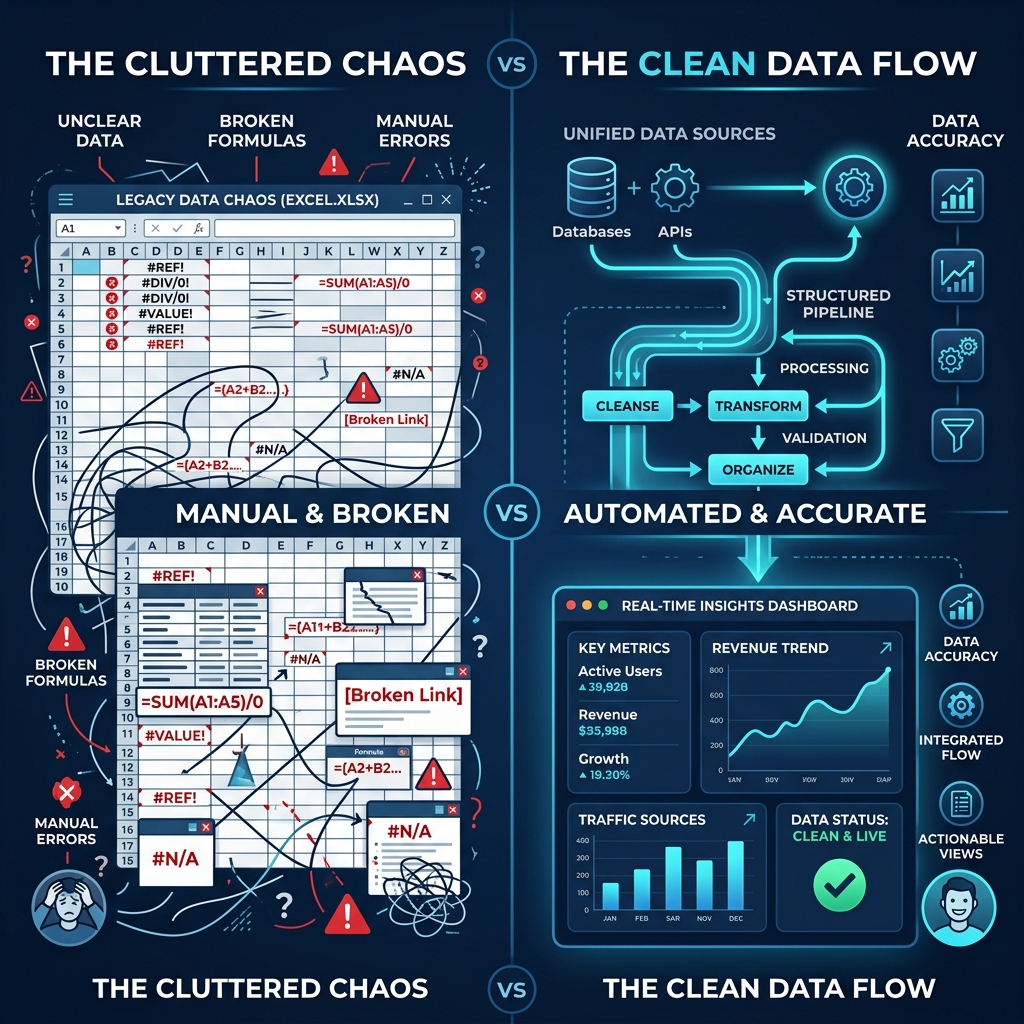
Mainstream cloud payroll applications like Gusto, Rippling, or QuickBooks Online fail miserably in barn environments. They demand persistent internet connections, charge recurring monthly per-worker fees during seasonal lay-offs, and lack native support for equine housing credits and piece-rate mount fees.
In this comprehensive engineering guide, we dissect the federal and state labor laws governing equine stables, model the mathematics of mount fees and Section 3(m) lodging credits in Excel, and demonstrate how horse trainers use PayslipGen to generate legally compliant, encrypted PDF paystubs 100% offline.
Try Our Interactive Demo Instantly
Want to see how an offline-capable, client-side payslip generator works in practice? Try our brand-new interactive demo right in your browser. Upload a sample CSV, map your columns, and generate beautifully designed PDF payslips—with zero data ever being transmitted to our servers.
Launch Free Demo NowChapter 1: The Equine Labor Landscape: Agricultural Exemptions vs. Racetrack Reality
The most catastrophic financial mistake an equine trainer can make is assuming all horse-related labor is automatically exempt from federal overtime under the Fair Labor Standards Act (FLSA), 29 U.S.C. § 213(a)(6).
1. The Breeding Farm vs. Racing Barn Legal Distinction
Under federal regulations (29 CFR § 780.122), the FLSA defines "agriculture" to include the raising, breeding, and care of livestock.
- Broodmare & Breeding Farms: Farm hands, foaling attendants, and breeding barn workers employed directly on a rural horse farm where horses are bred and raised are generally exempt from federal FLSA overtime requirements under Section 13(a)(6).
- Racetrack Training Barns: The Department of Labor and federal courts have repeatedly ruled (see Marshall v. Woods and WHD Opinion Letter FLSA2004-18) that once racehorses leave the farm and are stabled at a commercial racetrack or public training center for competitive racing, the activity transitions from "agriculture" to "commercial sports entertainment." As a result, grooms, hot walkers, and barn foremen at racetrack stables are fully subject to federal 40-hour overtime rules!
2. State Agricultural Wage Orders Override Federal Rules
Even for true agricultural breeding operations, state labor codes severely limit or eliminate overtime exemptions:
| State Jurisdiction | Statutory Governing Body | Overtime Threshold for Barn Staff | Special Equine Mandates |
|---|---|---|---|
| California | IWC Wage Order 14 (Ag) / Wage Order 10 (Stable) | Overtime after 8 hrs/day or 40 hrs/week; 2x after 12 hrs | Mandatory 7th-day overtime premium; strict split-shift premiums. |
| New York | Farm Labor Fair Labor Practices Act (FLFLPA) | Overtime mandatory after 40 hours per calendar week | Mandatory 24 consecutive hours of rest per calendar week. |
| Kentucky | KRS Chapter 337 | Federal rules apply; 40 hrs/week for non-farm racetrack barns | Strict itemized written wage statement requirements under KRS 337.070. |
| Florida | Article X, Section 24, Fla. Const. | FLSA 40 hrs/week at racetracks; farm exemption on Ocala farms | Annual minimum wage indexed above federal floor. |
Chapter 2: Groom Lodging Credits under FLSA Section 3(m) (29 U.S.C. § 203(m))
In the thoroughbred and show horse world, grooms and barn foremen often live on-site in backstretch dormitories, barn tack rooms, or mobile trailers to be near the horses in case of nocturnal colic or fire emergencies.
Under Section 3(m) of the Fair Labor Standards Act (29 U.S.C. § 203(m)), an employer may count the "reasonable cost" of furnishing lodging toward an employee's statutory minimum wage, provided four strict legal conditions are met:
- Customary Practice: The lodging must be of the kind customarily furnished by horse trainers in the industry.
- Voluntary Acceptance: The employee must voluntarily agree to live in the provided quarters; lodging cannot be forced upon the groom as an arbitrary wage reduction.
- No Employer Profit: The credit must reflect the actual operating cost to the trainer (e.g., pro-rated trailer depreciation, electricity, propane, septic maintenance). The trainer cannot charge market rent that yields an investment profit.
- Written Deduction Agreement: The exact dollar credit must be agreed to in writing and clearly itemized on every paystub delivered to the worker.
Audit Alert: Substandard Housing Forfeits All Wage Credits
Under 29 CFR § 531.31, if groom housing violates local municipal building codes, lacks proper heating, has unapproved electrical hookups, or suffers from severe pest infestations, the Department of Labor disallows the entire Section 3(m) credit retroactively! The trainer will be ordered to pay back-wages in cash for every dollar deducted over the preceding 3-year statute of limitations.
Chapter 3: Exercise Riders, Mount Fees & Stakes Race Purse Distributions
Exercise riders and jockeys operate under distinct compensation formulas that merge piece-rate production with high-stakes performance incentives.
1. Morning Gallop Mount Fees
Freelance and contract exercise riders are compensated on a per-mount fee basis—typically $18 to $25 per horse galloped or worked on the turf or dirt course.
If an exercise rider works 6 horses in a morning shift, they earn:
However, if the exercise rider is classified as a non-exempt employee (which is standard when the trainer sets the morning set schedule and provides the tack and helmets), the trainer must ensure the total mount fees divided by total hours on the backstretch (e.g., 4.5 hours) satisfy the statutory minimum wage:
2. Stakes Shares & Stable Staff Purse Percentages
When a stable horse wins or places in a maiden special weight, allowance, or graded stakes race, the racetrack pays out prize money to the owner. Under long-standing turf custom:
- The Trainer's Cut: The owner pays 10% of the purse to the trainer.
- The Jockey's Cut: The winning jockey receives 10% of the first-place purse (5% for second or third).
- The Stable Staff Pool: Successful trainers customary distribute 1% to 2% of the net purse as a performance bonus to the individual groom who feeds, brushes, and hot-walks that specific horse.
For example, if a filly wins a $100,000 stakes race, a 1.5% groom bonus equals $1,500.00. This bonus represents taxable compensationsubject to FICA, Medicare, and federal income tax withholding, and must be itemized on the groom's weekly paystub.
Chapter 4: Master Excel Equine Payroll Blueprint (With Real Formulas)
To eliminate backstretch disputes and withstand Department of Labor audits, stable managers should maintain a structured weekly master payroll spreadsheet.
Below is the exact production architecture for a 25-horse racing stable operating with grooms, hot walkers, and exercise riders:
| Line # | Column Header | Sample Value | Classification | Excel Formula Specification |
|---|---|---|---|---|
| 01 | Staff_Name | Mateo Ramirez | Stable Roster | Text string |
| 02 | Billet_Role | Head Groom (4 Horses) | Job Title | Classification |
| 03 | Actual_Hours_Worked | 46.00 hrs | Weekly Barn Punch | Decimal hours |
| 04 | Base_Hourly_Wage | $17.50 / hr | Base Agreement | Fixed rate |
| 05 | Regular_Straight_Pay | $700.00 | First 40 Hours | =MIN(40, B3)*B4 |
| 06 | Overtime_Pay_1.5x | $157.50 | 6.0 Overtime Hours | =MAX(0, B3-40)*(B4*1.5) |
| 07 | Purse_Stake_Bonus | $350.00 | 1% Allowance Win Share | Purse allocation |
| 08 | Mount_Gallop_Earnings | $0.00 | Groom (Zero mounts) | =Mount_Qty*Mount_Rate |
| 09 | TOTAL_GROSS_EARNINGS | $1,207.50 | Gross Taxable Compensation | =B5+B6+B7+B8 |
| 10 | Section_3m_Housing_Credit | -$125.00 | Authorized Tack Room Credit | =Fixed_Weekly_Housing |
| 11 | Mandatory_Taxes_FICA_FITW | -$198.40 | Standard Statutory Withholding | =Calculated_Taxes |
| 12 | NET_PAYSTUB_DISBURSEMENT | $884.10 | Net Cash Paid to Worker | =B9+B10+B11 |
Racetrack Barn Roster Summary Table
Here is how the master spreadsheet handles different staff positions across a thoroughbred racing stable:
| Worker Name | Barn Role | Hours / Mounts | Gross Earnings | Purse Bonus | Housing Credit | Net Pay |
|---|---|---|---|---|---|---|
| Mateo Ramirez | Head Groom | 46.0 hrs | $1,207.50 | $350.00 | -$125.00 | $884.10 |
| Alejandro Cruz | Stable Groom | 42.0 hrs | $752.50 | $0.00 | -$125.00 | $518.20 |
| Devon MacIntyre | Exercise Rider | 28 mounts | $616.00 | $150.00 | $0.00 (Lives off-track) | $645.10 |
| Sofia Vasquez | Hot Walker | 35.0 hrs | $560.00 | $0.00 | -$100.00 | $390.80 |
| STABLE TOTALS | 123 hrs / 28 mounts | $3,136.00 | $500.00 | -$350.00 | $2,438.20 | |
Chapter 5: Why Rural Stables & Racetrack Barns Need Offline Desktop Software
Operating horse racing stables, breeding farms, and show barns involves harsh physical environments that render cloud software impractical:
1. The Racetrack Backstretch Faraday Cage
Racetrack barns, indoor arenas, and tack rooms are built from heavy corrugated steel, concrete cinderblocks, and cinderblock partitions. Cellular reception inside a barn aisle is notoriously unreliable, and Wi-Fi networks rarely reach the back row of barns. Cloud payroll services that require continuous browser connectivity, WebSockets, or mobile authenticator apps freeze during payroll processing, leaving trainers unable to deliver checks before morning post times.
2. High Seasonal Relocations & Layoff Periods
Equine operations follow the racing circuit:
- Saratoga runs for 8 weeks in July and August before horses ship to Belmont or Aqueduct.
- Kentucky circuits shift between Keeneland and Churchill Downs.
- Florida winter circuits operate out of Gulfstream Park or Palm Meadows before shipping north in April.
During seasonal turnouts or winter lulls, staff counts drop dramatically. Cloud payroll platforms continue charging base subscription fees and employee retention fees during down months just to keep past pay records accessible.
3. Sensitive Owner Billing & Purse Confidentiality
A trainer's roster, individual horse daily board rates, groom assignments, and owner purse shares are highly confidential business assets. Storing these proprietary horse records on public multi-tenant cloud platforms creates unnecessary data exposure risks.
Chapter 6: 5-Year Financial Analysis: $49 Lifetime License vs. Cloud SaaS Subscriptions
Let's analyze the total cost of ownership for an independent thoroughbred trainer employing an average of 10 barn workers over a 5-year operating cycle:
| Cost Component | Gusto Core / Plus | QuickBooks Online Payroll | PayslipGen (One-Time Desktop License) |
|---|---|---|---|
| Monthly Base Platform Toll | $45.00 / mo ($540/yr) | $75.00 / mo ($900/yr) | $0.00 (Zero subscriptions) |
| Per-Groom Monthly Seat Fee (10 Staff) | $6.00 / worker / mo ($720/yr) | $6.00 / worker / mo ($720/yr) | $0.00 (Unlimited staff) |
| Off-Circuit Dormant Billing | Required to preserve records | Required to preserve records | $0.00 (Local files stay on laptop) |
| Internet Connection Required? | 100% Mandatory (Cloud only) | 100% Mandatory (Cloud only) | 100% Offline Barn Operation |
| Year 1 Net Cost | $1,260.00 | $1,620.00 | $49.00 total |
| Year 3 Cumulative Cost | $3,780.00 | $4,860.00 | $49.00 total |
| Year 5 Cumulative Cost | $6,300.00 | $8,100.00 | $49.00 (Lifetime) |
Over 5 years, paying monthly SaaS software fees bleeds $6,300 to $8,100out of a trainer's racing stable. That capital covers several sets of racing plates, tons of prime alfalfa hay, or veterinary ultrasound fees.
Chapter 7: Step-by-Step Workflow: Generating Stable Paystubs from Excel
Here is how horse trainers and barn bookkeepers use PayslipGen to produce audit-proof stable paystubs in under 60 seconds:
Step 1: Record Stable Hours & Mounts in Excel
Enter your grooms' weekly clocked hours, exercise riders' mount counts, stakes bonuses, and agreed Section 3(m) lodging credits into your barn spreadsheet.
Step 2: Launch PayslipGen on Your Tack-Room Laptop
Open PayslipGen on your Windows PC or Mac. Enter your stable legal entity, racing license registration number, barn logo, and racetrack stable address.
Step 3: Drag & Drop Your Barn Workbook
Drag your .xlsx or .csv file into PayslipGen. The desktop software parses all entries instantly without transmitting data over the internet.
Step 4: Map Equine Payroll Columns
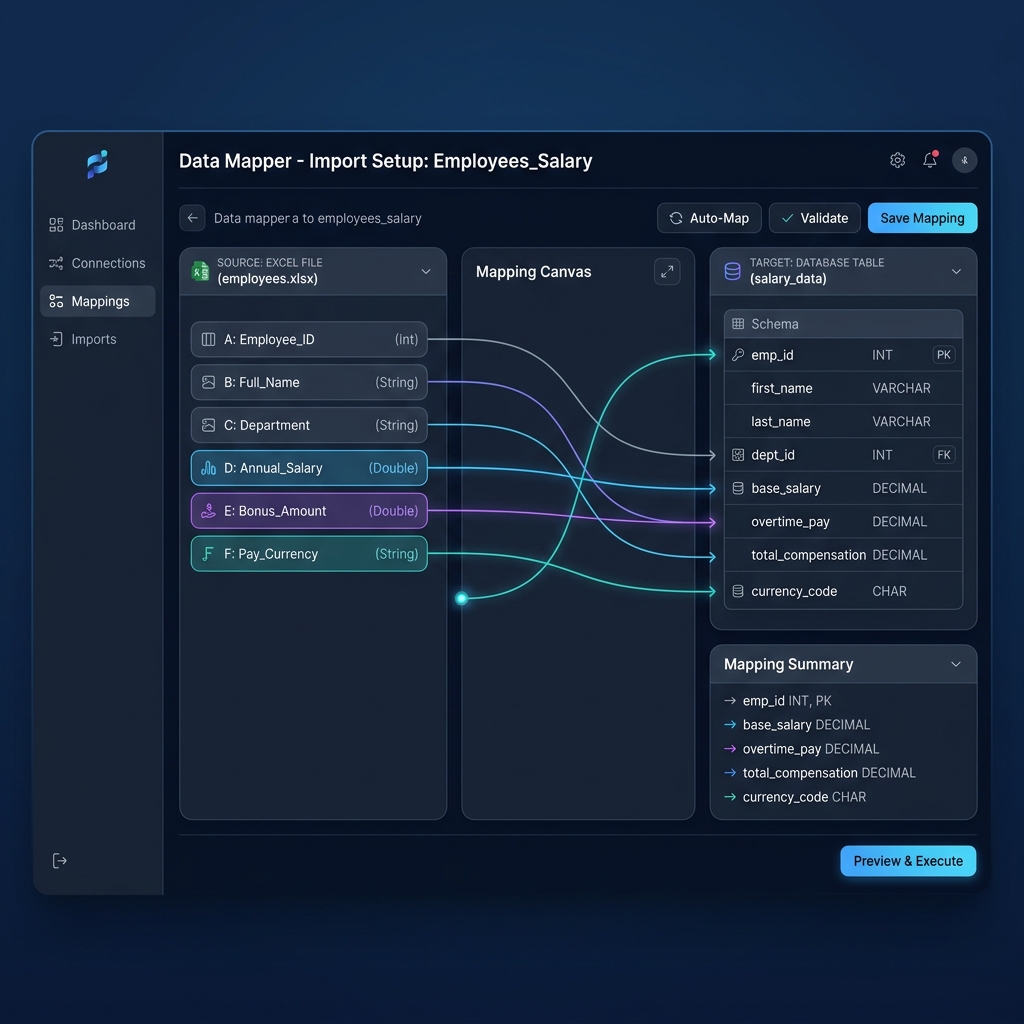
Link your spreadsheet headers to PayslipGen's itemized payroll fields:
Actual_Hours_Worked→ Regular HoursOvertime_Pay_1.5x→ Overtime EarningsPurse_Stake_Bonus→ Performance BonusMount_Gallop_Earnings→ Piece-Rate EarningsSection_3m_Housing_Credit→ Pre-Tax Lodging Deduction
Step 5: Apply AES-256 PDF Password Protection & Print
Encrypt each PDF paystub using the worker's Date of Birth (YYYYMMDD) or last 4 digits of their SSN/ITIN. Click Generate Paystubs. Within 2 seconds, PayslipGen generates print-ready vector PDF paystubs ready to hand out on Friday morning or email via local SMTP.
Frequently Asked Questions (FAQs)
Are thoroughbred racehorse grooms exempt from overtime under the federal agricultural exemption?
Generally, NO. While breeding, foaling, and raising horses on a rural farm qualifies for the FLSA Section 13(a)(6) agricultural overtime exemption, caring for racehorses stabled at a commercial racetrack or public training center is classified as commercial sports entertainment. At the racetrack, grooms and hot walkers are non-exempt employees entitled to 1.5x overtime for hours worked over 40 in a workweek.
How much can a trainer legally deduct for groom on-site housing under FLSA Section 3(m)?
Under 29 U.S.C. § 203(m) and 29 CFR Part 531, the trainer can only deduct the actual, reasonable cost of furnishing the lodging, excluding any landlord profit. The housing must meet local sanitation and building codes, the employee must accept the lodging voluntarily, and the agreement must be in writing. The net cash wage paid must still satisfy statutory cash minimum wage requirements unless strict Section 3(m) accounting records are documented.
How do we report purse earnings bonuses on a groom's paystub?
Purse bonuses distributed from stakes or allowance wins are non-discretionary performance bonuses. They must be included in the groom's taxable gross earnings for the workweek in which the race occurred, subjected to standard statutory tax withholding (FICA, Medicare, income tax), and factored into the regular rate of pay if overtime was worked during that pay cycle.
Can freelance exercise riders be paid on Form 1099-NEC instead of Form W-2?
Under both IRS common-law tests and state ABC employment tests (such as California AB 5), exercise riders who use the trainer's saddles/helmets, follow the trainer's set schedules, and work under direct supervision are almost universally classified as statutory W-2 employees. Classifying exercise riders as 1099 independent contractors is a primary target of racetrack Department of Labor audits and can result in severe misclassification penalties and back workers' compensation assessments.
Can PayslipGen generate paystubs without an internet connection in the barn?
Yes, 100%. PayslipGen is a native desktop application for Windows, Mac, and Linux. It requires zero internet access, zero cloud logins, and zero external server calls. You can calculate stable payroll and generate vector PDF paystubs directly in your barn tack room or trailer office on a laptop running on battery power.
Run Your Stable Payroll Without Recurring Software Fees
Generate compliant, itemized equine stable and groom paystubs directly from your Excel spreadsheet. 100% offline tack-room privacy, zero monthly SaaS tolls, one-time payment of $49 for lifetime access.
Get PayslipGen for $49 (Lifetime Access)Conclusion: Protect Your Stable with Legally Bulletproof Paystubs
Training thoroughbred racehorses and managing competitive show stables requires relentless dedication, early mornings, and extraordinary horsemanship. The grooms, hot walkers, and exercise riders who care for your equine athletes deserve transparent, compliant, and dignified accounting for their physical labor.
By formalizing your Section 3(m) lodging credits, accurately itemizing mount fees and purse bonuses, and generating encrypted PDF paystubs with PayslipGen, you protect your stable from devastating Department of Labor backstretch audits while keeping your hard-earned racing profits where they belong—in your stable.
(Interested in streamlining payroll across other agricultural or specialized industries? Read our guides on H-2A Agricultural Farm Worker Paystubs, Commercial Fishing Lay Shares, and How to Create Password-Protected Payslips Automatically.)