
Craft Brewery & Distillery Cellar Worker Paystub Generator: How to Manage Shift Differentials, Canning Line Rates & IRC § 132 Beer Stipends in Excel
Key Takeaways
- ✓Cellar Operations & Chemical Hazard Differentials: Cellar workers and distillers operate in hazardous environments governed by OSHA confined space regulations (29 C.F.R. § 1910.146) and chemical exposure protocols. Executing Clean-In-Place (CIP) caustic sanitizations and working inside high-CO2 fermentation vessels commands specialized hazard pay premiums ($2.00 to $4.00/hr).
- ✓24-Hour Fermentation Shifts & Canning Bonuses: Yeast metabolism and spirit distillation do not observe 9-to-5 schedules. Cellar operators working graveyard fermentation monitoring shifts earn 10% to 15% shift differentials, while packaging operators receive non-discretionary case output bonuses that must be factored into FLSA regular overtime rates.
- ✓The IRC § 132 Taxable Beer Allowance Trap: While an occasional post-shift pint on premises qualifies as a non-taxable de minimis fringe benefit under IRC § 132(a)(4), recurring take-home monthly beer case stipends exceed employee discount limitations. Providing free case allowances without reporting their fair market value as taxable non-cash compensation on paystubs triggers IRS and TTB audit liabilities.
- ✓Offline Taproom & Brewhouse Paystub Generation: Wet, humid brewery production floors and remote farm distilleries need dependable, private payroll tools. Using PayslipGen, brewery owners convert complex production spreadsheets into encrypted PDF paystubs completely offline for a single one-time payment of $49, bypassing predatory cloud SaaS subscription fees.
Behind the gleaming copper tap handles, rustic timber bars, and lively taproom crowds of an independent craft brewery or artisanal spirits distillery lies a grueling, continuous manufacturing environment. In the brewhouse cellar, concrete floors are perpetually soaked with rinse water, glycol chiller lines hum at 28°F, and massive 60-barrel stainless steel conical fermenters generate thousands of cubic feet of lethal carbon dioxide (CO2).
Cellar staff, assistant brewers, packaging technicians, and distillation operators are the true engine of the craft beverage revolution. They pitch active yeast strains, monitor specific gravity readings, execute dry-hop additions, scrub mash tuns, handle boiling wort, and operate high-speed rotary canning lines packing 50 cases per hour.
Yet for brewery founders, head brewers, and operations directors, managing payroll in a packaging brewery or micro-distillery is notoriously complex:
- 24/7 Fermentation Shifts: Active primary fermentation and continuous pot-still stripping runs require late-night and graveyard shifts that command shift differential premiums.
- Severe OSHA Hazards: Entering bright tanks for dry-hop cleanout involves OSHA confined-space protocols, while recirculating 180°F sodium hydroxide (caustic soda) and peracetic acid (PAA) requires specialized chemical hazard differentials.
- Packaging Case Incentives: High-speed canning line days involve non-discretionary production throughput bonuses that legally alter the Fair Labor Standards Act (FLSA) regular rate of pay for overtime calculations.
- The Employee Beverage Allowance (IRC § 132): The beloved industry tradition of free "shift beers" and monthly take-home case allotments intersects with strict IRS fringe benefit rules and Alcohol and Tobacco Tax and Trade Bureau (TTB) excise tax reporting.
Mainstream cloud payroll platforms—such as Gusto, Toast Payroll, or ADP—are poorly equipped for independent craft beverage producers. They force breweries into rigid bi-weekly salary boxes, fail to calculate blended overtime with production bonuses, leak confidential brewer salaries across cloud databases, and drain taproom profit margins with continuous monthly subscription fees.
In this engineering guide, we dissect the labor laws and tax rules governing brewery cellar compensation, build a production-grade Excel payroll model, and demonstrate how independent craft producers use PayslipGen to generate encrypted, audit-proof PDF paystubs offline.
Try Our Interactive Demo Instantly
Want to see how an offline-capable, client-side payslip generator works in practice? Try our brand-new interactive demo right in your browser. Upload a sample CSV, map your columns, and generate beautifully designed PDF payslips—with zero data ever being transmitted to our servers.
Launch Free Demo NowChapter 1: Brewery Cellar Operations, Chemical Hazards & OSHA 1910.146
Craft brewing is not a glamorous culinary hobby; it is heavy industrial chemical manufacturing. A cellar worker spends their day surrounded by boiling liquids, pressurized vessels, cryogenic gases, and powerful industrial oxidizers.
1. The Confined Space and Carbon Dioxide Hazard
During primary fermentation, yeast converts malt sugars into ethanol and carbon dioxide gas (C6H12O6 → 2C2H5OH + 2CO2). A single 30-barrel fermenter produces enough CO2 to asphyxiate an entire cellar crew if ventilation fails. Entering a fermentation vessel (FV) or bright beer tank (BBT) to scrub hop trub falls under OSHA 29 C.F.R. § 1910.146 (Permit-Required Confined Spaces).
Tanks must be thoroughly purged with air, locked out/tagged out (LOTO), and tested with calibrated four-gas monitors to verify oxygen concentrations (≥ 19.5%) and CO2 levels (≤ 5,000 ppm TWA).
2. Chemical Clean-In-Place (CIP) Hazard Differentials
Brewery sanitation relies on aggressive two-stage Clean-In-Place (CIP) cycles:
- Hot Caustic Wash: Recirculating a 2% to 4% solution of sodium hydroxide at 160°F–180°F to dissolve organic proteins and beer stone. Caustic splashes cause instantaneous, irreversible chemical burns and permanent blindness.
- Sanitizer Cycle: Recirculating peracetic acid (PAA), a pungent, volatile equilibrium mixture of acetic acid and hydrogen peroxide that irritates the respiratory tract.
To compensate cellar personnel for executing these dangerous procedures, progressive craft breweries pay a Chemical CIP Hazard Differential—typically an extra $2.00 to $4.00 per hour for hours spent mixing chemicals and conducting closed-loop hot washes.
Chapter 2: Shift Differentials & Mobile Canning Line Production Bonuses
Brewery fermentation runs 24 hours a day, 7 days a week. Lagers undergo extended cold fermentation, while ales experience violent krausen rises that require pressure blow-offs at 3:00 AM.
1. Cellar Night Shift Differentials
To maintain round-the-clock monitoring of tank temperatures, dissolved oxygen (DO) levels, and fermentation kinetics, breweries schedule rotating shifts:
- Day Shift (Brewing & Transfers): 6:00 AM – 2:30 PM (Standard Base Rate)
- Swing Shift (Cellar Filtration & CIP): 2:00 PM – 10:30 PM (+10% Shift Differential)
- Graveyard Shift (Overnight Fermentation & Still Watch): 10:00 PM – 6:30 AM (+15% Shift Differential, or +$3.00/hr)
2. Canning Line Production Bonuses & The FLSA Overtime Trap
Packaging is the most labor-intensive phase of craft beverage production. Whether operating an in-house Wild Goose canning line or hiring a mobile canning service (such as Iron Heart Canning), packaging teams must depalletize empty cans, fill at low DO pickup, seam lids, label, pack four-packs into flats, and shrink-wrap pallets.
Many breweries incentivize packaging teams with a Case Production Bonus (e.g., $0.15 per case packaged over a daily quota of 600 cases).
However, brewery payroll administrators frequently make a catastrophic labor law mistake: they treat production bonuses as separate from overtime calculations.
Under the Fair Labor Standards Act (29 C.F.R. § 778.208), non-discretionary production bonuses must be included in the employee's regular rate of pay when computing overtime:
Failure to true-up overtime pay on weeks with canning line bonuses results in unpaid wage liabilities that can trigger severe Department of Labor penalties during an audit.
Chapter 3: The IRC § 132 Beverage Allowance & Fringe Benefit Rules
Few employee perks are more cherished in craft brewing than the "beer allotment"—the tradition of free cases to take home and post-shift pints in the taproom. However, the Internal Revenue Service views beer through a very different lens.
1. De Minimis Fringe Benefits vs. Take-Home Beer Allowances
Under IRC Section 132(a)(4), an employer may provide a "de minimis fringe benefit" tax-free if the value is so small that accounting for it would be unreasonable or administratively impracticable.
- The Shift Pint: A single post-shift pint consumed by a brewer or cellarperson on the brewery premises immediately after completing work qualifies as a non-taxable de minimis fringe benefit.
- The Monthly Case Allotment: Providing an employee with two free 24-can cases of craft IPA each month (retail value $160 to $200) does not qualify as de minimis. The IRS explicitly holds that regular, recurring allotments of high-value merchandise must either meet the qualified employee discount rules or be taxed as non-cash compensation.
2. IRC § 132(a)(2): Qualified Employee Discount Ceilings
Under Section 132(a)(2), employee merchandise discounts are tax-free only up to the employer's gross profit percentage:
If a craft brewery produces beer at an average cost of goods sold (COGS) of 45% of retail price, the maximum tax-free discount is 55%. If the brewery provides the beer 100% free, the remaining 45% of fair market value represents taxable non-cash fringe compensation!
To remain fully compliant, the employer must:
- Record the fair market or taxable value of take-home beer on the employee's paystub.
- Add the value to gross taxable wages to calculate proper FICA, Medicare, and income tax withholding.
- Deduct the non-cash value on the post-tax deduction line so net cash disbursed matches actual earnings.
Furthermore, the brewery's compliance manager must ensure that all beer distributed to employees is properly accounted for on TTB Form 5130.9 (Brewer's Report of Operations)under "Beer Consumed on Brewery Premises" or "Tax-Paid Removals."
Chapter 4: Master Excel Craft Brewery & Distillery Payroll Blueprint (With Real Formulas)
To maintain airtight compliance with FLSA blended overtime and IRS Section 132 fringe benefit rules, craft breweries and distilleries should operate from a structured, dynamic Excel model.
Below is the exact production architecture for a cellarperson who worked day shifts, overnight graveyard fermentation monitoring, caustic CIP cleaning, mobile canning line packaging, and received a monthly beer case allotment:
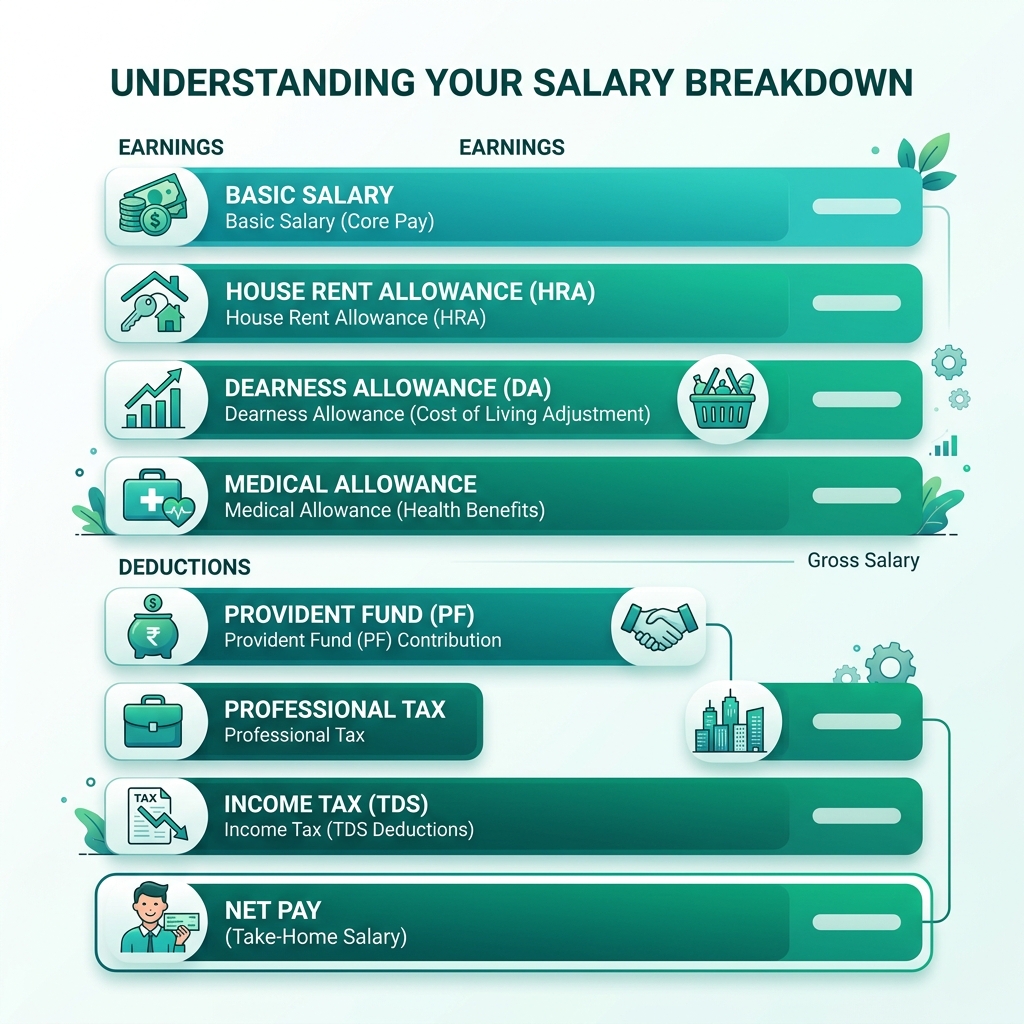
| Line # | Compensation Element | Operational Task | Units & Hourly Rates | Excel Formula Specification |
|---|---|---|---|---|
| 01 | Base Cellar Hours | Gravity, Centrifuge & Transfers | 56.0 hrs @ $22.00/hr | =B10*C10 ($1,232.00) |
| 02 | Graveyard Differential | Overnight Fermentation Watch | 16.0 hrs @ $3.00/hr diff | =B11*C11 ($48.00) |
| 03 | Hot Caustic CIP Hazard | Chemical FV/BBT Sanitization | 12.0 hrs @ $2.50/hr diff | =B12*C12 ($30.00) |
| 04 | Canning Line Bonus | Packaging Output Incentive | 850 cases @ $0.15 / case | =B13*C13 ($127.50) |
| 05 | Straight-Time Gross | Total Straight-Time Remuneration | 84.0 Total Hours Worked | =SUM(E1:E4) ($1,437.50) |
| 06 | FLSA True-Up Overtime | Weighted Half-Time on >80 hrs | 4.0 OT hrs @ $8.56/hr ($17.11 / 2) | =4*(E5/84)*0.5 ($34.23) |
| 07 | IRC § 132 Beer Allotment | Taxable Value of Take-Home Beer | 2 Cases IPA (Wholesale/COGS Fair Val) | Manual Input ($90.00) |
| 08 | TOTAL TAXABLE W-2 EARNINGS | Subject to Payroll Tax Withholding | Cash + Non-Cash Fringe | =E5+E6+E7 ($1,561.73) |
| 09 | Statutory Tax Withholding | FICA (7.65%) + Fed/State W/H (13%) | Applied to Line 08 | =-E8*0.2065 (-$322.50) |
| 10 | Non-Cash Beer Offset | Deduction for Product Received | Offsets Line 07 non-cash addition | =-E7 (-$90.00) |
| 11 | NET CASH DISBURSED | Direct Deposit / Paycheck | $1,149.23 | =E8+E9+E10 |
Chapter 5: How Independent Breweries Generate Bulk Encrypted Paystubs with PayslipGen
In a busy packaging microbrewery, administrative time is precious. The head brewer or general manager often balances payroll while troubleshooting a balky grain auger or verifying yeast cell counts.
Subscribing to restaurant/hospitality cloud payroll platforms (like Toast Payroll or Gusto) imposes heavy recurring overhead: $40 to $100 base fees per month plus $6 to $12 per employee per month. When seasonal taproom beertenders and summer canning staff are added, monthly SaaS bills balloon into hundreds of dollars every month.
PayslipGen provides an offline, sovereign desktop solution for a flat one-time purchase of $49, allowing craft breweries and distilleries to generate unlimited professional paystubs with zero recurring subscriptions.
The Brewhouse Office Workflow
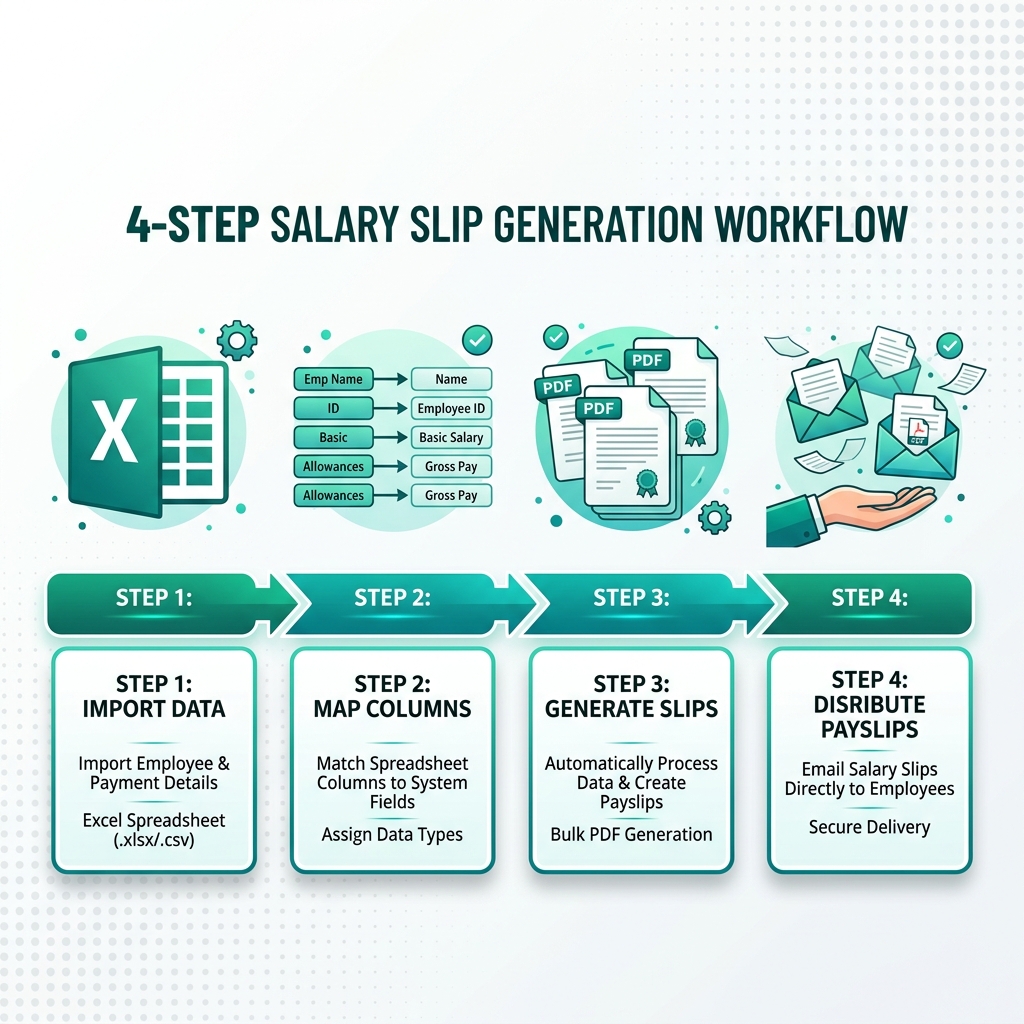
- Step 1: Export Your Production Timesheet: Maintain your brewery hours, shift differentials, CIP hazard premiums, and beer case allotments in your established Excel or Google Sheets workbook.
- Step 2: Open PayslipGen Locally: Launch the native desktop app on your brewery office computer (macOS or Windows). Because PayslipGen is 100% offline, sensitive recipe notes, employee compensation data, and banking details are never synced to external cloud databases.
- Step 3: Map Columns in the Visual Mapper: Drag and drop your spreadsheet into PayslipGen. Align your custom brewery columns:
Brewer_Name→ Employee Full NameCellar_Role→ Job Title (e.g., Lead Cellarperson / Distiller)Base_Wages_Diffs→ Regular WagesCanning_Bonus→ Production Incentive / BonusOvertime_TrueUp→ Overtime EarningsBeer_Allowance_Fringe→ Taxable Non-Cash BenefitTax_Withholding→ Statutory DeductionsNet_Direct_Deposit→ Net Take-Home Pay
- Step 4: Enable Automated Password Protection:Secure each PDF with AES-256 encryption using each employee's Date of Birth (YYYYMMDD) or the last 4 digits of their SSN. This ensures that paystubs shared over the brewery's internal Wi-Fi or emailed cannot be opened by unauthorized staff.
- Step 5: Bulk Export & Email via SMTP: Click "Generate Payslips."Within two seconds, PayslipGen generates crystal-clear vector PDF paystubs for your entire production and taproom staff. Use the built-in SMTP delivery engine to send password-protected payslips directly to your crew's smartphones automatically.
Frequently Asked Questions (FAQs)
Is a free shift beer at the end of the day legally taxable to the employee?
Generally, NO. Under IRC § 132(a)(4), an occasional alcoholic beverage consumed on the employer's premises immediately following a work shift qualifies as a non-taxable de minimis fringe benefit. However, this exemption applies only to immediate on-premises consumption; it does not extend to packaged cases taken off-premises or cash subsidies given in lieu of beer.
Why must packaging bonuses be included in overtime calculations?
Under the Fair Labor Standards Act (FLSA 29 C.F.R. § 778.208), any non-discretionary bonus promised to employees to encourage productivity or speed (such as $0.15 per packaged case over daily targets) must be added to total weekly remuneration to establish the regular rate of pay. Overtime hours must then be compensated at 1.5 times this adjusted regular rate. Omitting bonuses from the overtime calculation violates federal wage law.
How does TTB regulation impact employee beer allowances on the paystub?
The Alcohol and Tobacco Tax and Trade Bureau (TTB) regulates all alcohol removals from bonded brewery premises. Free beer given to employees for off-premises consumption is considered a tax-paid removal under 27 C.F.R. § 25.155 and must be accounted for on monthly TTB Form 5130.9. Aligning your internal paystub records with your federal TTB cellar reports protects your brewery permit during audits.
Can distillery distillers qualify for hazard pay differentials during stripping runs?
Yes. Operating ethanol distillation equipment involves Class I, Division 1 hazardous explosive atmospheres where volatile ethanol vapors are heated near open flames or high-temperature steam coils. Many craft distilleries provide a specialized distillation hazard differential ($3.00 to $5.00/hr) during active spirit runs.
Does PayslipGen support separate profiles for our brewhouse and taproom?
Yes. PayslipGen allows you to create unlimited company profiles. You can manage your production cellar staff under one profile with manufacturing and fringe benefit line items, and manage your front-of-house taproom beertenders under another profile with tip credit and hourly rates, all under a single $49 license.
Master Craft Beverage Payroll Without SaaS Taxes
Generate compliant, itemized brewery and distillery paystubs with clear shift differential and beer allowance tracking directly from Excel. 100% offline desktop sovereignty for a single one-time payment of $49.
Get PayslipGen for $49 (Lifetime Access)Conclusion: Professionalize Your Craft Beverage Production Records
Independent craft breweries and distilleries are built on passion, craftsmanship, and community. Yet maintaining long-term financial health and employee trust requires treating the manufacturing cellar with the same rigor as the front-of-house taproom.
By mastering FLSA blended overtime calculations, tracking OSHA chemical hazard premiums transparently, maintaining compliance with IRC § 132 beverage fringe benefit rules, and generating encrypted PDF paystubs with PayslipGen, your brewery eliminates payroll headaches, protects its federal permits, and preserves precious capital for new fermentation tanks and grain malt.
(Managing payroll across other specialized manufacturing or service operations? Explore our guides on Blended Overtime Paystubs, Fringe Benefit Gross-Up Paystubs, and Bulk Payslip Generation with SMTP Email Delivery.)