
The Danger of Sending Unprotected Payslips
Payslips contain a highly sensitive set of personal records: basic wages, pension contributions, banking details, personal home addresses, tax identification numbers, and social security details. Under international privacy laws like the EU GDPR (General Data Protection Regulation) and the US HIPAA (Health Insurance Portability and Accountability Act), sending this data unencrypted constitutes a critical data exposure risk.
How a Healthcare Staffing Firm Avoided a €120,000 GDPR Fine
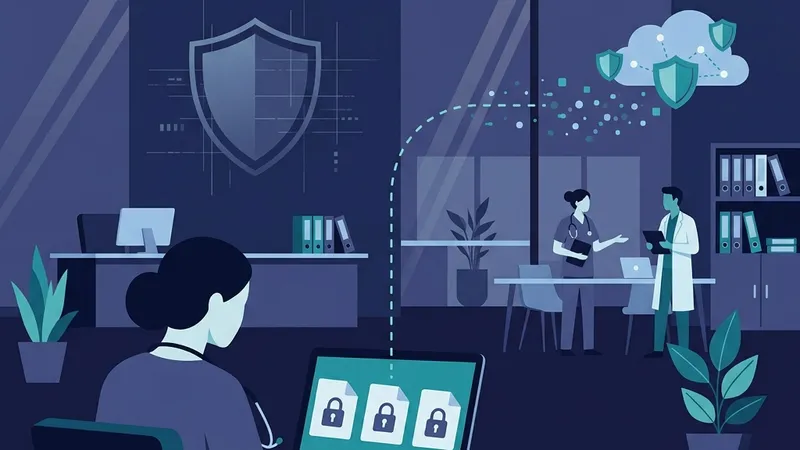
MedStaff Solutions is a healthcare staffing agency in Germany that manages 220 temporary nurses and care assistants.
Every month, the payroll officer exported payslips from their accounting tool and emailed them individually via Outlook. The PDFs were completely unencrypted — standard practice at the time.
An internal audit was triggered by Germany's Federal Commissioner for Data Protection. Auditors flagged that all 220 salary records were being sent as plain, unencrypted PDF attachments over standard email.
Any email server compromise — forwarding rules, cached credential attacks, or domain spoofing — would expose the entire workforce's financial records in a single breach.
Under GDPR Article 83(5), this category of infringement carries fines up to €20 million or 4% of global annual turnover — whichever is higher.
MedStaff's legal team estimated their potential exposure at approximately €120,000. The firm was given 90 days to implement "appropriate technical safeguards."
Cloud payroll providers were evaluated, but uploading patient-facing healthcare staff records to external databases introduced additional HIPAA-like compliance concerns.
Instead, MedStaff deployed PayslipGen on the payroll officer's workstation. The tool reads CSV exports, generates AES-256 password-locked PDFs using each nurse's employee ID and birth year, and dispatches them through MedStaff's own Exchange SMTP server.
No employee data ever leaves MedStaff's internal network. The auditors approved the new pipeline. Monthly payroll distribution now takes 55 seconds instead of 6+ hours. Total transition cost: $49.
Why the "BCC Mail Merge" Method Fails
Some companies try to solve the distribution problem using mail merge hacks or emailing the entire database list by placing employees in the BCC field. This approach introduces major functional and security liabilities:
- Accidental Leakage: A simple typing slip can place an employee in the "To" field, exposing the entire distribution list and salary context.
- Bulk spam flags: Sending hundreds of identical messages with different attachments simultaneously triggers outbound spam filters, resulting in your domain being blacklisted by Google Workspace or Office 365.
- No audit verification: If an employee claims they didn't receive their slip, you have no local, verifiable database logs proving delivery status.
An Architectural Framework for Secure Dispatch
To safely email payslips in bulk, your distribution system must satisfy three fundamental layers of security architecture:
1. File-level Encryption
Before sending, the PDF must be locked using AES-256 dynamic passwords generated from personal parameters (like tax ID + birth year) so that only the employee can decrypt it.
2. Direct Outbound SMTP
Do not upload payroll details to a third-party email system. Send directly via your own company SMTP server, ensuring files are processed end-to-end behind your firewall.
3. Intelligent Queue Delays
Configure sending interval delays (e.g. 1500ms between messages). This protects your domain reputation, prevents server throttling, and guarantees email delivery.
Local-First Compliance Solution
By running PayslipGen as a native desktop application, you keep employee payroll records entirely on local hardware. The application loads Excel worksheets, maps the data, generates password-encrypted PDFs, and dispatches them via SMTP on your own machine. No records are sent to external databases or stored on a third-party cloud. This makes it the most secure bulk email system available for small and medium-sized enterprises.