Why HR Teams Are Switching Away from Subscription Payroll Software
Key Takeaways
- ✓SaaS payroll platforms use per-employee monthly pricing that penalizes workforce expansion, causing software costs to compound as headcount grows.
- ✓Most HR teams only require core payroll features, making recurring monthly subscriptions an expensive payment for bloated, unused functionality.
- ✓Desktop payroll software maintains complete data sovereignty by keeping sensitive employee PII on local machines rather than multi-tenant cloud servers.
- ✓PayslipGen offers a one-time perpetual license with zero recurring fees, permanently eliminating subscription fatigue and vendor lock-in.
In an era heavily dominated by the Software as a Service (SaaS) business model, organizations of all sizes have increasingly found themselves ensnared in a complex, continuously expanding web of recurring monthly subscriptions that relentlessly erode their operational budgets over time. This phenomenon, which industry experts have aptly termed "subscription fatigue," is prompting a significant, industry-wide reevaluation of the way fundamental business applications—particularly critical HR and payroll software tools—are procured, licensed, and deployed.
For many years, the siren song of the SaaS model presented an undeniably attractive proposition to growing businesses: minimal upfront capital expenditure, automatic delivery of the latest feature updates, and the theoretical promise of infinite scalability. However, as these software ecosystems have matured, HR professionals and financial directors alike are discovering that this convenience comes at a tremendously steep, compounding price. What initially appears as a manageable, almost negligible monthly operational expense quickly balloons into an exorbitant long-term financial commitment, especially when arbitrary per-user pricing tiers, hidden maintenance fees, and inevitable annual price hikes are factored into the equation over a multi-year horizon.
Try Our Interactive Demo Instantly
Want to see how an offline-capable, client-side payslip generator works in practice? Try our brand-new interactive demo right in your browser. Upload a sample CSV, map your columns, and generate beautifully designed PDF payslips—with zero data ever being transmitted to our servers.
Launch Free Demo Now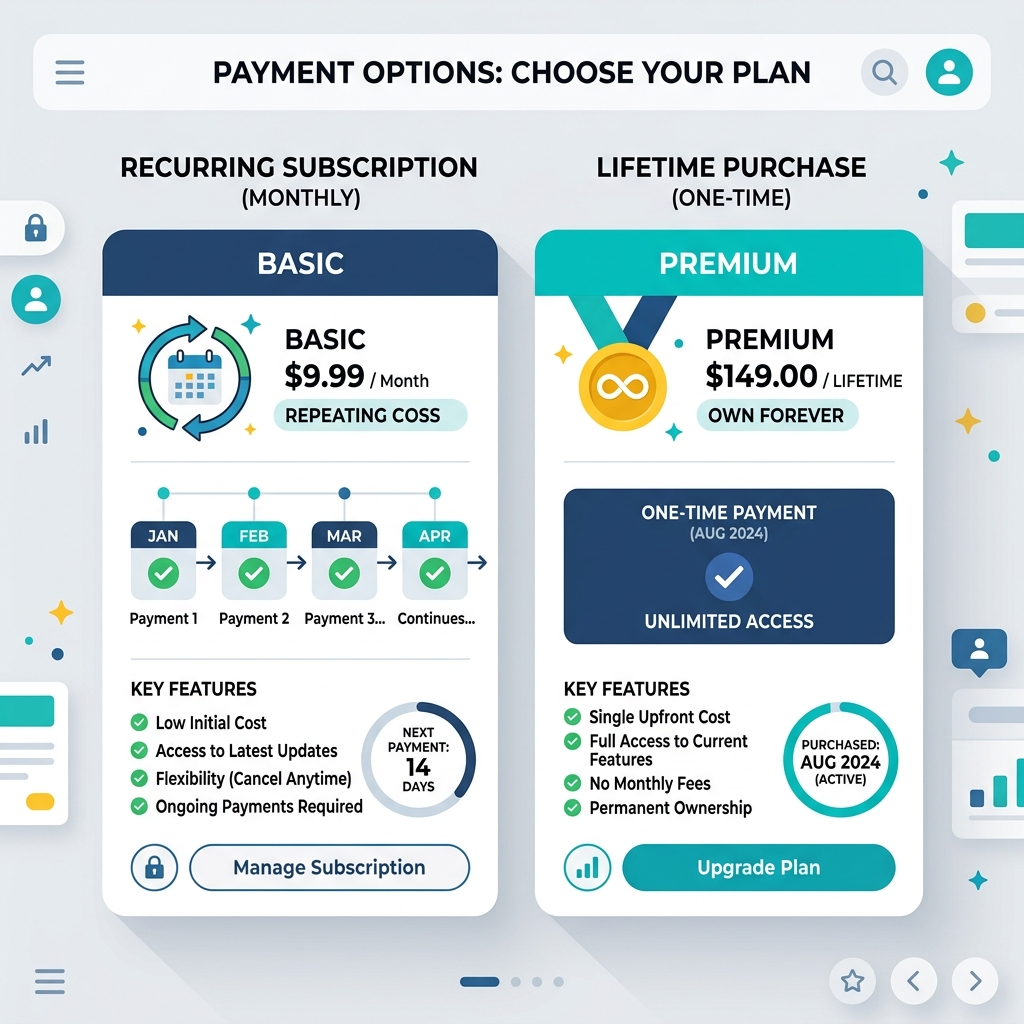
The Silent Exorbitance of the Per-Employee Pricing Trap
One of the most insidious and financially damaging aspects of modern subscription-based payroll platforms is the seemingly ubiquitous adoption of the per-employee, per-month pricing structure. On the surface, this model is consistently marketed under the guise of "fairness" and "flexibility," suggesting that businesses should logically only pay for the exact volume of software utilization they require at any given moment. In reality, this pricing architecture acts as a powerful disincentive for business growth and inadvertently penalizes organizations for successfully expanding their workforce and scaling their operations.
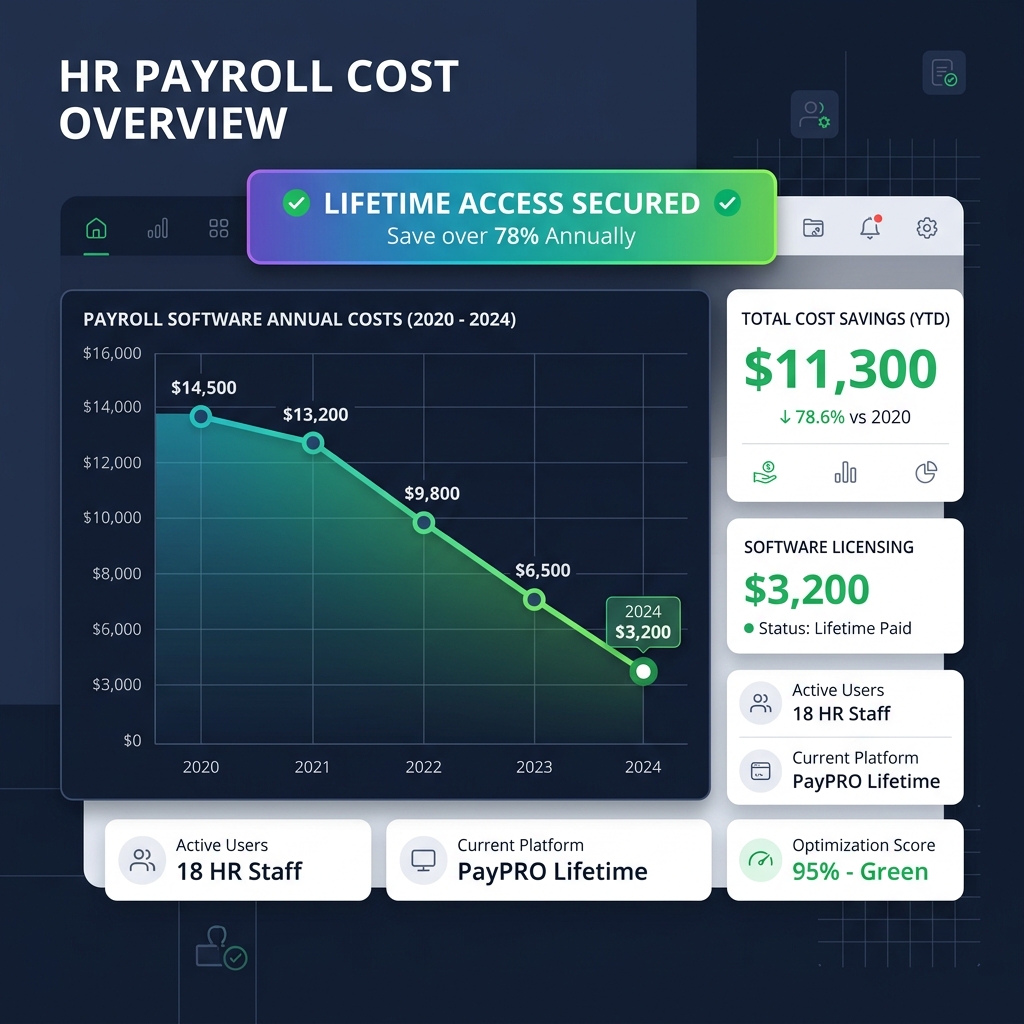
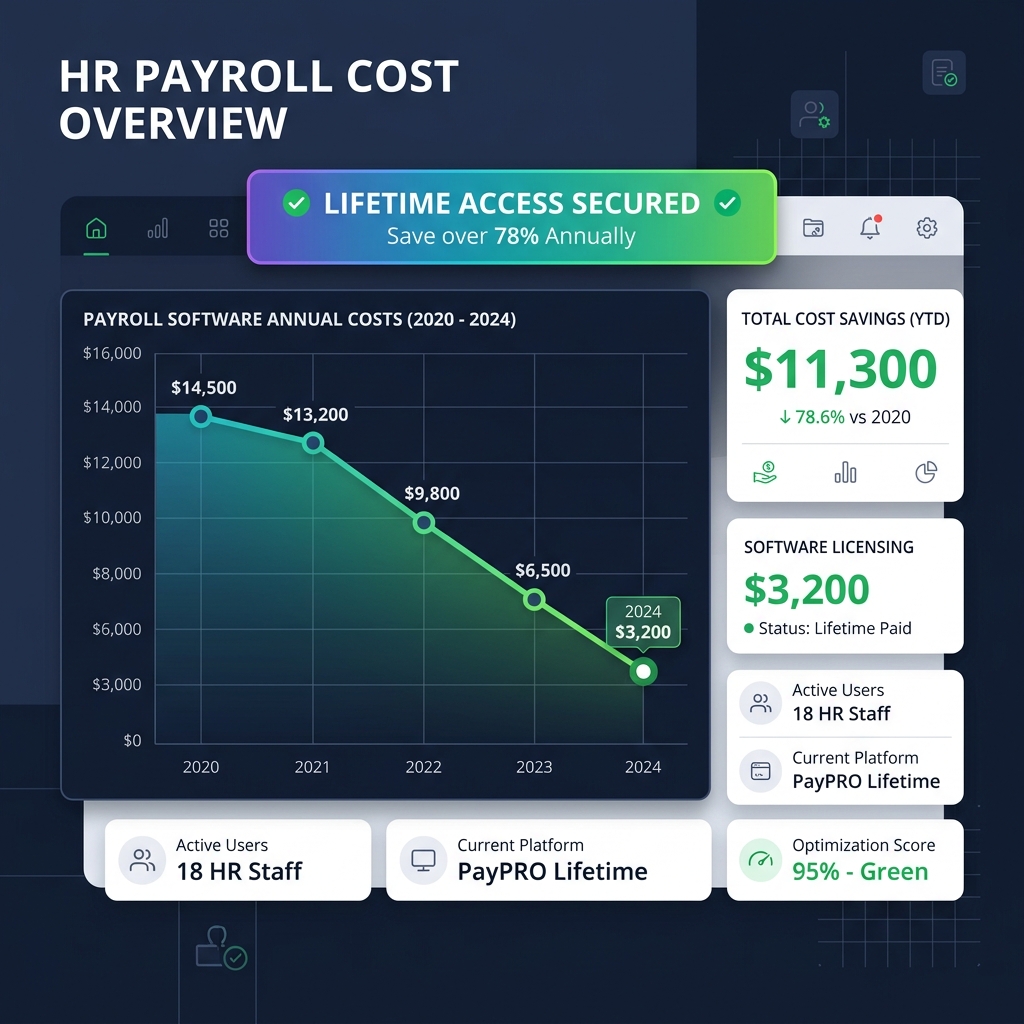
Consider the trajectory of a rapidly growing mid-sized enterprise. Bulk payslip generator software eliminates per-employee fees, offering unlimited processing with a one-time license. As the company successfully recruits new talent to meet expanding market demands, the HR department is subsequently forced to continually increase their subscription tier to accommodate the influx of new employees into the payroll system. Consequently, the cost of simply processing foundational administrative tasks increases in direct, immutable proportion to the company's success. Over a conservative five-year timeline, a business that scales from fifty to five hundred employees will inevitably see its payroll software expenditure skyrocket exponentially, transforming what was once a minor line item on the balance sheet into a major, inescapable financial burden that actively drains resources away from core strategic initiatives and revenue-generating activities.
The Illusion of Continuous Value
Subscription advocates frequently justify high recurring fees by pointing to continuous feature updates. Yet, empirical studies show that the vast majority of HR professionals utilize only a fraction of the core functionalities—meaning they are perpetually paying for an ever-expanding array of complex features they will never actually deploy in their day-to-day operations.
Furthermore, the administrative overhead required simply to manage these fluctuating subscription tiers introduces an entirely unnecessary layer of bureaucratic friction into the HR department's daily workflow. Administrators must constantly audit their active user lists, deactivate accounts for departed employees to avoid incurring unwarranted charges, and negotiate complex tier upgrades with aggressive sales representatives whenever the organization crosses an arbitrary headcount threshold. This constant state of licensing vigilance distracts HR professionals from their primary mandate: fostering a positive workplace culture, managing talent, and ensuring the accurate, timely distribution of employee compensation.
Regaining Financial Sovereignty with One-Time Licensing Models
In stark contrast to the endlessly extractive nature of the SaaS paradigm, the resurgence of the perpetual licensing model—characterized by a single, upfront payment in exchange for lifetime software access—represents a fundamental reclaiming of financial sovereignty for discerning business owners. By transitioning away from the rental economy and embracing outright software ownership, organizations can dramatically simplify their financial forecasting, eliminate the existential anxiety associated with unanticipated price hikes, and decisively sever the artificial link between their headcount growth and their administrative overhead costs.
The profound financial clarity offered by a one-time purchase cannot be overstated in today's unpredictable economic climate. When a company invests in a perpetual license for a robust, desktop-based payroll solution, that expenditure can be cleanly categorized, fully amortized according to established accounting principles, and subsequently forgotten. There are no surprise invoices mysteriously appearing at the end of the fiscal quarter, no tense renegotiation sessions with account managers attempting to upsell unnecessary add-on modules, and absolutely no risk of suddenly losing access to critical historical payroll data simply because a credit card on file unexpectedly expired or a temporary cash flow disruption delayed a monthly payment.
Data Ownership, Security, and the Offline Advantage
Beyond the compelling economic arguments favoring one-time purchases, there is a profound, increasingly critical debate surrounding data privacy, security, and the fundamental concept of digital ownership in the corporate sphere. When an organization utilizes a cloud-based, subscription-driven payroll platform, they are essentially entrusting the most sensitive, highly confidential personally identifiable information (PII) of their entire workforce—including social security numbers, banking details, and salary histories—to a third-party server infrastructure over which they exercise absolutely zero direct administrative control.
This total reliance on external cloud architecture introduces a multitude of latent vulnerabilities into the organization's security posture. Cloud-based SaaS platforms represent massive, centralized honeypots for malicious cyber actors; a single, sophisticated breach of the provider's infrastructure can instantaneously expose the confidential data of thousands of different client companies. Moreover, even in the absence of a catastrophic security incident, businesses remain entirely at the mercy of the vendor's internal data retention policies, their server uptime reliability, and their compliance with continuously evolving international data sovereignty regulations. If the vendor experiences an unforeseen service outage precisely on payday, the HR department is left completely paralyzed, entirely unable to access their own data or execute their most critical operational function.
Conversely, modern desktop-based payroll software that is secured through a perpetual, lifetime license offers a radically different, fundamentally more secure paradigm based on the principle of absolute data sovereignty. Because the software operates entirely on the organization's own localized hardware infrastructure, all sensitive employee data remains strictly confined within the company's own established security perimeter, completely insulated from the inherent risks associated with continuous external internet connectivity. This localized, self-hosted approach ensures that the HR department retains total, uninterrupted access to their historical records and operational capabilities regardless of external network conditions, internet outages, or the operational status of a third-party service provider.
The Resurgence of Purpose-Built, Minimalist Software Architecture
There is an undeniable, growing fatigue within the professional sphere regarding software applications that relentlessly attempt to be everything to everyone. In their endless quest to justify exorbitant recurring subscription fees, SaaS vendors are notoriously prone to "feature bloat," continuously cramming their platforms with increasingly esoteric, overly complex functionalities that the vast majority of their user base neither requested nor requires. The result is often a convoluted, hopelessly unintuitive user interface that demands extensive, specialized training to navigate and significantly increases the probability of critical user errors during the execution of routine administrative tasks.
The conscious pivot toward one-time payment software often aligns harmoniously with a broader organizational desire for tools that are intentionally designed to be streamlined, purpose-built, and unapologetically focused on executing a specific set of core functions with absolute, unassailable reliability. A dedicated payroll generator that does not have to artificially justify a monthly fee is completely free to embrace a minimalist, highly intuitive design philosophy. It can focus entirely on optimizing the exact workflows that HR professionals actually utilize on a daily basis—such as bulk PDF generation, automated salary calculations, and secure email dispatch—without cluttering the user interface with irrelevant analytics dashboards, convoluted gamification elements, or aggressive internal upselling prompts.
Strategic Emancipation from Vendor Lock-In Mechanisms
Perhaps the most pernicious, universally despised characteristic of the modern subscription software ecosystem is the intentional, highly engineered phenomenon of "vendor lock-in." SaaS providers explicitly design their platforms to make the process of migrating away from their service as technologically arduous, financially painful, and administratively disruptive as humanly possible. By deliberately utilizing proprietary, non-standardized data formats, strictly limiting the capabilities of their data exportation tools, and embedding their software deeply into the tangential workflows of other integrated systems, vendors ensure that organizations become practically hostage to their ecosystem, rendering them powerless to resist future price increases or detrimental changes to the terms of service.
When an HR team strategically transitions to a standalone, perpetually licensed software solution, they effectively shatter these artificial restraints and comprehensively emancipate themselves from the coercive tactics of the subscription economy. Because they hold absolute, uncontested ownership over both the application itself and the raw data it generates, they are completely free to establish their own autonomous data backup protocols, seamlessly integrate their payroll outputs with independent, third-party accounting systems using universally accepted file formats (such as standard CSV or standardized XML exports), and make strategic, long-term technological decisions based entirely on what is genuinely best for the ongoing success and security of the organization, rather than what is artificially dictated by the restrictive terms and conditions of a rented software platform.
Conclusion: A Paradigm Shift Toward Sustainable Tech Procurement
The accelerating migration away from subscription-based payroll software is not merely a fleeting, reactionary trend; rather, it represents a profound, deeply rational paradigm shift in the fundamental philosophy of corporate technology procurement. As the true, compounding, long-term financial consequences of the SaaS model become increasingly impossible to ignore, organizations are decisively reasserting their fundamental right to own the digital tools that are absolutely critical to their daily operations. By actively rejecting the endless cycle of software rentals and purposefully embracing the financial predictability, enhanced security posture, and uncompromising data sovereignty offered by one-time payment models, HR departments are strategically positioning themselves to operate more efficiently, securely, and sustainably well into the future.
In a business landscape characterized by continuous, unpredictable change and intense economic pressure, eliminating the unnecessary burden of perpetual software taxation is one of the most immediate, highly effective strategic decisions an organization can make to permanently optimize its operational expenditures and safeguard its most sensitive internal data. The era of blindly accepting software as a perpetual financial drain is rapidly coming to a definitive end, replaced by a renewed appreciation for the enduring value of true digital ownership.
One-time payment. Lifetime access.
Break free from the endless cycle of software subscriptions. Secure your perpetual license today and never pay another monthly fee for payroll software again.
One-time payment. Lifetime access.