Gusto vs ADP: Which Payroll Platform Is Right for Your Business in 2026?
Key Takeaways
- ✓Gusto is ideal for US small-to-midsize businesses (1–500 employees) needing transparent pricing and intuitive domestic payroll automation.
- ✓ADP is designed for complex mid-market and enterprise companies requiring global payroll in 140+ countries and custom compliance reporting.
- ✓Gusto offers flat base pricing with unlimited payroll runs, whereas ADP uses customized, quote-based pricing tiers.
- ✓Businesses that calculate payroll in spreadsheets can bypass costly HRIS subscriptions by using PayslipGen to automate bulk payslip PDF generation and secure email delivery offline.
Introduction
Deciding on the right payroll software is one of the most critical operational choices a company can make. It is never just about processing direct deposits.
Your payroll software decisions directly affect the daily employee experience, your organization's legal compliance, overall payroll accuracy, and your business's administrative efficiency. A clunky interface leads to frustrated HR managers, while poor tax compliance features can result in crippling federal penalties.
When evaluating industry titans like Gusto and ADP, the "right" choice heavily depends on your specific business size, your internal HR workflow, and your overarching operational priorities. In this comprehensive comparison, we will objectively evaluate both platforms to help you determine which software aligns with your corporate architecture.
Quick Comparison Table
For a high-level perspective, here is how Gusto and ADP compare across essential payroll and HR metrics.
| Feature / Area | Gusto | ADP |
|---|---|---|
| Best For | Small to medium businesses prioritizing user experience | Growing mid-market companies to massive enterprises |
| Business Size | 1 – 500+ employees | 1 – 100,000+ employees (highly scalable) |
| Payroll | Automated, unlimited payroll runs on all plans | Robust, complex payroll handling; runs may be capped by plan |
| HR Features | Excellent foundational HR and onboarding | Deep, enterprise-grade HR, talent management, and compliance |
| Benefits Administration | Built-in broker services for US benefits | Extensive broker integrations and massive benefits networks |
| Global Payroll | Limited to international contractors (via partner) | Comprehensive global payroll across 140+ countries |
| Reporting | Clean, pre-built reports; limited deep customization | Highly advanced, granular, customizable analytics |
| Pricing Philosophy | Transparent base fee plus per-employee cost | Quote-based, highly variable depending on selected modules |
| Ease of Setup | Extremely fast, intuitive self-onboarding | Requires implementation specialist and dedicated training |
| Customer Support | Standard chat/email; phone support on higher tiers | Dedicated account managers and 24/7 enterprise support |
| Integrations | Connects with most popular modern SaaS tools | Massive marketplace with thousands of native integrations |
What is Gusto?
Gusto revolutionized the payroll industry by taking a notoriously complex, legacy-driven process and transforming it into a beautifully designed, consumer-grade software experience. Its primary target audience consists of modern startups, local retail shops, and small to medium-sized businesses (SMBs) that do not have massive, dedicated HR departments.
Gusto's greatest strength is its extraordinary ease of use. It makes onboarding a new hire, administering health insurance, and running payroll feel as intuitive as using a modern banking app. For businesses that want to handle payroll efficiently without needing a certification in HR compliance, Gusto is exceptionally well-tailored.
What is ADP?
ADP (Automatic Data Processing) is the undisputed behemoth of the global payroll industry. With decades of institutional experience, ADP processes payroll for millions of employees worldwide. Their target audience spans from small businesses (via their RUN by ADP platform) up to massive, multinational Fortune 500 enterprises (via ADP Workforce Now and Vantage).
ADP's primary strengths are its infinite scalability, absolute regulatory compliance, and unparalleled feature depth. It is built to handle incredibly complex organizational structures, sophisticated union rules, granular tax jurisdictions, and global workforces. ADP is the ideal choice for established businesses that require a heavy-duty, highly customizable HR infrastructure that will never outgrow them.
Feature-by-Feature Comparison
Payroll
Gusto offers automated, unlimited payroll runs across all its tiers, making it incredibly predictable for businesses that pay employees weekly or have high turnover. The interface is clean, showing exactly how much cash is required before running payroll. ADP's payroll engine is significantly more powerful under the hood, capable of handling complex garnishments, multi-state taxation nuances, and intricate shift-differentials with ease, though frequent off-cycle payroll runs might incur additional fees depending on your specific contract.
Employee Management
Gusto excels at the "soft" side of employee management. Sending digital offer letters, capturing e-signatures, and creating welcoming onboarding checklists are entirely seamless. ADP provides a much more clinical, structured approach to human capital management (HCM). It offers deep talent acquisition modules, advanced performance management tracking, and rigorous succession planning tools suited for large HR teams.
Automation
Both platforms offer excellent automation, but they apply it differently. Gusto focuses on automating the small business workflow—like "AutoPilot" payroll that runs itself if no variables change. ADP automates massive enterprise workflows, such as automatically adjusting tax withholdings when an employee moves across state lines or automating complex benefits eligibility triggers based on tenure.
Compliance
Compliance is non-negotiable. Gusto automatically calculates, files, and pays local, state, and federal taxes flawlessly for US-based employees. ADP, however, operates on a global scale. If your business faces complex industry-specific audits, union compliance reporting, or international labor law adherence, ADP possesses the institutional infrastructure to manage that risk effectively.
Reporting
Gusto provides beautiful, easy-to-read reports that satisfy 90% of a small business owner's needs—like payroll summaries, tax liabilities, and basic time-off balances. ADP's reporting is an entirely different beast. It offers massive data warehouses, custom SQL query capabilities, and predictive analytics that allow enterprise financial officers to forecast labor costs with extreme precision.
Tax Support
Both handle end-of-year W-2s and 1099s automatically. ADP has dedicated teams of tax professionals that actively monitor changing legislation, making them slightly more robust for companies navigating highly regulated industries or dealing with complex multi-state taxation issues.
Time Tracking
Gusto includes simple, built-in time tracking on its higher-tier plans, which perfectly suits most office or retail environments. ADP offers highly advanced time and attendance hardware integrations (like biometric punch clocks) and complex scheduling software for manufacturing, healthcare, or logistics companies managing hundreds of shift workers.
Benefits
Gusto acts directly as a digital broker, allowing small businesses to select and administer health, dental, and vision insurance seamlessly within the app. ADP integrates with virtually every major insurance carrier globally and handles incredibly complex benefits structures, including intricate 401(k) matching tiers and enterprise-level wellness programs.
Third-party Integrations
Gusto integrates beautifully with modern staples like Xero, QuickBooks, and Slack. ADP boasts one of the largest enterprise marketplaces in the world, meaning it can connect directly to legacy ERP systems, complex Point of Sale (POS) networks, and bespoke enterprise software.
Scalability
This is ADP's domain. While Gusto can comfortably support a company growing to a few hundred employees, ADP is designed to scale to hundreds of thousands of employees globally without ever needing to migrate to a new system.
Customization
Gusto provides a highly curated, somewhat rigid experience to ensure simplicity. ADP offers near-infinite customization. If you need a specific workflow for a unique business process, ADP's implementation team can likely build it—though this customization comes with significant setup costs and complexity.
Security
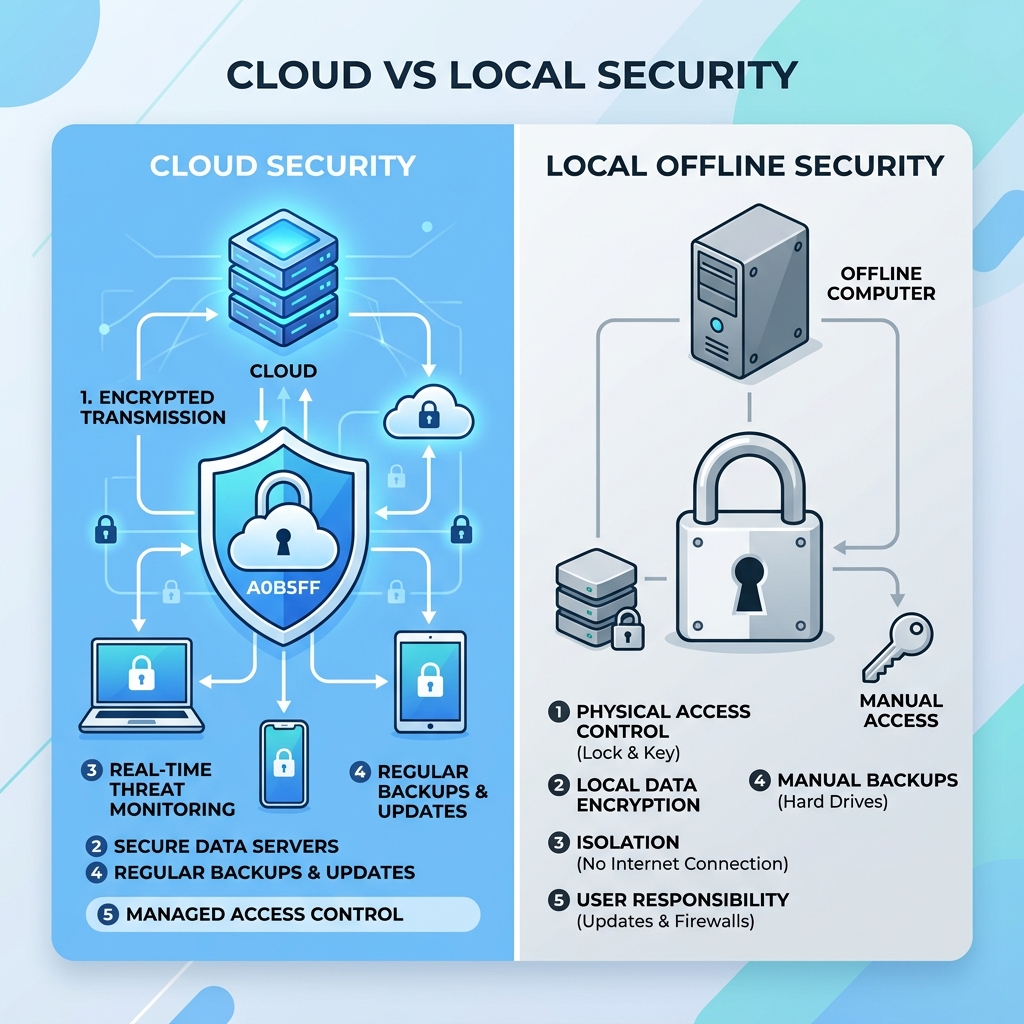
Both platforms utilize bank-level encryption, multi-factor authentication (MFA), and rigorous physical data center security. As cloud-based platforms, they both operate on a shared responsibility model, meaning your internal password hygiene is just as critical as their server encryption.
Pros and Cons
Gusto
Advantages
- Incredibly intuitive and user-friendly interface.
- Transparent, highly predictable pricing model.
- Exceptional automated tax filing capabilities.
- Excellent employee onboarding experience.
- Unlimited automated payroll runs.
Limitations
- Not designed for massive enterprise scaling.
- Limited native support for international payroll.
- Reporting lacks deep, granular customization.
- Slower response times on basic support tiers.
ADP
Advantages
- Unparalleled scalability for massive enterprises.
- Comprehensive global payroll capabilities.
- Deeply customizable reporting and analytics.
- Extensive compliance and risk management tools.
- Dedicated account management support.
Limitations
- Opaque, quote-based pricing structures.
- Legacy UI can feel clunky and unintuitive.
- Extensive training required for administrators.
- Implementation is slow and highly complex.
Pricing Philosophy
When evaluating cost, you must look beyond the initial invoice. Gusto champions pricing transparency. They typically charge a flat monthly base fee combined with a clear per-employee, per-month charge. This makes budgeting for payroll incredibly straightforward, especially for startups carefully managing their burn rate.
ADP utilizes a traditional enterprise sales model. Their pricing is almost entirely quote-based and varies wildly depending on your company size, the specific modules you select (like time tracking or benefits), and the length of your contract. While this allows ADP to craft highly bespoke packages for large corporations, it can make it difficult for small businesses to easily compare costs upfront. Always engage directly with their sales teams to verify current promotional pricing and exact implementation fees.
Which Businesses Should Choose Gusto?
Gusto is the absolute optimal choice for modern startups, local retail establishments, tech agencies, and small businesses that prioritize speed, aesthetics, and ease of use. If your company has fewer than 200 employees, operates primarily within the United States, and wants a system that allows HR managers to run payroll confidently without needing extensive training, Gusto provides an unparalleled experience. It removes the friction from foundational HR tasks, allowing small teams to focus on growth rather than administrative overhead.
Which Businesses Should Choose ADP?
ADP is built for established businesses, rapidly scaling mid-market companies, and massive global organizations. If your company operates across multiple international borders, requires highly specific custom reporting for a board of directors, deals with complex union labor contracts, or has thousands of shift workers requiring sophisticated biometric time tracking, ADP is the necessary choice. They provide the heavy-duty infrastructure and institutional compliance expertise required to manage highly complex, high-risk HR environments.
When Neither Platform Is the Right Fit
While Gusto and ADP are exceptional all-in-one HR Information Systems (HRIS), there are specific operational scenarios where adopting either platform introduces unnecessary friction, bloat, and unjustified recurring expenses.
Many businesses already successfully calculate their payroll elsewhere. They might use specialized, industry-specific accounting software, or they may have a highly sophisticated, macro-driven Excel spreadsheet that perfectly handles their unique wage and commission structures. For these organizations, the core calculation of payroll is not a problem that needs solving.
Instead, their operational bottleneck lies in the tedious, manual process of exporting that payroll data, formatting individual PDF payslips, and securely delivering those documents to employees. Furthermore, some organizations—particularly those prioritizing absolute data privacy—actively want to maintain local, offline processing of their payroll documents rather than uploading sensitive financial data to another cloud platform. These companies distinctly prefer a one-time software purchase to automate a specific administrative task, rather than committing to another expensive, per-employee monthly subscription.
How PayslipGen Fits Into This Workflow
It is vital to understand that PayslipGen is not an HRIS, nor is it a payroll calculation platform. It does not replace the comprehensive tax filing capabilities of Gusto or the global compliance infrastructure of ADP.
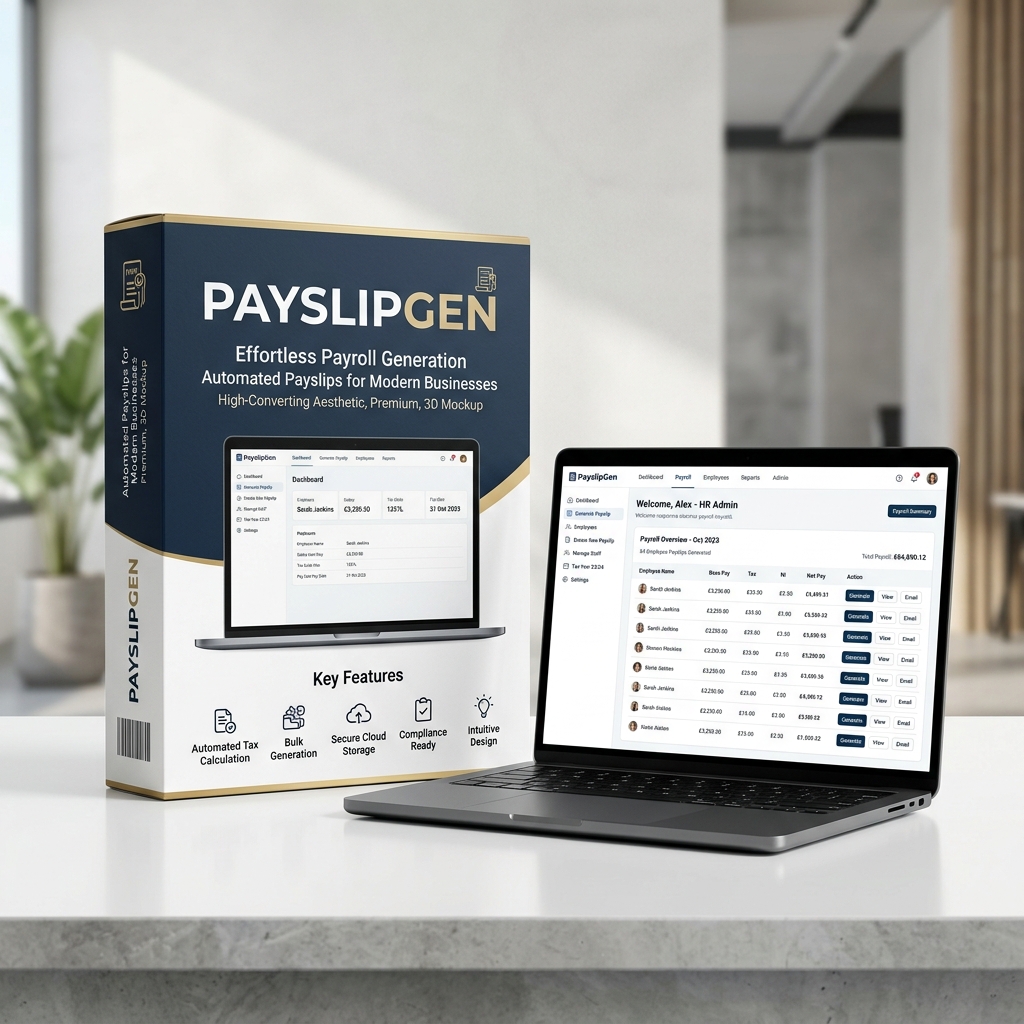
Instead, PayslipGen is a highly specialized, self-hosted desktop application precision-engineered for businesses that already have their payroll data calculated.
PayslipGen allows HR teams and accountants to:
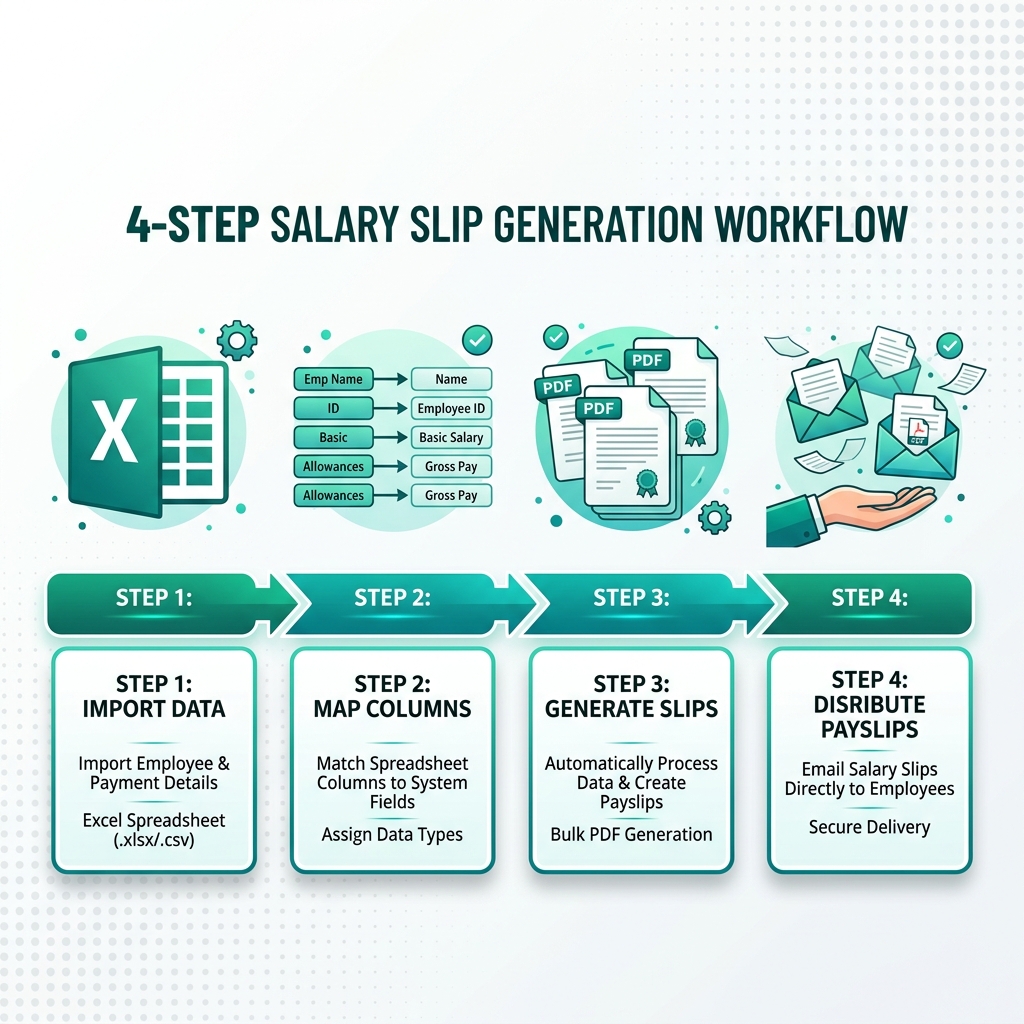
- Instantly import raw payroll data from Excel or CSV files.
- Generate hundreds of professional employee payslips in seconds.
- Create highly secure, password-protected PDF payslips automatically.
- Email payslips securely directly to the workforce in bulk.
- Use their own internal SMTP server to maintain absolute data sovereignty.
- Keep all sensitive payroll document processing entirely under their local control.
- Avoid recurring monthly subscription costs by utilizing a one-time licensing model for this specific workflow.
Frequently Asked Questions
Can PayslipGen replace ADP?
No. PayslipGen does not provide talent acquisition, benefits administration, global compliance, or automated tax filings. It is strictly designed for automated document generation and delivery.
Can PayslipGen replace Gusto?
No. PayslipGen is not an HR suite. It does not act as an insurance broker or manage employee onboarding checklists. It is a specialized tool for companies that handle those tasks internally.
Does PayslipGen calculate payroll?
PayslipGen does not perform raw tax or deduction calculations. It takes your pre-calculated data (via an Excel or CSV file) and automates the formatting and secure distribution of that data.
Can I use PayslipGen with payroll exports?
Yes. If you use an accounting tool that exports payroll data to CSV or Excel, you can map those columns directly into PayslipGen to instantly generate and email the associated payslips.
Which businesses benefit most?
Organizations that calculate their own payroll offline, companies that strictly require localized data privacy, and businesses tired of manually saving and emailing individual PDFs benefit the most from this software.
Conclusion
When comparing Gusto and ADP, the optimal choice is dictated by your organizational complexity. If you are a rapidly scaling enterprise with complex international requirements and thousands of employees, ADP provides the necessary heavy-duty infrastructure. Conversely, if you are a modern small business looking for an exceptionally intuitive, beautifully designed HR platform that simplifies domestic compliance, Gusto is unequivocally the better fit.
However, it is crucial to recognize that not every business requires a massive, cloud-based HR system. If your core payroll calculations are already effectively managed internally, and your true operational burden is simply the repetitive task of formatting and securely distributing payslip documents, you do not need to overhaul your entire HR department.
For businesses focused exclusively on achieving maximum administrative efficiency in document delivery, enterprise payslip automation tools like PayslipGen offer a targeted, highly secure, and exceptionally cost-effective alternative to comprehensive SaaS subscriptions. Choose the software that solves your specific operational bottleneck, rather than paying for a suite of features you will never use.
Stop Manually Emailing Payslips
Keep your payroll data local and automate your entire payslip generation and email distribution workflow in seconds.